Here’s the odd thing about aging eyes: everyone blames the reading glasses.
You notice small print getting harder. You buy stronger readers. Problem solved. Except the eyes have more changes in store, and most of them have nothing to do with reading glasses.
Some of these changes are plain nuisance. A few are early warnings of conditions that can be treated, but only if they’re caught in time. Knowing which is which changes everything.

When the menu drifts out of reach

You know this one. You hold the menu a little farther away. Then farther. Eventually your arms aren’t long enough.
This is presbyopia, from Greek words meaning “aging eye.” The lens inside your eye, the clear structure that focuses light, gradually stiffens with age. A young lens flexes to focus up close. A stiff one can’t. That’s the whole story.
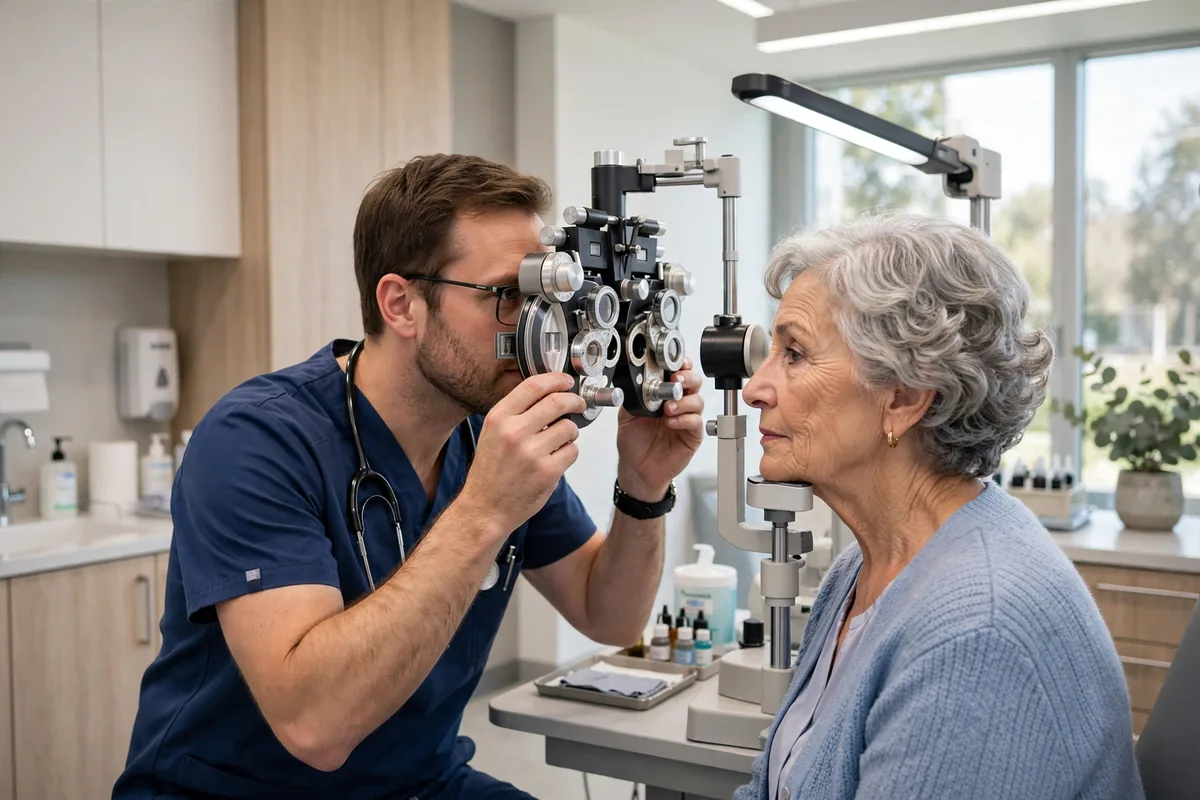
It starts around 40 for most people and keeps creeping for years. Reading glasses fix the symptom, but here’s what many people miss: even if readers solve your close-up problem, your eyes still need regular professional exams. Presbyopia is normal. What hides behind it sometimes isn’t.
One practical note: cheap readers from the drugstore are fine for many people, but they give both eyes the same strength. If your eyes differ, or if you get headaches or eye strain, prescription lenses matched to each eye are worth it. An exam sorts that out in minutes.
A film over the world

Imagine looking through a windshield that gets a little dirtier every year. Colors look muted. Whites look yellowish. Night driving gets hard because oncoming headlights explode into halos and glare.
That film is real. It’s your eye’s lens turning cloudy, a condition called a cataract. The process begins around 50, and professional guidance shared by the Florida Society of Ophthalmology notes that nearly everyone develops them with age.
Here’s the reassuring part. Cataract surgery is one of the most common elective surgeries in the United States, and it significantly improves vision and quality of life. This isn’t a tragedy. It’s maintenance.
Cataracts also dull your night vision gradually, which is why many people first notice them behind the wheel. If oncoming headlights have started blooming into starbursts and you find yourself avoiding night driving, mention it at your next exam. It’s a classic early sign, and it’s very fixable.
Specks that drift like cobwebs

Look at a bright blue sky. See tiny specks, strings, or cobweb shapes drifting around? Try to look at one directly and it darts away.
Those are floaters. Inside your eye is a jelly-like substance called the vitreous. With age it gets more liquid, and tiny fibers inside it clump together and cast shadows on your retina, the light-sensitive layer at the back of the eye. That’s all floaters are: shadows of clumps.
A few long-standing floaters are usually harmless. But new ones deserve attention. See an eye specialist immediately if you notice a sudden shower of floaters in one eye, especially with flashes of light or a shadow creeping across your side vision. That combination can mean the retina is tearing or detaching, which needs urgent treatment to save vision.
Old floaters: nuisance. New floaters: phone call. That distinction matters.
If your floaters are old, stable, and few, most eye doctors just want to hear about them at your regular visit. They’ll check the retina with dilation to make sure everything is flat and healthy, and then you’ll go back to ignoring them. Which is the correct amount of attention for old floaters.
Eyes that burn and water at the same time

This one feels like a contradiction. Your eyes burn and sting, yet they water excessively. How can dry eyes produce tears?
Because those aren’t the good tears. As you age, especially women going through hormonal changes, your eyes may produce fewer quality tears, or the tears may evaporate too fast. The eye gets irritated and dry. The watering is your eye’s panicked reflex response, flooding the surface with watery, low-quality tears that don’t actually fix the dryness.
For most people, treatment starts simple: over-the-counter artificial tears. If those don’t help, an ophthalmologist, a medical doctor who specializes in eyes, can prescribe medication or suggest procedures to improve tear quality. Dry eye ranks among the most common age-related complaints, and the fix is usually straightforward once it’s diagnosed.
Faces that blur in the center

This is the one to take most seriously. Your side vision works fine. But when you look straight at someone’s face, it blurs. Straight lines look wavy: door frames bend, light poles curve.
That pattern points to age-related macular degeneration, AMD. The macula is a tiny spot in the center of your retina responsible for your sharpest vision: reading, recognizing faces, seeing road signs. In AMD, it deteriorates.
AMD is the number one cause of vision loss in adults over 50. The dry form develops slowly and has no proven treatment, though certain supplements can slow it. The wet form, where abnormal blood vessels leak under the retina, can steal central vision fast, but injections that block those vessels work well when given promptly.
Here’s the catch. Symptoms often don’t show up until damage has already happened. That’s why this one is caught at exams, not by noticing.
One simple home check doctors mention: the Amsler grid, a small grid of straight lines you view one eye at a time. If lines look wavy or a patch of the grid disappears, that’s worth a prompt call. Many eye clinics hand these out for free, and printable versions are easy to find online.
The exam most people skip
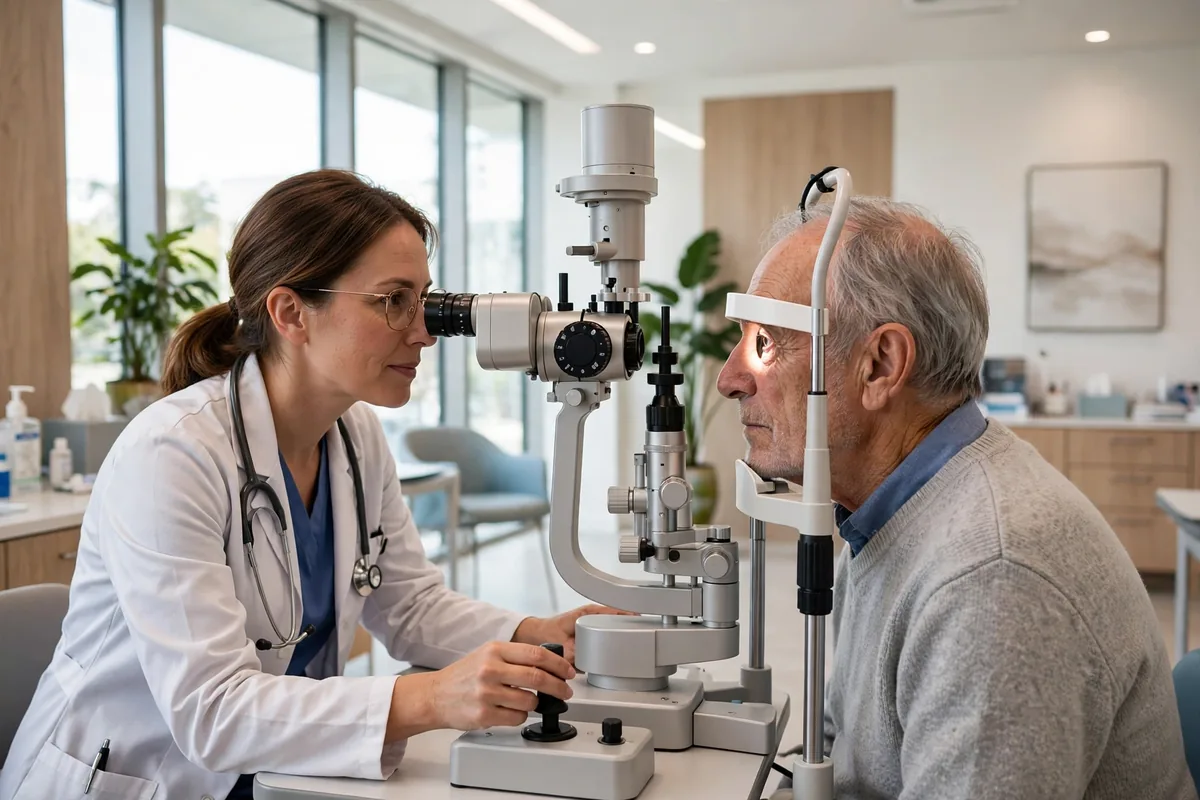
A dilated eye exam is different from a vision screening. The doctor puts drops in your eyes to widen the pupils, then looks at the retina, the optic nerve, the whole back of the eye. It takes a few minutes. Your vision stays blurry for a few hours after. People skip it because of the hassle.
Don’t. This exam catches glaucoma, AMD, and diabetic eye disease before symptoms exist, when treatment works best.
The Academy’s recommended schedule: a baseline exam around 40, then every two to four years from 40 to 54, every one to three years from 55 to 64, and every one to two years from 65 on. More often if glaucoma or other eye disease runs in your family.
If cost worries you, ask about it. Many insurance plans, including Medicare, cover medically necessary eye exams, and community clinics often offer screenings on a sliding scale. Skipping the exam because of the bill is the most expensive option of all.
Your eyes are worth the appointment

Reading glasses solved one problem and created a false confidence. Your eyes changed in other ways too, and you noticed most of them.
Two of them, cataracts and dry eye, are mostly nuisances with good fixes. One, floaters, is usually nothing but occasionally urgent. One, macular degeneration, is silent until it isn’t.
The exam connects all of them. Make the appointment.
This article is for information only and is not medical advice. If you notice sudden changes in your vision, see your eye doctor promptly.

Eliza Mercer, the renowned golf coach with unmatched expertise in the sport, is our Lead Instruction Coach. Eliza provides exclusive and personalized coaching sessions to help golfers of all levels improve their skills. With her wealth of knowledge and experience, Eliza is a valuable resource for readers looking to elevate their game. Join Our Team!