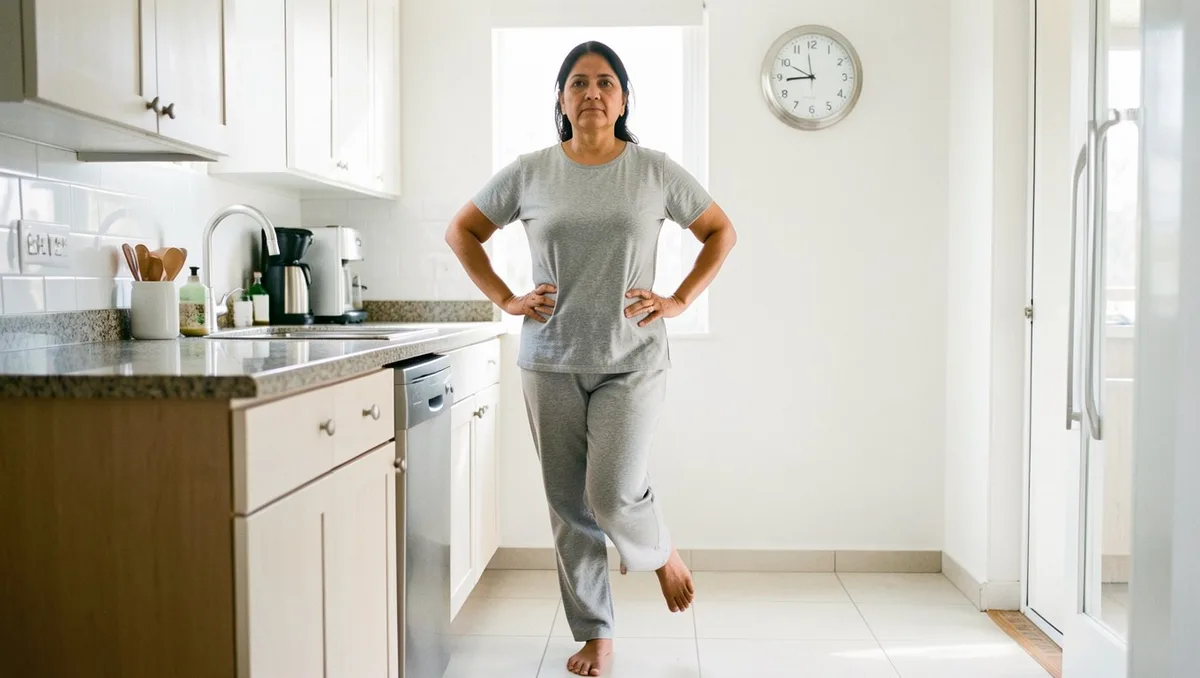
Stand up right now, cross your arms over your chest, and lift your left foot three inches off the floor.
If your ankle starts dancing, your arch collapses, or your hips wobble within five seconds, you are feeling a real-time report on your brain and vascular system.
For decades, preventive medicine focused almost entirely on static numbers like resting blood pressure or fasting cholesterol. Recent longevity research has shifted sharply toward dynamic functional biomarkers.
Your ability to stand on one foot turns out to be one of the most reliable windows into your biological age, neurological health, and long-term survival.
Can You Hold Still for 30 Seconds? The Balance Metric Longevity Doctors Track
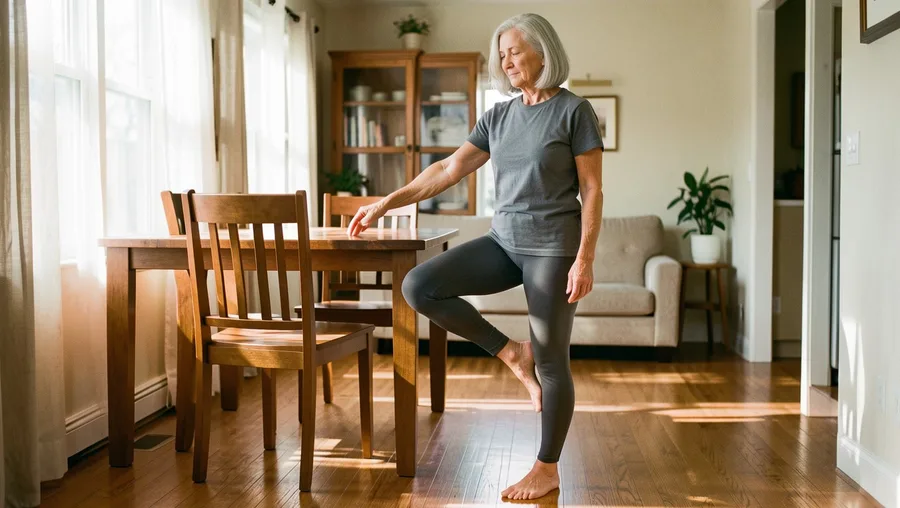
Your balance is not a gymnastics trick.
It is a relentless, high-speed calculation performed by your central nervous system every second you remain upright. When you stand on two feet, your base of support is wide, making stability effortless.
The moment you transition to a single leg, your body must manage its entire center of mass over a patch of skin smaller than an envelope. This requires instant coordination between your eyes, your inner ear, and thousands of microscopic nerve endings in your feet.
Longevity physicians look closely at single-leg stance time because it tests structural integrity and brain health simultaneously. A sharp drop in balance performance rarely starts in the feet; it reflects subtle changes in microvascular blood flow, nerve conduction velocity, and muscle fiber retention.
⚠️ COMMON MISTAKE
Don't Test Yourself on a Thick Yoga Mat
Testing your balance on plush carpet or a squishy foam mat masks your actual sensory baseline. Always perform diagnostic stance tests barefoot on a hard, flat floor like hardwood or tile to get an accurate read.
What Happens in Your Brain and Body When You Stand on One Foot
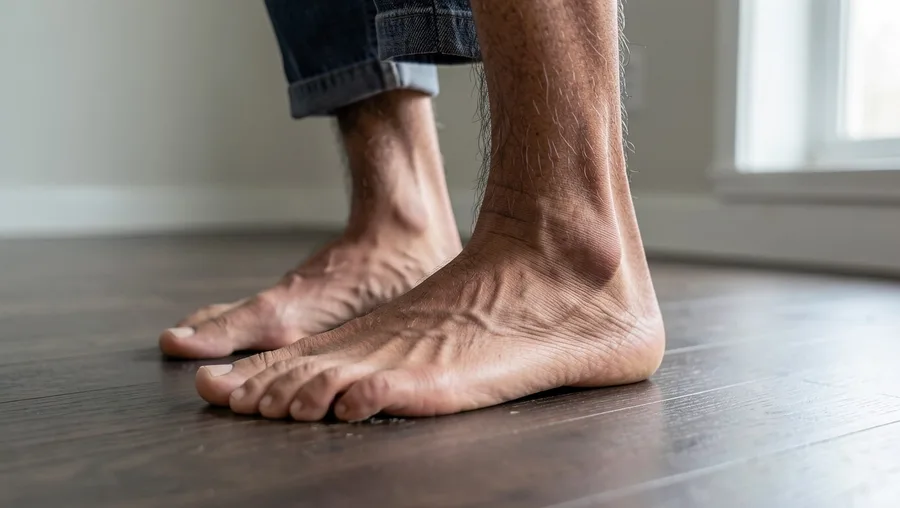
Your equilibrium relies on a complex biological triad.
First, your vision anchors you to fixed points in your environment. Second, your vestibular system inside your inner ear measures head rotation and spatial gravity. Third, proprioceptors in your joints, tendons, and foot pads signal exact pressure variations to your spinal cord.
All three streams of information surge into your cerebellum at lightning speed. Your brain processes these signals instantly and fires motor commands back down to your glutes, calves, and deep core stabilizers to catch you before you lean.
As we age, fast-twitch Type II muscle fibers degrade faster than slow-twitch endurance fibers. If nerve signaling slows even slightly due to inflammation or reduced capillary density, those corrective muscle twitches arrive a fraction of a second too late, turning a minor sway into a dramatic wobble.
What the Science Says: The 10-Second Survival Metric vs. The 30-Second Optimal Biomarker
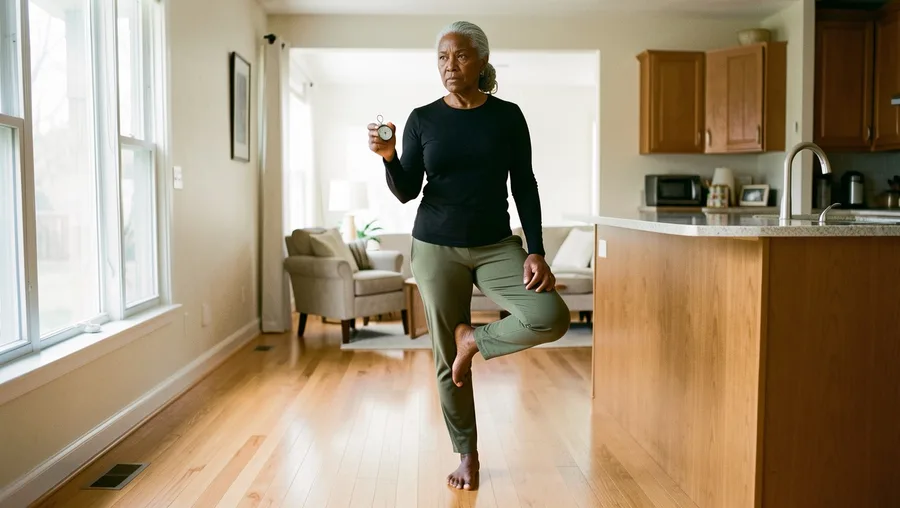
The ten-second threshold is a clinical line in the sand.
Major observational studies tracking adults over age 50 found that individuals unable to complete a 10-second unassisted single-leg stand had a significantly higher risk of all-cause mortality over a decade of follow-up compared to those who passed. The test controls for age, sex, and underlying conditions.
While ten seconds indicates basic survival baseline, longevity specialists advocate for thirty seconds as the functional benchmark for middle-aged and older adults. Reaching thirty seconds demonstrates healthy peripheral nerve speed, sufficient core strength, and intact cerebellar processing.
Closing your eyes changes the equation completely. Deprived of visual cues, your brain relies entirely on vestibular and foot pad sensory data. Managing ten seconds with eyes closed indicates superior neuromuscular health.
Single-Leg Stance Standards — At a Glance
⏱️ Baseline Target
10 Seconds (Eyes Open)
🎯 Longevity Goal
30 Seconds (Eyes Open)
🧠 Neuro-Check
10 Seconds (Eyes Closed)
🦶 Surface Setup
Barefoot on Hard Floor
Key Insight
Failure under 10 seconds correlates with accelerated biological aging and systemic nerve latency.
Static Stance vs. Dynamic Balance
Static Single-Leg Stance
- Measures baseline sensory integration speed
- Zero equipment required for testing
- Isolates subtle ankle and arch nerve deficits
- Clear benchmark for biological age
Dynamic Gait Stability
- Measures momentum control during locomotion
- Requires real-time obstacle negotiation
- Heavily influenced by hip power and stride length
- Reflects daily real-world fall avoidance
Where Longevity Experts Agree: Balance Failure Is a Window into Systemic Aging
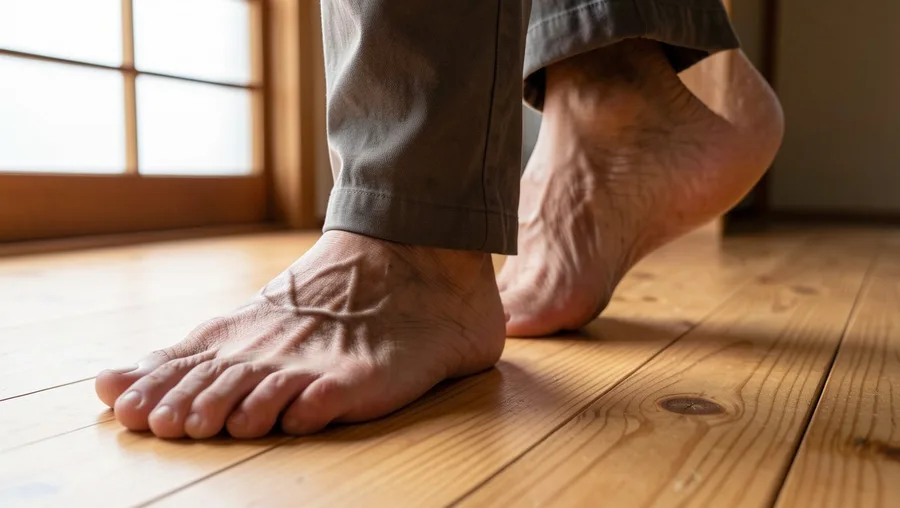
Falling is the symptom, not the root cause.
When physical therapists and geriatricians discuss single-leg stability, they are rarely concerned about balance as an isolated skill. A sudden loss of stability indicates deeper physiological strain occurring below the surface.
Subclinical vascular stiffness, early peripheral nerve decay, and reduced mitochondrial density in lower body muscles all show up in your stance before they appear on standard blood panels. Your nervous system simply cannot hide micro-delays when forced onto one limb.
The encouraging reality is that balance possesses remarkable neuroplasticity. Unlike structural joint wear or fixed birth dates, your neuromuscular signaling responds quickly to consistent daily stimulus, allowing 60-year-olds to rebuild the stability of a 40-year-old within weeks.
Stance Time Risk Spectrum
- 🟢 30+ Seconds (Eyes Open) — Optimal neuromuscular health. Maintain routine with single-leg strength work.
- 🟡 10–20 Seconds (Eyes Open) — Moderate sensory lag or foot weakness. Introduce daily counter stance drills.
- 🔴 Under 10 Seconds (Eyes Open) — High fall and frailty risk. Begin safe daily balance training using sturdy support.
Balance Misconceptions Debunked
The At-Home Protocol: How to Accurately Benchmark Your Stance Age
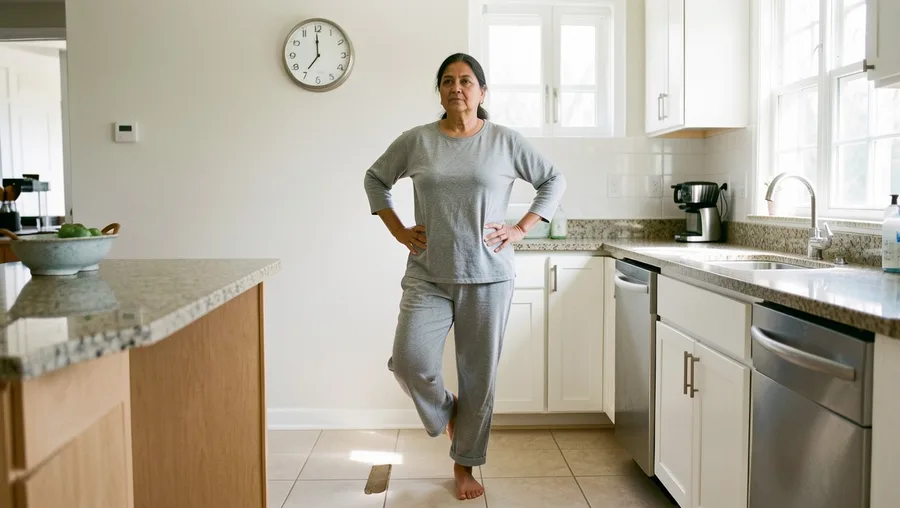
Accuracy requires proper testing conditions.
Remove your shoes and socks. Find a quiet spot on a flat, non-carpeted surface right next to a sturdy kitchen counter or heavy dining chair.
Place your hands on your hips, stand tall, and lift one foot three inches off the ground without letting it rest against your standing leg. Start your timer the moment your foot leaves the floor.
Stop the clock immediately if your hands leave your hips, your standing foot shifts or slides, or your lifted foot touches the floor. Record the score for both legs, as a noticeable strength imbalance between sides reveals valuable information about hip and knee biomechanics.
Ideal Safety Conditions
Home Test Safety Audit
From Wobble to Solid: How to Train Your Neuromuscular System in 2 Minutes a Day
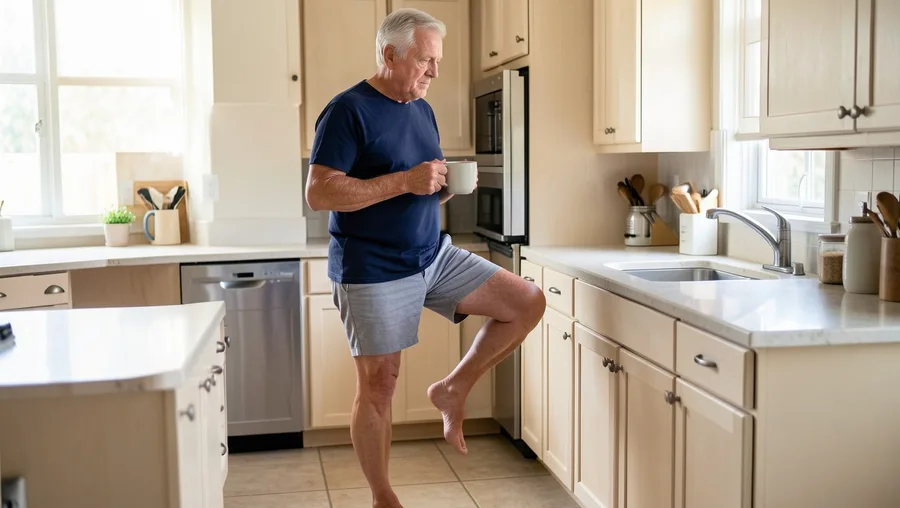
Improving balance does not demand long gym sessions.
The key to neuromuscular adaptation is frequency rather than intensity. Two minutes of deliberate sensory practice performed twice daily builds stronger neural pathways than one exhausting weekly workout.
Habit stack your balance practice onto existing routines. Stand on one leg while brushing your teeth, brewing morning coffee, or talking on the phone. Keeping one hand hovering an inch above a counter maintains complete safety while forcing your lower leg muscles to micro-adjust.
Incorporate foot-doming exercises to wake up dormant arch muscles. Press your toes firmly into the floor and pull the ball of your foot toward your heel without curling your toes. Rebuilding foot pad sensitivity restores the rapid feedback your brain needs to keep you upright.
Balance Training Progression Spectrum
Gradually scale challenge without exposing yourself to falls
- Two-Foot Tandem Hold: Heel-to-toe stance on solid ground with fingertip counter support.
- Single-Leg Open Eyes: Standard single-leg stand near a wall for 30 seconds per leg.
- Single-Leg Head Turns: Slowly turn head left to right while balancing to challenge vestibular tracking.
- Single-Leg Eyes Closed: Advanced integration isolating foot proprioception and inner ear completely.
📈 3-Week Balance Rebuilding Progression
Week 1: Counter Support Baseline
Practice 30-second single-leg holds twice daily near a counter with two fingers lightly resting on the surface.
Week 2: Hovering Fingertips
Lift fingers one inch off the counter while maintaining a single-leg stance for 30 seconds per side.
Week 3: Dynamic Head Turns
Maintain your single-leg stand while slowly turning your head side-to-side to challenge inner ear sensory integration.
💡 PRO TIP
Spread Your Toes to Instantly Expand Your Base
Narrow footwear compresses foot bones over time, shrinking your sensory footprint. Before lifting a leg, manually spread your toes wide against the floor to instantly widen your support tripod.
Frequently Asked Questions
Does using a counter or chair defeat the purpose of the test?
For diagnostic testing, touching a surface invalidates your time because tactile support bypasses lower-body nerve signaling. However, using light fingertip contact during daily training is highly effective for safely building neuromuscular strength.
Why is balancing with eyes closed so much harder?
Closing your eyes eliminates visual spatial anchors, forcing your cerebellum to rely entirely on inner ear signals and foot pad proprioception. It reveals true raw nerve feedback.
Can poor balance indicate a serious medical issue?
A sudden, unexplained drop in stability warrants medical evaluation to rule out inner ear infections, medication side effects, peripheral neuropathy, or vitamin B12 deficiencies.
Is it better to perform the test barefoot or in athletic shoes?
Always test barefoot. Cushioned shoe soles dampen floor feedback and artificially stabilize the arch, masking underlying muscle and nerve weakness.
How quickly can someone improve their balance time?
Neural pathways adapt rapidly to daily stimulus. Most consistent individuals see measurable improvements in stance stability within two to three weeks.
Your Stability Is Written in Your Daily Movement, Not Your Birth Certificate
A shaky stance is not a permanent sentence.
Your nervous system remains adaptable throughout your entire life, constantly restructuring neural pathways in response to how you challenge it. That wobble in your foot is simply feedback showing you where to focus your training.
Start today by standing on one foot while your morning coffee brews. Two minutes of daily practice restores sensory signaling, protects joint longevity, and secures your physical independence for decades to come.

Meet Edward Green, the founder of GolfingGoal and a seasoned expert in golf. With years of experience on the course and a passion for the sport, Edward has a wealth of knowledge to share. As our Lead Writer, he contributes articles, tutorials, and resources to help readers to improve their skills and reach their full potential on the golf course. Join Our Team!