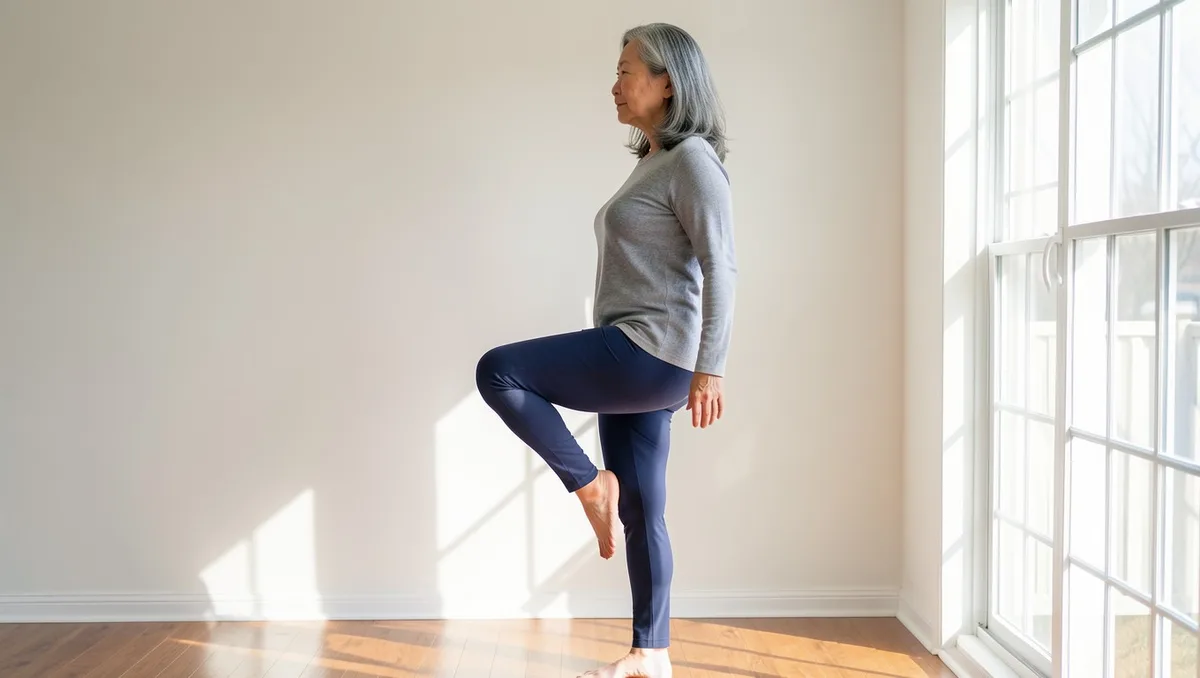
You step out of bed, take those first three cautious steps, and your hips feel like rusty door hinges.
That deep, stubborn tightness in the front of your thighs and lower back is not an inevitable sentence of aging. After 50, your body processes collagen and joint fluid differently, turning long hours of sitting into stiff, restricted connective tissue. The good news is that your joint capsules are entirely capable of regaining smooth, pain-free range of motion without heavy weights or extreme flexibility stunts.
💡 PRO TIP
The Biological Switch in Mature Joints
After age 50, collagen in tendons naturally becomes less elastic and synovial fluid production slows down during rest. Dynamic bodyweight movement acts as an internal pump, forcing protective lubricating fluid directly back into the joint capsule.
Why Hips Tighten After 50 and How Bodyweight Reverses It
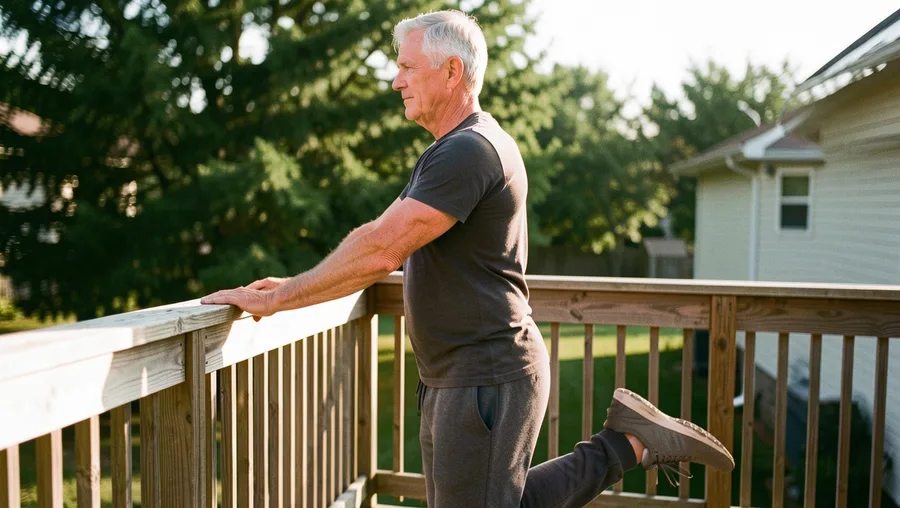
Your hips are not losing cartilage overnight.
What you are actually feeling is a systemic combination of shortened hip flexors, dehydrated fascia, and dormant gluteal muscles. When you sit for prolonged periods—whether driving, working, or reading—the psoas and rectus femoris muscles remain in a constantly shortened state. Over time, your nervous system accepts this shortened position as your new normal, shutting down signal strength to your posterior glutes through a process known as reciprocal inhibition.
Your lower back pays the price.
Static stretching alone rarely fixes this issue after 50 because cold, stiff ligaments resist passive pulling. Active bodyweight mobility works far better because it forces the nervous system to build strength at the end ranges of motion. By taking your hip joint through controlled, unweighted circles and deliberate shifts, you signal to your brain that these deep movement angles are safe to unlock once again.
The Spectrum of Hip Restriction
Understanding where joint stiffness transforms into functional movement risk
- Mild Morning Stiffness: Clears within 10 minutes of walking; fluid production is just sluggish.
- Flexor Shortening: Tightness when standing straight after 30 minutes of sitting.
- Glute Amnesia & Arching: Pelvis tilts forward, forcing lower back to take the strain during walks.
- Compromised Gait Mechanics: Reduced stride length, pinching in groin, and loss of lateral balance.
1. The Standing Hip CAR (Controlled Articular Rotation)
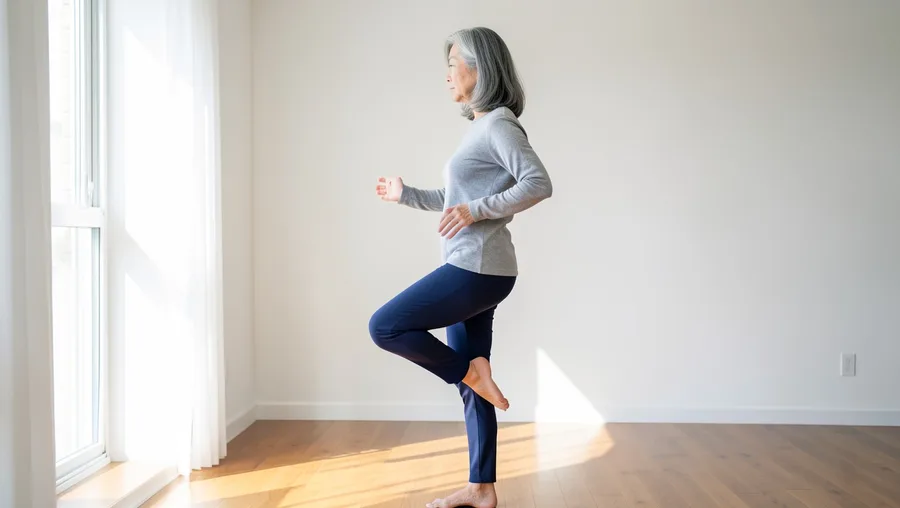
Your hip is a ball-and-socket joint designed to rotate 360 degrees.
Most daily activities like walking and climbing stairs only move the leg forward and backward, leaving the sides and back of the joint capsule glued shut. The Controlled Articular Rotation (CAR) actively sweeps the head of the femur around the entire rim of the acetabulum. Physical therapists regularly use this move as both a joint diagnostic tool and a daily lubrication protocol.
Stand tall next to a wall or sturdy dining chair for balance.
Slowly pull one knee straight up toward your chest until it hits 90 degrees. Without letting your torso twist, sweep that knee as far out to the side as possible, like opening a gate. At the outer limit, rotate your thigh inward so your foot kicks back behind you, then slowly circle the knee down and back into the starting position. Reverse the entire circle for one full rep.
Do not fake range by arching your spine.
Keep your pelvis perfectly square, imagine your headlights are pointing directly forward, and focus strictly on isolating the movement inside the hip socket itself.
💡 Tip: Complete 5 slow, deliberate circles per leg every morning before your first cup of coffee.
🔄 Mapping the Standing CAR Motion Circle
1. Knee Flexion
Lift your lead knee straight up to hip height while bracing your core.
2. Abduction Sweep
Open your knee out to the side as wide as your joint allows without turning your hips.
3. Internal Rotation
Rotate your thigh bone inward to swing your heel backward into hip extension.
4. Reverse Trace
Reverse the trajectory smoothly back to the front starting position.
Standing Hip CAR — At a Glance
⏱️ Time Needed
2 minutes daily
🎯 Primary Target
Deep capsule internal & external rotators
⚙️ Equipment
Wall or chair back for balance support
📈 Expected Progress
Reduced clicking within 10–14 days
Why It Matters
Rotational capacity is the very first dimension of hip mobility lost with age.
2. The 90/90 Shin Box Switch
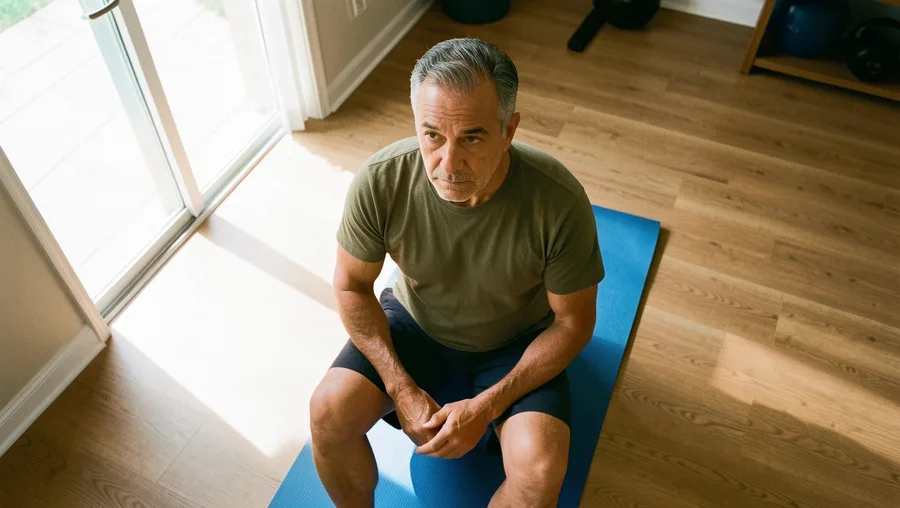
Sitting on the floor should not feel like an impossible feat.
The 90/90 Shin Box position simultaneously places your lead hip in full external rotation and your rear leg in full internal rotation. This unique ground-based setup directly targets deep, stubborn rotators like the piriformis, gemelli, and obturators that tighten up after decades of prolonged chair sitting.
Sit on a cushioned yoga mat with your front leg bent at 90 degrees in front of you and your back leg bent at 90 degrees to your side.
Keep your spine long and tall. Gently lean your chest over your front shin until you feel a deep, warm stretch in the outer hip. Hold for two slow breaths, return upright, and then lift your back knee up to pivot on your heels over to the opposite side without using your hands if possible.
Struggling to sit upright without slumping back?
If your hips are extremely restricted, your lower back will round heavily. Elevate your seat by placing a folded yoga blanket or a firm cushion under your glutes to take immediate pressure off the lower lumbar spine.
💡 Tip: If you feel a sharp pinch in the front crease of the hip, back off the depth and lift your torso higher.
Best For
3. The Half-Kneeling Hip Flexor with Pelvic Tuck
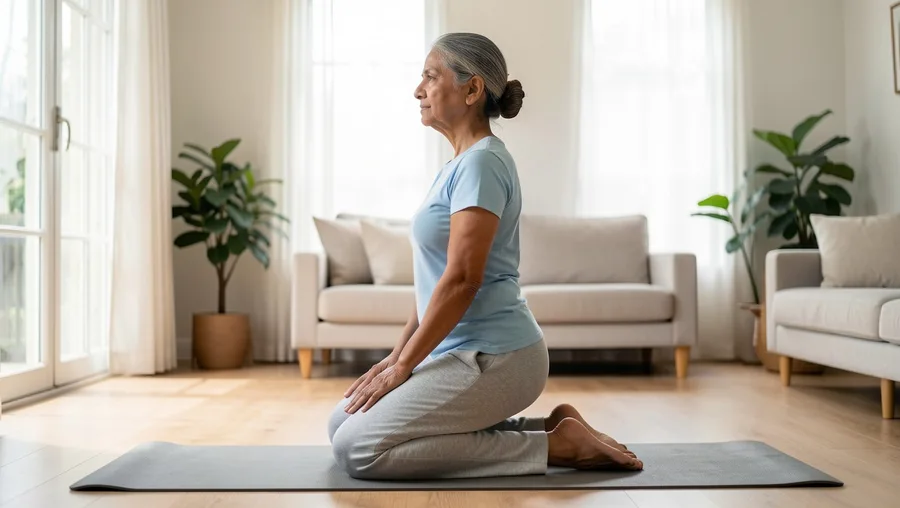
Most people stretch their hip flexors completely wrong.
You have likely seen people drop into a wide lunge and arch their lower back heavily to press their hips forward as far as possible. This aggressive maneuver completely misses the deep psoas muscle, jamming the lumbar spine and stretching out vulnerable anterior hip ligaments instead.
Fix the posture before you move an inch.
Kneel on one knee with your front leg at a 90-degree angle, exactly like a marriage proposal setup. Place a soft pad or folded towel under your back knee. Before shifting forward, squeeze your trailing-side glute tight and tuck your tailbone slightly under your pelvis. This single adjustment places your pelvis into a posterior tilt.
You only need to shift forward two inches.
Maintaining that glute squeeze and pelvic tuck, glide forward just an inch or two. You will feel an intense, localized stretch right down the very front of your hip and top of your thigh without bending your back at all.
💡 Tip: Place a thick foam pad under your kneeling joint to prevent direct kneecap pressure.
Technique Breakdown: The Hip Flexor Stretch
The Common Way (Flawed)
- Arching lower back heavily forward
- Zero engagement in the back glute
- Bypasses deep psoas tissue
- Puts shear stress on lumbar spine
The Pelvic Tuck Way (Correct)
- Upright spine with posterior pelvic tilt
- Trailing glute firmly contracted
- Isolates the rectus femoris and psoas
- Protects lower back joints completely
A two-inch move with a tucked pelvis releases deep hip flexors far better than a massive lunge that arches your lower back.
— Physical Therapy Core Principle
4. The Dynamic Frog Rock
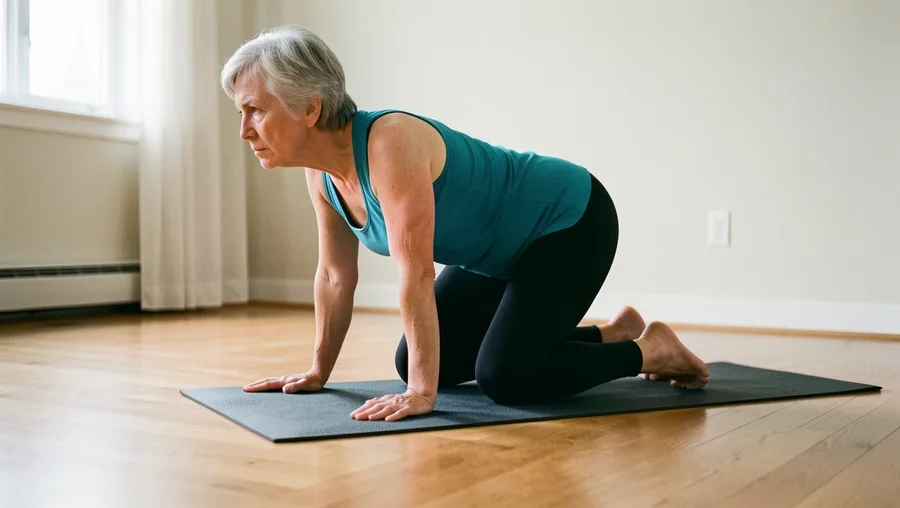
Inner thigh tightness is a silent culprit behind outer hip and knee discomfort.
The adductor muscles running along your inner thighs play a massive role in stabilizing your pelvis. When these muscles lock up, they pull your femur inward, limiting your ability to squat, step wide, or move side-to-side comfortably.
Get down on all fours on a comfortable carpet or padded surface.
Widen your knees out comfortable past shoulder width, turning your inner feet flat toward the floor with your ankles aligned directly behind your knees. Keep your forearm or hand position stable on the floor and maintain a flat, neutral lower spine.
Rock slowly backward toward your heels.
Inhale as you gently push your hips back toward your feet until you feel a firm stretch across your inner thighs and groin. Pause for two seconds at the back, then exhale as you rock forward to the start position. Repeat this dynamic oscillating wave 10 times.
💡 Tip: Never hold this stretch statically if your groin feels tense—the oscillating rhythm relaxes the nervous system.
⚠️ COMMON MISTAKE
Avoid Forcing Groin Depth
Over-stretching tight inner thigh tissue can trigger a protective muscular spasm. Keep the movement small, slow, and fluid—never force your hips all the way to your heels on day one.
5. The Glute Bridge with Hip Abduction Sweep
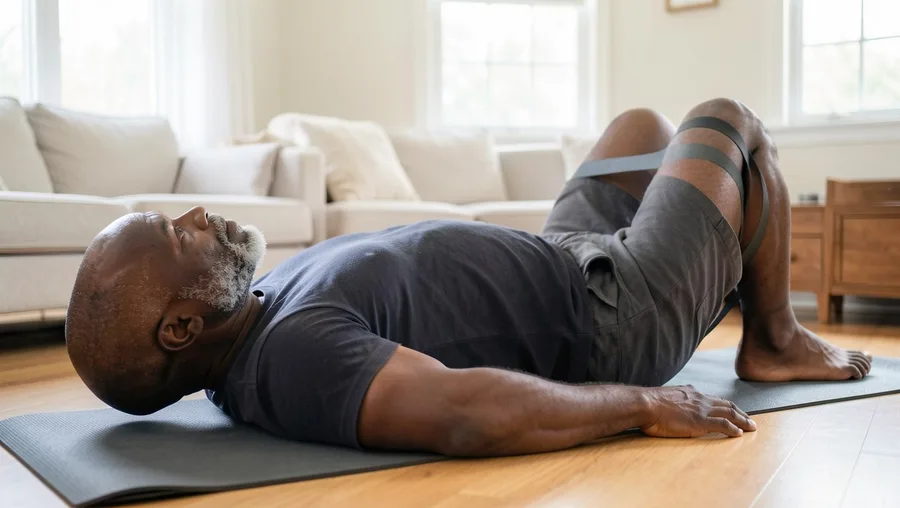
Mobility without strength is useless.
Unlocking raw joint space feels wonderful, but if your glute muscles cannot actively stabilize that newly opened space, your brain will simply re-tighten your hip flexors within hours to protect you from falling.
Lie flat on your back with your knees bent and feet flat on the floor, hip-width apart.
Drive down through your heels and squeeze your glutes tight to lift your hips until your thighs, pelvis, and torso form one straight diagonal line. Pause firmly at the top of the bridge.
Press your knees outward two inches.
While holding the top position, slowly push your knees apart against imaginary resistance, hold for two seconds, return your knees to parallel, and lower your hips smoothly back to the mat. This activates both the gluteus maximus for extension and the gluteus medius for hip stability.
💡 Tip: Press your big toes firmly into the floor as you sweep your knees outward to protect your ankle alignment.
The Posture & Mobility Hierarchy
Building a resilient lower body foundation after 50 from base to apex
5-Move Mobility Plan — Quick Reference
🔄 Standing CAR
5 circles / leg
🧘 90/90 Shin Box
5 switches / side
📐 Half-Kneeling Tuck
8 rocks / side
🐸 Frog Rock
10 dynamic reps
🌉 Glute Bridge Sweep
10 reps with pause
Daily Routine
Perform this sequence in order for an 8-minute daily hip tune-up.
The 2-Minute Hip Self-Check and Daily Integration
How do you know if your hip mobility is improving?
Stand with your feet shoulder-width apart next to a sturdy bathroom sink or doorframe. Hold onto the edge for light support and lower yourself into a shallow, comfortable squat. Pay attention to how your joint sockets feel as you sink down.
Listen to the subtle signals your body gives.
Are your hips sinking evenly, or is one side hitching up? Do you feel a smooth, cushioned slide in the joint, or a sharp, catching pinch in the front groin? If you feel a sharp pinch, that is a sign to stop forcing depth and stick to gentle standing CARs and half-kneeling pelvic tucks until joint space improves.
Consistency always trumps aggressive intensity.
Spending 8 quiet minutes on these five bodyweight moves every morning yields far better long-term structural results than doing an intense 45-minute mobility session once a week.
Your 5-Day Weekly Hip Consistency Schedule
Unlocking Your Stride: Small Moves for Lifelong Agility
Stiff hips after 50 are not an inevitable decline—they are simply a sign that your joints are starving for dynamic movement.
You do not need expensive gym gear, intense stretching classes, or radical flexibility to regain freedom in your stride. By committing just eight minutes a day to these five controlled bodyweight moves, you lubricate your joint capsules, lengthen shortened flexors, and rebuild the active glute strength needed to move through your day with ease and confidence.

Meet Edward Green, the founder of GolfingGoal and a seasoned expert in golf. With years of experience on the course and a passion for the sport, Edward has a wealth of knowledge to share. As our Lead Writer, he contributes articles, tutorials, and resources to help readers to improve their skills and reach their full potential on the golf course. Join Our Team!