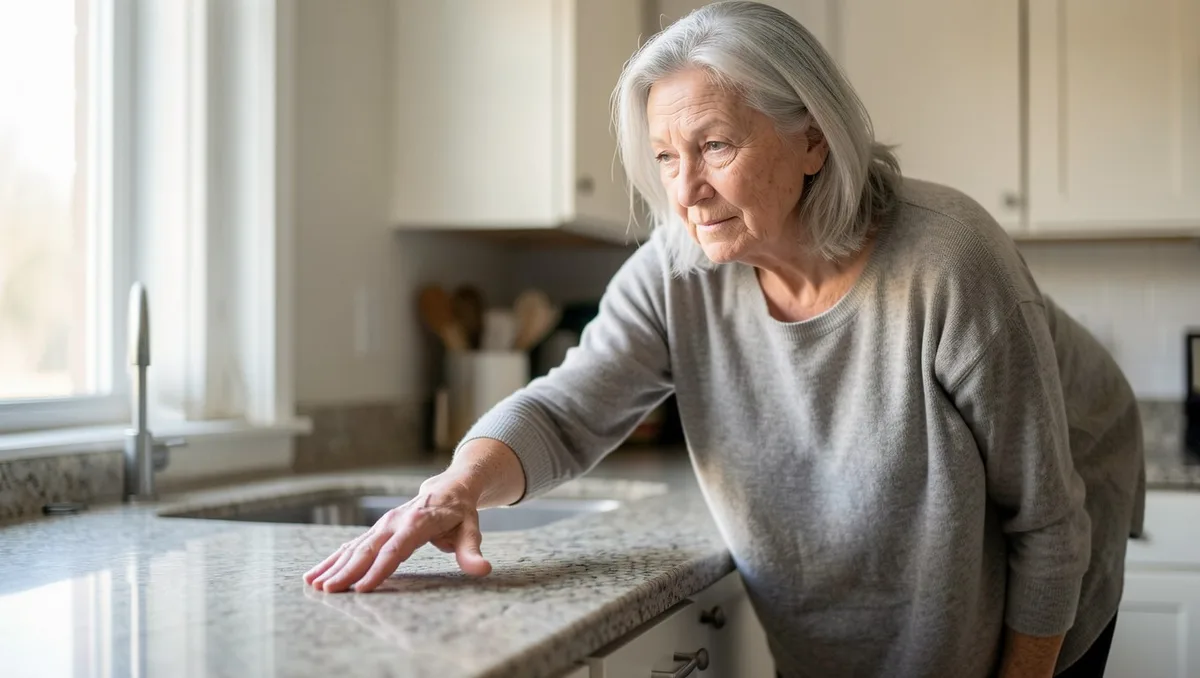
You step off a curb you have walked past a thousand times, and for a split second, your foot misses the mark. Your heart jumps into your throat, your hands shoot out, and while you catch yourself this time, a cold realization settles in.
Most advice for staying on your feet after 50 tells you to tape down rugs or install grab bars in the shower. But physical therapists see a completely different reality: your body loses balance not because you got older, but because your nervous system stopped getting daily balance practice.
Building reliable, automatic stability does not require an expensive gym membership or heavy weights. One simple, daily micro-habit—practiced at your kitchen counter in under two minutes—rebuilds the neural pathways that keep you upright.
Why Falls Aren't an Inevitable Part of Getting Older
Your balance system operates like a muscle.
When you stop challenging your internal sensors, the brain gradually dials down its sensitivity to subtle body sways. Physical therapists call this sensory neglect, and it happens so quietly over decades that most people only notice when a sudden trip catches them completely off guard.
It is a myth that balance decline is a permanent tax on aging.
Your nervous system retains remarkable plastic ability well into your eighties, meaning the pathways between your ankles and your brain can be retrained. Retraining them requires a daily stimulus that forces your body to make micro-adjustments.
The Balance System Priority Pyramid
How your brain keeps you upright from the ground up
The Hidden Mechanism Behind Daily Slips and Trips
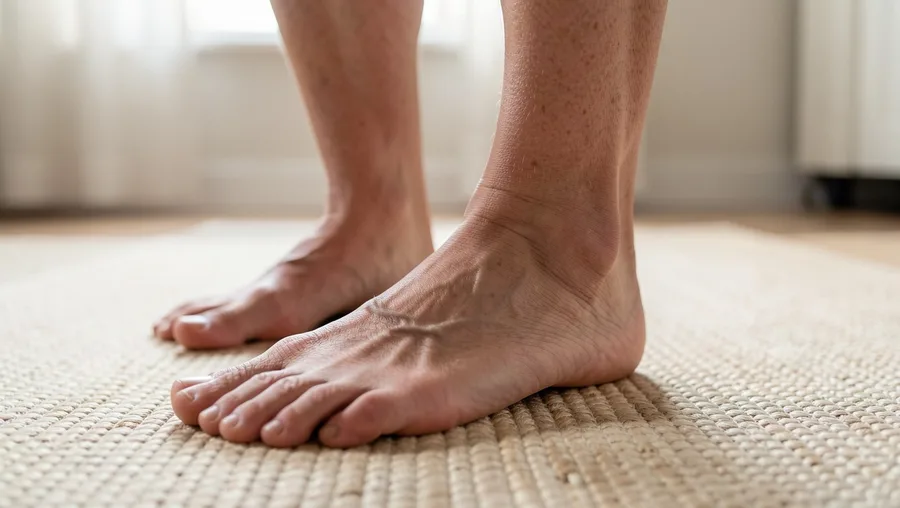
Walking is actually just a continuous series of single-leg stands.
Over 60 percent of your walking pattern is spent entirely on one foot while the other leg swings forward. If your hips, ankles, and brain cannot stabilize your weight during that fraction of a second, any uneven pavement forces a sudden, clumsy recovery move.
When you slip, your body relies on two distinct emergency systems: the ankle strategy and the hip strategy.
The ankle strategy fires first, using tiny twitches in your foot arches and calves to sway you back to center. If those foot receptors are sluggish from years of stiff shoes and smooth flat floors, your body skips right to the hip strategy—a violent torso lurch that often causes a hard tumble.
Daily single-leg practice keeps those subtle ankle receptors sharp and firing fast.
Who Needs Single-Leg Training Most
How to Practice the Single-Leg Stance Habit Safely
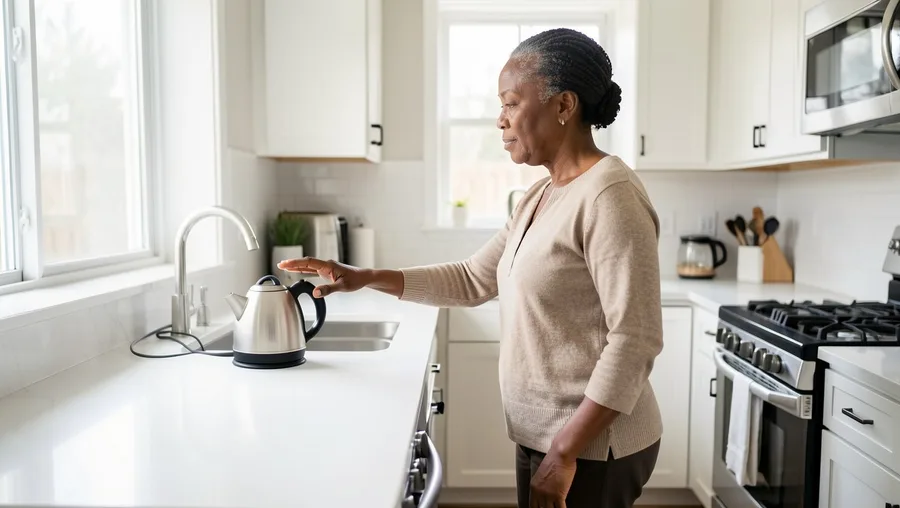
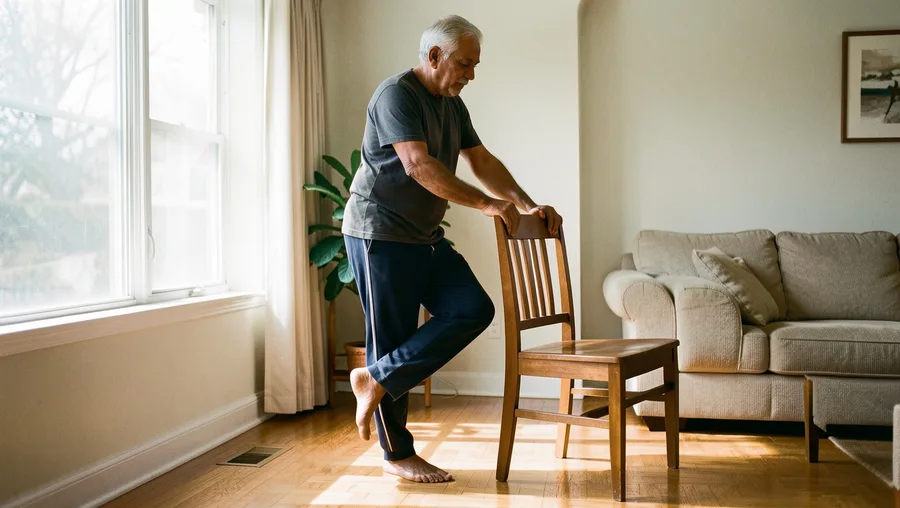
The habit itself is simple: stand on one foot for 30 to 60 seconds per side while doing a routine task like making morning tea or brushing your teeth.
However, executing it correctly requires a structured progression so your nervous system is challenged without risking a fall. You should always practice within arm's reach of a solid counter or a heavy table.
Consistency beats duration every single time. Practicing for 60 seconds total every morning builds stronger neural connections than a 20-minute workout done once a week.
🦶 The 3-Level Single-Leg Balance Progression
Level 1: Two-Handed Touch
Place both hands lightly on a sturdy counter, lift one foot two inches, and hold for 30 seconds.
Level 2: The Finger Hover
Hover your fingers one inch above the surface, allowing your foot and ankle to make small twitching adjustments.
Level 3: Head Turns
Maintain your single-leg hover while slowly turning your head left and right to challenge your inner ear balance.
⚠️ COMMON MISTAKE
Do Not Lock Your Standing Knee
Locking your standing joint shuts off the gluteus medius and transfers all the load straight into cartilage. Keep a micro-bend in the knee so your muscles handle the balance work.
The Unanimous Rules of Safe Balance Training
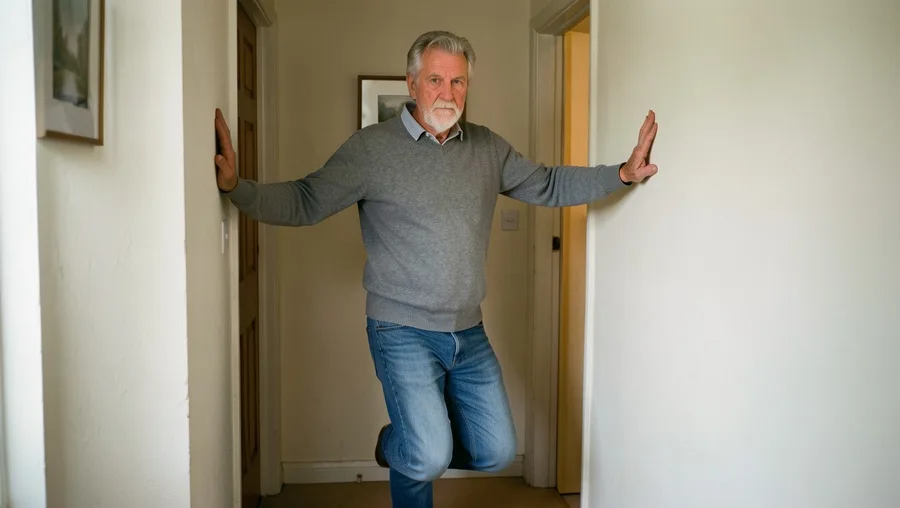
Safety precedes progress.
Physical therapists agree on a core boundary: balance training should make your ankle work, but it should never feel precarious or terrifying. Panic triggers a stress response that stiffens your body, preventing real neural learning.
You must distinguish between productive sway and unsafe instability.
Productive sway looks like small, rapid twitches in your feet and ankles while your head stays relatively steady. Unsafe instability involves flailing arms, breath-holding, or your hip collapsing sideways. If you experience unsafe instability, drop back to two-handed counter contact immediately.
Reading Your Body's Balance Signals
Productive Sway (Keep Going)
- Micro-twitches in the foot arch and calf
- Steady, rhythmic breathing through the nose
- Hips stay level over the standing leg
- Fingers hovering smoothly over a counter
Unsafe Instability (Regress Level)
- Holding your breath or gasping
- Torso leaning heavily to one side
- Flailing arms or sudden jerky movements
- Sudden loss of visual focal point
Your feet need to feel the floor to recalibrate your brain. Barefoot balance practice on a hard surface yields twice the sensory feedback of soft shoes.
— Physical Therapy Physical Balance Consensus
The 10-Second Balance Self-Assessment
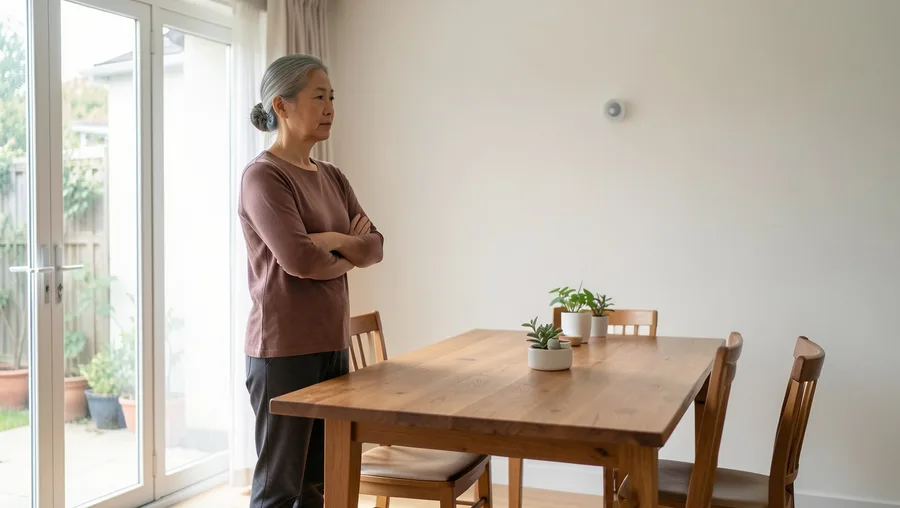
You can evaluate your current neural stability in under a minute right now.
Stand next to a kitchen counter, cross your arms over your chest, lift one foot, and start counting seconds. If you can hold this cleanly for 10 to 30 seconds without grabbing the counter or dropping your foot, your baseline balance is functioning well for daily life.
Struggling to hit 10 seconds is not a failure—it is simply a clear data point.
It signals that your ankle sensors have gone dormant, and starting the daily counter habit will yield rapid improvements over the next four weeks.
Single-Leg Stance Target Duration by Age
Where clinical guidelines place healthy single-leg hold times
- Under 10 Seconds (High Fall Risk): Indicates dormant proprioceptors; needs daily level-1 support practice.
- 10-20 Seconds (Moderate Stability): Functional for flat ground, but leaves little margin on rough terrain.
- 30+ Seconds (Optimal Stability): Strong neuromuscular protection against trip hazards.
💡 PRO TIP
Fix Your Eyes on a Stationary Target
Your visual system provides up to 40% of your balance cues. Pick a non-moving dot on the wall four feet ahead of you to anchor your focus during single-leg holds.
Anchoring Balance Work to Your Daily Schedule
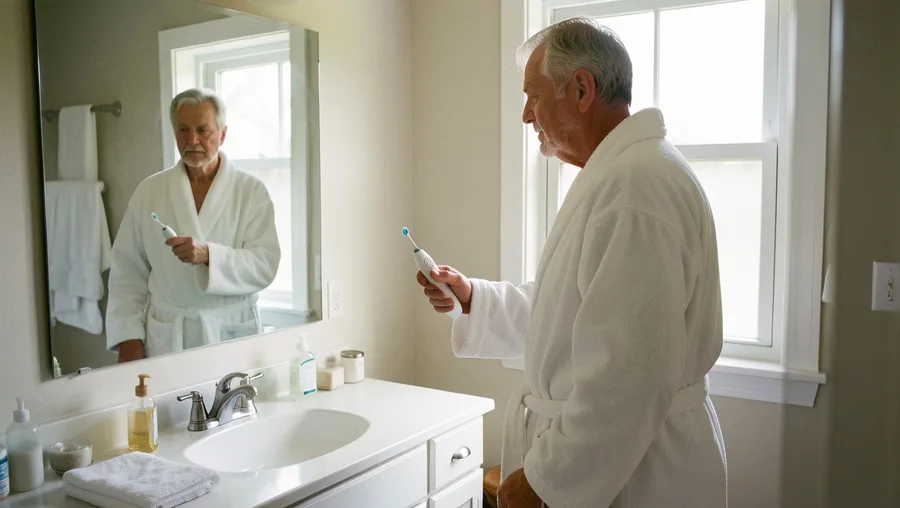
The biggest obstacle to balance training is not physical weakness; it is simply forgetting to do it.
The easiest fix is a technique called habit stacking. Pair your balance practice directly with an existing, unshakeable daily event, like waiting for the coffee pot or brushing your teeth every morning.
By tying the balance hold to something you already do, you bypass the need for willpower.
In six weeks, balancing on one foot while your morning beverage brews will feel as second-nature as pouring the milk.
Single-Leg Stance — Protocol Summary
⏱️ Daily Time
2 minutes
📍 Best Location
Kitchen counter or bathroom sink
👟 Footwear
Barefoot or flat grip socks
📅 Results In
3 to 4 weeks
Core Principle
Small daily challenges rebuild fast neural balance reactions better than rare, intense workouts.
Your Next 60 Seconds
You do not need to buy balance boards or wait for your next checkup to start protecting your mobility.
The next time you stand at your kitchen counter, place your hands lightly on the edge, lift your left foot two inches, and notice how your right ankle immediately goes to work retraining its sensors. That tiny twitch is your nervous system getting sharper.

Meet Edward Green, the founder of GolfingGoal and a seasoned expert in golf. With years of experience on the course and a passion for the sport, Edward has a wealth of knowledge to share. As our Lead Writer, he contributes articles, tutorials, and resources to help readers to improve their skills and reach their full potential on the golf course. Join Our Team!