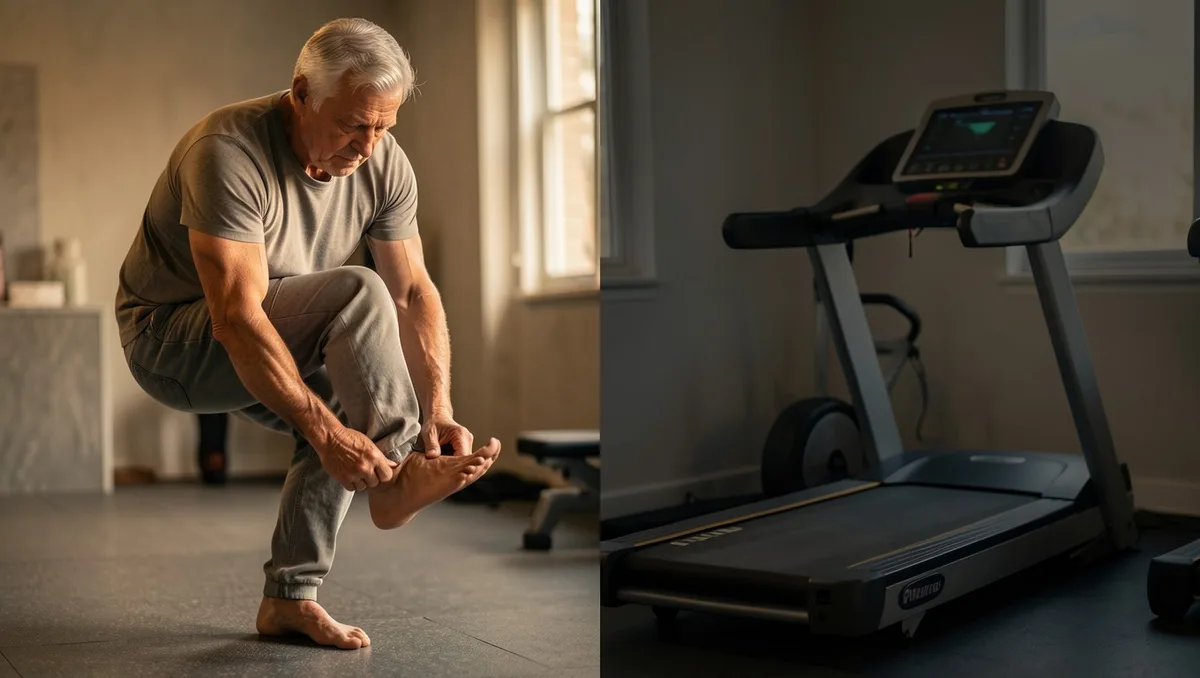
You have done everything right for twenty years, logging miles on the treadmill or the local bike path before dawn. Then, you step off a curb on a Tuesday afternoon and feel your ankle wobble, or you reach for a box on a top shelf and realize your core is not quite holding the line.
That moment of instability is a warning shot from your nervous system. While your heart is likely in great shape, your physical autonomy depends on something entirely different: your ability to stay upright. Here is why prioritizing balance over steady-state cardio is the smartest move for your body after 65.
The Mechanism of Physical Decline
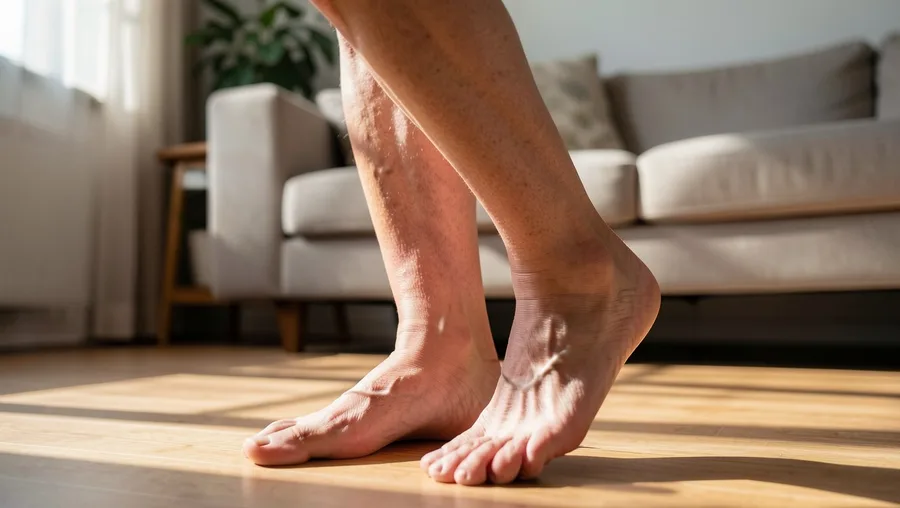
Your body does not just slow down as you age; it undergoes a subtle, quiet reconstruction. The most significant shift is sarcopenia, the loss of fast-twitch muscle fibers. These are the muscles responsible for the explosive, split-second corrections your body makes when you trip.
Beyond muscle, there is the internal GPS problem. Your vestibular system in the inner ear and your proprioceptors in your joints provide constant feedback to your brain about your position in space. This feedback loop dims slightly with every passing decade.
You are essentially relying on a fading map. Unless you actively challenge this system with new inputs, your brain becomes less efficient at coordinating your limbs. Stability requires a constant, active conversation between your ears, eyes, and ankles.
The Balance Hierarchy
Foundations for stability at 65+
Why Cardio Misses the Mark on Falls
Cardio is excellent for your heart, but it is linear by design. When you run, walk, or cycle, you move in a predictable, straight line. You rarely ask your body to shift weight laterally or recover from an unexpected surface change.
Consider this: if you trip on a sidewalk, you do not fall in a straight line. You fall sideways. Your treadmill habit provides zero protection for these mechanical recovery moments.
This is not about choosing between heart health and mobility. It is about recognizing that steady-state cardio is simply not enough. You need to train the muscles that keep you standing, not just the heart that pumps the blood.
Cardio vs. Balance Training
Steady Cardio
- Improves aerobic capacity
- Burns calories
- Linear movement patterns
- Low cognitive demand
Balance Training
- Prevents fall injuries
- Builds bone density
- Complex motor patterns
- Engages the cerebellum
Debunking the Stability Myths
⚠️ COMMON MISTAKE
Ignoring the Lateral Shift
Most people train only in a straight forward-backward plane. Your hips lose the ability to move side-to-side, which is exactly where most falls happen when you lose your footing.
The Three Levels of Balance Training
You need a structure that builds up gradually. Do not jump straight to standing on unstable equipment if your basic standing stability is shaky. We follow a clear progression.
Safety is the primary variable here. Keep a sturdy chair or a wall within arm's reach at all times. The goal is to challenge your system, not to perform a stunt.
1.

Start with static balance exercises to recalibrate your internal compass. Stand near a counter with your feet together, then try closing your eyes for five seconds. This removes the visual crutch, forcing your ears and ankles to work together.
This is the foundation. If you cannot stand still, you cannot possibly recover from a dynamic trip.
2.
Move into dynamic balance once static control feels routine. Try tandem walking—placing one foot directly in front of the other, heel to toe, along a straight line like a tightrope walker.
This forces your hips to handle instability while moving. It is the real-world equivalent of maneuvering through a crowded store or a narrow hallway.
3.
The final layer is perturbation training. This involves intentionally throwing yourself slightly off balance and recovering.
Stand on one leg while gently tossing a light ball against a wall or shifting your weight from your toes to your heels. You want your body to learn how to recover when the ground feels slightly unpredictable.
💡 Tip: Keep your gaze fixed on a single point ahead. Darting your eyes around makes it harder for your vestibular system to orient you.
Essential Balance Movements
🗓️ The Weekly Balance Protocol
Warm-Up
Do 2 minutes of gentle ankle circles and calf raises.
Static Work
Hold 3 sets of 30-second single-leg stands per side.
Dynamic Work
Perform 20 tandem steps in a straight, clear path.
Cool Down
Finish with a 1-minute slow, controlled march in place.
Balance Protocol — At a Glance
⏱️ Time
15 minutes, 3× weekly
🎯 Focus
Neuromuscular signaling
🛡️ Equipment
Wall or sturdy chair
🗓️ Results In
3 to 4 weeks
Why It Works
Consistency forces your brain to create new, more efficient communication pathways between your muscles and ears.
Integrating This Into Your Current Routine
You do not need to abandon your cardio habit to make room for this. Simply treat balance as your pre-cardio warm-up. Your nervous system is freshest before you start tiring out your muscles.
Perform these moves when you are alert. Attempting complex balance work when your legs are already shaky from a long bike ride is a recipe for a fall, not progress.
The Integration Schedule
When to See a Professional
Self-Check: Are You Balance-Deficient?
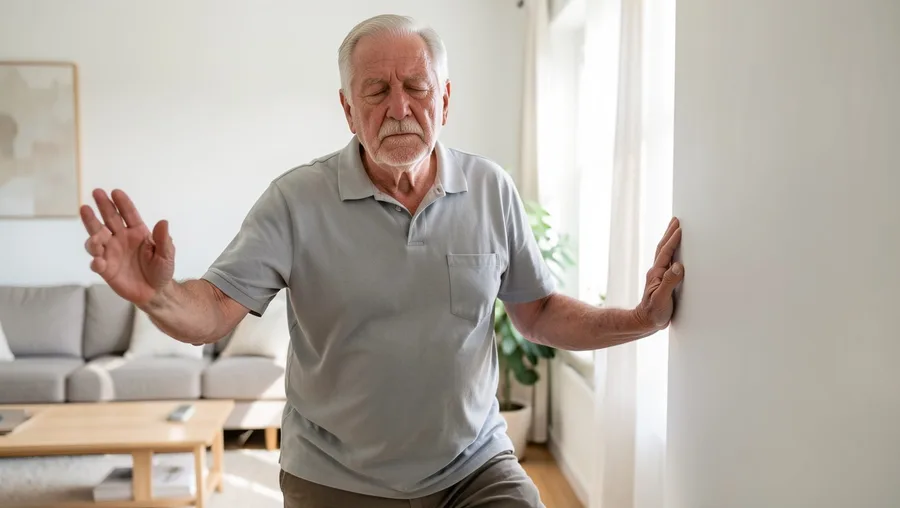
Take a moment to assess your baseline. Stand in a clear room with a wall right next to you. Lift one foot off the ground. How long can you stay upright without grabbing the wall?
If you cannot reach 20 seconds with your eyes open, you have clear room for improvement. That is not a judgment—it is just data. It tells you exactly where to start your training.
If you can pass the 20-second mark, try it with your eyes closed for 5 seconds. If you wobble immediately, your brain is over-relying on your vision and ignoring your vestibular system.
The Transformation of Stability
Reclaiming Your Steady Stride
Treating balance as a chore is a mistake. It is an insurance policy for the freedom of your next twenty years. You are not just standing on one leg; you are investing in the ability to walk to the grocery store, travel, and navigate your own home without fear.
Start today by adding those single-leg stands to your morning routine. The body responds quickly to this kind of demand. Your future self will thank you every time you navigate an uneven sidewalk with ease.

Meet Edward Green, the founder of GolfingGoal and a seasoned expert in golf. With years of experience on the course and a passion for the sport, Edward has a wealth of knowledge to share. As our Lead Writer, he contributes articles, tutorials, and resources to help readers to improve their skills and reach their full potential on the golf course. Join Our Team!