

You step onto the gym treadmill, punch in a flat speed, and stare at the digital timer for forty long minutes.
Your joints absorb the exact same repetitive impact with every stride while the motorized belt pulls your feet backward automatically. After 61 years on this planet, my knees started having strong opinions about that indoor routine.
Trading predictable indoor pacing for the variable, natural incline of outdoor trails completely changed my lower body strength and overall stability. Here is the unvarnished truth about what actually improved when I left the gym floor behind.
Why Motorized Belts Cheat Your Muscles

A motorized treadmill belt assists your hip extension by pulling your foot backward for you.
That mechanical assistance significantly reduces posterior chain activation in your glutes and hamstrings. When you walk outdoors on a natural hill, your body has to generate every ounce of upward and forward force against gravity.
That simple gravitational demand forces your gluteus maximus and calf muscles to fire up to thirty percent harder with every single step.
⚠️ COMMON MISTAKE
The Motorized Assist Trap
Relying on flat motorized belts lets your hips coast. Stepping onto natural inclines forces your posterior chain to do the actual work.
Joint-Friendly Power Without the Pounding
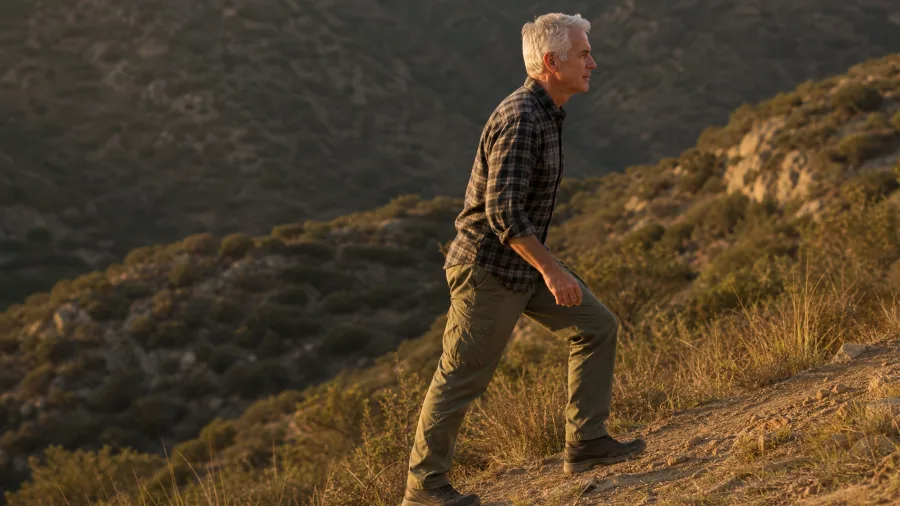
Many older adults fear that higher exercise intensity will destroy their knee cartilage.
Walking uphill actually reduces the downward braking force and impact shock on your patellar tendons compared to flat running or downhill pounding. Shorter stride lengths on inclines naturally protect your lower back and knees.
You get a powerful cardiovascular stimulus and muscular load without the punishing joint compression.
Flat Treadmill vs. Outdoor Hill Walking
Flat Treadmill
- Motorized belt pulls foot backward
- Repetitive impact on exact same joint angles
- Minimal ankle stabilizer activation
- High mental boredom and screen staring
Outdoor Hills
- Body drives upward against gravity
- Variable terrain protects patellar tendons
- Constant micro-adjustments for balance
- Natural scenery engages the mind
Balance and Proprioception Upgrades
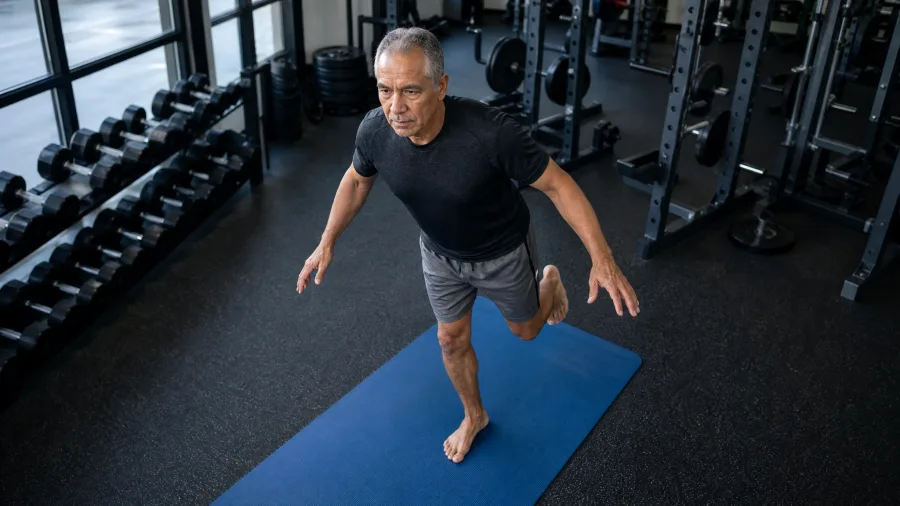
Proprioception is your body's unconscious awareness of joint position in space.
Smooth gym floors cause that neurological feedback loop to slowly atrophy over the decades. Uneven dirt, gravel, and grassy hill paths force your ankle stabilizers and core proprioceptors to constantly recalibrate with every step.
That improved neuromuscular response directly translates to superior everyday stability and a lower risk of falls.
Best For
Metabolic Efficiency and Heart Rate Variety
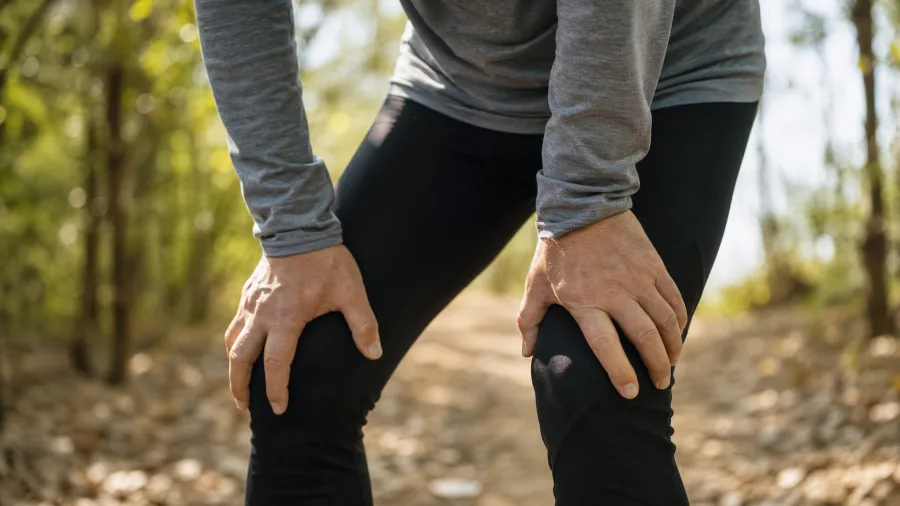
Natural terrain creates an unintentional interval training effect.
Steeper pitches safely spike your heart rate while flat spots or gentle dips allow natural recovery periods. The increased muscular load of climbing also elevates your post-exercise calorie burn compared to steady-state flat walking.
Your metabolism responds eagerly to the changing demands of the landscape.
💡 PRO TIP
The Natural Interval Benefit
Let the hill pitch dictate your pace rather than an electronic console. Push hard on the steeper sections and recover on the flattening crests.
The Mental Shift From Chore to Exploration

Staring at a digital gym wall timer turns movement into a tedious chore.
Outdoor environments trigger attention restoration theory, which actively reduces mental fatigue and circulating cortisol levels. Consistency at 61 comes down to choosing an environment that feels genuinely rewarding instead of punitive.
When your mind is occupied by changing scenery, the physical effort feels remarkably lighter.
Functional Longevity Over Gym Metrics

Maintaining functional strength and balance trumps arbitrary speed or distance metrics in later decades.
Geriatric exercise science agrees that multi-planar, weight-bearing movement stimulates bone mineral density far more effectively than linear indoor machines.
This shift prepares your body for real-world demands like carrying heavy groceries up stairs or hiking uneven vacation paths with confidence.
Hill Walking Routine — At a Glance
⏱️ Time
25 to 35 minutes
📅 Frequency
3 times a week
💪 Targets
Glutes, calves, ankles
⚠️ Skip If
Severe acute joint pain
💰 Cost
Free outdoors
Core Mechanism
Concentric muscle loading against gravity builds functional leg power safely.
Is Your Routine Ready for the Hills?
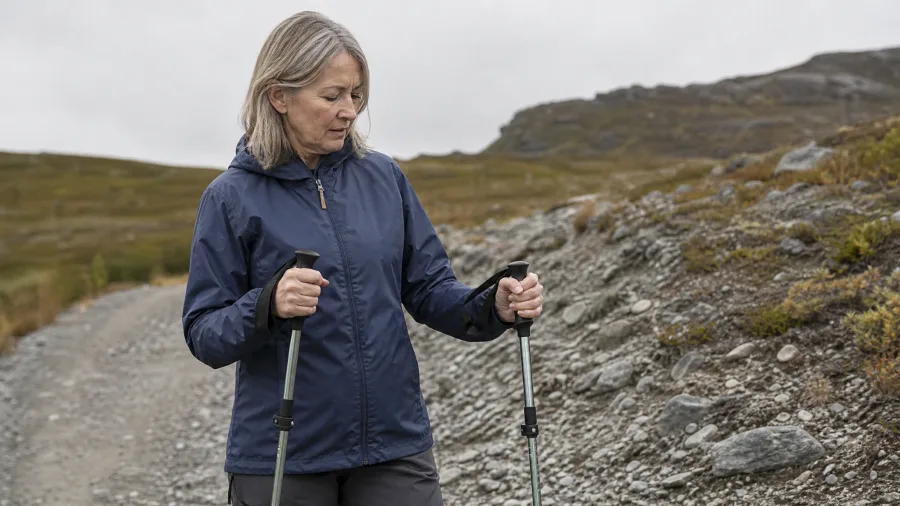
Transitioning to outdoor terrain requires a sensible approach to protect your joints.
Start with ten to fifteen minutes of low-grade outdoor inclines once or twice a week before replacing all of your indoor sessions. Invest in sturdy athletic shoes with deep tread patterns to prevent slipping on loose dirt.
If balance feels shaky initially, grab a pair of lightweight trekking poles to maintain stability.
Outdoor Readiness Audit
Top Four Physical Upgrades
Terrain Insights
The Safe Hill Transition
The Hill Metrics
Key figures behind the outdoor transition.
🥾 Your 4-Week Trail Progression
Week 1: Flat Foundation
Walk 20 minutes on gentle paved park paths to test footwear and joints.
Week 2: Mild Slopes
Introduce small grassy inclines for five minutes of your total walk.
Week 3: Variable Terrain
Move to dirt and gravel paths with moderate sustained hills.
Week 4: Full Integration
Complete three weekly outdoor hill sessions without indoor treadmill reliance.
Frequently Asked Questions
What if I do not live near natural hills and must use a treadmill?
Set your treadmill incline to five or eight percent with zero handrail support, keeping your walking speed moderate.
Is hill walking safe for people with early-stage knee osteoarthritis? Yes, because concentric muscle action dominates over eccentric pounding, provided your ranges remain pain-free.
Do I need specialized hiking gear to start? Sturdy athletic shoes with good traction are sufficient for gentle graded paths.
How do I protect my knees on the way back down a hill? Take shorter steps, engage your core, and utilize zig-zag switchbacks if the slope is steep.
Step Outside for Your Next Walk
Trading artificial indoor speed for natural outdoor strength changes everything about how your body feels and moves.
Leave the motorized belt behind, find a local green hill, and let gravity build the functional resilience you actually need.

Meet Edward Green, the founder of GolfingGoal and a seasoned expert in golf. With years of experience on the course and a passion for the sport, Edward has a wealth of knowledge to share. As our Lead Writer, he contributes articles, tutorials, and resources to help readers to improve their skills and reach their full potential on the golf course. Join Our Team!