
You reach for a jar on the top shelf, feel a sudden, uncharacteristic sway, and quickly grab the counter to steady yourself.
Most people brush off these micro-wobbles as simple clumsiness or a momentary distraction, dismissing them until a heavier stumble forces a closer look.
Physical therapists know a different reality entirely. Balance is not a single muscle you can isolate and flex, but rather a complex, silent dialogue between your eyes, inner ear, and joints that frays gradually over time.
⚠️ COMMON MISTAKE
The Fall Pyramid Reality
One severe fall is almost always preceded by dozens of unmeasured micro-losses of balance that go completely ignored until it is too late.
How Your Body Keeps You Upright: The Invisible Triad
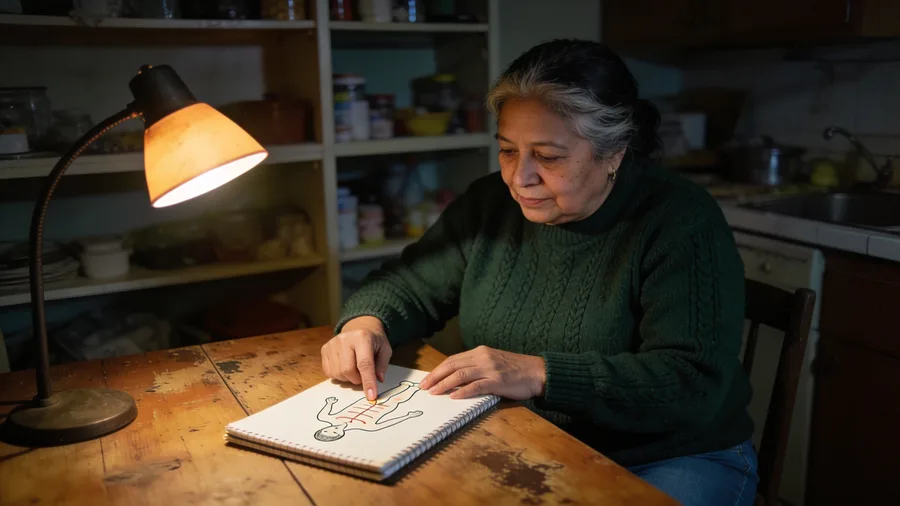
Before evaluating any warning signs, you need to understand the physiological machinery that keeps you vertical every second of the day.
Your central nervous system relies on a three-part balance triad: the vestibular system in your inner ear, your visual input, and proprioception.
Proprioception consists of tiny sensory receptors located in your joints, ligaments, and the soles of your feet that report your body position back to your brain.
As we age, these proprioceptive signals naturally dull, forcing the brain to lean more heavily on vision to compensate for the lost data.
That shift creates immediate vulnerability when you walk into a dimly lit room or step onto uneven outdoor terrain where your eyes cannot save you.
1. The Midnight Bathroom Shuffle
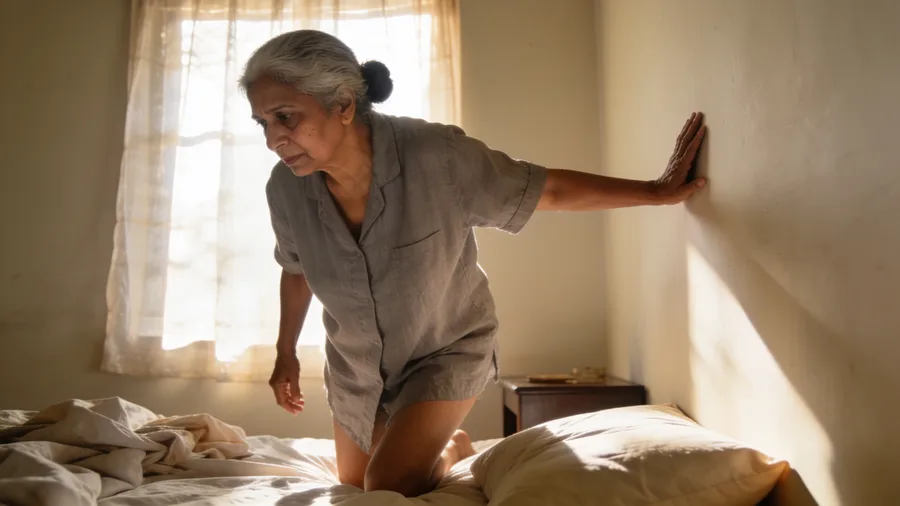
You wake up in the dead of night and make your way down the hallway, trailing your hand along the wallpaper or furniture.
That tactile wall-surfing feels harmless, but it is actually a glaring indicator of hidden vestibular-visual dependency.
When the lights go out, your eyes can no longer help your brain map the room.
If your inner ear and foot sensors are underperforming, you lose spatial awareness the moment darkness falls.
💡 Tip: Keep a low-wattage amber nightlight in the hallway to preserve visual feedback during nighttime trips.
Night Navigation Patterns
Red-Flag Navigation
- Blindly trailing hands along walls for physical safety
- Shuffling feet low to the carpet to avoid lifting
- Freezing in place the moment ambient light disappears
- Dizziness upon first sitting up on the mattress edge
Healthy Baseline
- Stepping firmly with confident heel-to-toe mechanics
- Using low-level nightlights for clear path visibility
- Maintaining steady stride rhythm in low light
- Smooth transition from lying down to standing upright
2. Shoe-On, Shoe-Off Wobbles
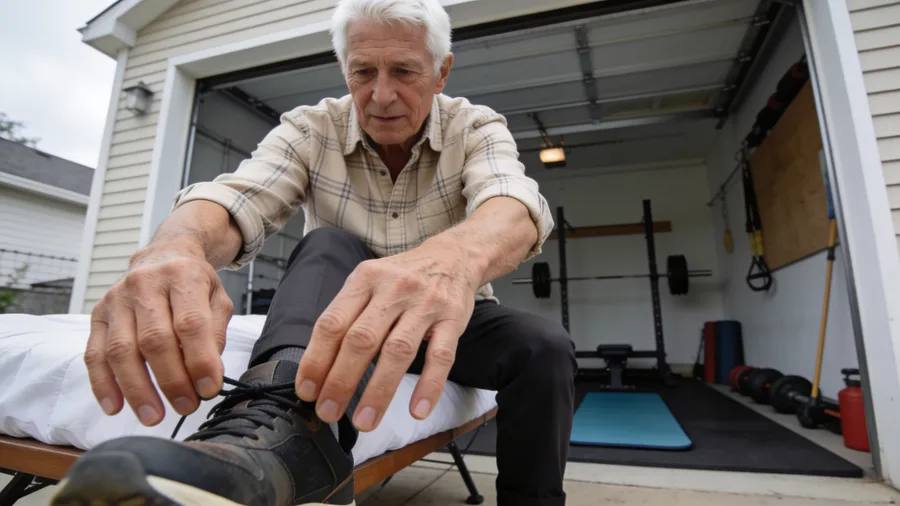
Try putting on a pair of socks or stepping into trousers while standing up without holding onto a wall or a chair.
If you find yourself hopping across the room or tipping sideways, your single-leg stability has quietly degraded.
Single-leg stance requires immediate recruitment of your gluteus medius and deep ankle stabilizing muscles.
Clinical literature consistently shows that losing the ability to stand unsupported on one leg for ten seconds strongly correlates with future mobility loss.
💡 Tip: Practice putting on socks while sitting down if standing causes sharp instability.
Single-Leg Stance Benchmark — At a Glance
⏱️ Target Duration
10 to 15 seconds
📅 Improvement Window
4 to 6 weeks of daily practice
💪 Primary Target
Gluteus medius and ankle stabilizers
⚠️ Red Flag
Inability to hold past 3 seconds
💰 Equipment Needed
None — bodyweight only
Clinical Meaning
Single-leg control is the foundational metric physical therapists use to screen fall vulnerability.
3. The Multi-Tasking Freeze
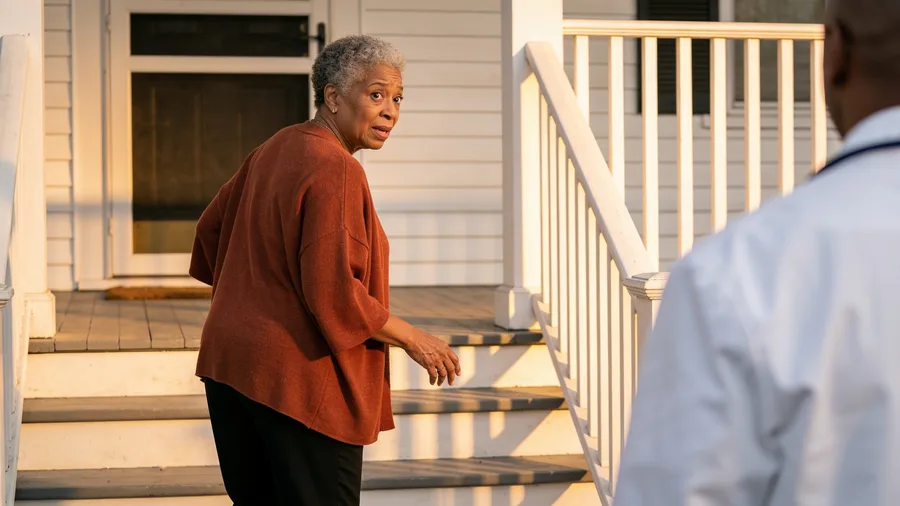
Have you ever noticed yourself stopping dead in your tracks when someone asks you a question while you are walking?
That sudden halt is not just a quirk of concentration; it is a sign of cognitive-motor interference.
When your brain processing capacity gets overloaded by secondary tasks, it forces a choice between processing the conversation and managing your stride.
Physical therapists view this multitasking slowdown as a primary warning indicator of heightened fall risk in dynamic environments.
💡 PRO TIP
The Dual-Task Test
If you cannot walk across a room and count backward from fifty by threes without slowing your pace, your brain is working overtime just to keep you upright.
4. Narrow-Space Drifting
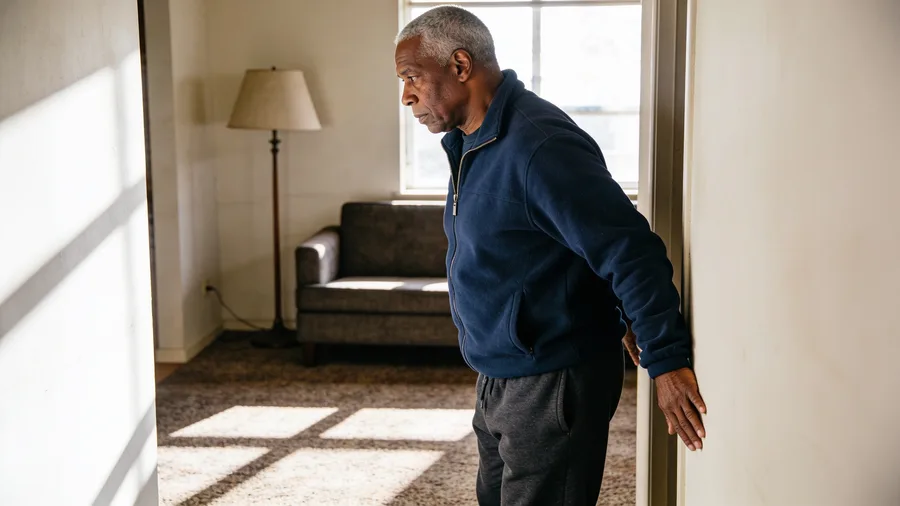
Pay attention to whether you actively avoid narrow grocery store aisles, crowded hallways, or hiking trails with exposed roots.
Lateral stability relies entirely on outer hip strength and foot-arch control, both of which weaken rapidly when restricted to predictable indoor paths.
When avoidance behavior starts dictating your daily movement patterns, your functional physical confidence shrinks much faster than your actual physical capacity.
Common Avoidance Triggers
5. Delayed Recovery Steps
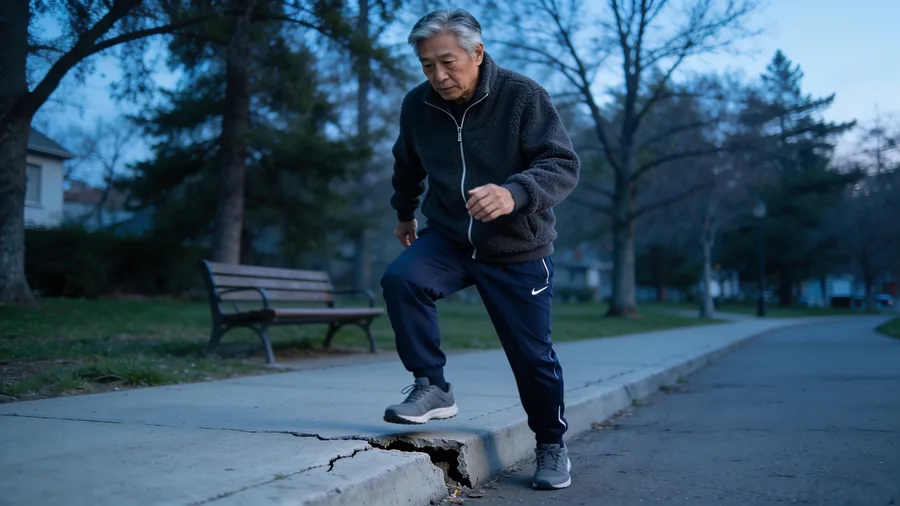
Think about what happens when your foot catches on an unexpected ridge in the pavement.
Instead of executing a quick, automatic corrective step to catch your weight, your body stumbles or requires a wide, heavy recovery stride to regain control.
That delay stems from sluggish firing rates in the fast-twitch muscle fibers responsible for immediate postural correction.
Fortunately, neuromuscular reaction time can be successfully trained and sharpened at any age with targeted, low-impact drills.
Postural Recovery Assessment
- 🟢 Instant micro-step recovery — Fast-twitch fibers activate immediately to normalize stride.
- 🟡 Wide, clumsy compensation stride — Delayed neural firing requires an exaggerated motion to avoid falling.
- 🔴 Complete loss of balance requiring grab — Indicates high vulnerability and immediate need for stability training.
The 30-Second Living Room Self-Check

Stop guessing about your stability and test it safely inside your own home right now.
Stand near a sturdy kitchen counter, place one fingertip down for safety, and lift one foot off the floor.
Aim for a stable, clean hold without white-knuckling the surface for support.
Identifying a minor deficit today gives you an actionable opportunity rather than waiting for a dangerous incident down the road.
📈 Four Steps to Rebuild Stability
Establish Baseline
Perform the 30-second single-leg test near a counter to find your current limit.
Clear Obstacles
Remove loose throw rugs and hallway clutter that force micro-stumbles.
Daily Practice
Integrate one minute of unsupported standing into your morning kitchen routine.
Progress Challenge
Introduce gentle head turns while balancing to train vestibular adaptation.
Stability Improvement Metrics
What targeted training achieves over time
Frequently Asked Questions About Balance
Can balance actually be improved in your sixties, seventies, and beyond?
Yes, through neuroplasticity and specific neuromuscular training, your nervous system readily builds new pathways at any age.
Are walking pads and treadmills enough to maintain absolute stability?
No, because linear forward motion on a motorized belt does not challenge lateral hip and ankle stability.
When should a balance issue prompt a visit to a doctor or physical therapist?
Seek professional guidance immediately if unsteadiness is accompanied by sudden dizziness, persistent joint pain, or unexplained numbness.
Quick Daily Protocol

Meet Edward Green, the founder of GolfingGoal and a seasoned expert in golf. With years of experience on the course and a passion for the sport, Edward has a wealth of knowledge to share. As our Lead Writer, he contributes articles, tutorials, and resources to help readers to improve their skills and reach their full potential on the golf course. Join Our Team!