

You reach for the phone at 6:30 AM, scrolling past a glowing video of someone chugging sixteen ounces of raw lemon juice and apple cider vinegar on an empty stomach.
Your morning routine has become a testing ground for viral wellness hacks promising instant flat stomachs and boundless energy, yet your digestive tract often responds with sharp heartburn and stubborn bloating.
The stomach does not need to be shocked, scorched, or scrubbed at sunrise with aggressive acidic tonics; it requires a calibrated, low-friction transition from nighttime fasting to active daytime digestion.
⚠️ COMMON MISTAKE
The Viral Morning Routine Audit
Chugging harsh acids on an empty stomach mimics chemical irritation, eroding enamel and triggering protective inflammatory responses in your delicate mucosal lining.
The Dawn Physiology: What Your Stomach Is Actually Doing at 6:00 AM

During late-stage nocturnal fasting, your gastrointestinal tract relies on housekeeping waves of electrical activity known as the Migrating Motor Complex.
These powerful sweeping contractions clear out cellular debris and residual bacteria while you sleep.
Resting gastric acid accumulation sits low, and the specialized mucosal barrier actively defends the stomach wall from autodigestion overnight.
Introducing sudden high-acidity or hyperosmotic solutions disrupts this delicate waking equilibrium.
All four must coordinate smoothly before consuming food or stimulants.
Myth Versus Fact: Why Shocking Your System Backfires

Popular wellness culture insists that harsh acidic liquids jumpstart sluggish stomach acid production, but biology operates through precise hormonal feedback loops.
Your stomach regulates its own pH independently via gastrin release, meaning external acid additions do not permanently boost your intrinsic digestive capacity.
Chronic early-morning mucosal irritation leads directly to micro-erosions, acid reflux flare-ups, and long-term dental enamel degradation.
Simple room-temperature water supports natural cellular rehydration without triggering compensatory inflammatory spikes.
Morning Routine Reality Check
⏱️ The 10-Minute Post-Wake Gastric Transition
Minute 0
Consume 8 to 12 ounces of lukewarm water to begin gentle cellular rehydration.
Minute 3
Fluid interacts with gastric mechanoreceptors without stretching the stomach wall.
Minute 6
The Migrating Motor Complex completes its final morning sweeping wave safely.
Minute 10
Gastric pH stabilizes, preparing the mucosal lining for your first nutrient intake.
The Gold Standard: Temperature, Volume, and Osmolarity
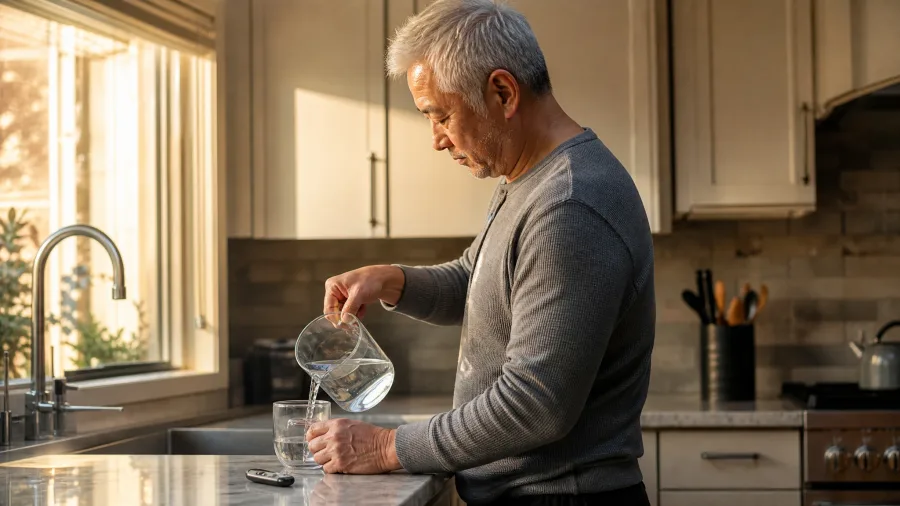
Temperature science dictates that room-temperature or lukewarm water hovering around 98 to 102 degrees minimizes thermal shock.
Ice water constricts local blood vessels and slows down gastric emptying rates.
The ideal 8-to-12-ounce window should be consumed over five minutes rather than chugging a massive 32-ounce quantity that over-stretches gastric mechanoreceptors.
Plain water or a trace pinch of unrefined sea salt outperforms hypertonic sugary tonics every single time.
Optimal Hydration Parameters
Priming the Engine: When and How to Add Real Food

Establish a dedicated 20-to-45-minute window between waking hydration and your first solid food to allow complete cellular rehydration.
Your first-food macronutrient profile should feature gentle, low-residue proteins and healthy fats like soft-boiled eggs or bone broth.
These choices signal satiety without provoking a massive insulin spike or overworking resting digestive enzymes.
Specific amino acids like glutamine actively support tight junction integrity in the gut lining after a 12-hour overnight fast.
💡 PRO TIP
The First-Food Amino Acid Advantage
Introducing easily digestible collagen peptides or warm bone broth provides immediate raw materials for mucosal repair without triggering heavy digestive strain.
The Morning Transition Shift
The Medical Consensus: Where Gastroenterology and Aging Science Agree

Gastroenterology societies consistently emphasize mucosal barrier preservation as a cornerstone of long-term digestive health.
Protecting your gut lining directly reduces systemic inflammatory tone, keeping inflammatory cytokines like TNF-alpha and IL-6 under control.
Shifting away from short-term detox hacks toward lifelong physiological stewardship preserves your metabolic resilience as you age.
Your gut wall is a dynamic ecosystem that thrives on consistency rather than aggressive daily experiments.
Mucosal Protection — At a Glance
🛡️ Primary Goal
Preserve gut barrier integrity
⏱️ Buffer Window
20-45 minutes pre-food
📉 Inflammation
Lowers systemic cytokine load
🦷 Enamel Risk
Zero acid erosion
Core Mechanism
Gentle rehydration maintains tight junction health without triggering defensive gastric spasms.
Morning Routine Strategies Compared
What to Avoid
- Raw citrus shots on an empty stomach
- Chugging 32 ounces of ice water instantly
- Aggressive green detox powders at sunrise
- Rushing into heavy coffee before hydration
What to Do Instead
- Sip 8 to 12 ounces of warm, plain water
- Allow a 30-minute window before breakfast
- Choose gentle, low-residue first proteins
- Protect your mucosal lining daily
Hydration Timing Impact
Key metrics supporting morning gastric pacing
Self-Check Payoff: Design Your Personalized Morning Protocol

Audit your current morning habits by asking whether you experience unexplained bloating, rely on caffeine before water, or suffer from morning heartburn.
If your digestive system is sensitive, restrict your wake-up ritual exclusively to pure lukewarm water and wait forty minutes for breakfast.
If your system is resilient, follow your warm water with slow-release protein within thirty minutes to stabilize morning blood sugar.
Commit to a seven-day transition roadmap to strip away aggressive fads and let your stomach function the way biology intended.
Protocol Quick Reference
Frequently Asked Questions
Should I drink lemon water in the morning if I don't feel any heartburn?
While occasional mild acidity is well-tolerated by healthy stomachs, daily long-term use can erode dental enamel and cause cumulative mucosal irritation even without immediate pain symptoms. Recommend diluting or using plain water for daily baseline hydration.
Does coffee count as the first thing my stomach receives?
Coffee is a potent gastric secretagogue that stimulates rapid acid and gastrin release; consuming it on an entirely empty stomach can provoke cramping and reflux. Always drink plain water first as a protective buffer.
Is warm water better than ice water for digestion?
Cold water temporarily constricts local blood vessels and slows down gastric emptying rates, whereas room-temperature or lukewarm water matches internal body temperature for seamless absorption.
How long should I wait between waking up, drinking water, and eating breakfast?
Recommend a 20-to-45-minute window to let cellular rehydration occur and allow the migrating motor complex to complete its morning cycle undisturbed.
Can intermittent fasting change what my stomach needs first thing in the morning?
Fasters still require baseline water and electrolyte rehydration upon waking. While solid food timing shifts, the physiological need for gentle mucosal protection remains identical.
The Quiet Power of Starting Gentle
Your stomach does not need to be shocked or scorched at sunrise with extreme viral tonics; it requires a gentle, temperature-calibrated rehydration window before any food or stimulants touch your system.
Adopt this measured approach tomorrow morning, protect your mucosal lining, and let your digestive tract perform its natural work without interference.

Meet Edward Green, the founder of GolfingGoal and a seasoned expert in golf. With years of experience on the course and a passion for the sport, Edward has a wealth of knowledge to share. As our Lead Writer, he contributes articles, tutorials, and resources to help readers to improve their skills and reach their full potential on the golf course. Join Our Team!