

You stand in front of the bathroom mirror on a Tuesday morning, pull your hair back, and wonder when your jawline decided to soften.
Estrogen decline during the menopausal transition triggers an immediate loss of up to thirty percent of dermal collagen in the first five years alone, leaving skin thinner and drier than before.
Walk down any supplement aisle and you will find a wall of powders and liquids promising to reverse that shift overnight, while quiet skepticism tells you oral supplements cannot possibly reach your face.
Oral hydrolyzed collagen peptides do show clinically validated efficacy for skin elasticity and hydration after 50, but only if specific peptide weights and daily dosages are met.
⚠️ COMMON MISTAKE
The Post-Menopausal Drop
Many women assume standard moisturizers can fix structural collagen loss, but topical creams sit on the surface while the degradation happens deep in the dermis.
The Science of the Drop: What Actually Happens to Skin After 50

Your skin is not just aging on a schedule; it is responding to a chemical shift.
Type I and Type III collagen fibers form a dense structural scaffolding alongside elastin and hyaluronic acid, keeping mature skin firm and resilient.
As estrogen receptors in fibroblasts diminish during menopause, these cells produce less native collagen and upregulate matrix metalloproteinases, which are the enzymes that break down existing structural proteins faster than your body can rebuild them.
Dermal Vocabulary Decoded
Into the Gut: Can Oral Collagen Actually Reach Your Face?

Whole collagen is too large to pass the intestinal barrier, which is why supplementation relies entirely on hydrolyzed peptides broken down by targeted enzymatic action.
Specific di- and tri-peptides, such as proline-hydroxyproline and hydroxyproline-glycine, resist complete digestive hydrolysis and enter your bloodstream intact.
Pharmacokinetic research shows these unique peptides accumulate specifically in skin tissue, acting as a signaling mechanism that tricks fibroblasts into ramping up native production.
💊 The Journey of an Ingested Peptide
Ingestion
You mix hydrolyzed peptide powder into your morning water or coffee.
Enzymatic Cleaving
Stomach acid and digestive enzymes break the protein down into short di-peptides.
Intestinal Absorption
Specialized transporter proteins move the intact peptides across the gut wall.
Dermal Accumulation
Circulating peptides target skin fibroblasts and stimulate fresh collagen synthesis.
What the Clinical Data Says: Elasticity, Hydration, and Wrinkles
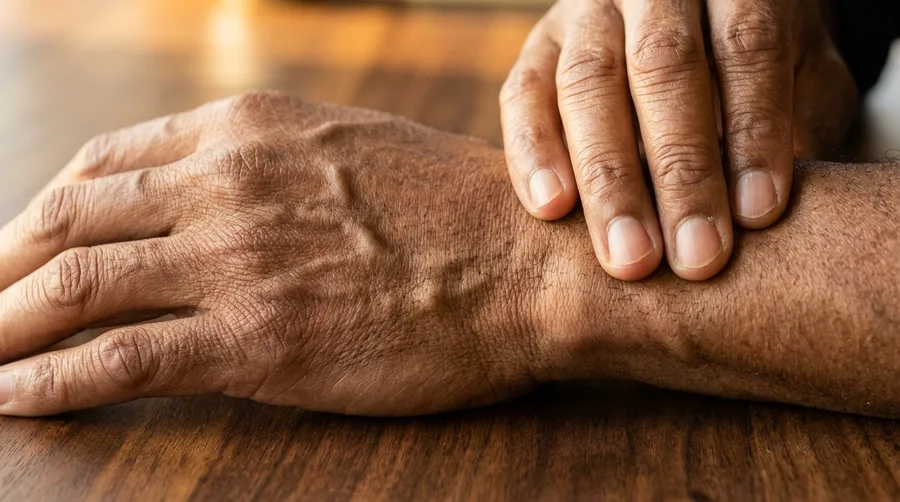
Randomized, double-blind, placebo-controlled trials show measurable improvements in skin hydration after eight to twelve weeks of daily supplementation.
Participants over 50 demonstrate statistically significant increases in skin elasticity using cutometer measurements, meaning skin rebounds faster after physical deflection.
Clinical data reveals a visible decrease in eye-area wrinkle volume after consistent daily intake of 2.5g to 10g of specific bioactive peptide fractions.
The Clinical Trial Benchmarks
What science measures over a twelve-week protocol
Bovine, Marine, or Porcine: Does the Source Matter After 50?

Bovine powders derived from cows offer a robust profile rich in Type I and Type III collagen, making them a well-rounded choice for overall structural support.
Marine collagen sourced from fish skin features a lower average molecular weight, which translates to slightly faster absorption across the intestinal lining.
The animal source matters less than the specific enzymatic hydrolysis process used to break the proteins down into low-dalton peptides.
Bovine vs. Marine Collagen
Bovine Collagen
- Rich in both Type I and Type III collagen
- Typically more affordable per serving
- Supports joints and gut lining alongside skin
- Neutral taste profile in hot liquids
Marine Collagen
- Composed almost entirely of Type I collagen
- Lower molecular weight for fast absorption
- Sustainably sourced from wild-caught fish
- Dissolves easily in cold beverages
The Dermatologist Consensus: Where Science Meets Skepticism

Mainstream dermatology once dismissed oral supplements as an expensive fad, but peer-reviewed trials have shifted professional opinion toward cautious endorsement.
Supplements cannot replace topical retinoids, daily broad-spectrum SPF, or hormone replacement therapy where clinically indicated by your physician.
Biological turnover in mature skin takes time, meaning visible results require a minimum trial period of twelve weeks of daily adherence without skipping days.
Dermatologist Quality Audit
Your Personal Protocol: How to Choose and Use Collagen at 50+

Look for a daily dose ranging between 2.5 grams for specific bioactive peptide fractions and 10 to 15 grams for general hydrolyzed powders.
Check ingredient labels for third-party testing certifications from organizations like NSF or USP, minimal added sugars, and transparent sourcing.
Pair your morning scoop with a source of vitamin C, which acts as an essential chemical co-factor for endogenous collagen synthesis in your cells.
Daily Morning Routine
Key Protocol Metrics
Essential numbers for your daily regimen
Best For Your Daily Regimen
Frequently Asked Questions
Will stopping collagen supplementation cause my skin to revert immediately?
Baseline degradation resumes gradually if you stop taking peptides, as native production remains suppressed by age-related hormonal shifts. You will typically lose the hydration gains within four to six weeks.
Can I get the same amino acids from bone broth and chicken?
While whole foods provide amino acids, reaching the specific therapeutic concentration of unique di-peptides found in hydrolyzed supplements requires impractical volumes of food every single day.
Does vitamin C need to be taken at the exact same time?
Vitamin C is an essential co-factor for endogenous collagen synthesis, making it highly beneficial to combine your supplement with vitamin-C-rich foods or a formula containing the nutrient.
Are there any kidney or liver risks for women over 50?
Standard doses of hydrolyzed collagen peptides are well-tolerated in healthy adults, though individuals with chronic kidney disease should consult their physician before altering protein intake.
Do liquid collagen shots work better than powders?
Liquid offers convenience and faster gastric emptying, but dry powders typically provide a significantly higher active dosage of peptides per dollar spent.
Building Resilience from Within
Transformation after 50 is never about erasing decades, but rather about reinforcing your underlying dermal architecture so your skin behaves with greater resilience.
Targeted hydrolyzed peptides offer proven biological support for hydration and elasticity when chosen wisely and used consistently alongside daily protective care.

Meet Edward Green, the founder of GolfingGoal and a seasoned expert in golf. With years of experience on the course and a passion for the sport, Edward has a wealth of knowledge to share. As our Lead Writer, he contributes articles, tutorials, and resources to help readers to improve their skills and reach their full potential on the golf course. Join Our Team!