

You sit in the garage on a Tuesday afternoon with a wrench in your hand and realise nobody has called just to talk about nothing in three weeks.
The calendar is empty where the third man used to be, and the silence in the driveway feels heavier than the tools you are packing away.
This piece examines the specific loss of peer connection that happens after sixty, why the absence hurts past the point of inconvenience, and how to spot the shift before it becomes permanent.
Quick Tips Before You Start
Call Without Reason
Ring someone directly instead of waiting for a holiday or an emergency.
Fix the Time
Lock in a recurring Tuesday morning coffee so neither person has to ask.
Walk and Talk
Move side by side down a familiar street to make conversation easier.
1. The Quiet Disappearance of the Shared Workshop

You stare at the closed garage door on a Saturday morning, waiting for the familiar sound of a truck pulling into the driveway.
The workbench inside is clear of sawdust, the tools are hung up in neat rows, and the project you spent ten years building together is sitting in someone else's living room.
You assume that when the daily labor ends, the friendship built around it will naturally transition into easy leisure time and coffee on demand.
What actually happens is that the social scaffolding holding the entire connection upright vanishes the moment the final joint is glued and sanded.
Researchers who track adult male friendships note that shared physical tasks act as a structural anchor, keeping people in the same room long enough for a bond to form without requiring forced conversation.
When the task disappears, the relationship has no independent engine to keep it running through the quiet weeks.
Stop waiting for an accidental reunion in the hardware store aisle, and instead send a direct text proposing a specific Tuesday lunch at the diner downtown.
At a Glance
2. When Casual Distance Is Just Normal Life

Is it possible that everyone just needs more quiet space once the workday ends for good?
Sometimes a drop in contact is just two people enjoying the peace of not having a schedule to juggle.
If both of you are content to see each other twice a year at birthdays and feel completely grounded rather than lonely, that is not isolation at all.
🌱 GROWING TIP
Spotting the Natural Boundary
Check if the silence comes with mutual ease or lingering hesitation before assuming a relationship is fading.
3. Assuming Busy Schedules Still Exist

He is just busy with the grandkids and the yard work this month.
The standard advice insists that you should step back, grant him breathing room, and wait patiently for his overflowing calendar to finally settle down.
That well-meaning guidance completely misses the quiet reality of how days actually empty out once work stops and schedules clear.
His calendar is not packed with frantic obligations; it is startlingly blank, and he sits at home waiting for someone else to make the first move just like you are doing right now.
Assuming that silence means he is simply too busy is the fastest way to turn a harmless two-week gap into a permanent ten-year drift.
Instead of waiting for an invitation that never arrives because both of you are paralyzed by the same polite hesitation, send a text proposing a specific Tuesday morning coffee without any heavy preamble.
4. The Daily Routine Without an Audience

The morning routine loses its anchor the moment your home becomes entirely quiet.
You wake up at six, make coffee, and realize the only person who will hear your voice before noon is the grocery cashier.
The loss is not about losing a person to argue with; it is about losing the mirror that reflects your daily competence back to you.
Without someone around who knew you when you were sharpest, the days start to blur together into an unrecorded blur of errands and lawn work.
The silence begins to feel less like peace and more like a permanent backstage pass to a play that is no longer running.
Make a phone call before nine in the morning to break the seal on the day.
Best For Daily Reset
5. The Shift in Social Research Findings

Two distinct decades of peer connection data point to a stark baseline pattern.
Researchers who study aging and social structures keep finding that men over sixty lose close confidants at twice the rate women do after major life transitions.
That drop is driven entirely by the disappearance of task-oriented gathering places where conversation happens side-by-side rather than face-to-face.
When those shared projects vanish, the friendship often goes with them because neither person built the muscle of talking without a job to do.
The Retirement Social Shift
6. Breaking the Silence With Simple Words

The conventional wisdom insists that reaching out after a long dry spell requires a clever icebreaker or a significant life update to justify the sudden text message.
That advice usually guarantees that nothing gets sent at all.
You do not need an elaborate excuse to check in on someone you used to see every week.
The people who study social ties keep finding that routine proximity matters far more than grand gestures when it comes to keeping friendships intact over the decades.
Say something direct like this: I am heading to get hardware supplies this morning, want to ride along?
If he says no, follow up with: Alright, catch you next week same time.
Keeping the door open without demanding an immediate performance changes the entire tone of the interaction from an obligation into an open invitation.
⚠️ COMMON MISTAKE
The Over-Explanation Trap
Avoid offering a long backstory for why you are calling; keep the invitation simple so it feels effortless to accept.
7. The Friday Afternoon Hardware Store Run

The quiet erosion of routine costs you more than your weekends because it trains your nervous system to look for ghosts in empty aisles.
You stand in aisle four looking at galvanized screws, half expecting him to round the corner with a box of drywall anchors just like you did every Friday for a decade.
That habit of expecting him to be there is the hardest part to break because physical proximity leaves deeper tracks in muscle memory than any shared history ever could.
Recognize that the physical habits die last, then bring someone else along or change the day you go until the empty space stops feeling like an absence and starts feeling like just another hardware store.
Key Social Metrics
8. What Quiet Isolation Buys You

For a long time, I thought guarding your time by staying completely out of the loop was just good boundary work.
Staying isolated saves you from the awkwardness of mismatched schedules and small talk that leads nowhere.
It protects your predictable daily rhythm from outside interruption, leaving your Tuesday afternoons entirely yours.
What it spends over the months is your willingness to speak easily with anyone outside your immediate household, trading everyday ease for a quiet kind of detachment that grows heavier the longer you keep it.
9. The Ten-Second Friendship Audit

Isolation builds quietly over months until your world shrinks to the walls of your own house and the voices of your immediate family.
Ask yourself honestly when was the last time you spoke to someone outside your home about something that had nothing to do with home repairs or daily chores.
If that answer stretches beyond two weeks, your social circle has slipped below the maintenance threshold where casual ties survive.
Fix it today by sending a plain text message to one person you have not seen lately, asking simply how their week has been heading.
10. The Same Facts From a Different Angle

Think of friendship after sixty not as a social obligation but as tool maintenance for your mental clarity.
Just as you clean your saws so they do not rust in the damp air, you keep in touch with peers so your social reflexes stay sharp.
This perspective removes the emotional pressure.
11. When Keeping to Yourself Is Perfectly Fine

I just need a quiet weekend to reset.
That sentence gets spoken in kitchens and hallways every Friday afternoon by men who have spent five straight days managing family demands, neighborhood requests, and endless domestic logistics.
Solitude often gets treated as a warning sign in social research, as though every hour spent alone represents a step toward dangerous isolation or a failure of community connection.
The people who study adult social patterns find something entirely different when they look closer at these intentional pauses.
There is a vast gulf of difference between retreating to a quiet garage by choice to fix an old lawnmower and sitting in an empty house because nobody knows you are there.
When you feel genuinely grounded in your own company, staying in for three days straight is simply a way to recharge your batteries after a particularly heavy stretch of obligations.
You do not need to force social contact just to meet some arbitrary weekly quota of outings or phone calls.
The dividing line comes down to ownership.
Ask yourself a simple ten-second question before deciding whether to stay put or answer an invitation.
Did you choose this quiet, or did the quiet choose you?
12. The Myth of Natural Reunions
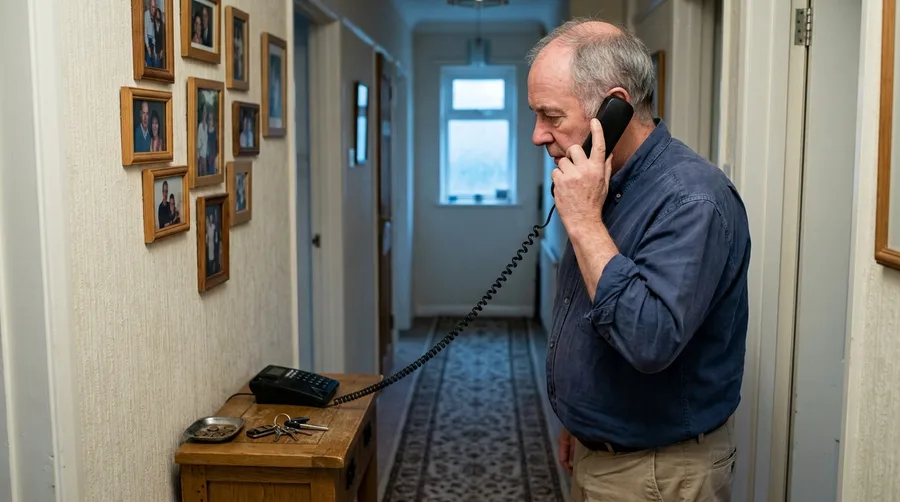
Fifteen years can pass before two men realize they have not spoken outside of a holiday text message.
People assume that decades of shared history will automatically bridge the gap when you finally reconnect, but time alone only creates more distance without a concrete reason to sit down together.
The warm reunion you picture in your head usually stalls out after twenty minutes of catching up on children and medical tests.
Pick up the phone today and invite him to look at a used truck or help clear out a garage, because shared work is what makes old friendships start moving again.
13. The Long-Term Cost of Staying Quiet

People tell you that taking time to yourself is completely harmless because everyone needs space to decompress after working hard all week.
Every month you let pass without a peer conversation makes the next phone call feel twice as difficult, turning a casual five-minute check-in into a major emotional hurdle.
The friction builds up until reaching out feels like climbing a hill, and soon you find yourself avoiding simple texts because the silence has lasted too long to break easily.
Break the cycle while the barrier is still small by sending one plain, no-pressure message about a local game or a hardware store find before the habit hardens completely.
14. What the Research Shows About Isolation

Studies on aging populations consistently point to peer connection as the primary stabilizer for routine well-being.
Men who maintain at least one regular confidant handle post-retirement stress with far greater resilience.
That is worth remembering.
15. Pick Up the Phone Today

You know exactly which person you stopped calling when the work stopped.
Dial his number before the sun goes down today.
Keep it brief, keep it simple, and let the connection start over.
Frequently Asked Questions
Why do men lose friends after sixty more often than women?
Men often build friendships around shared work, tasks, or physical environments. When those settings disappear in retirement, the connection fades without structural upkeep.
How can I reconnect with someone I have not spoken to in years?
Keep the first outreach brief and low-pressure. Send a short text or make a quick call mentioning a shared memory or asking a simple practical question.
Is it normal to prefer solitude after retirement?
Yes, a period of quiet adjustment is completely natural. The key is distinguishing between restorative alone time and unwanted isolation that drains your energy.
What is the best way to maintain new friendships?
Establish a recurring, low-effort routine like a weekly coffee or a morning walk so neither person has to constantly initiate meetings from scratch.
Your First Step Forward
The single friendship you lost after sixty does not have to stay gone forever, but it requires a conscious choice to pick up the phone.
Start with one small call today and let the connection rebuild itself naturally from there.

Meet Edward Green, the founder of GolfingGoal and a seasoned expert in golf. With years of experience on the course and a passion for the sport, Edward has a wealth of knowledge to share. As our Lead Writer, he contributes articles, tutorials, and resources to help readers to improve their skills and reach their full potential on the golf course. Join Our Team!