
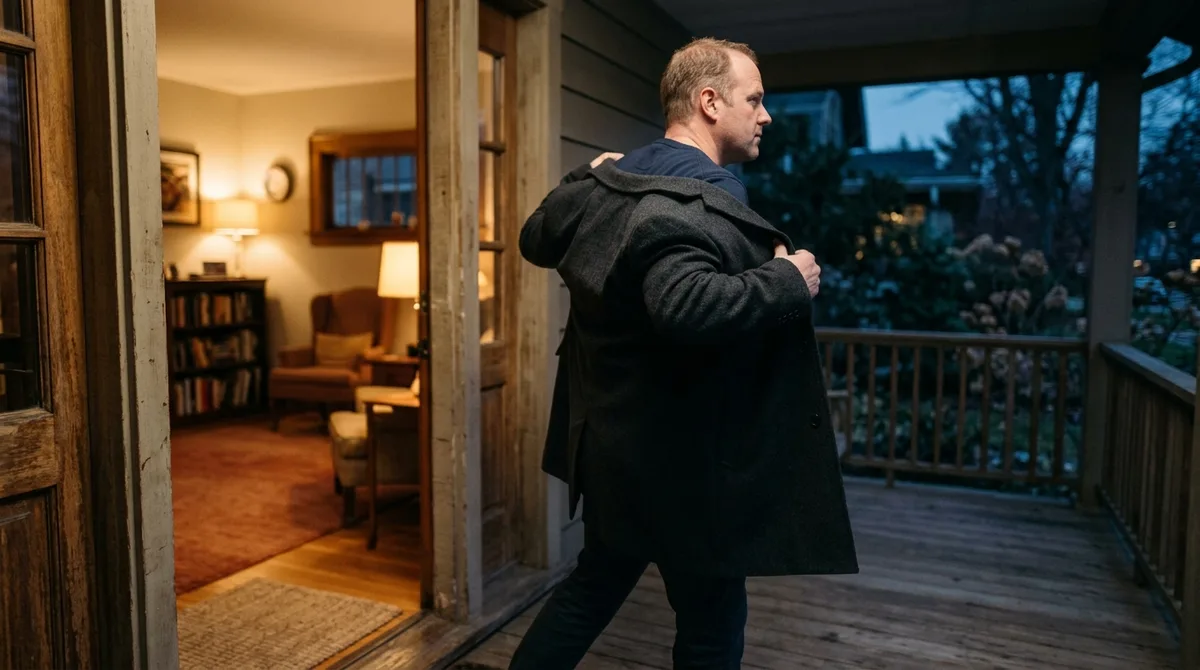
You notice the shift during a Sunday dinner when he answers a polite question with a flat, unfiltered assessment that leaves the room momentarily quiet. The diplomatic padding that once softened every observation has simply vanished.
This directness is rarely hostility. It is an internal recalculation of time, energy, and social currency that changes how older adults communicate.
Quick Tips Before You Start
Look Past Tone
Focus on the content of the statement rather than the lack of diplomatic softening.
Recognize Time
Understand that reduced social battery leads directly to shorter sentences.
Drop Defensiveness
Respond to bluntness with steady curiosity instead of immediate pushback.
1. The Declining Currency of Polite Agreement

Forty years of nodding along to suggestions you know will fail leaves a specific kind of exhaustion in your chest.
You sit through another meeting where everyone agrees with a broken plan simply to avoid creating friction in the room.
The quiet cost of maintaining these pleasant fictions adds up until the price feels far too high to keep paying.
When he finally stops nodding and points out the flaw, the shift buys back hours of mental bandwidth.
That directness trades away the expensive social insurance policy of harmless agreement for a simpler form of peace.
💡 PRO TIP
Decide What Costs Less
True efficiency in communication often requires letting go of the need for everyone in the room to feel entirely comfortable at all times.
2. The Shrinking Horizon of Remaining Years
Too many conversations get wasted on weather small talk and performative deference when time feels finite.
You watch him decline a third weekend commitment with a simple statement that he would rather stay home and read.
There is no elaborate excuse offered about prior engagements or complicated scheduling conflicts.
The calendar shrinks the patience for social filler.
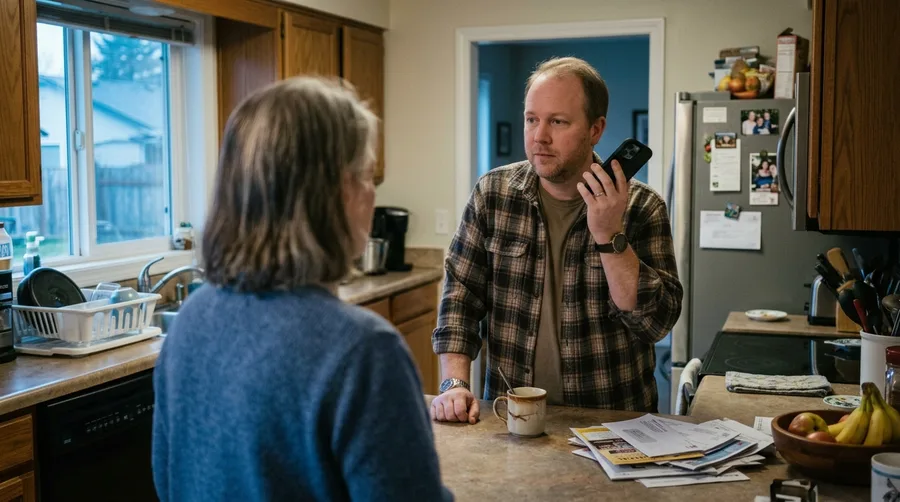
The afternoon light hits the kitchen counter as the phone rings with another polite invitation to a neighborhood gathering that nobody actually wants to attend.
Instead of inventing a complicated story about a prior engagement or a plumbing emergency, he simply looks across the room and says that he is staying in tonight.
There is a momentary pause on the line because people are so rarely accustomed to a clean, unmodified refusal without an apology attached.
The calendar shrinks the patience for social filler when the math of remaining years becomes harder to ignore.
Energy is no longer spent on maintaining the fragile choreography of social obligations that serve no actual purpose.
When the horizon narrows, the tolerance for spending an evening nodding along to small talk evaporates completely.
Notice the absence of guilt or performative regret in his voice.
The next time you find yourself manufacturing an elaborate excuse to protect someone else from a simple no, try dropping the preamble entirely and offering the unvarnished truth instead.
What You Think It Means
- Personal rejection
- Growing hostility
- Loss of social skills
- Deliberate harshness
What It Actually Means
- Energy conservation
- Preference for truth
- Efficiency in time
- Unfiltered authenticity
3. Dropping the Performance of Constant Agreeability

Why spend forty years learning what you actually think only to pretend you agree with things you despise?
That realization strips away the instinct to soften every sentence with qualifiers.
Common Shifts
4. When Directness Is Just Honesty
"Let us just skip the preamble and look at the numbers." That sentence lands like a cold shower in a room built on polite cushioning, but sometimes bluntness is just a straightforward assessment delivered without a theatrical wrapper.
Not every hard truth requires a soft landing, especially when the timeline is compressed and everyone in the conversation already knows the stakes. When the tone carries no trace of annoyance and the delivery stays completely level, directness is simply efficiency rather than hostility.
The way to tell the difference is to watch what happens after the sentence lands. If the speaker stays open to a counter-argument without tightening their jaw, the plain truth is just a clean tool doing its proper job.
Communication Shift — At a Glance
⏳ Time Horizon
Finite focus
🔋 Energy Cost
Conserved strictly
🎯 Delivery Style
Direct & plain
Key Takeaway
Bluntness is a tool of efficiency, not an act of hostility.
5. The Misread Motivation Behind the Silence

I used to assume that when an older man went completely quiet during a heated family debate, it meant he was silently judging everyone at the table.
You might look at that same stillness during a holiday argument and read it as simmering anger or passive aggressive disapproval directed at the topic at hand.
What looks like a deliberate penalty or an icy withdrawal is actually something much more mundane once you observe the pattern over time.
It usually signals that he has heard this exact argument cycle three times before across twenty years and recognizes the total futility of running through another round.
The silence is an exit strategy rather than a punishment, deployed because energy has become finite and old arguments no longer merit the performance of a rebuttal.
Recognizing the difference between a deliberate snub and simple conversational fatigue saves everyone involved from manufacturing unnecessary drama where none was ever intended.
Next time the room goes quiet, resist the urge to fill it with accusations; simply shift the subject to something lighter and let the silence do its job.
⚠️ COMMON MISTAKE
Avoid Assuming Malice
Mistaking economy of language for personal rejection turns a simple communication style into an unnecessary conflict.
6. Rewriting the Social Contract of Retirement
Retirement is frequently viewed as a slow unwinding, but for many it functions less like a vacation and more like a hard structural collapse of decades-long habits.
When your primary job for forty years required diplomatic navigation of corporate hierarchies, retirement feels like a license to finally drop the act.
You no longer need to manage the feelings of stakeholders, clients, or difficult managers just to keep the peace, which strips away the daily incentive for artificial patience.
That professional armor comes off permanently, leaving behind the raw baseline personality that was always underneath.
The sudden exposure of that unvarnished self can shock people who only ever knew the polished workplace version, because the diplomacy was never your true character but rather an occupational tax you paid every single morning.
This is not a personality defect or a sudden deterioration; it is simply the natural weight of work clothes finally hitting the floor after a lifetime of carrying other people's organizational friction.
The Path to Directness
7. What the Research Shows About Aging and Candidacy

People often assume that social circles expand naturally over time through accumulated acquaintances and lifelong networking habits.
Researchers who study late-life social patterns consistently find a measurable decline in the motivation to maintain superficial ties.
You trade peripheral acquaintances for deep conservation of emotional resources, trimming away interactions that require polite performance rather than genuine exchange.
The social network contracts by choice, and the remaining interactions become remarkably transparent once the energy spent on pleasing everyone else is redirected toward what actually matters.
The Metrics of Clarity
Understanding the shift in social priorities
8. The Exact Words to Reset the Dynamic

You are sitting across the table when a blunt comment lands with a heavy thud, and the temptation to immediately defend yourself or smooth it over feels almost automatic. That is the precise moment when the entire dynamic of the conversation shifts toward friction or calm, depending entirely on the first sentence you choose to release into the air.
Try keeping your response simple and non-reactive when a direct statement lands heavily in the room. Say, That is certainly one way to look at it, and let the sentence sit without rushing to fill the void. Silence is the most effective tool for managing unvarnished opinions because it removes the fuel that arguments require to keep burning.
Instead of matching the abrupt tone or offering a long justification for your choices, you simply hold the quiet space for a few seconds. The other person usually recalibrates their own delivery once they realize their words are not going to provoke a frantic counterattack.
9. The Quick Take on Direct Communication

"I just think we should keep our options open." That phrase gets turned over for three days, analyzed for hidden subtext, and weighed against past behavior until the original sentence is entirely lost under invented meaning.
Most plain statements carry no secret code or secondary agenda waiting to be unlocked by careful interpretation.
Stop searching for hidden meanings in straightforward sentences. Take what is said at face value and move on.
When someone gives a clear answer, repeat it back simply without adding your own commentary or interpretation to test the waters.
10. Evaluating Your Own Reaction to Directness
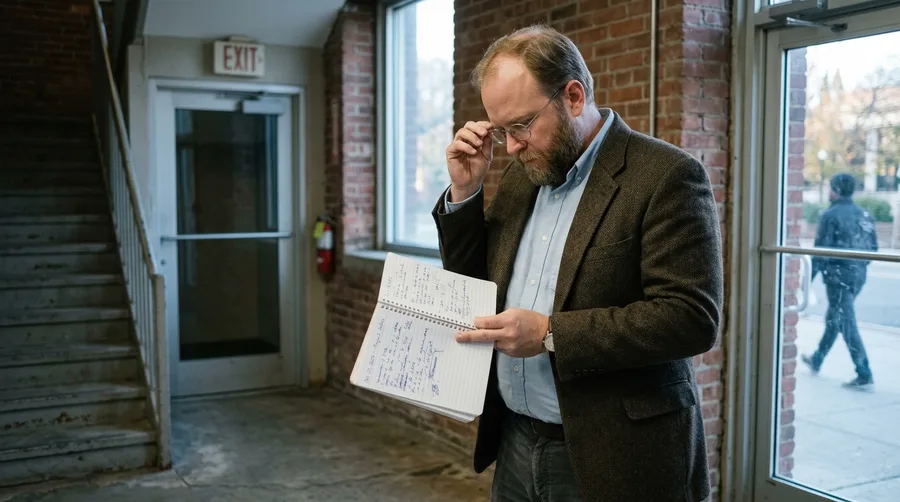
You sit across the table while he answers a question with an unvarnished yes, and your shoulders tense waiting for the apology or the soft pivot that never arrives.
Ask yourself in the next ten seconds whether his blunt comment actually threatened your safety or simply disrupted the predictable polite script you expected.
If the sting comes from the script rather than the substance, let the friction go and appreciate the sudden absence of guessing games.
Clear communication requires a listener who can tolerate an edge that has not been sanded down for comfort.
11. Patterns in Late-Life Communication Shifts

Studies on social aging point to a steady reduction in tolerance for unnecessary complexity.
When energy drops, verbal economy rises to take its place.
12. Using Clear Boundaries in Conversation

How do you stop an unfiltered remark from derailing an entire afternoon without turning it into a fight? You stop treating every blunt observation as a personal indictment that requires an immediate defense. When someone offers sharp feedback on how you handle your schedule, the urge is always to explain the logistics behind every choice.
Instead, you take the observation on its actual merits and leave the emotional freight behind on the table. Say, I hear you, and let the sentence end cleanly right there without offering a supporting paragraph of justification. Once the air clears, you redirect the conversation to something productive by asking a simple logistical question about the next task on the list.
13. The Efficiency of Plain Truths

Skipping the diplomatic preamble saves valuable minutes during every single exchange.
When people stop buffering their opinions with softeners and qualifiers, conversations move forward without the usual exhausting detours.
Embrace the straightforwardness as a sign of trust and respect for your time, rather than a lack of warmth.
The next time someone gets straight to the point without the preamble, skip the urge to soften them up and simply answer the question on the table.
14. Assessing Your Comfort With Unfiltered Truth

I used to think that keeping the peace meant smoothing over every sharp corner in a conversation.
Ask yourself how often you spend the first five minutes of any discussion calculating whether your actual opinion is worth the social friction it might cause.
If you edit your thoughts automatically to preserve someone else comfort, notice what that constant internal curation actually costs your nervous system over the course of a normal week.
When you watch someone finally stop performing that daily translation, pay attention to how much lighter their ordinary exchanges look from the outside.
Unfiltered speech is rarely an attack or a sudden failure of manners.
It is simply the sound of someone who has finally put down luggage they were never asked to carry in the first place.
15. Reframing the Shift Toward Radical Clarity

Taking every unfiltered comment as a personal rejection guarantees a exhausting cycle of constant friction.
You spend hours decoding sentences that were never designed to carry hidden malice or strategic hostility in the first place.
When you stop viewing bluntness as an attack and start seeing it as an energy conservation strategy, the entire dynamic transforms completely.
Picture a family Sunday dinner where a straightforward observation about the meal or the travel time lands with the heavy thud of an insult.
You brace for an argument, rehearsing your defense while the other person has already moved on to pouring a glass of water without a second thought.
You realize that nobody is trying to hurt your feelings; they are simply refusing to spend finite hours wrapping truth in ribbon.
That realization opens the door to deeper, simpler, and far more honest relationships across every generation in the family.
The bluntness is not a wall being built against you, but rather the removal of every wall that stood between what was felt and what was said.
Instead of taking the bait, try answering the literal statement with a calm, unbothered agreement that drops all defensive posturing instantly.
That is a trade worth making every single time.
Frequently Asked Questions
Why do older men stop sugarcoating their opinions?
As time feels more finite, the energy required to maintain polite fictions and social padding starts to feel like a poor investment. They prioritize directness to conserve mental bandwidth.
Is this sudden bluntness a sign of cognitive decline?
Usually, no. It is typically a conscious or semi-conscious shedding of professional armor and social filters that were maintained during working years.
How should I respond when someone speaks to me too bluntly?
Avoid taking it personally or getting defensive. Acknowledge the core statement simply, allow silence to sit in the room, and focus on the content rather than the tone.
Does this mean they no longer care about my feelings?
Not at all. It reflects a shift away from performative agreeability toward honest communication, which often comes with a deep foundation of trust and respect.
What Changes First
You will notice your own instinct to take offense begins to soften once you recognize that directness is simply an economy of time.
Start by listening to the words without adding a narrative, and watch how much simpler every conversation becomes.

Meet Edward Green, the founder of GolfingGoal and a seasoned expert in golf. With years of experience on the course and a passion for the sport, Edward has a wealth of knowledge to share. As our Lead Writer, he contributes articles, tutorials, and resources to help readers to improve their skills and reach their full potential on the golf course. Join Our Team!