
Your monitor is clear, your coffee is hot, and you sit down ready to tackle the hardest project on your list. Ten minutes later, your eyes drift to the loose stack of receipts, the ringing phone, or the colorful sticky notes plastered around your screen.
Attention does not vanish all at once. It leaks away through small, constant reminders of incomplete tasks that sit right in your field of vision, pulling your focus without your consent.
Quick Tips Before You Start
Clear the Surface
Remove everything that does not serve the exact task currently in front of you.
Hide the Phone
Put mobile devices in a drawer out of sight and out of arm's reach.
Batch Your Tools
Keep only one notebook and one pen within reach during deep work blocks.
1. The Daily Smartphone Station

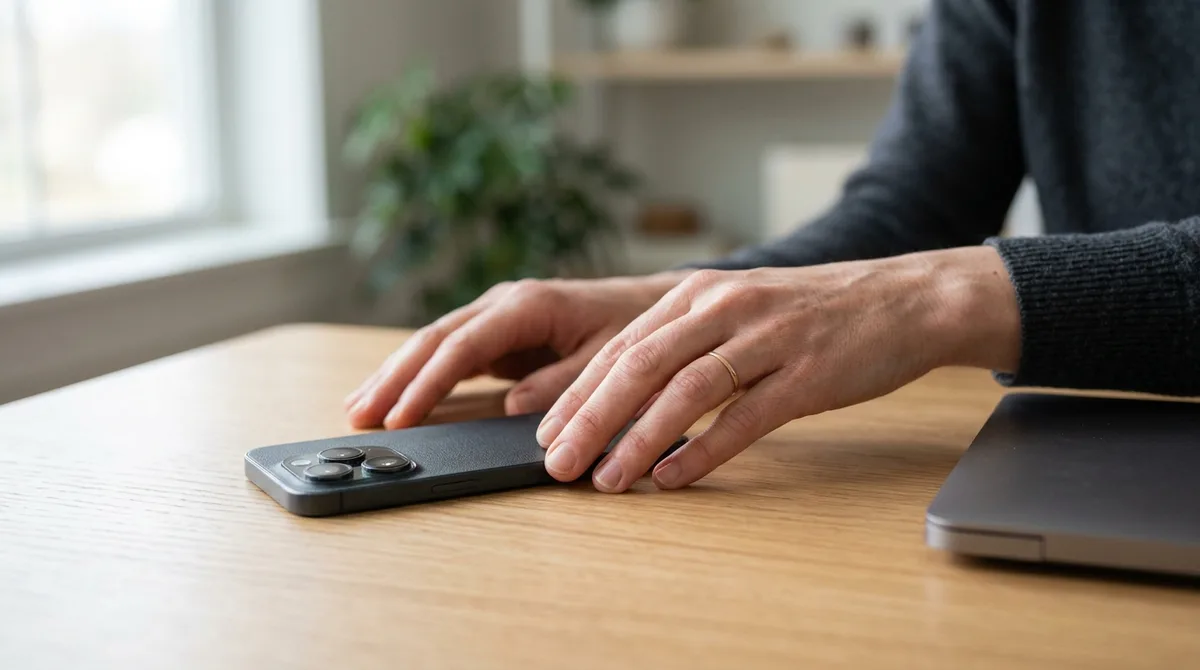
You reach for the mouse while your eyes dart sideways because the glass rectangle resting right beside the keyboard just flickered to life with another silent preview.
Keeping the phone face up within arm reach turns a standard work session into a constant exercise in low-grade impulse control, quietly draining the exact mental bandwidth you need for complex problem solving.
Researchers who study attention management find that the brain expends measurable cognitive energy simply inhibiting the urge to check an accessible device, even when it is completely silenced and face up.
Open the bottom desk drawer, drop the phone inside out of sight, and if authentication apps require it nearby, turn the screen downward and mute every vibration.
💡 Tip: Out of sight means out of mind for your dopamine receptors.
Distraction Hierarchy
2. The Stack of Unpaid Bills and Mail

Is that pile of envelopes and notices just normal administrative clutter, or does it cross the line into cognitive drag? If you are actively reviewing a reference document or a printed brief for the task happening right now, keep it out on the table.
When that paperwork belongs to tomorrow or next week, leaving it in your immediate line of sight quietly drains your attention every time your eyes drift away from the screen. Move the mail into a vertical sorter inside a credenza across the room.
Let your primary work surface hold only the tools for the current hour.
⚠️ COMMON MISTAKE
Leaving Paper Piles in Plain View
Treating your desk as a long-term storage shelf for mail guarantees cognitive fatigue before you even open your laptop.
3. Decorative Trinkets and Souvenirs

Look at that tiny ceramic cat, I wonder where I packed the rest of those travel photos.
You glance up from your screen and see the miniature souvenir from your trip to Lisbon or the quirky desk toy a colleague gifted you.
Ask yourself a simple question ten seconds into the workday: did your gaze drift toward that object because you needed it to solve the problem in front of you, or did your brain simply use it as an immediate exit hatch from a hard cognitive stretch?
Objects tied to personal memories trigger associative thinking that pulls you away from analytical tasks, flooding your attention with narrative threads instead of execution.
If the answer points to an escape hatch, keep your workspace strictly utilitarian during work hours by moving personal items to bookshelves behind your seating position where you can enjoy them during breaks instead of mid-task.
Focus Vocabulary Decoded
4. The Endless Collection of Sticky Notes

Forty-seven square inches of yellow paper frame your monitor with a mosaic of forgotten passwords, meeting times, and brilliant ideas scribbled three weeks ago.
That colorful border is a quiet tax on your cognitive energy, quietly spending your daily focus on tasks that no longer require your attention while pretending to be productive.
When everything is highlighted on adhesive squares, your brain treats a grocery reminder with the exact same urgency as an expiring deadline.
Transfer any active tasks to a single daily notepad, then clear the screen entirely so your attention has room to breathe.
💡 PRO TIP
Adopt a Single Notepad Rule
Keep one bounded notebook for raw capture during the day, then digitize or discard the pages before you close your laptop.
5. Multiple Half-Empty Coffee Cups

People often assume that living with desktop clutter is just a harmless quirk of a busy mind, but accumulating old mugs changes how your brain processes physical space over a long workday.
You grab a fresh mug at 8 AM, another at 11 AM, and suddenly your desk looks like a permanent campsite for glassware that nobody intends to clean up.
I can just take them all down to the sink later when I finish this report, you tell yourself while stepping around a stray spoon and a ring of dried foam.
The physical accumulation of beverage containers signals a breakdown in personal boundaries and workspace hygiene, gradually turning your primary environment into a storage unit for yesterday's drinks.
When someone walks into your office or catches a glimpse of your video call background, that ring of ceramic clutter quietly communicates that you have stopped maintaining the basic borders of your working life.
Say this sentence when you finish a drink: Take the mug to the sink right now.
Stand up, wash it immediately, and return to your desk with a completely clear surface that leaves room for actual focus instead of low-grade visual fatigue.
At a Glance
Frequently Asked Questions
How often should I clear off my entire desk?
Take two minutes at the end of every workday to reset your workspace surface so you start the next morning with a clean slate.
Is it okay to keep a plant on my desk?
A single small plant is fine if it does not block your line of sight or accumulate clutter around its pot.
What if I work in a tiny home office space?
Use vertical wall organizers and under-desk storage bins to keep the actual writing surface completely bare.
Does a messy desk really hurt productivity?
Research in cognitive ergonomics shows that visual clutter competes for your neural processing capacity, lowering sustained attention.
Where This Actually Starts
Pick just one item from this list right now and remove it from your field of view before you close this tab.
Clear surfaces create clear thinking, and the change happens the moment you reclaim your physical workspace.

Meet Edward Green, the founder of GolfingGoal and a seasoned expert in golf. With years of experience on the course and a passion for the sport, Edward has a wealth of knowledge to share. As our Lead Writer, he contributes articles, tutorials, and resources to help readers to improve their skills and reach their full potential on the golf course. Join Our Team!