

You send a simple text canceling a Saturday dinner because you are simply too tired to leave the house, and instead of stopping at the period, your fingers start typing paragraphs of justification. You explain the late meeting, the headache, the exhaustion, as if a quiet evening at home requires a court defense.
Calm people operate entirely differently in these moments. They understand that over-explaining invites debate where none should exist, turning simple choices into open negotiations.
What you are about to read breaks down the specific boundaries quiet, grounded people keep intact, and the exact words they use instead of offering unnecessary proof.
Quick Tips Before You Start
Stop Defending
Notice how often you offer reasons before anyone even asks for them.
Pause the Silence
Let a statement sit for three full seconds without adding a footnote.
Trim the Backstory
Cut every sentence that begins with the word because.
1. Your Personal Financial Choices

I just do not want to spend that much right now.
You say this to a friend pushing an expensive weekend trip, pause for a second, and immediately launch into a nervous inventory of your savings account, your recent rent increase, and your upcoming car insurance payment.
Ask yourself a simple question in that exact moment: are you offering a polite refusal, or are you handing over a detailed financial audit to secure permission to say no?
If you answer that you are trying to make your boundary logical to someone else, you are treating your personal choices like a committee motion that requires a second vote to pass.
People who maintain genuine internal calm understand that a preference does not require a balance sheet to justify its existence.
Say what you choose, drop the financial breakdown entirely, and let your single sentence stand on its own two feet.
💡 Tip: Replace financial explanations with a flat statement: That is outside my budget this month.
2. The Reasons Behind Your Schedule

You stare at your phone screen in a quiet kitchen on a Tuesday evening, watching an invitation arrive for a crowded birthday party you have zero desire to attend.
Instead of writing a polite decline, you invent an elaborate narrative involving a visiting cousin, a home repair, and a looming work deadline.
This performance costs you precious mental energy and trains the people around you to expect an excuse for every single boundary you set.
Real calm means trusting that a simple no is enough for an adult relationship to survive.
💡 PRO TIP
The Power of the Simple Decline
A clean decline without a built-in excuse preserves your autonomy and teaches others to respect your time without cross-examining your motives.
3. Your Core Moral Beliefs

Why do we feel compelled to defend our personal ethics to coworkers who are clearly just looking for an argument over lunch?
Researchers who study conversational dynamics note that over-articulating your values often signals a subconscious desire for validation rather than a firm stance.
When you launch into a twenty-minute monologue explaining why you volunteer or how you vote, you hand over your center of gravity to people who did not ask out of curiosity.
Grounded individuals state their perspective once, plainly and without footnotes, and let others draw their own conclusions.
4. Past Mistakes You Have Solved

Five years separate you from the project that nearly sank your career, yet you still introduce it at dinner parties like an opening act.
What feels like self-aware vulnerability to you often registers to everyone else as an unfinished eviction notice, keeping a solved ghost at the head of the table.
Shift the script entirely by treating yesterday's wreckage as classified state archives, mentioning the outcome in one flat sentence and letting the closed file stay shut.
5. Your Reasons for Ending Relationships
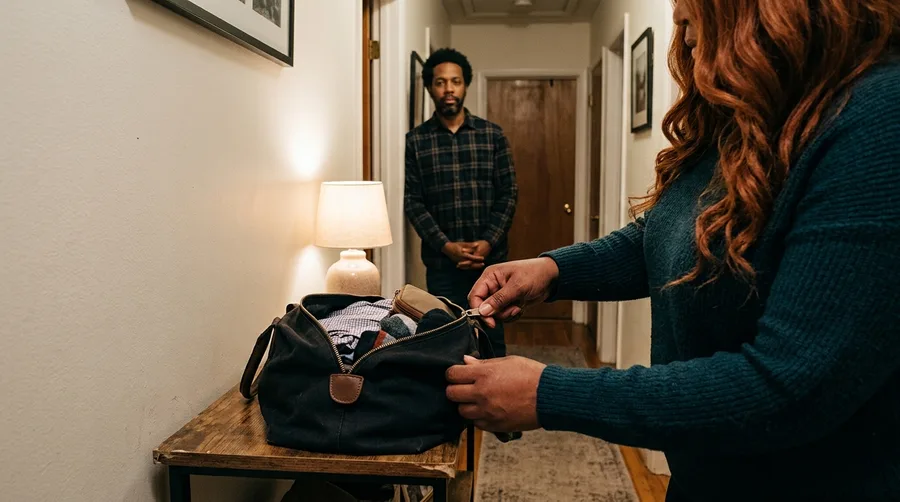
Turning a clean parting into an endless courtroom trial is a quiet trap that costs you months of unnecessary emotional recovery.
When a connection runs its natural course, the temptation to sit the other person down and deliver a comprehensive diagnostic breakdown of why the dynamic failed is remarkably strong.
This exhaustive post-mortem rarely brings actual closure to either party; instead, it turns a quiet separation into a defensive debate about ancient history and minor grievances.
You find yourself re-litigating text messages from six months ago while the other person scrambles to refute your character assessment sentence by sentence.
Calm people recognize that relationships can simply expire without requiring a signed confession, a notarized timeline, or a final committee hearing to validate the outcome.
Keep your departure clean and unburdened by offering a simple, definitive statement instead of a multi-page closing argument that invites a counter-argument.
Say goodbye with quiet grace, pack your emotional bags, and step away into your next season without looking back over your shoulder to check if they understood your reasoning.
⚠️ COMMON MISTAKE
Avoid the Forensic Breakdown
Listing every grievance during a parting conversation invites a counter-argument rather than offering peace.
6. How You Spend Your Solitude

Sometimes you just want to sit on your living room floor with the lights off for an hour.
There are days when sharing every detail of your evening feels less like conversation and more like an audit you never signed up for.
When a partner asks what you did all night, telling the exact truth about your blank quietude is entirely fine if it comes without an apology or a defensive preface.
Notice whether you are offering the information because they care or because you feel a quiet pressure to prove you earned the rest.
7. Your Internal Emotional State

I used to unpack every flicker of annoyance or fatigue the moment someone noticed I was quiet.
You are sitting at the dinner table, someone asks why you seem distant, and you immediately offer a full report on your heavy workload and sleep deficit.
I am fine, truly, just taking a moment to reset, you murmur when someone notices you are quiet at the dinner table.
You can say that sentence, pause, and let the conversation flow around you without launching into a full psychoanalysis of your childhood or your current workload.
People who maintain inner peace understand that not every fleeting mood requires public translation or group management.
When you narrate every internal dip, you turn a passing shadow into a shared project that everyone else feels obligated to fix.
Instead, keep the response light and unburdened by offering a simple boundary phrase like I am just catching my breath for a minute, then let the silence do the rest.
8. Your Professional Career Trajectory

The standard advice tells you to network constantly and explain your five-year plan to every acquaintance at a cocktail party.
That relentless urge to narrate your ambitions actually strips away the quiet momentum required to build anything substantial.
When you broadcast every career move before it happens, you spend your creative fuel on talking rather than executing.
Quiet professionals let their finished work speak from the portfolio while their lips remain sealed about the drafts.
9. Your Private Family Dynamics

My family is complicated, you say, and then you stop right there. You think you need to explain the family tree.
You imagine this brief summary signals emotional maturity, letting others know you see your relatives clearly without venting your grievances. What it actually signals is an unbreachable wall, leaving people to guess whether you come from ordinary holiday friction or something much darker.
When someone asks about home, give them the geography and nothing more. Say you grew up in Ohio, and let the sentence end right there before they start inventing the backstory.
10. Your Daily Creative Process

Conventional wisdom insists that talking through your creative ideas with everyone you know helps build momentum, but the opposite tends to happen the moment the words leave your mouth.
You sit at your kitchen table with a half finished notebook, eager to tell a friend about the new direction of your writing, so you spend twenty minutes walking them through every chapter outline and character arc.
The conversation feels warm and encouraging, but when you return to your desk the next morning, the urgent need to actually write those scenes has completely vanished.
The human mind often registers social approval of an intended achievement as the achievement itself, which quietly starves the actual labor of its necessary fuel over weeks and months.
This habit quietly costs you finished projects, trading tangible output for a long trail of enthusiastic coffee shop conversations that ultimately led to nothing on the page.
Keep your drafts in a closed drawer, build the foundation in absolute silence, and let the final completed piece arrive in the world without any introductory speech.
11. Your Reasons for Saying No

Over-explaining a refusal quietly hands the other person a veto over your personal boundaries.
You find yourself staring at an email request, drafting three different polite excuses about prior engagements because you believe people need a valid logistical reason to accept your refusal.
You think that without a detailed backstory, your boundary looks selfish or unreasonable to the person asking.
In reality, researchers who study social friction find that extra justifications invite negotiation rather than ending the conversation.
A clean refusal without a supporting alibi respects both your time and theirs, signaling that your initial answer is a complete decision rather than an opening bid for debate.
Say no using a simple, direct sentence, then stop talking and let the silence hold the space.
12. Your Personal Definition of Success

3 markers of a good life are often measured by titles, square footage, and salary brackets in standard conversations.
When you frame your success around quiet mornings and steady work, people look for the hidden catch.
Instead of defending your unconventional metrics, simply smile and let your daily peace serve as the entire definition.
13. Your Immediate Health Habits

Do you announce why you are turning down a drink or leaving a gathering by nine o'clock, or do you just say goodnight? If you feel a quiet pull to list your reasons-early meetings, tomorrow's run, a stomach that acts up after midnight-you are treating your rest like a request that needs seconding.
The moment you offer a rationale for a basic physical boundary, you turn a simple choice into an open debate where anyone at the table gets a vote.
Next time you step away early, offer a flat sentence instead. Say you need to head out, wish everyone well, and let the silence sit there.
14. Your Personal Growth Milestones

I used to think that every quiet internal victory required an audience to make it real.
You notice that the usual trigger passed without the old familiar spike of panic, and the urge to tell someone how far you have come hits like a wave across the dinner table. You lean in to explain the shift, waiting for the nod that validates the work.
Real change settles deeper when you let it stay entirely your own. Say the simple thing about the present moment, and leave the history of your own reconstruction completely unsaid.
15. Your Reasons for Remaining Silent

There is immense power in letting a room stay quiet after someone makes an unreasonable demand or asks an intrusive personal question.
You do not need to fill the void with an explanation, a nervous laugh, or a quick deflection.
Most people rush to rescue an awkward pause because discomfort feels like danger.
By holding your tongue and letting the silence do the heavy lifting, you reclaim your boundaries and teach everyone around you what real calm looks like in practice.
Practice this simple restraint tomorrow morning, and watch how quickly the noise around you begins to fade into the background.
Frequently Asked Questions
Why is over-explaining such a hard habit to break?
Over-explaining usually stems from an early conditioning to keep the peace and manage other people's comfort levels. Breaking the habit requires retraining your nervous system to tolerate the brief discomfort of a silent pause.
Won't people think I am being rude if I don't give a reason?
People often mistake a lack of explanation for rudeness at first simply because they are used to performative politeness. Once they adjust to your consistent boundaries, they will respect your concise communication.
How do I start setting these boundaries without feeling guilty?
Start small with low-stakes situations, such as declining an unnecessary invitation with a simple no. Notice how the world does not end when you omit the backstory.
Is silence always better than offering a polite excuse?
Not always, but reserving your explanations for deep relationships rather than casual acquaintances preserves your emotional energy. Save your justifications for the people who truly share your life.
Where This Actually Starts
Pick one small boundary to test this week, like declining a casual request with a simple, unadorned sentence and letting the silence sit.
That single quiet moment is where genuine personal calm takes root.

Meet Edward Green, the founder of GolfingGoal and a seasoned expert in golf. With years of experience on the course and a passion for the sport, Edward has a wealth of knowledge to share. As our Lead Writer, he contributes articles, tutorials, and resources to help readers to improve their skills and reach their full potential on the golf course. Join Our Team!