
Your attention collapses at 3 PM because your cognitive reserve hits absolute zero after six hours of unbroken micro-decisions.
Most people try to solve this exhaustion by pouring a third cup of coffee or scrolling social media feeds, which only fragments your remaining focus further. Instead, you need a precise 90-second behavioral reset that clears mental fatigue without stimulants.
Quick Tips Before You Start
Set a Hard Timer
Stop working the exact second your 90-second block begins.
Change Your Line of Sight
Look at something at least twenty feet away to relax eye strain.
Drink Cold Water
Swallow eight ounces of ice water to trigger a mild physiological alertness shift.
1. Why Do You Keep Chasing Tabs?

I am just looking up one quick thing before I finish this paragraph.
That open browser window looks like research, but it is actually an escape hatch from cognitive fatigue. When executive function dips in the afternoon, your brain treats tab-switching as work because it delivers a tiny, low-effort hit of novelty, even though each unread tab remains an unresolved micro-commitment siphoning your working memory.
The illusion of productivity takes over while your actual exhaustion deepens. Close every browser window except the single document you need right now, write your immediate priority on a sticky note, and place it directly over your trackpad.
Best For
2. How to Stop Apologizing for Slow Work

The standard reflex when your afternoon focus evaporates is to broadcast your fatigue to everyone around you, assuming an admission of struggle buys you grace or lowers expectations. Announcing that your brain is completely fried or that you are running on empty actually accomplishes the exact opposite by deepening your sluggish state and inviting unhelpful chatter that drains your remaining cognitive bandwidth.
Instead of leaning into helpless vulnerability, you can completely shift the dynamic by anchoring your response to a concrete timeline that signals competence rather than collapse. When someone interrupts your slump with a new request, use these exact words to protect your focus: I am wrapping up this specific analysis and will reply by four o'clock.
That boundary holds the line without inviting negotiation or sympathy, allowing your brain to transition out of social processing mode and back into execution. Stating a precise completion time changes how the interruption lands, turning a vague delay into a managed delivery.
💡 PRO TIP
Protect Your Afternoon Hours
Treat your 3 PM window like an inviolable meeting with yourself. Turn off non-essential notifications before the clock strikes two.
3. What the Research Shows About Dips

For years, I assumed the three o'clock fog meant I simply lacked discipline or had mismanaged my morning routine.
Researchers who study human circadian rhythms consistently find a predictable trough in alertness during the mid-afternoon hours, independent of how much coffee you drank at breakfast.
This dip is not a personal failure or a sign of poor sleep the night before, but rather a biological baseline tied to core body temperature drops and natural cortisol regulation.
Accepting this rhythm allows you to stop fighting your biology and start scheduling mechanical administrative tasks during this exact window instead of forcing deep creative work that requires peak cognitive energy.
Afternoon Slump Realities
4. The Quick Reset Routine

Your eyes stay locked to the glowing spreadsheet while your mind quietly slips away into a fog of half-formed tabs and lingering fatigue.
That exact blur is the moment your cognitive bandwidth has hit a hard ceiling, demanding a deliberate physical break rather than another cup of caffeine.
Step away from the screen immediately when your attention starts to blur, leaving the open documents right where they are.
Stand up, stretch your arms overhead, and take ten slow breaths while looking out a window at something distant.
This physical shift breaks the trance of tunnel vision and changes your physiological state in under ninety seconds.
When you return to the desk, do not try to catch up all at once; pick the single smallest task and let momentum rebuild itself naturally.
At a Glance
5. The Desk Staredown
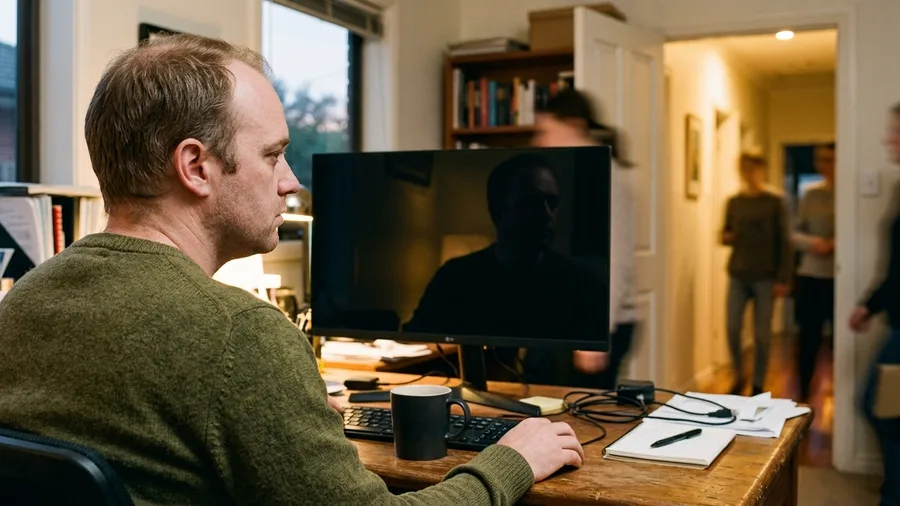
You stare blankly at an unmoving cursor for twenty minutes while your coffee grows cold beside your keyboard.
The project folder is open, your notes are neatly arranged, and your hands refuse to type a single useful sentence.
Every minute spent forcing it feels like pushing a boulder up a mud hill.
What is actually happening is cognitive overload masquerading as laziness, leaving your working memory completely out of RAM.
Instead of trying to force another paragraph out of a tired mind, close the lid for sixty seconds and let the system clear.
Stand up, look away from the screen, and let the pressure drop before you try to touch the keys again.
Before You Reset
-
Close all active email clients Hide notifications completely.
-
Push your chair back three feet Break physical posture.
-
Grab a glass of cold water Hydrate before returning.
6. Why More Coffee Makes It Worse
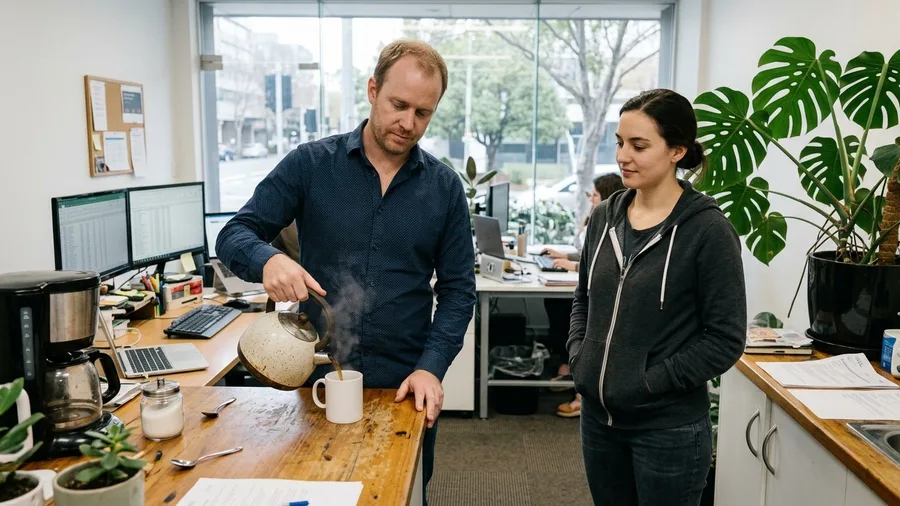
Three cups of coffee after lunch feel like the only bridge across the afternoon wall.
Reaching for another brew tricks your system by blocking adenosine, the chemical buildup that signals fatigue, but it leaves the underlying exhaustion untouched. The actual cost arrives at midnight when that leftover stimulant disrupts deep sleep, guaranteeing an even deeper crash tomorrow.
Swap the fourth cup for a cold glass of water and a five minute walk to let your body clear the fog naturally.
Afternoon Habits Compared
What to Avoid
- Reaching for a third cup of coffee
- Scrolling social media feeds
- Forcing complex creative work
- Skipping breaks entirely
What to Do Instead
- Drink eight ounces of cold water
- Take a 90-second stretch break
- Switch to mechanical tasks
- Set a hard timer for focus
7. When Slump Becomes Burnout

The quiet danger of the mid-afternoon fog is that it acts as a permanent state rather than a temporary pause, bleeding your evenings dry and turning recovery into a full-time job.
When a fatigue that feels like a 3 PM crash greets you at 8 AM on a Tuesday, your body is telling you that a simple desk stretch or a glass of cold water is no longer enough to bridge the gap.
You sit at your desk staring at an unread email while the clock ticks past three, and the heaviness in your limbs feels less like a lack of focus and more like a total exhaustion that sleep no longer cures.
The line between a normal circadian dip and chronic burnout is crossed when rest stops working, and trying to push through a fundamentally unsustainable workload becomes an exercise in burning fuel you simply do not possess.
There is a crucial exception here worth noting because every afternoon slump is not a crisis, and if your exhaustion lifts entirely by Friday evening and stays gone all weekend, you are merely tired from a busy week rather than broken by it.
When the weight persists through your days off, the correct move is not to squeeze another productivity hack into your routine, but to look at your calendar and say the words out loud to yourself or a manager: this volume of work is unsustainable and non-essential commitments must go.
Fatigue Spectrum
Measuring your afternoon exhaustion level
- Mild Slump: Fixed with a glass of water and a short walk.
- Brain Fog: Requires a complete task switch for 15 minutes.
- Total Burnout: Needs structural workload reduction immediately.
8. What Your Distraction Signals
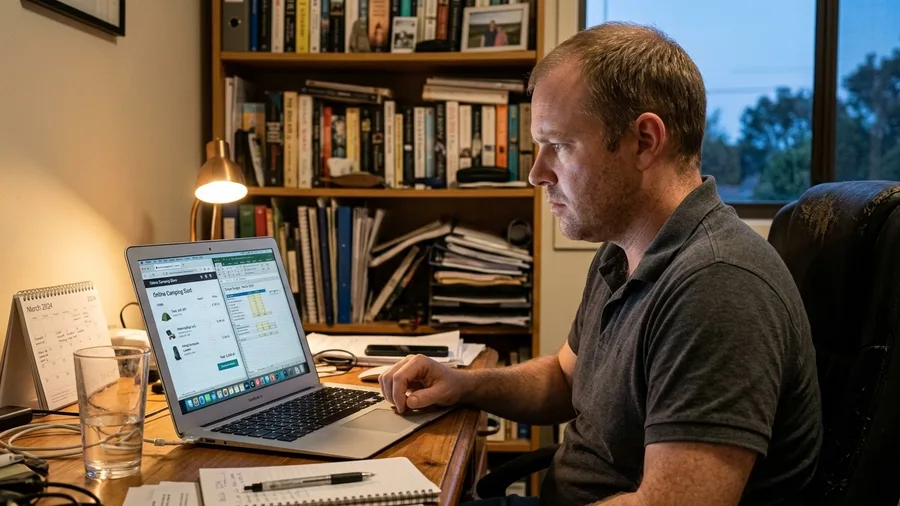
Why do you open shopping sites when you should be finishing reports?
You stare at a spreadsheet cell, your chest tightens with a familiar low-grade panic, and suddenly a tab for camping gear feels like the most urgent priority in your life.
You probably tell yourself you have no willpower left and mentally punish your lack of discipline for giving in so easily.
That interpretation misses what is actually happening beneath the surface.
Distraction is rarely a discipline issue.
It is a distress signal from a brain that has run out of glucose and needs a low-stakes escape hatch.
When cognitive load peaks and emotional fatigue sets in, the nervous system looks for a quick route to relief without demanding more heavy problem-solving.
Browsing items or scrolling through feeds acts as a painkiller for mental exhaustion rather than a sign of laziness.
Instead of fighting the urge with harsher self-criticism, recognize the tab switch as a polite tap on the shoulder telling you your mental battery is sitting at zero.
Close the browser windows, step away from the keyboard for sixty seconds, and drink a glass of water to give your prefrontal cortex the actual break it is screaming for.
9. The Quiet Cost of Pushing Through

Forcing yourself to stay at the keyboard when your attention has completely evaporated feels like dedication, but it operates as a slow drain on your life outside of work.
Pushing through fatigue buys you twenty extra minutes of substandard output. It quietly spends your evening patience, leaving you irritable and depleted when your family or friends need you most.
The trade-off looks invisible on any single afternoon, yet over months it trains your nervous system to associate work with chronic depletion rather than focused effort.
10. Can You Pass This Focus Test?

How many minutes can you read dense material without checking your phone before your mind wanders? If the answer is under five, your attention span has been fractured by micro-interruptions.
That number serves as your real baseline. When you cannot finish a single page without hunting for a notification, it means your daily habits have adapted to constant digital grazing. You pay a heavy cognitive tax every single time you look away, losing your momentum and resetting your deep focus for minutes at a time.
Do not trust willpower alone here.
Move the device entirely out of arm's reach, set a physical timer for ten minutes, and stay with the text until it rings. The first three minutes will feel genuinely agonizing, but pushing past that initial wave of resistance is the only reliable way to repair the underlying damage.
11. The Desk Staredown Revisited

I used to think that pushing through mental exhaustion was a badge of honor that separated productive days from wasted ones. You sit motionless while the afternoon light shifts across your keyboard, feeling the heavy weight of fatigue settle right behind your eyes.
Sometimes admitting defeat for ninety seconds is the only way to save the rest of your workday. Let go of the task entirely, step back from the desk, and give your mind the brief reset it is desperately begging for.
12. Why Slowing Down Speeds You Up
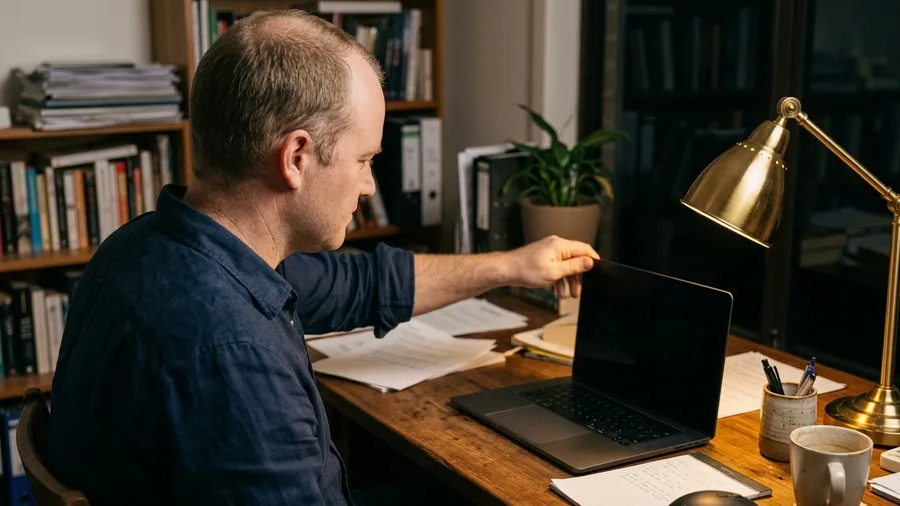
The standard advice when your focus frays at three in the afternoon is to push harder, double down, and sprint through the final hours of the workday.
That common instinct feels productive on the surface, but it is precisely what turns a manageable mid-afternoon cognitive dip into a compounding cascade of errors.
You stare at a simple spreadsheet row at three fifteen, trying to force your tired brain to reconcile columns that refuse to balance, and five minutes later you realize you have overwritten the wrong formula entirely.
Working faster during an energy crash is a losing strategy because when your cognitive processing slows down, trying to rush creates compounding mistakes that take twice as long to fix tomorrow morning.
Instead of gritting your teeth through the fog, stop completely, step away from the desk for ninety seconds, and let your mind idle so it can clear the accumulated static.
Saying out loud to yourself or a colleague that you need a quick reset clears the mental hurdle, and stepping back to stretch or drink a glass of water lets you return to finish your remaining tasks in half the time with zero errors.
13. What Your Exhaustion Signals

Three o'clock arrives and your brain turns to static, convincing you that your work ethic has quietly evaporated.
You take that heavy drop as a personal failure of discipline, assuming you simply lack the stamina to finish strong.
It is actually a straightforward signal that your daily pacing needs structural adjustment rather than a harsher internal penalty.
14. When Slumps Are Totally Normal

You stare at the blinking cursor at three in the afternoon, convinced that a sudden wave of exhaustion means your entire career path is fundamentally broken. That panic feels completely real in the moment, turning a standard biological lull into a full existential crisis about your life choices.
Chronobiologists who study human energy cycles keep finding the same baseline pattern across every profession. Our internal clocks naturally dip after midday, reducing core body temperature and cognitive alertness regardless of how much coffee you consumed or how inspiring your morning tasks felt.
Mistaking a routine physiological trough for a professional mismatch leads to frantic overcorrection, where you try to force high-level output through sheer willpower when your system simply needs a shift in gear. Acknowledge this predictable rhythm as a normal part of human biology rather than a personal failure.
Instead of fighting the drop or rewriting your resume, take a deliberate ten-minute break to step away from the screen and handle low-stakes physical tasks. Design your schedule so routine administrative chores land during this window, letting your natural energy catch up without forcing an unwinnable battle against your own biology.
15. Can You Test Your Focus Now?

Take ten seconds to notice where your shoulders are positioned right now.
Drop them away from your ears, unclench your jaw, and take one deep breath before you finish reading this final point.
Frequently Asked Questions
Why does my attention always crash in the afternoon?
Your circadian rhythm experiences a natural trough in alertness and body temperature during the mid-afternoon hours, compounded by decision fatigue.
Is coffee bad for the afternoon slump?
Consuming caffeine late in the day disrupts your adenosine clearance, which ruins your sleep quality that night and worsens tomorrow's fatigue.
What should I do during the 90-second reset?
Stand up from your desk, drink a glass of cold water, look out a window to rest your eyes, and take ten slow breaths.
Can I do creative work during the 3 PM dip?
It is much more effective to reserve deep creative work for your peak morning hours and handle routine administrative tasks during the afternoon slump.
The Single Afternoon Habit to Start Today
Close your extra tabs, stand up from your chair, and drink a glass of cold water the next time your focus slips.
That single ninety-second interruption will change how you finish your workday.
Try the 90-Second Reset Now
Push your chair back, stand up, and take ten slow breaths before you close this tab.

Meet Edward Green, the founder of GolfingGoal and a seasoned expert in golf. With years of experience on the course and a passion for the sport, Edward has a wealth of knowledge to share. As our Lead Writer, he contributes articles, tutorials, and resources to help readers to improve their skills and reach their full potential on the golf course. Join Our Team!