

Dropping ten dated verbal habits will instantly modernize your conversation and keep people focused on your ideas rather than your birth year.
Language evolves constantly, and subtle speech markers often telegraph generational detachment long before physical appearance does. When you replace nostalgic cushions and age-centric qualifiers with direct, present-tense phrasing, listeners respond to your expertise rather than framing you as a relic of a bygone era.
Speech Modernization Overview
1. Drop 'In My Day' When Sharing Advice

Three small words can turn a sharp, useful observation into an unnecessary lecture. Prefacing a practical insight with "in my day" causes the listener to stop absorbing the lesson and start filtering out what they expect to be nostalgia.
Researchers who study communication patterns consistently find that younger listeners mentally disengage when advice opens with temporal distance. When a story is explicitly anchored to a past era, people under forty tend to assume the underlying mechanics no longer apply to modern workplaces or current technology. The practical wisdom gets buried simply because you framed it as history.
The underlying human pattern usually outlives the era.
Drop the historical frame entirely and state the core observation in the present tense. Saying "when deadlines get tight, people always value clear boundaries over vague promises" delivers your real-world experience as an active truth. It gives the listener something they can use today without asking them to step into a time capsule first.
💡 Tip: Instead of 'In my day, we called clients directly', say 'Direct phone calls often resolve miscommunications faster than text messages.'
Misconceptions About Generational Speech
2. Stop Saying 'Young Lady' to Service Staff

A subtle flash of annoyance across a barista's face often follows what felt like a warm compliment. You hand back the payment terminal, smile, and say, 'Thank you, young lady.' What was intended as warmth instantly reframes the counter dynamic, signaling that you see a teenager needing encouragement rather than a peer managing a shift.
Working adults behind a desk or counter do not want paternal affection from customers; they want professional recognition. Stripping out the age-based labels keeps the exchange direct, grounded, and equal.
A plain 'Thank you, I appreciate it' does the whole job.
⚠️ COMMON MISTAKE
The Diminutive Trap
Using casual terms of endearment with retail staff or younger colleagues rarely projects warmth. It usually highlights an unearned power dynamic that makes people uncomfortable.
3. Cut 'Back When' From Everyday Stories

You might think setting up a story with 'back when' gives your listener helpful context. In reality, it turns a sharp observation into a museum exhibit before you even finish the sentence.
Researchers who study conversation dynamics point out that nostalgic markers immediately anchor your identity in the past. When you say, 'Back when we worked without computers,' the listener prepares for an artifact rather than active insight. If you cut the phrase and start with the action – 'We managed forty client accounts using paper ledgers' – the human challenge takes over.
Drop the timeframe and let the story earn its own room.
How Language Shapes Listener Attention
Audience retention markers during professional conversations
4. Eliminate 'Nowadays' When Commenting on Modern Culture

Why does a word as common as 'nowadays' instantly draw an invisible border between you and modern culture? Because the moment it leaves your mouth, it signals that you are watching life from the outside.
When you say 'nowadays people do not read books' or 'nowadays nobody has real conversations,' you are doing much more than offering a simple opinion. You are framing contemporary society from a distant vantage point, casting yourself as a nostalgic spectator looking at the world through a window rather than an active participant living squarely inside it.
Sweeping generational generalizations always make you sound dated.
Researchers who study communication patterns find that blanket judgments signal a person's disengagement from current reality. When you reduce complex social shifts to a single dismissive summary, listeners do not hear thoughtful critique. They hear someone who feels alienated by modern digital and social habits, which quietly adds decades to how your perspective is received.
The replacement is simple: state the precise, observable detail instead of the sweeping complaint. Swap 'nowadays nobody goes to theaters' for 'streaming habits have completely shifted how people watch independent films.'
Notice how that small adjustment completely changes how your point lands. You are making the exact same observation about cultural habits, but you no longer sound like an outsider mourning the past. You sound like an active participant paying close attention to how the world around you is actually evolving.
When to Replace 'Nowadays'
5. Erase 'At My Age' Before Stating Your Limits

Prefacing your personal boundaries with the phrase "at my age" turns a simple daily preference into an unnecessary disclaimer about your physical decline.
In the moment, invoking your birth certificate feels like an easy buffer against social pressure when you want to decline an activity you never liked in the first place. Over several months, though, the quiet cost adds up. Family and friends stop inviting you to morning walks, travel plans, or weekend events because you have systematically trained them to view you through a lens of limitation.
You trade lasting agency for two seconds of comfort.
State what you want without framing your personal schedule as a medical concession. When someone suggests a late gathering, skip the age disclaimer entirely and state your preference cleanly. Saying "I pass on late-night dinners, but I would love to do lunch" protects your sleep routine while keeping your standing in the group entirely intact.
Phrasing Shift: Age Disclaimers vs. Direct Boundaries
Dated / Defensive Speech
- At my age, I can't stay up past ten.
- I'm too old to learn this new software.
- In my day, people worked harder.
- Excuse my senior moment, I forgot your name.
Modern / Direct Speech
- I prefer wrapping up dinners around nine.
- Show me the steps for this new tool.
- Different workflows bring different priorities.
- Your name slipped my mind for a second.
6. Replace 'Whatever Happened To' With Specific Questions

"Whatever happened to basic courtesy in customer service?"
It drops like a heavy curtain over a room. You might intend it as a light observation while waiting in a slow line, but the people around you hear a complaint disguised as an inquiry. Listeners quickly learn to brace for a broad lecture, assuming you are about to contrast every modern inconvenience with an idealized memory of the past.
Launching a thought with those words signals pure nostalgia rather than active curiosity. It tells the person listening that you have already passed judgment on modern life, which quietly shuts down the possibility of an engaging, two-way conversation.
When you genuinely want to explore how a custom or industry has shifted, swap the open-ended nostalgic groan for a precise question about current reality. Put the actual mechanics into words. Try saying, "I have noticed most companies moved their support lines to automated apps recently. Do those digital channels actually improve resolution times, or do they just reduce staffing costs?"
The same shift works in casual dining or everyday social settings. Instead of asking where good restaurant service went, ask, "Do you find these table-side ordering apps make meals faster, or do you miss having a server take the order directly?"
Curious questions invite people into a shared conversation, whereas nostalgic laments force them to defend the era they live in. Asking how modern systems work shows you are engaged with today's world rather than merely criticizing it.
The 3-Step Speech Correction Sequence
7. Stop Apologizing With 'Excuse My Senior Moment'

You are standing near the drinks table at a Saturday dinner party, looking right at someone you spent an hour talking to last month, when their name completely vanishes from your head.
To cover the awkward beat, you chuckle and offer up a reflexive apology about having a senior moment. A twenty-year-old who blanks on a name assumes they are tired, but those four words hand the room a verdict. You turn an ordinary human slip-up into cognitive decline, trading conversational grace for quiet pity.
Normal memory lapses happen to thirty-year-olds every day, and they do not require a demographic disclaimer.
The next time an acquaintance's name evaporates, drop the self-deprecating excuse. Simply say 'Your name just slipped my mind,' take the quick reminder with a smile, and keep the conversation moving. When you treat a brief memory lapse as a complete non-event, everyone else in the room will too.
Memory Lapses — Context vs. Demographic Myth
🧠 Everyday Forgetfulness
Common Across All Ages
🗣️ Self-Labeling Impact
Reinforces Internal Age Bias
💬 Best Response
Direct Acknowledgment
⚡ Conversational Effect
Maintains Equal Footing
Key Principle
Treating a momentary brain fog as an age event invites unwanted pity.
8. Retire 'You Kids' When Speaking to Younger Adults

I used to throw 'you kids' around in project meetings, assuming it made me sound like an approachable, easygoing senior who did not take title or age too seriously.
The gap between intent and impact was huge. What feels like affectionate banter to you actually signals to a thirty-year-old colleague that you still view them through a nursery window rather than as a full professional peer. It quietly resets the room into an age hierarchy, which eats away at mutual respect on shared projects.
Drop the collective label and use their actual names.
9. Swap 'In the Old Days' for Actual Years
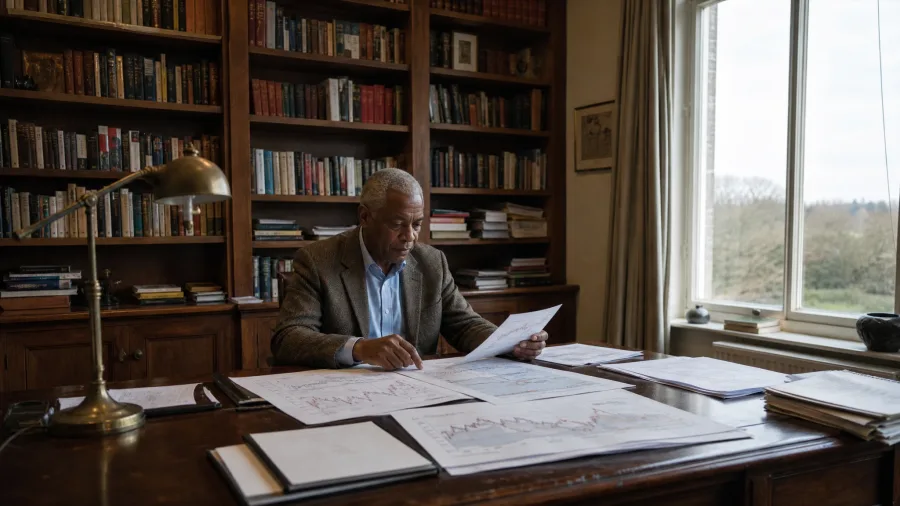
You are sitting at dinner trying to explain how a twelve percent mortgage rate actually felt, and the phrase "in the old days" slides out before you can stop it. In an instant, documented economic history turns into an abstract tale, sounding distant and completely disconnected from modern financial reality.
Vague phrases quietly convert hard-earned authority into quaint folklore.
Take this ten-second self-test: the last time you referenced a past event, did you frame it with a clear calendar year or a hazy epoch? If you defaulted to "back in the old days," you invited listeners to dismiss the memory as a fable. If you named 1982, you anchored the point in concrete historical fact.
Precise years give your experience the weight it deserves. Swapping abstract phrases for "during the late nineties" transforms personal stories into valuable background, letting your knowledge land as useful context rather than nostalgic storytelling about a lost world.
10. Ditch 'I'm Too Old For This' Before Trying New Things

Handing away your adaptability before you even try the new app or join the group chat quietly shrinks your world, signaling to everyone in the room that your curiosity has an expiration date. It converts a minor learning curve into an insurmountable wall.
Of course, there is a clear difference between guarding your energy against actual physical strain and using the calendar as an excuse to avoid modern software. When a task is genuinely absurd or physically unwise, passing on it is just good sense. But when it comes to learning new tools, swap the exit line for a simple "I haven't tried this yet, but let me figure it out."
Adaptability is a daily habit, not an age.
💡 Tip: When facing unfamiliar tech, say 'Walk me through the interface' rather than pre-emptively declaring tech inability.
Frequently Asked Questions
Why do these specific phrases make someone sound older?
Phrases like 'in my day' or 'nowadays' explicitly frame the speaker as an outsider to current culture. They create a generational gap that focuses attention on age rather than the substance of what is being said.
Is it wrong to talk about past experiences?
Not at all. The key is how you frame them. Mentioning specific years or sharing stories directly gives context, whereas using nostalgic cushions makes your experience sound like ancient history.
What should I say when I forget a name or word?
Simply say 'that word slipped my mind' or 'give me a moment for the name.' Normal memory lapses happen at every age, so there is no need to attribute them to getting older.
How can I catch myself using these phrases in real time?
Start by identifying your default phrase. When you feel the urge to preface a sentence with a generational qualifier, pause for one second and state your core point directly.
Where to Start Updating Your Speech
Modernizing your speech is not about hiding your age or pretending to use youth slang. It is about removing unnecessary verbal cushions that distance you from the present moment.
Pick just one phrase from this list today—whether it is 'in my day' or 'at my age'—and eliminate it completely from your next three conversations. Notice how much more directly people engage with your actual ideas when your language stays grounded in the present.

Meet Edward Green, the founder of GolfingGoal and a seasoned expert in golf. With years of experience on the course and a passion for the sport, Edward has a wealth of knowledge to share. As our Lead Writer, he contributes articles, tutorials, and resources to help readers to improve their skills and reach their full potential on the golf course. Join Our Team!