

Cognitive research long held that neural adaptability tapered off sharply after young adulthood, leaving older minds with fixed processing habits. Modern brain imaging shows that adult brains retain remarkable capacity to form fresh neural pathways when forced to decode unfamiliar grammar systems.
Picking up a second language past sixty provides a uniquely rigorous form of cognitive exertion. It forces working memory, pattern recognition, and intentional focus to coordinate under unfamiliar rules.
Here is what actually happens inside your brain during late-life language acquisition.
Cognitive Language Study — At a Glance
1. Can You Still Build New Neural Pathways After Sixty?
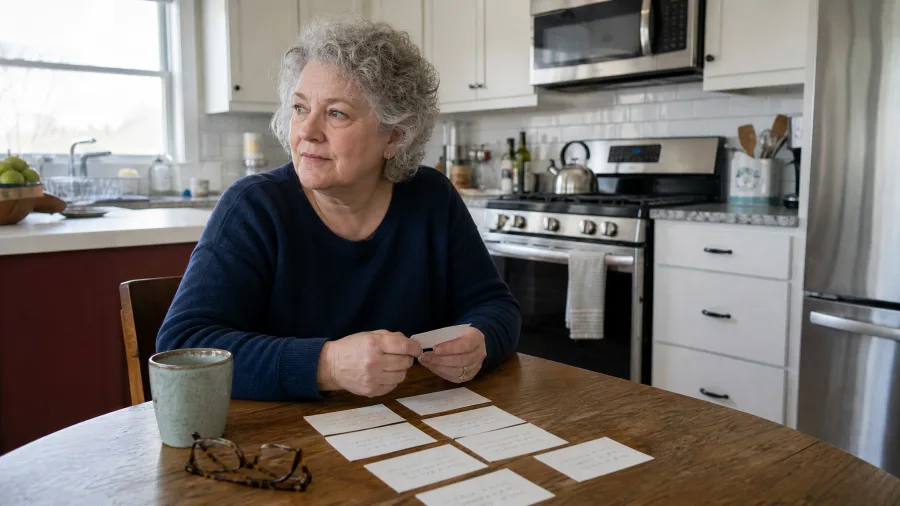
Are you actually building new neural connections, or just tiring out an older brain?
Try a quick ten-second check: look at your stove right now and try to recall its foreign equivalent without looking at your phone. If you feel a heavy, hesitant pause before the word comes, your brain is working hard.
That mental friction happens because your visual cortex, auditory cortex, and frontal lobe are forcing distant regions to fire together in sequence. Pushing through that slight discomfort instead of checking a cheat sheet gives those pathways the exact resistance they need to build structural resilience.
Adult Cognitive Engagement Metrics
Where brain effort concentrates during language tasks
2. Fluency Is the Wrong Goal for Brain Health

Measuring your language study by how fluently you speak is the single quickest way to quit before your brain reaps any real benefit.
Most late-life learners assume cognitive gains require smooth conversation, but the brain builds density through friction, not ease. The actual structural adaptation happens during the uncomfortable pause – the fifteen seconds you sit at the table, straining to pull a forgotten past-tense verb out of thin air. That difficult effort to retrieve a memory forces the brain to reorganize, regardless of whether the sentence lands cleanly.
You are not failing when you hesitate; you are giving the brain the exact work it needs.
To protect your motivation during difficult grammar lessons, change what you track each morning. Stop counting mastered vocabulary items and start timing the raw minutes you spend actively wrestling with difficult recall. Spending ten focused minutes inside that mental struggle is a complete success, because the search itself is where the brain rewires.
💡 PRO TIP
Focus on Retrieval Effort
The psychological benefit stems from active struggle during recall practice, not from flawless grammatical execution.
3. When Is Grammatical Frustration Actually Doing the Work?

Three months into studying a new Italian grammar concept, twenty minutes of sentence drills can leave you staring down at your workbook on the kitchen table with a distinct, heavy ache.
You sit frozen over an exercise, wrestling with whether to choose past tense forms, suddenly convinced your memory is hitting an insurmountable wall. The immediate temptation is to close the book in defeat, assuming that sharp mental resistance means you started too late. Yet that painful tension is actually evidence of something else.
Cognitive psychologists refer to this uncomfortable threshold as desirable difficulty.
When an exercise feels effortless, your brain is merely coasting on existing pathways. True structural adaptation requires you to operate under friction. When deciding between competing tenses, your prefrontal cortex works intensely to suppress decades of automatic English habits while searching for unfamiliar target rules. That double workload is demanding, but it builds new connections.
The key is distinguishing this productive neurological strain from useless cognitive fatigue. Productive friction feels like heavy mental exertion during the task itself, whereas burnout leaves you feeling drained for hours.
When resistance peaks, say out loud, "This struggle is my brain suppressing English," write two final sentences, and shut the notebook. Capping these high-intensity grammar workouts at twenty minutes per day maximizes pathway development while protecting your working memory, ensuring you step away at the peak of growth rather than at total exhaustion.
Session Calibration Specs
🎯 Target Error Rate
20% to 30% Misses
🛑 Early Stop Trigger
3 Blank Responses
⏱️ Consolidation Rest
15 Min Quiet Window
📅 Weekly Cadence
4 to 5 Days Max
Post-Drill Protocol
Avoid screens or media for 15 minutes immediately after drill to allow offline neural consolidation.
4. Executive Function Improves Before Vocabulary Does

You sit at the kitchen table on a Tuesday evening with two highlighters and a dog-eared notebook, staring at a blank line where the past participle for 'to leave' ought to be. The word simply refuses to surface.
It feels like failure, but the friction is the point.
Researchers who study adult language acquisition consistently find that managing two language systems strengthens executive function long before vocabulary becomes fluid. The silent, uncomfortable effort of suppressing your native English to search for an unfamiliar pattern forces your brain to recruit attentional control networks. You build focus efficiency long before you build conversational speed.
That mental upgrade carries straight into your daily routine. You will notice it when you hold steady concentration through complex financial planning or sit with a dense, three-hundred-page history book without your attention drifting after two paragraphs. The missing word was never the real score.
Adult Language Learning Realities
5. Why Isn't Struggling for Words a Sign of Memory Loss?

I spent weeks convinced that every five-second pause for a simple French word was clear evidence my memory was slipping.
What feels like a failing memory is actually an overcrowded mental queue. When you look at an apple, your brain now retrieves both 'apple' and 'pomme' at once. To say the French word, your mind must actively suppress the dominant English one first. That deliberate hesitation is a healthy workout in cognitive inhibition, not a sign of decay.
The next time you freeze mid-sentence, hold the silence instead of apologizing. Your brain is busy doing heavy lifting.
Best Formats for High Cognitive Yield
6. Mental Fatigue Demands Scheduled Rest Days

Grinding through heavy mental fatigue quietly destroys your long-term language retention.
When you force extra flashcard drills onto an exhausted brain, you spend energy without making progress. Adult neuroplasticity depends heavily on quiet rest and slow-wave sleep. During these deep sleep cycles, your brain actively reorganizes fragile, short-term linguistic memories into permanent structural networks. Forcing study sessions while fatigued disrupts this process, preventing new words from taking root.
Over several months, refusing to rest compounds into severe cognitive burnout, causing you to misinterpret normal brain fatigue as a personal failure of memory or an inability to learn at your age.
Schedule two non-negotiable, study-free rest days every single week. Close the flashcard apps and put the grammar workbooks away on those days, treating the total silence as an active consolidation period that allows your brain to convert recent effort into lasting fluency.
Adult Language Methods Compared
High Cognitive Yield
- 20 minutes of handwriting drill
- Translating short prose sentences
- Listening without English subtitles
- Speaking target sentences aloud
Low Cognitive Yield
- Tapping multiple-choice app buttons
- Passive background listening
- Reading translated text instantly
- Memorizing word lists without sentences
7. Why Should You Ditch Gamified Streak Apps for Real Context?

Most language apps promise that five minutes of swiping digital icons each day will keep your brain sharp. In reality, matching cartoon pictures creates a quick reward loop without engaging deep processing networks.
True cognitive adaptation requires real friction and active recall.
You cannot build structural memory when you are merely selecting correct options from a drop-down menu on a screen. Replace the digital tapping with ten minutes of hand-written translation exercises in a physical notebook. Writing simple, complete sentences about your actual day from memory forces your brain to construct original meaning from scratch, which is where the real growth lives.
The Daily Active Recall Process
8. Accent Hesitation Silently Sabotages Cognitive Growth

"I sound foolish whenever I try to speak Spanish out loud," is the single most common confession adult language learners make, and it usually ends with them going completely silent.
What feels like a personal failure of memory or courage is actually a plain shift in brain resource allocation. The moment your nervous system senses social evaluation, it treats potential embarrassment as a threat. Attention gets pulled away from vocabulary retrieval and redirected into anxious self-monitoring, quietly draining the exact working memory you need to form a coherent sentence.
Your brain is not forgetting grammar; it is busy protecting your dignity.
To reclaim that stolen bandwidth, practice speaking out loud while completely alone in your car or a quiet room. Narrate your daily routines in simple sentences without an audience present. Removing perceived judgment clears the cognitive deck, allowing your nervous system to dedicate its full processing power to speech production until the physical mechanics feel natural.
9. When Does the Brain Shift Into Active Translation?
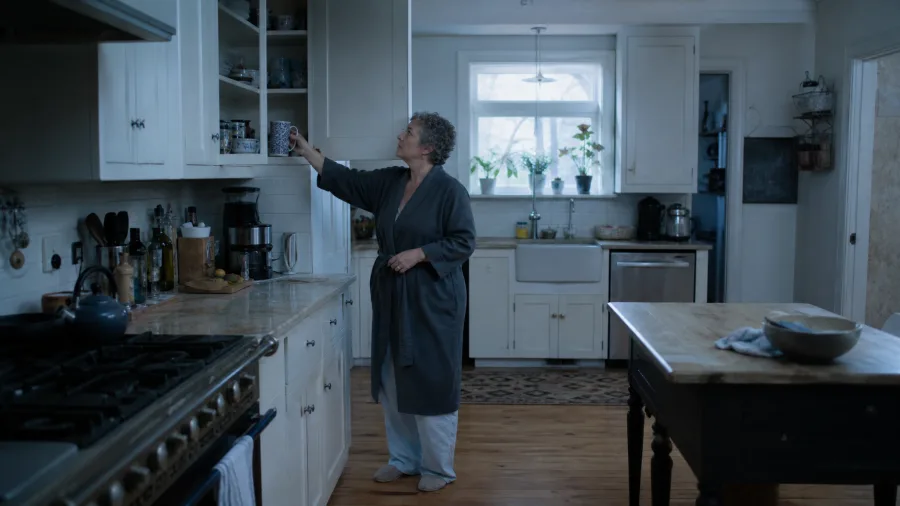
Your brain gradually stops translating every target word back through your native tongue.
You are standing in the kitchen on a quiet morning, reaching into the cupboard for a mug. For months, seeing the ceramic mug meant registering the English word first, then running a brief mental search to pull up the Spanish word taza. Today, as your fingers touch the handle, the word taza appears instantly alongside the mug itself, completely skipping the English step.
That brief moment of dual availability signals a profound structural shift.
During your early months of study, your brain relies on a double hop, using native words as a mandatory bridge to understand new vocabulary. When the target word connects straight to the physical object, that bridge collapses. Cognitive researchers observe this as direct semantic mapping, proof that your brain is no longer managing language as an academic puzzle, but as a primary perceptual filter.
You do not need full conversational fluency to experience this bypass. It happens quietly in mundane moments, long before you can hold a complex debate at a dinner party.
To reinforce this shortcut, turn your morning routine into an active exercise. Walk through your home, point at five familiar objects, and say their target names out loud without naming them in English first. Touch the wooden counter and say mesa immediately. If you catch your mind reaching for the English bridge, stop, look at the object again, and say the target word straight from the image.
10. Words to Use When Your Inner Critic Interrupts

Four distinct internal doubts surface during your first month of study, and the loudest usually attacks your capacity. When your mind says, 'You are too old to learn verb tenses,' skip the empty positivity. Answer with a flat counter-script: 'My brain is building new pathways through this exact effort.'
Anxiety hijacks the exact working memory required to process language.
By replacing self-doubt with a statement of neuroplasticity, you drop the stress response and free up mental bandwidth. Speak that single sentence silently, take one breath, and return to the page.
11. Why Does Working Memory Reorganize Before Words Flow?

When you start learning a foreign language in your sixties, stumbling over a familiar English word mid-sentence feels terrifically alarming, like direct evidence that your primary language is beginning to slip away.
Psycholinguistic research shows the exact opposite process.
You are standing in the kitchen describing your afternoon to a friend, reach for a completely ordinary word like "appointment," and hit an unexpected wall. The natural panic tells you that learning new vocabulary is somehow erasing old memories, but that frustrating blank spot is actually evidence of a crowded room, not an empty one.
Your mental filing cabinet is rapidly expanding, requiring your frontal cortex to manage mild linguistic interference as it reorganizes two distinct vocabulary systems into a single, shared cognitive directory.
Because your selection mechanism is now searching across a much larger combined pool, it must briefly hold competing foreign terms at bay before retrieving the precise English word you need. Over time, this continuous filtering mechanism refines your search speed and leaves you with stronger overall attentional control, even if the construction phase feels messy.
When a basic word eludes you, avoid announcing that your brain is shot. Pause calmly, give your retrieval system three quiet seconds to resolve the search, and trust the extra machinery working behind the scenes.
12. Subtitles Do Not Spoil Auditory Neural Processing

Stripping away subtitles too soon often triggers a subtle auditory panic. When your brain cannot parse where one spoken word ends and the next begins, it stops trying to decode meaning and begins treating the fast stream of speech as overwhelming noise.
Conventional wisdom treats captions as a cheap crutch, but researchers who study language acquisition find that dual input actually accelerates neural mapping. Watching media in your target language with matching target-language subtitles allows your brain to pair unfamiliar spoken phonemes with written letters in real time. This reduces cognitive strain, leaving your working memory enough room to isolate word boundaries.
The goal is changing what you read, not turning the screen blank.
Leave captions switched on, but set them exclusively to your target language rather than English. Matching French audio directly to French text forces your brain to stay engaged with the new sounds without relying on your native language to translate the moment.
13. Does Social Hesitation Drain More Brainpower Than Grammar Errors?

"Everyone in this cafe is watching me stumble over my verbs."
When you freeze mid-sentence, your brain treats social exposure like a physical threat, redirecting working memory away from language retrieval and straight into threat monitoring. Over several months, this quiet hesitation costs far more bandwidth than a wrong tense ever could, leaving you exhausted long before you complete a thought.
Remaining silent buys immediate safety, but it spends your actual processing power on self-protection instead of neural adaptation. Next time the pause drags out, say your best guess out loud and let the mistake land.
14. Late-Life Language Study Outpaces Daily Crosswords

Why do so many people stick to daily crosswords to stay sharp, despite language study offering far deeper cognitive exercise? Crosswords mostly ask you to retrieve words you already know from familiar pathways.
Attempting to construct a sentence in a new language forces your brain to build entirely new rules, hold shifting context, and manage syntax in real time. Researchers studying cognitive aging observe that managing these dynamic tasks engages far broader brain networks than static pattern-matching ever can.
Trade half your puzzle time for translating five real sentences out loud each morning. You will feel the mental effort shift immediately, and that friction is where actual adaptation happens.
15. How Does a New Language Quietly Change Daily Home Focus?

You stand at the kitchen counter waiting for the water to boil. You reach for a mug, glance at the kettle, and the Spanish words surface automatically before you even think to check your notes.
That spontaneous naming shows your brain has integrated the new vocabulary directly into daily visual processing. The language ceases to be an academic exercise you force yourself to study at a desk and becomes an active lens through which you perceive your environment. This ongoing mental effort alters how your mind manages attention across all routine activities.
The cognitive benefit usually shows up hours later at home.
The intense attentional practice required by daily language drills translates directly into sharper afternoon concentration. Whether you are managing household logistics, reading a book, or organizing a project, your brain draws on the enhanced focus you cultivated during morning study.
Acknowledge these small moments of automatic translation when they happen. They are plain, meaningful evidence that neural plasticity is actively at work, reshaping how your brain functions every day.
Frequently Asked Questions
How many minutes per day should an adult practice a new language?
Twenty to thirty minutes of daily active recall is optimal for cognitive health. Consistency builds pathways better than long weekend sessions that cause mental exhaustion.
Is it normal to feel mentally tired after twenty minutes of language study?
Yes, mental fatigue indicates that your brain is actively working to form new synaptic connections. Short, focused sessions followed by rest yield the strongest long-term gains.
Which language is best for brain health in older adults?
Any language with grammatical structures distinct from your native tongue works well. The cognitive challenge of decoding new rules matters far more than the specific language chosen.
Do mobile language learning apps offer the same cognitive benefits as notebooks?
Physical writing and active recall drills engage deeper memory processing than multiple-choice app tapping. Apps work best as supplements to handwritten practice.
How long before an adult notices improvements in focus and memory?
Most learners notice improved attentional control and daily focus within three to four weeks of consistent daily practice.
You Do Not Have to Master Spanish by Autumn
Learning a language in your sixties is about providing your brain with a rich, challenging environment. You do not need to deliver flawless speeches or conquer every complex tense to gain mental benefits.
Pick one simple ten-minute translation drill for tomorrow morning. Let that single active step be enough for this week while your mind adapts to the challenge.

Meet Edward Green, the founder of GolfingGoal and a seasoned expert in golf. With years of experience on the course and a passion for the sport, Edward has a wealth of knowledge to share. As our Lead Writer, he contributes articles, tutorials, and resources to help readers to improve their skills and reach their full potential on the golf course. Join Our Team!