
Can an ordinary person actually train their brain to remember everything using memory champion techniques, or does it require rare natural wiring? The answer is straightforward: the method works for anyone because it abandons rote repetition entirely.
Most people read a presentation outline or a short shopping list three times, only to watch those points evaporate from working memory the moment a new task demands focus. Mechanical repetition treats facts as abstract text, which human biology is simply not built to retain under pressure.
Tying abstract information to physical geography taps into innate evolutionary navigation, instantly lifting first-time retention from the typical seven-item working memory limit to twenty or more structured items on a single pass. Converting cold concepts into exaggerated, moving imagery along a familiar spatial path allows anyone to master the method of loci and construct a dependable memory palace today.
| Feature | Rote Memorization | Method of Loci (Memory Palace) |
|---|---|---|
| Primary Mechanism | Prefrontal verbal repetition and working memory loops | Evolutionary spatial navigation and visual anchoring |
| Single-Pass Capacity | Limited to 7 items (working memory ceiling) | 20 or more structured data points |
| Recall Path | Strictly linear forward sequence | Bidirectional (forward, reverse, direct random access) |
| Decay Rate | High decay within minutes without constant review | Durable persistence with scheduled spaced retrieval |
| Cognitive Demand | High strain, prone to interference and fatigue | Low cognitive friction using innate spatial terrain |
Why Evolution Favors Spatial Navigation Over Abstract Facts

Human evolutionary survival depended on tracking physical terrain, reliable water sources, and predator territory across shifting landscapes rather than parsing arbitrary strings of abstract symbols.
Navigational memory requires remarkably little conscious mental effort.
Specialized regions like the hippocampus and the parahippocampal place area automatically process spatial coordinates, room boundaries, and physical landmarks without heavy cognitive strain. You can walk through a new building once and remember the path to the exit because your neural architecture is built to anchor details to physical geometry.
Modern data provides no such spatial footholds. Phone numbers, professional jargon, and written task lists carry zero native physical coordinates, forcing your prefrontal cortex to retain raw data through exhausting mental force.
Without physical grounding, unanchored rote repetition inevitably fails within minutes. Information lingers in temporary working memory buffers just long enough for immediate use, but the moment your attention shifts to another task, the unanchored data decays and vanishes from your mental grasp completely.
Cognitive Storage Priority
How the human brain prioritizes different classes of information
The Core Mechanics of the Method of Loci

The method of loci turns abstract data into a physical route by anchoring information directly to architectural checkpoints. The Greek poet Simonides of Ceos discovered this system after stepping outside a banquet hall moments before the roof collapsed, later identifying every crushed victim purely by recalling where each person sat.
The entire technique rests on two non-negotiable structural elements.
You need a series of fixed architectural stations, known as loci, and distinct visual markers placed at each point to represent the specific concepts you want to store.
Mental movement through the space must always follow a single, unbroken linear direction. Walking your route in one predictable sequence prevents you from skipping loci, wandering in circles, or accidentally counting the same room twice when scanning through a long list of stored information under pressure.
Placing a vivid image at each physical checkpoint hooks your target facts directly to long-term spatial memories, turning fleeting data into permanent mental landmarks you can retrieve on demand.
💡 PRO TIP
Lock Your Mental Walk Direction
Always move clockwise through rooms and along hallways. Establishing a strict directional rule keeps your retrieval order intact and prevents skipping stations during fast recall.
Selecting and Mapping Your First Reliable Route
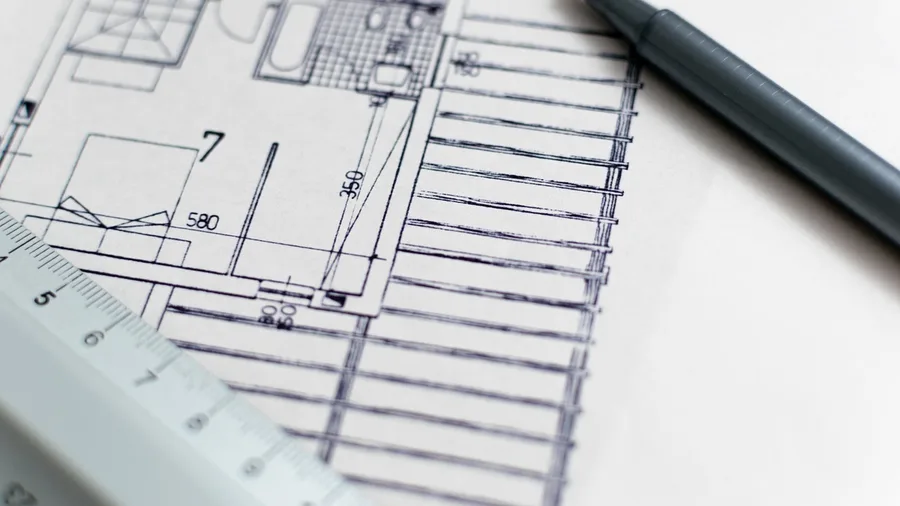
Building a reliable memory palace begins with choosing an intimately familiar environment you already know by heart, such as your current apartment, a childhood home, a regular office workspace, or your daily walking commute.
The standard blueprint relies on ten well-defined stops.
Select five sequential rooms along your normal walking route and establish exactly two fixed stations in each space. For instance, your path might start on the front porch, move to the entryway shoe rack, shift to the hallway mirror, and then advance toward the kitchen sink and kitchen table in order.
Every micro-location must stay clearly separated from its neighbor. Setting distinct visual boundaries prevents stored images from bleeding together when you retrieve them later.
Your layout design must also eliminate dead ends, crisscrossing pathways, and dark, cluttered corners that interrupt your forward momentum. A clean, clockwise flow through the architecture guarantees that your mental movement remains effortless, allowing you to focus entirely on the facts stationed at each point along the line.
📍 Route Setup and Testing Schedule
Calibrate the Empty Path
Run through all ten bare stations in sequence under thirty seconds before placing any mental targets.
Anchor Active Imagery
Fuse each target item to its station using bizarre scale, rapid physical movement, or vivid emotional charge.
Run the One-Hour Audit
Test recall at sixty minutes to spot weak loci; unassisted retention typically scales past twenty items.
Complete Spaced sweeps
Revisit the full ten-station circuit at 24 hours and one week to lock the data into long-term storage.
Encoding Abstract Information Into High-Impact Visuals
You anchor abstract information by stripping away ordinary logic and transforming cold concepts into exaggerated, highly distinctive physical scenes.
Cognitive researchers describe this dynamic through the Von Restorff effect: ordinary, sensible mental pictures fade within minutes, whereas bizarre anomalies trigger deep retention. To make a marker memorable, build it with extreme scale, rapid movement, and tangible sensory details like foul smells, sharp textures, and loud, echoing sounds.
Static, realistic images simply dissolve from recall.
A concept like foreign trade policy transforms into two giant diplomats in suits wrestling furiously over a heavy ceramic globe, smashing it into sharp pieces right on your entryway shoe rack.
Layering physical impact and distinct emotional charge onto a specific location changes how your brain catalogues the event. That deliberate intensity expands retention on a single pass, moving beyond the usual seven-item working memory wall to twenty or more structured data points.
Mental Image Encoding: Mundane vs. High-Impact
Mundane (Fades Rapidly)
- Static, flat objects sitting quietly on a table
- Text labels or written words pasted onto walls
- Realistic, ordinary sizing that blends into the room
- Absence of sound, texture, or physical consequence
High-Impact (Locks Into Memory)
- Exaggerated scale and comical or violent physical motion
- Multisensory details including pungent smells and loud sounds
- Direct interaction between the object and the physical station
- Surprising, absurd, or emotionally charged scenarios
Retrieval Rules and Palace Maintenance Over Time
You maintain a memory palace without confusing overlapping information by separating temporary layouts from permanent ones and pacing your mental reviews on a disciplined schedule.
Turning newly placed visual markers into permanent memories requires walking the spatial route at precise intervals: once after one hour, again after twenty-four hours, and once more at the one-week mark. True mastery means testing non-linear access, like walking the track backwards or jumping straight to stop seven without tracing the earlier stations.
Sequential habit often masks real gaps.
For disposable information like a weekly grocery list or an afternoon errand run, assign a temporary scratchpad palace. Once the task is finished, leave that layout completely empty for forty-eight hours; this cooling period clears out ghost memories so older visual traces do not bleed into your next set of errands.
Permanent palaces, by contrast, house career knowledge, historical timelines, or foundational professional frameworks. These spaces should never be overwritten, preserving their architecture as permanent mental filing cabinets for lifetime reference.
Palace Consolidation Schedule
Where the Memory Palace Fails and What to Use Instead

Spatial memory palaces fail whenever material requires deep conceptual reasoning, mathematical proofs, or spontaneous conversational speech rather than ordered recall.
The method of loci functions as an associative index rather than a thinking engine. Building elaborate rooms and converting complex formulas into visual puns takes considerable upfront mental effort, making the system inefficient for quick, disposable facts or dynamic problem-solving where you must manipulate ideas on the fly instead of reciting an ordered list.
Memorizing an outline is not understanding a mechanism.
To achieve genuine comprehension, pair your spatial palace with the Feynman technique by explaining the underlying ideas in simple, everyday language without relying on mnemonic imagery. Combining spatial locations for structural sequence with active recall testing and spaced retrieval schedules provides both rapid, dependable access and deep functional understanding.
Use the palace to hold the structural skeleton of your topic, but rely on plain-language testing to make sure the underlying logic makes sense on its own.
Avoid Common Memory Palace Errors
Frequently Asked Questions
How many items can a beginner realistically store in one memory palace?
A beginner using a standard 10-stop route can reliably store 10 to 20 distinct data points on their first attempt. With consistent practice and multiple linked rooms, experienced practitioners routinely scale their palaces to hold hundreds of items.
Can I use virtual environments like video game maps for a memory palace?
Yes. Any virtual space that you know intimately and can navigate smoothly in your mind works well. Video game maps, digital architectural models, and familiar television sets provide excellent layouts as long as the path remains clear and non-overlapping.
What should I do if a mental image fades from a station during review?
If a station appears blank during a review walk, do not force rote repetition. Re-encode the image by making it significantly more bizarre, louder, or physically interactive with the station itself before running the full route again.
How do memory champions prevent old images from bleeding into new ones?
Champions maintain separate permanent palaces for lifetime reference data and rotate a collection of disposable scratchpad palaces for short-term recall. Leaving scratchpad routes unused for 48 hours allows temporary associations to dissolve completely.
Constructing Your Five-Stop Route Today
Memory champions rely on ancient spatial navigation rather than genetic anomalies, sidestepping the blind repetition that causes ordinary facts to vanish.
Map out a clean five-stop route through your current home today, designate each checkpoint, and anchor a five-item list using exaggerated, moving scenes. Walk the mental path forward to retrieve every point on your first attempt, then run the sequence in reverse from stop five to stop one. The outline that usually disappears after twenty minutes will stay locked exactly where you placed it.
Map Your First Route Right Now
Review the 10-Stop Baseline Route timeline above, pick five landmarks in your living room, and test your first mental walk.

Meet Edward Green, the founder of GolfingGoal and a seasoned expert in golf. With years of experience on the course and a passion for the sport, Edward has a wealth of knowledge to share. As our Lead Writer, he contributes articles, tutorials, and resources to help readers to improve their skills and reach their full potential on the golf course. Join Our Team!