
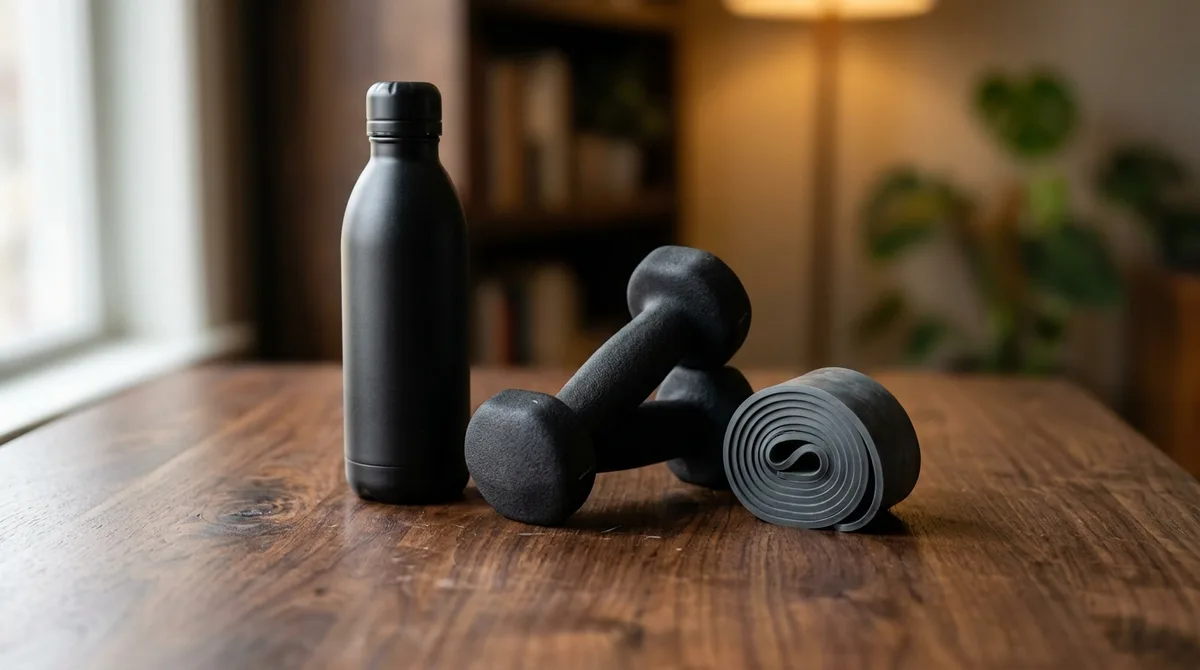
You sit down at your desk to finish a task, and twenty minutes later you find yourself staring at an open browser tab wondering how you got there. Mental fatigue creeps in around mid-afternoon, making simple decisions feel like heavy lifting. Your brain is not failing you; it simply needs physical input to wake up the prefrontal cortex.
We spend hours reading studies and testing movement habits that actually move the needle on daily concentration. You do not need a gym membership or an hour of free time to reset your attention span.
Here are fifteen practical ways to clear the fog using deliberate physical actions.
Quick Tips Before You Start
Keep it short
Spend less than five minutes per exercise to avoid mental burnout.
Hydrate first
Drink a full glass of water before starting any movement routine.
Stay barefoot
Perform floor movements without shoes to improve balance feedback.
Breathe deep
Match your breath to your movement to keep cortisol levels low.
1. Single Leg Balance Stands

Your ankles feel stiff after sitting for hours, and your balance seems less reliable than it used to be.
Standing on one leg forces your nervous system to wake up instantly.
When you challenge your balance, the cerebellum fires rapidly, which translates directly into sharper mental clarity within minutes.
Researchers who study adult motor control note that unilateral balance work demands immediate cognitive engagement.
Stand near a kitchen counter for safety, lift one foot two inches off the floor, and hold that position for thirty seconds without grabbing the surface.
Keep a soft bend in your standing knee to protect the joint and engage the stabilizing muscles properly.
2. Controlled Spinal Twists

Your mid-back locks into a rigid curve after a long morning of looking down at a screen or a phone.
Rotation is the first movement pattern adults lose with age because most daily activities happen strictly in a forward plane.
Mobilizing the thoracic spine increases blood flow up into the neck and base of the skull.
Sit tall in a sturdy dining chair, cross your arms over your chest, and slowly rotate your torso to the right as far as comfortable without forcing the movement.
Spinal Mobility — At a Glance
⏱️ Duration
2 minutes total
📅 Frequency
Twice daily
🦴 Targets
Thoracic spine and ribs
⚠️ Skip If
Active disc injury
Key Benefit
Reverses upper back stiffness from slouching.
3. Brisk Hallway Walking Intervals

A sluggish afternoon walk does very little for your attention span if your heart rate never leaves its resting baseline.
Cardiovascular stimulation pumps fresh oxygenated blood directly to the hippocampus, which handles memory and focus. Neurologists consistently point to aerobic intervals as a fast track for clearing brain fog.
Walk down your hallway or around your living room at a normal pace for thirty seconds, then accelerate to a brisk pace for thirty seconds, repeating this cycle five times.
After 50, your vascular response can be a bit slower to wake up, making these short bursts far more effective than a long, monotonous stroll when you need to sharpen your concentration fast.
4. Seated Heel Raises
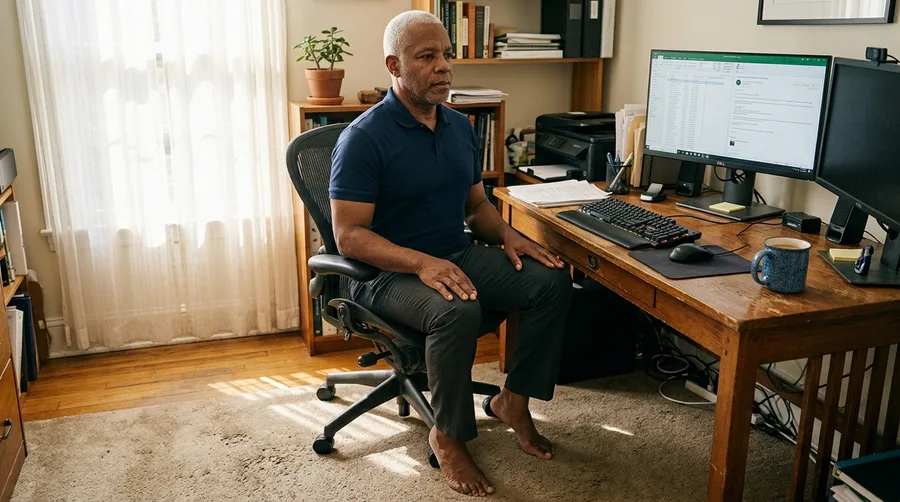
Your lower legs feel heavy and stagnant when you sit for hours without moving your ankles.
The soleus muscle in your calf acts as a secondary pump for the circulatory system, pushing blood back up toward your heart and brain against gravity.
As we age, venous return slows down, making this muscular pump essential for keeping circulation active during long stretches of desk work or television viewing.
Sit on the edge of a chair with your feet flat on the floor, lift your heels as high as possible while keeping your toes down, and perform twenty steady repetitions.
Aim for two sets every afternoon to clear out that sluggish feeling and support healthy blood flow.
Best For
5. Wall Push-Offs
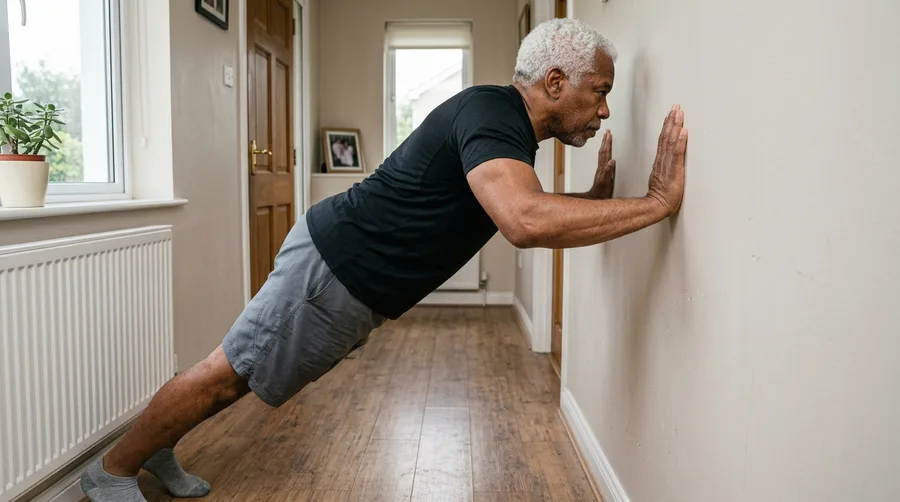
Your chest muscles tighten and your shoulders roll forward whenever you spend too much time working on a computer.
Pushing against a vertical surface engages your pectoral girdle and arms without putting excessive strain on your wrists or lower back.
Physical therapists recommend wall pushes to reset upper body posture quickly.
Stand facing a blank wall at arm length, place your palms flat against the surface at shoulder height, bend your elbows to bring your chest toward the wall, and press firmly back to the starting position.
Treat the wall push as a moving plank to engage your abdominal wall and protect your spine.
6. Overhead Arm Reaches

Your arms spend all day pinned to your sides.
That constant downward pull quietly stiffens your scapular mobility and restricts how deeply your lungs can expand during a normal workday. When oxygen intake drops over the afternoon slump, your mental clarity pays the price right along with your posture.
A simple reach changes that.
Stand with your feet hip-width apart, inhale deeply through your nose while sweeping both arms up toward the ceiling, and stretch tall before exhaling and lowering them.
Doing this for just one minute resets your upper back tension and feeds your brain the fresh oxygen it needs to push through the late afternoon fatigue. I keep a mental note to do five of these every time I stand up for a glass of water.
Focus Myths
7. Seated Hip Openers

Your hips feel glued in place after sitting on upholstered furniture for too long.
Tight hip flexors send stress signals to your nervous system, keeping your body in a low-grade fight-or-flight response that drains mental energy. Opening the hips tells your brain that you are safe and can relax.
Sit on the edge of a chair, place your right ankle across your left knee, flex your right foot to protect the knee joint, and hinge forward slightly from your hips until you feel a gentle stretch.
Hold this position for thirty seconds on each side, breathing deeply into the lower back to release accumulated tension.
Doing this twice a day helps restore natural range of motion without requiring floor mats or complicated stretching routines.
8. Neck Retraction Glides
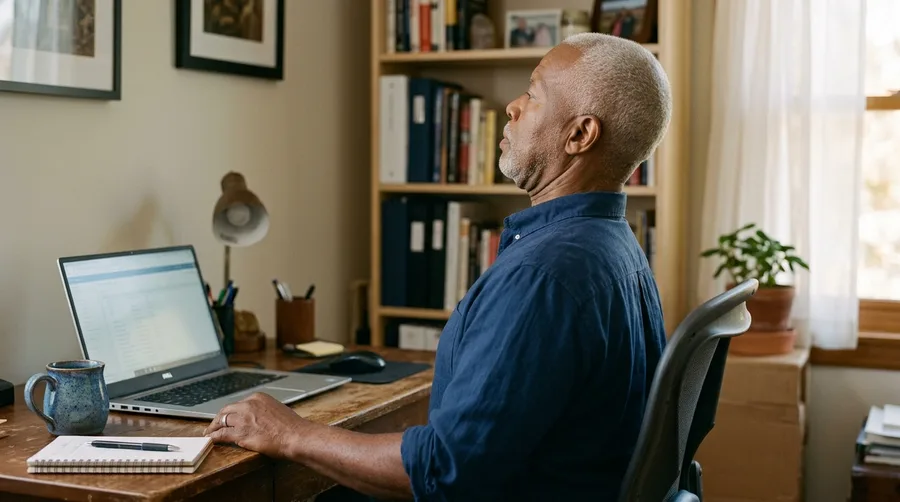
Your chin juts forward toward your screen as you get tired, straining the muscles at the base of your skull.
Forward head posture reduces blood flow through the vertebral arteries, which directly triggers mental sluggishness and afternoon headaches that feel entirely unrelated to your neck.
Sit tall, look straight ahead, and glide your head straight back as if making a double chin without tilting your chin up or down, holding for three seconds before releasing.
Doing five repetitions every hour at your desk changes the mechanical load on your cervical spine.
Physical therapists point to this exact movement as the fastest antidote to the computer-slump fog.
Focus Recovery Comparison
Static resting versus active movement
9. Shoulder Blade Squeezes
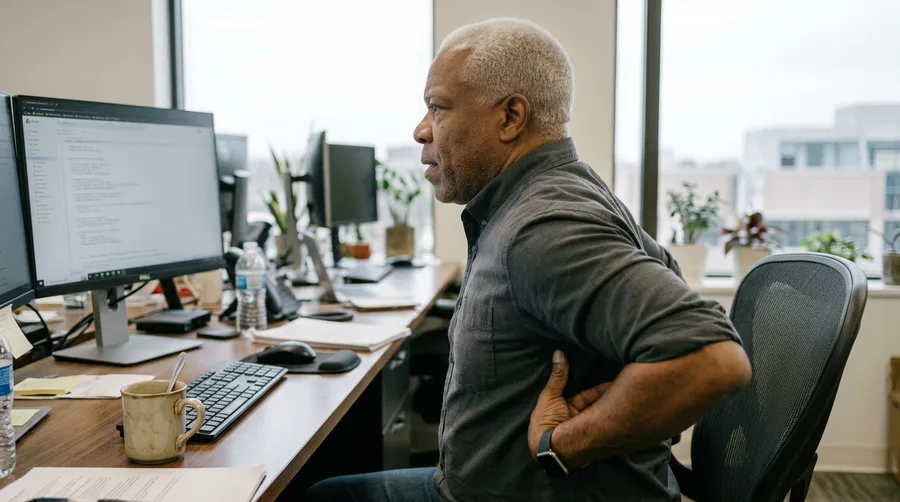
Your upper back rounds forward as your attention span wanes in the middle of the afternoon.
That subtle slouch does more than hurt your posture-it physically compresses your chest and restricts the deep breathing your brain relies on for clean mental clarity after fifty.
Squeezing your shoulder blades together activates the rhomboids and lower traps, countering the forward pull that creeps in after hours at a desk or steering wheel.
Sit or stand tall, pull your shoulders down away from your ears, and squeeze your shoulder blades together as if trying to crack a walnut between them, holding for five seconds.
Try doing two sets of ten repetitions whenever your afternoon focus starts to fray.
10. Wrist and Finger Flexes
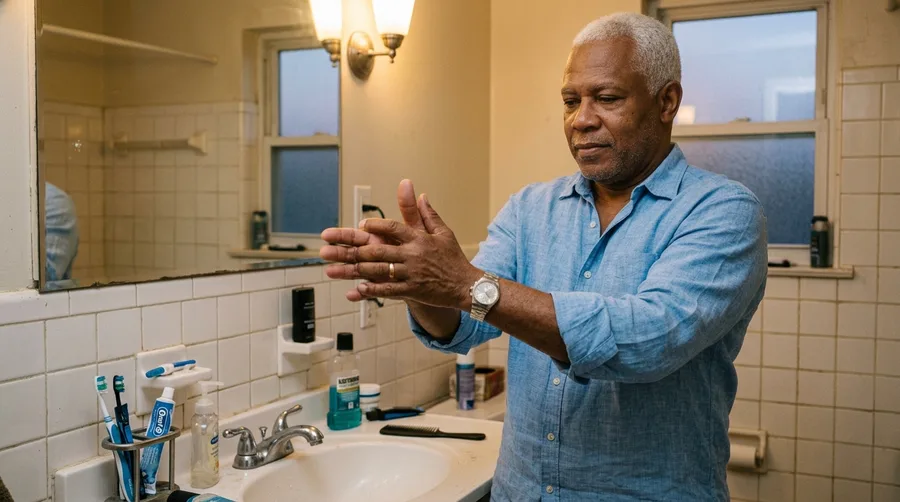
Your hands and fingers cramp up after typing or scrolling on devices for extended periods.
Releasing tension in the forearm flexors sends calming sensory feedback up the median and ulnar nerves to the central nervous system.
Extend your right arm forward with your palm facing out, use your left hand to gently pull your fingers back toward your body, and hold for twenty seconds per arm.
Do this twice a day to keep stiffness from locking up your grip.
11. Standing Calf Stretches
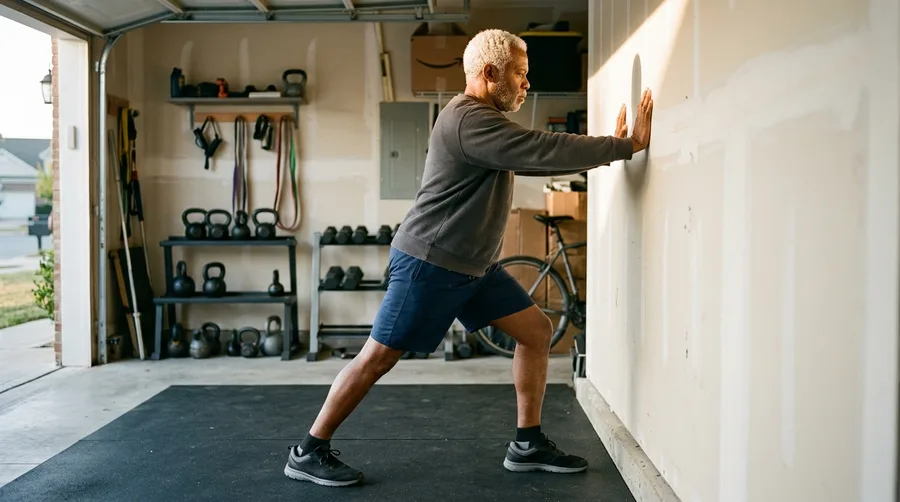
Your lower legs tighten up when you sit in an office chair that restricts natural movement.
Stretching your calves improves ankle dorsiflexion, which is essential for maintaining proper walking mechanics and overall physical confidence.
Step one foot back, press your back heel flat into the floor, keep your back leg straight, and lean your hips forward toward a wall until you feel a deep stretch in your lower calf.
12. Ankle Circles and Pumps

Your ankles lose mobility over time from lack of varied movement on flat indoor surfaces.
Mobilizing your ankle joints stimulates proprioceptors that send spatial awareness data straight to your brain, sharpening your mental focus.
Lift one foot off the floor while sitting or standing, and draw ten slow, deliberate circles in the air with your toes in each direction.
13. Chair Squats for Activation

Your glutes and quadriceps fall asleep when you remain seated for hours at a time.
Squatting is a fundamental human movement pattern that activates the largest muscle groups in your body, triggering a systemic release of growth factors that support brain health.
Stand up from your dining chair without using your hands for momentum, pause briefly at the top, and lower yourself back down with control over five full seconds.
The eccentric descent is where the real work happens for joint stability.
Do ten slow repetitions twice a day to wake up dormant hip stabilizers.
14. Cross-Body Arm Swings
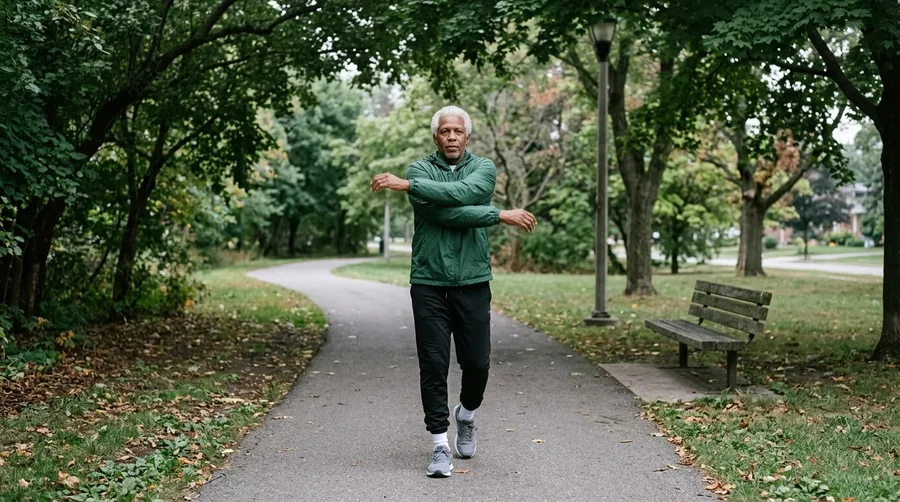
Your upper body feels stiff and uncoordinated when you try to transition from seated work to active tasks.
Crossing the midline of your body forces the left and right hemispheres of your brain to communicate more efficiently, which enhances concentration.
Stand tall, swing both arms open wide to your sides, and then cross them across your chest in a hugging motion, alternating which arm goes on top each time for twenty repetitions.
That simple shift in coordination helps wake up your nervous system during an afternoon slump.
15. Deep Diaphragmatic Breaths

Your breathing becomes shallow and rapid when mental fatigue sets in during a demanding project.
Deep belly breathing stimulates the vagus nerve, which lowers heart rate and shifts your nervous system away from stress and toward calm, focused attention.
Place one hand on your belly, inhale slowly through your nose for a count of four so your hand rises, and exhale slowly through your mouth for a count of six.
Frequently Asked Questions
How often should I do these exercises?
Pick two or three exercises and perform them for two minutes whenever you feel your concentration slipping during the day. Consistency matters far more than doing all fifteen at once.
Do I need any special equipment?
None of these movements require weights or resistance bands. Your body weight and a sturdy chair or blank wall are all you need to get started.
Can these movements replace a full workout?
These routines are designed specifically to break up sedentary time and clear mental fatigue during the day. They complement a regular walking or strength routine rather than replacing one.
What if an exercise causes discomfort?
Stop immediately if you feel sharp pain in any joint. Muscle engagement should feel like work, but joints should never hurt during these movements.
Where to Go From Here
Pick a single exercise from this list right now and do it before you close this page. Notice how your breathing deepens and your mind clears within two minutes.
Integrate one movement break into your morning routine and another into your afternoon slump, and let physical momentum do the work of sharpening your focus.

Meet Edward Green, the founder of GolfingGoal and a seasoned expert in golf. With years of experience on the course and a passion for the sport, Edward has a wealth of knowledge to share. As our Lead Writer, he contributes articles, tutorials, and resources to help readers to improve their skills and reach their full potential on the golf course. Join Our Team!