
Your chest feels tight and the thoughts won't stop looping. You need a fast shift before the physical tension takes over your entire evening.
When the nervous system locks into overdrive, willpower alone rarely works. You need a mechanical input that signals safety directly to the body.
Here are four reliable breathing patterns that reset a racing mind in under two minutes, using simple physical mechanics rather than positive thinking.
Quick Tips Before You Start
Drop Your Shoulders
Unclench your jaw and drop your shoulders away from your ears before taking your first breath.
Count Silently
Keep your internal count steady and even, rather than rushing through the numbers.
Find a Quiet Space
Step away from screens and bright lights if possible to help your nervous system settle faster.
1. The Extended Exhale Pattern

Just breathe is terrible advice when your pulse is hitting one hundred beats a minute and your chest feels entirely blocked.
Instead, you extend the exhale past the inhale, forcing your heart rate to slow down automatically through physical mechanics.
Inhale through your nose for a count of four, then empty your lungs completely through pursed lips for a count of seven.
Repeat this cycle five times while keeping your jaw completely loose, ensuring your shoulders drop away from your ears with every single count.
The longer exhale signals the parasympathetic nervous system to step in and quiet the internal noise, trading frantic mental static for physical groundedness.
Over months of practice, this tiny habit quietly buys you an automatic pause before you react, spending the old frantic knee-jerk impulses for steady clarity instead.
💡 PRO TIP
Make the Exhale Audible
Creating a soft sighing sound on the way out deepens the vagal nerve stimulation.
2. The Box Breathing Method

Inhale for four, hold for four, exhale for four, hold for four.
This balanced rhythm occupies the cognitive loop that was previously replaying your worries.
Sit upright in your chair, place both feet flat on the floor, and trace a square in your mind as you move through the four equal phases by silently saying to yourself, I am breathing in calmness, I am holding my steady center, I am releasing the tension, and I am resting in the quiet space between each breath.
💡 Tip: If four seconds feels too long to start, drop down to three seconds per side.
Box Breathing At a Glance
🔄 Min Rounds
4 Full Cycles
⏱️ Max Time
120 Seconds
🪑 Posture
Feet Flat
⚠️ Failure Mode
Rushing Phase 4
Skip Condition
Omit the final retention pause if holding breath triggers lightheadedness.
3. The Physiological Sigh

I used to think deep breathing meant taking one massive, theatrical gulp of air and holding it until my chest ached, as if forcing calm could beat back a stressful afternoon.
You stare at an overwhelming inbox while the shallow, rapid breathing starts right in your upper chest without you even noticing it happening.
You take two quick inhales through the nose followed by one long, slow sigh out through the mouth, repeating it three times until your shoulders drop.
This specific pattern reinflates collapsed air sacs in the lungs and offloads carbon dioxide efficiently, bringing fast physical relief without needing a quiet room or a meditation app.
Best For
4. The Alternate Nostril Routine

Two minutes of conscious physical redirection can dismantle an afternoon mental spiral faster than any attempt to simply think your way out of it.
You sit at your desk while your inbox piles up and your thoughts loop endlessly around a single difficult conversation from the morning, feeling entirely stuck in your own head.
Most people assume closing off one side of the nose is merely an ancient meditative ritual with no modern utility.
The mechanical restriction actually forces a slower, much more deliberate airflow that instantly overrides your shallow breathing pattern.
Raise your right hand, use your thumb to gently close your right nostril, and inhale slowly and deeply through the left side.
Switch sides by closing the left nostril with your fingers, release the right side, and exhale completely through the open passage.
Continue this physical alternation for a full two minutes to deliberately pull your attention away from the mental noise and anchor it entirely in simple physical mechanics.
The sheer amount of physical focus required to coordinate your fingers leaves zero mental bandwidth for racing thoughts to continue unchecked.
Top Reset Methods Ranked
Rankings based on physiological recovery speed.
5. The 4-7-8 Relaxation Cycle

How do you keep your mind from wandering during a long count when your thoughts are already racing a mile a minute?
Researchers who study autonomic regulation note that rhythmic breath modification changes heart rate variability within seconds, shifting the body away from acute stress responses. To anchor your attention and keep distractions from pulling you away, press the tip of your tongue gently against the ridge behind your upper front teeth for the entire duration of the exercise.
Inhale quietly through the nose for a count of four, hold your breath steadily for seven seconds, and then make a soft whooshing sound exhaling completely through your mouth for a count of eight.
This precise numerical ratio forces the nervous system to decelerate by purposefully extending the exhale phase, signaling safety directly to the brain without requiring complex meditation skills. When you practice this pattern consistently, the extended exhale naturally triggers a physiological downshift that takes effect within minutes.
⚠️ COMMON MISTAKE
Avoid Forceful Retention
Holding your breath should never feel like gasping. If you feel dizzy, shorten the counts immediately.
6. The Diaphragmatic Belly Anchor
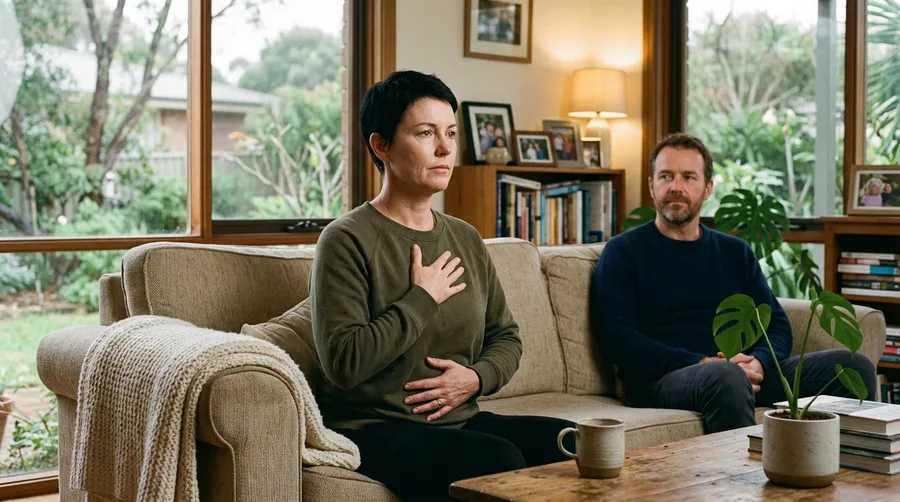
People usually say to take a deep breath when your mind races, but expanding your upper chest actually tells your nervous system that you are running from danger.
Chest breathing keeps your body in low grade panic mode by maintaining a shallow, rapid cycle that signals distress to your brain.
Drop the breath into your belly by placing one hand on your chest and one on your abdomen, ensuring only the lower hand moves as you inhale.
Impact at a Glance
7. The Resonant Coherent Pace
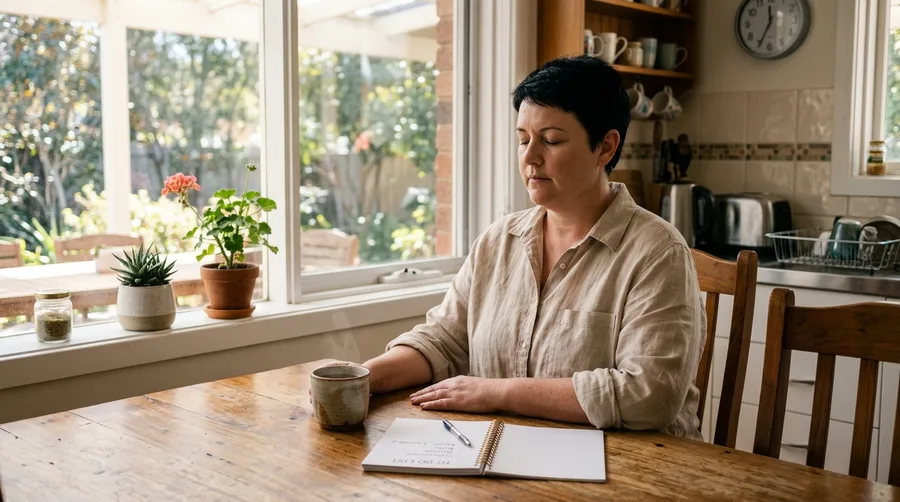
You sit at your kitchen table while your thoughts race through tomorrow's to-do list.
Ask yourself one simple question right now: does your breathing currently feel choppy and shallow, or is it smooth and deep? If it feels erratic, your nervous system is likely locked in a high-alert loop that feeds mental clutter.
You breathe in for five seconds and out for five seconds without pausing.
This smooth wave brings your heart rate and respiration into a synchronized rhythm that clears mental clutter fast. When your inhales and exhales match in equal duration around six breaths per minute, heart rate variability naturally increases and calms acute anxiety.
Try running this balanced cadence for two minutes the next time your thoughts spin out of control, and notice how quickly your mental clarity returns.
8. The Cadence Gap

Losing twenty minutes of your workday to a sudden stress spiral feels like an expensive failure when your inbox is already full.
Most people assume that calming a racing mind requires a lengthy meditation session in a quiet room, leading them to abandon the attempt entirely.
What actually happens is that a brief cadence gap lasting only two minutes can completely interrupt that physiological spiral before it derails your afternoon.
Notice the tiny, natural pause at the very top of your inhale before you let the air back out, and use that micro-rest to reset your nervous system right at your desk.
Nervous System Shift
9. The Natural Pause Exception

Why is my heart pounding out of nowhere, did I say something weird in that meeting earlier?
Sometimes your mind is racing simply because you drank too much coffee, and no breathing pattern will fix caffeine toxicity instantly. When a physical stimulant is driving the panic, mental reframing and pacing exercises are simply barking up the wrong tree.
If your hands are visibly shaking, skip the breathing drills and drink a large glass of water with a pinch of salt instead. Breathing exercises work wonders for mental loops, but they cannot override high chemical stimulants on their own.
10. The Coordinated Cadence Shift

The obvious advice during a panic spike is to relax your mind first.
That advice fails because a racing mind cannot think its way out of a physiological loop.
You must bypass the thoughts entirely by changing the physical cadence of your breath first.
Start by forcing a long, deliberate exhale that empties your lungs completely.
Follow that empty space with a slow, passive inhale that fills your torso from the bottom up.
Your thoughts will follow your body's lead once the physical pacing anchors down.
11. The Reset Illusion

Is that quiet stillness during a high-stakes presentation actually keeping you grounded, or are you just holding your breath until it ends?
You sit upright at the boardroom table, jaw clenched tight, convincing yourself that staying completely motionless proves you have everything under control.
The people watching you do not see composure because real regulation requires a physical shift rather than an internal standoff.
Instead of white-knuckling your way through the tension, drop your shoulders away from your ears and let out one deliberate sigh to signal safety to your nervous system.
12. The Physical Reset Script

Drop your shoulders, inhale through your nose for four seconds, and exhale slowly.
Say to yourself: "Drop the tension, keep the focus, let the breath settle."
13. The Rhythm Reframe

Breathing patterns are not magic tricks; they are physical brakes for your nervous system.
When you treat them as mechanical tools rather than spiritual exercises, you can use them anywhere without feeling self-conscious.
Close your mouth, drop your tongue from the roof of your mouth, and breathe only through your nose for sixty seconds.
14. The Two-Minute Window

Set a timer on your phone for one hundred twenty seconds.
Commit to one single breathing pattern until that alarm goes off, ignoring every distracting thought that pops up.
15. The Daily Reset Check

I used to think that building a lasting mental health habit meant carving out twenty uninterrupted minutes every single morning for silent meditation.
Can you commit to running one two-minute breathing pattern every single day before lunch?
If your answer is yes, you build the foundation needed to access calm automatically when a real crisis hits.
If your answer is no, start with just thirty seconds right after your morning coffee.
Consistency beats duration every single time when training your nervous system to rest.
Pick your daily trigger right now, anchor the two minutes to an existing routine, and let the habit take root without forcing a massive lifestyle overhaul.
Frequently Asked Questions
How long do I need to practice these breathing patterns to see results?
Most people notice a drop in physical tension within sixty to one20 seconds of starting a controlled breathing pattern. Consistency over several days builds even stronger baseline calm.
Can I do these breathing exercises while working at my desk?
Yes, all four patterns can be performed discreetly while sitting at a desk, during a meeting, or even while driving in traffic without drawing any attention.
What should I do if breathing exercises make me feel dizzy?
Dizziness usually happens when you breathe too deeply or hold your breath for too long. Reduce your counts immediately and return to a normal, gentle breathing rhythm.
Is nose breathing better than mouth breathing for anxiety?
Breathing through your nose filters the air, regulates airflow resistance, and activates the parasympathetic nervous system much more effectively than mouth breathing.
Start With This One
Pick the physiological sigh for your very first session today. Do two rounds right now before you close this tab.
That single mechanical shift is enough to prove your body can quiet down on command.

Meet Edward Green, the founder of GolfingGoal and a seasoned expert in golf. With years of experience on the course and a passion for the sport, Edward has a wealth of knowledge to share. As our Lead Writer, he contributes articles, tutorials, and resources to help readers to improve their skills and reach their full potential on the golf course. Join Our Team!