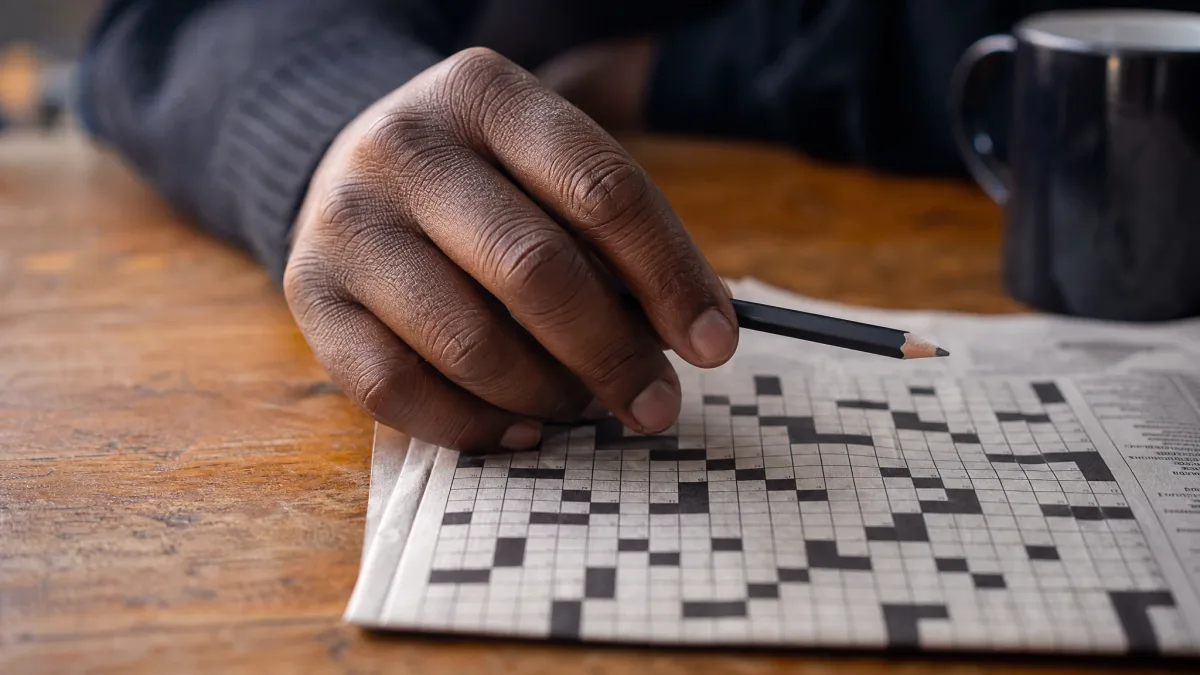
Relying on daily crossword puzzles for cognitive health wastes thousands of hours on familiar retrieval habits that no longer stretch your brain. When you fill in a grid, you retrieve facts you already stored decades ago. That process feels satisfying because it feels easy, but ease is the exact signal that no new neural connections are forming.
Building true cognitive reserve requires friction, frustration, and physical or mental novelty that forces your brain to adapt under load. If you want to keep your mind sharp and flexible as the years stack up, you must trade comfortable repetition for active, effortful learning.
Cognitive Challenge Blueprint
1. Master a Complex Physical Skill Like Juggling
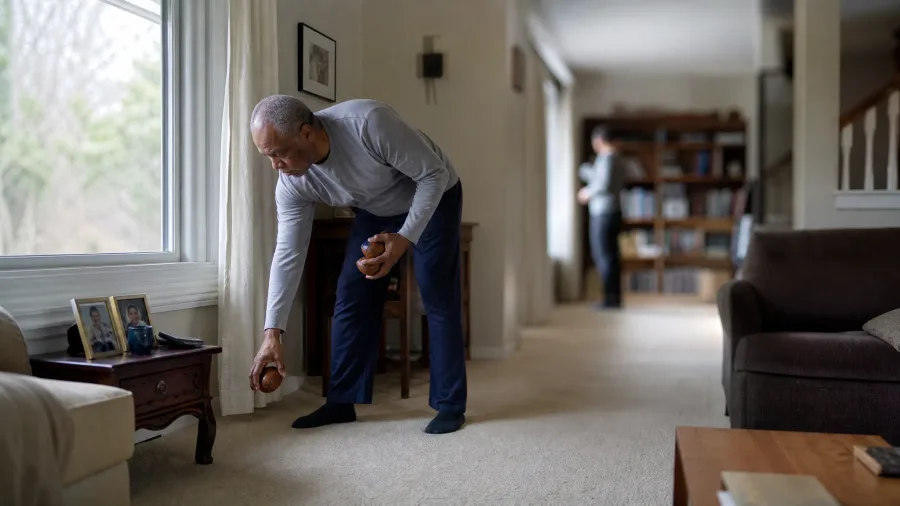
Spending twenty minutes bending over to pick up dropped wooden balls from a carpeted floor feels faintly ridiculous. That quiet embarrassment is the mandatory entry price for this kind of training. Real cognitive expansion rarely feels dignified, because forcing your brain past comfortable habits requires making obvious physical mistakes in real time.
To evaluate your routine, ask yourself one question: when was the last time you felt physically awkward while processing visual information? If the answer is months ago, you are merely maintaining existing habits.
Physical awkwardness is simply a motor network updating itself.
While crossword puzzles rely entirely on static recall, juggling forces your visual processing networks and motor cortex to synchronize under strict gravity constraints. Stand in an open space with three balance beanbags or wooden juggling balls, and spend fifteen minutes working on a simple three-ball cascade pattern. Drop them, pick them up, and let the awkwardness build the reserve.
💡 Tip: Start standing over a bed so dropped balls stay at waist height, saving your lower back during initial practice.
Motor-Skill Challenge — At a Glance
🧠 Brain Area
Visual & Motor Cortex
⏱️ Daily Target
15 Minutes
📈 Difficulty Curve
High Initial Friction
🎯 Key Mechanism
Real-Time Tracking
Why It Works
Physical coordination demands instant error correction, forcing rapid neural adjustment that sedentary puzzles cannot duplicate.
2. Learn a Musical Instrument and Read Notation

Why does picking up a musical instrument challenge your brain in ways a daily word puzzle never can? Because playing music forces your mind to coordinate visual decoding, physical motion, active listening, and rhythmic timing simultaneously.
Picture sitting at a piano with a fresh sheet of basic notation. Your eyes register a spatial symbol on a staff, your brain translates that location into a specific finger movement, and your ears immediately audit the tone for pitch and timing. Cognitive researchers consistently find this intense, multi-sensory feedback loop drives rapid communication across the corpus callosum.
The honest trade-off is a complete loss of comfort. Crosswords rely on vocabulary you already know, whereas reading music forces your brain to process unfamiliar visual instructions under relentless time pressure.
When your fingers freeze over the keys and your eyes lose their place on the staff, the temptation to quit or guess by ear is strong. Pause in that hesitation, look at the measure, and say out loud: "I am not trying to play a smooth piece today; I am training my eyes and hands to translate code."
Rent an entry-level digital piano or classical guitar this week rather than making a major purchase. Hire a local instructor for bi-weekly check-ins to correct your posture, and spend twenty minutes each day reading simple notation.
That awkward, clumsy effort is where the actual payoff lives.
💡 Tip: Practice basic sight-reading with a simple recorder or keyboard for fifteen minutes before trying complex melodies.
Musical Cognition Progression
3. Speak a Foreign Language in Live Conversations

Memorizing foreign vocabulary on a smartphone app feels like productive mental exercise, but it rarely forces your brain into high gear. Matching words on a glass screen builds recognition, not the fast-twitch cognitive flexibility required for actual communication.
Real cognitive demand occurs when you sit across from a native speaker in live conversation. Your working memory is pushed to its limit as you hold their sentence structure in mind while simultaneously selecting words, adjusting grammar, and reading subtle facial expressions. You have roughly two seconds to assemble a response before the conversational silence grows cold.
The trade-off is simple: you trade comfortable convenience for social friction.
Skip the passive matching games and schedule two weekly 20-minute video sessions with a live conversation tutor. Stepping into the discomfort of making grammatical mistakes out loud is not a failure of the process – it is the exact cost of forcing your brain to adapt.
💡 Tip: Book twenty-minute conversational sessions on language platforms like iTalki rather than spending hours on passive vocabulary apps.
Language Learning Method Selector
4. Navigate Unfamiliar Routes Without Digital Maps

"Turn right in two hundred feet" is the sentence that quietly retired your spatial intelligence. Handing navigation to a screen deactivates hippocampal mapping systems, trading active orientation for passive obedience.
The trade-off is convenience today against cognitive vulnerability tomorrow, as spatial memory quietly shrinks when left unused. Forcing your mind to track cardinal directions, terrain, and landmarks maintains a resilient internal map. The immediate cost is ten minutes lost to a wrong turn, but what you buy back is genuine neural self-reliance.
Next weekend, pick a town thirty miles away, study a paper map for five minutes to memorize main arterial roads, and drive there relying strictly on mental imagery and road signs.
💡 Tip: Study a paper map for three minutes before leaving home, then leave the phone inside your glove compartment for the drive.
Navigation Habits Compared
Active Navigation (Paper / Memory)
- Engages hippocampal spatial mapping networks
- Forces continuous observation of environmental landmarks
- Builds flexible mental models of geographic space
- Strengthens directional orientation and memory
Passive Navigation (Turn-by-Turn GPS)
- Reduces navigation to simple visual cue tracking
- Bypasses spatial processing and memory storage
- Creates total dependency on digital interface prompts
- Leaves no lasting cognitive map of the journey
5. Write Expressive Personal Essays by Hand

Thirty minutes into sitting at a quiet table, your fingers cramp slightly as you write down a memory from 1998. On a keyboard, typing moves faster than clear thought, relying on backspace to fix loose phrasing. Handwriting is too slow for that rush, forcing your brain to hold a sentence in working memory while the pen catches up.
That friction forces a synthesis digital tools simply bypass.
The trade-off is hand fatigue and the itch to scratch out imperfect lines. To try it, sit down with a bound journal, pick an event from two decades ago, and write two pages without stopping to edit or erase.
💡 Tip: Use a heavy fountain pen or smooth gel rollerball to reduce hand fatigue during long writing sessions.
✍️ 5-Step Brain-Driven Writing Session
Select a Prompt
Choose a specific memory or complex topic that demands detailed explanation.
Outline Key Points
Jot down three core thoughts on a scrap piece of paper before writing.
Write Without Pausing
Spend twenty minutes writing continuous longhand sentences in a bound journal.
Review for Clarity
Read the finished entry aloud to evaluate logical narrative progression.
Refine One Section
Rewrite a single paragraph to make the phrasing clearer and more precise.
6. Play Complex Modern Strategy Games Against Partners
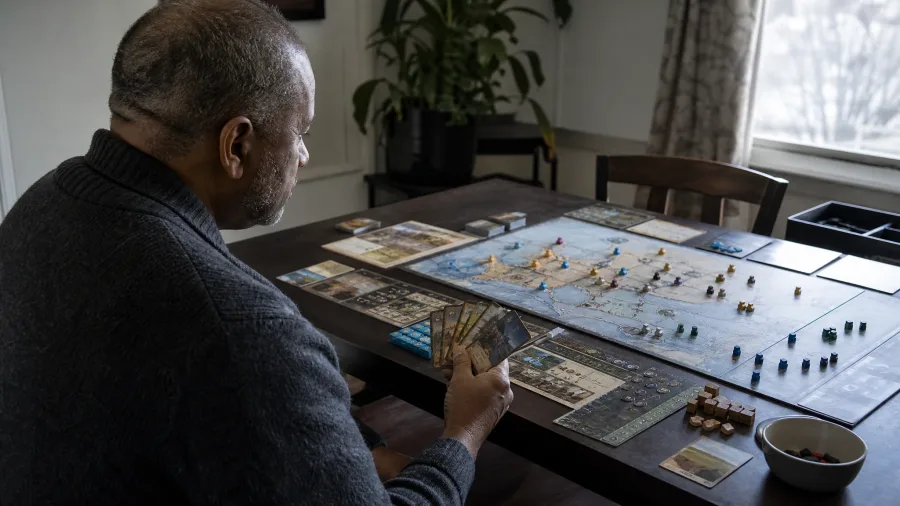
People often believe filling out a daily word grid is all the cognitive exercise an adult brain needs. It sounds logical, but static puzzles mostly test old information rather than forcing you to adapt under pressure.
Sit across a table playing a modern game like Ticket to Ride or Terraforming Mars. Your opponent quietly blocks the exact route you spent three turns preparing. "I thought you were building toward the coast," you say. Your brain must instantly discard its static plan, recalculate probabilities, and adjust to a fresh reality.
Static puzzles test memory, but live face-to-face competition forces continuous tactical adaptation.
Researchers who study executive function note that live human opponents stop you from relying on automatic habits. Every turn alters the board state, forcing your mind to manage spatial relationships, read social cues, and improvise. That dynamic shift is precisely what quiet solo puzzles lack, because a printed grid never turns around and changes its rules mid-game.
This does not mean your morning crossword is useless. Low-stakes solo puzzles are wonderful tools for evening relaxation. Enjoy them as quiet leisure, but do not mistake comfortable habits for heavy mental training.
Set aside one evening each week for live competition by hosting a board game night or joining a local tabletop group. Skip casual tile games in favor of modern strategic titles like Chess, Ticket to Ride, or Terraforming Mars that demand at least thirty minutes of focused, continuous strategic planning per match.
💡 Tip: Choose games with hidden information and high player interaction like Wingspan or Catan rather than solo tile-matching.
Cognitive Training Misconceptions
Frequently Asked Questions
Should I completely stop doing daily crossword puzzles?
No. Crosswords are fine for relaxation and vocabulary maintenance, but treat them as entertainment rather than your primary tool for building cognitive reserve.
How many minutes a day should I spend on high-effort mental challenges?
Aim for 20 to 30 minutes of focused practice per day. Short daily sessions with high focus produce better adaptation than long, infrequent marathon efforts.
Why is motor coordination so important for cognitive reserve after 50?
Physical coordination forces visual, motor, and spatial processing networks to communicate simultaneously under time pressure, stimulating broader brain areas than sedentary reading.
What if I feel extremely frustrated when starting a new skill?
Frustration is normal and helpful. That uncomfortable mental effort is the exact physiological indicator that your brain is working outside its established habits.
Choose the Challenge That Makes You Feel Unqualified
You do not need to overhaul your entire daily life or tackle six difficult hobbies all at once. Pick one single activity from this list that makes you feel slightly unqualified right now, whether that is holding three juggling balls, opening a musical notation book, or booking a short language chat.
Commit twenty minutes tomorrow morning to doing that one thing with full focus. That short period of genuine effort will do more for your cognitive reserve than another year of filling in predictable crossword squares.

Meet Edward Green, the founder of GolfingGoal and a seasoned expert in golf. With years of experience on the course and a passion for the sport, Edward has a wealth of knowledge to share. As our Lead Writer, he contributes articles, tutorials, and resources to help readers to improve their skills and reach their full potential on the golf course. Join Our Team!