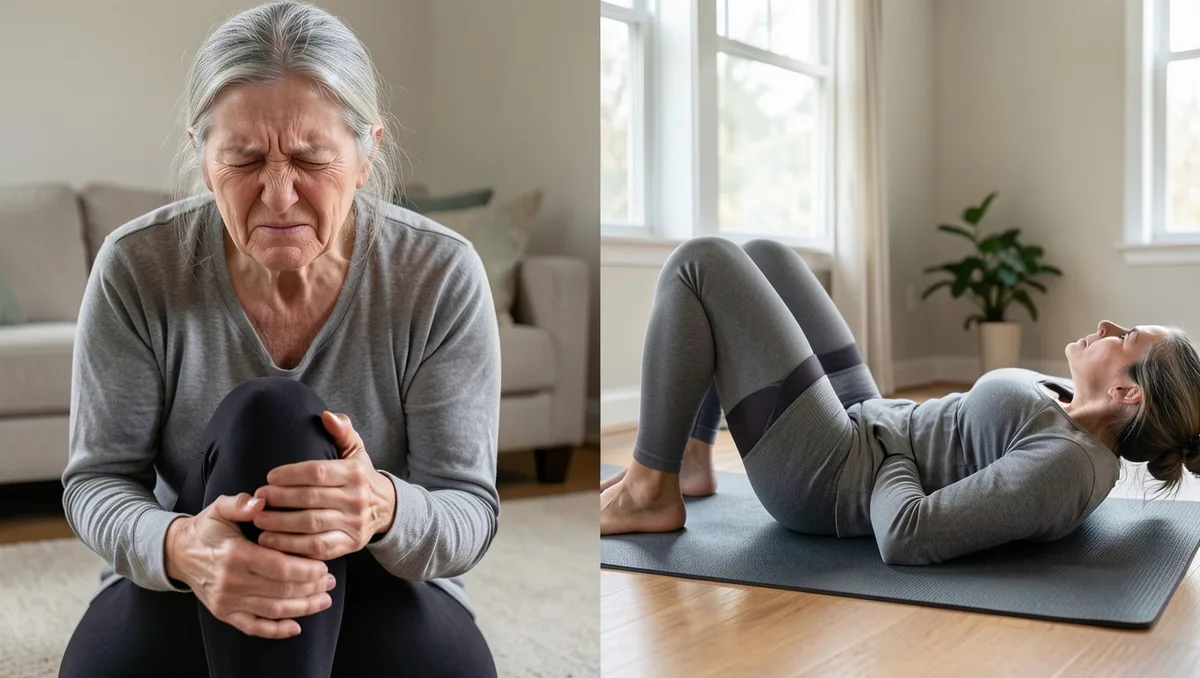
You were active in your forties, maybe even running or playing tennis, and then your fifties arrived with a sharp, persistent ache in your knees. You likely blamed the joint itself, assuming it was just wear and tear or the inevitable march of time.
I recently sat down with four different physical therapists to find out why this happens to so many of us. To my surprise, not one of them focused on the knee. They all identified the same structural failure point that forces the knee to do a job it was never built for.
The Frustration of the Compensatory Chain
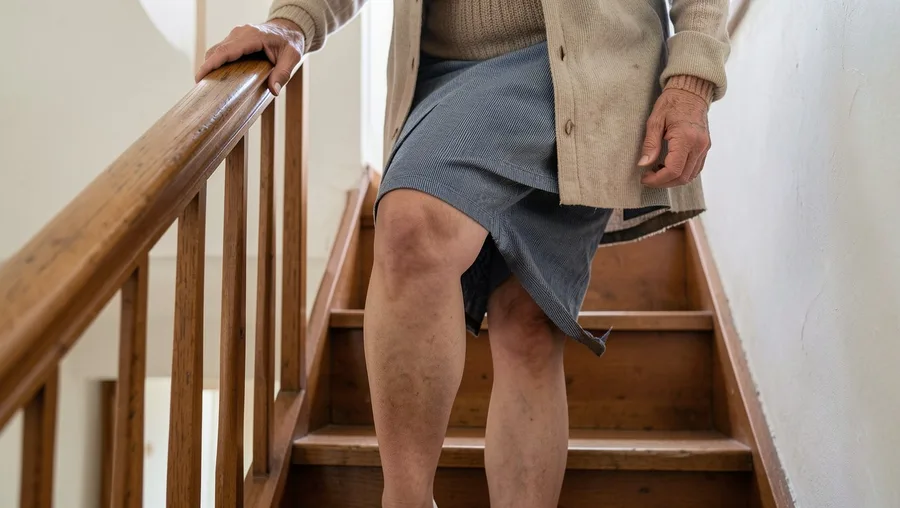
Most people start with the assumption that knee pain is a knee problem.
It feels like it, because the pain is right there under the kneecap, especially when you are taking the stairs or standing up from a low chair. But in the world of physical therapy, the knee is often just the victim, not the criminal.
Your knee is a simple hinge joint, designed to flex and extend.
When the structures that control your legs—specifically your hips and ankles—stop doing their jobs, the knee has to compensate. It starts absorbing torque and shearing forces it wasn't designed to handle, leading to inflammation and that familiar, grinding ache.
Knee Pain Myths
Why Resting Is Actually Making It Worse

The most common mistake I see is the 'stop moving' approach to knee pain.
When a knee hurts, you naturally avoid movement to protect it. The problem is that articular cartilage, the smooth tissue that covers your joint ends, lacks a direct blood supply. It relies entirely on movement—specifically cyclical compression and decompression—to pump synovial fluid in and out of the tissue.
If you stop moving, you literally starve your cartilage.
This leads to the atrophy loop: pain causes movement avoidance, which causes quad and glute weakness, which causes more instability, which increases pain. You have to break the cycle by introducing controlled, low-impact loading rather than total rest.
Rest vs. Load Management
Total Rest (Don't)
- Joints lose essential synovial lubrication
- Surrounding muscles quickly atrophy
- Increases stiffness after sitting
- Dependency on passive support increases
Load Management (Do)
- Stimulates cartilage nutrient absorption
- Maintains vital muscle support
- Reduces long-term joint stiffness
- Builds resilience against future injury
The Consensus: Why Your Glutes Are The Real Key
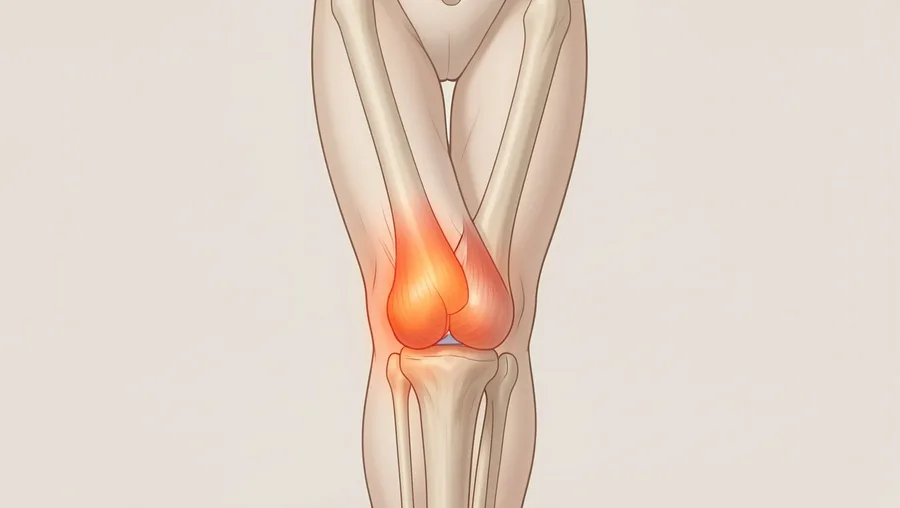
Every therapist I spoke with landed on the same word: glutes.
Specifically, the gluteus medius. This muscle is responsible for stabilizing your pelvis.
When your glutes are weak, your femur (thigh bone) rotates inward during every step you take. This is called 'valgus collapse,' and it forces the knee to cave inward. This creates massive shear stress on your meniscus and cartilage every single time you walk, squat, or climb stairs.
The fix isn't more knee exercises. It is re-engaging the posterior chain to ensure your pelvis stays level, which keeps your knee in a straight, neutral line during movement.
The Stability Hierarchy
The Daily Trio: A Foundation Protocol
You do not need an expensive gym membership to start correcting this.
The following three movements are designed to re-educate your muscles, not to build bulk. You should perform these with extreme focus on form, not speed.
Control is the priority here, as you are retraining your brain to fire the glutes before the quads take over the entire load.
⏱️ The Daily Foundation Trio
Banded Glute Bridges
Lie on your back, place a resistance band above your knees, and drive your hips upward while pushing your knees outward.
Side-Lying Clamshells
Lie on your side with knees bent, feet touching, and lift the top knee while keeping your pelvis perfectly vertical and stable.
Eccentric Step-Downs
Stand on a low step and slowly lower your opposite heel to the floor, ensuring your knee stays aligned over your second toe.
Your Re-Education Schedule
When To Seek Professional Evaluation
While mild aches are often manageable with the exercises above, some symptoms require an immediate visit to an orthopedist or a physical therapist.
If you experience locking, where the joint physically catches, or sudden, severe swelling that makes the skin feel hot, stop these exercises immediately.
These are signs of structural damage that requires professional imaging and a specific diagnosis.
⚠️ COMMON MISTAKE
Pain vs. Discomfort
Training soreness feels like a dull fatigue in the muscles; joint pain is sharp, piercing, and happens inside the knee. Never push through sharp joint pain.
When to See a Pro — At a Glance
🔒 Locking
Joint catches or traps
🔥 Swelling
Heat and visible puffiness
💤 Night Pain
Keeps you awake at night
📉 Instability
Knee 'gives way' unexpectedly
The Rule
If the symptoms disrupt your daily function or cause night pain, seek an evaluation.
Common Questions About Knee Health
Many people ask if they should start wearing braces to support their joints.
Unless a doctor specifically prescribes one for an injury, braces can actually cause more harm. They take over the stabilization role, allowing your muscles to become even weaker, which creates a cycle of dependency.
Key Takeaways for Knee Longevity
Best For
Your Knees Are Not Broken, They’re Just Under-Supported
Realizing that your knee pain is a symptom rather than the root cause changes everything.
It stops being about managing the pain and starts being about building the support system your body needs to thrive. Focus on your glutes, watch your alignment, and keep moving.
This isn't a quick fix that happens in two days, but if you stay consistent, you will start feeling the difference in four to six weeks.
Start With This One
If you only do one thing this week, start with the glute bridges.
They are the most direct way to wake up the muscles that take the load off your knees. Set a reminder, do ten reps, and notice how your knees feel the next time you stand up from your chair.

Meet Edward Green, the founder of GolfingGoal and a seasoned expert in golf. With years of experience on the course and a passion for the sport, Edward has a wealth of knowledge to share. As our Lead Writer, he contributes articles, tutorials, and resources to help readers to improve their skills and reach their full potential on the golf course. Join Our Team!