
My neck started feeling like a permanent question mark.
It happens so gradually you barely notice, until you see a photo of yourself standing in a checkout line or realize you are staring at the floor instead of the horizon. At 58, that constant pull toward the ground isn't just a lack of attention—it is muscle memory combined with gravity winning a long, slow battle.
Your spine loses flexibility and your chest tightens, creating the perfect trap for a slouch.
Why Gravity Wins After 50

Posture is not about holding a pose.
It is a dynamic dance between the muscles on your back and the ones on your front. As we get into our late 50s, the front muscles—specifically the pectorals and hip flexors—tighten from years of sitting and screen work, while the back muscles slowly weaken and overstretch.
This imbalance pulls your shoulders forward, forcing your neck to jut out to keep your eyes on the horizon.
Posture Myths
The 3-Move Reset
I started these moves at 58, skeptical that anything could change my alignment.
The secret wasn't stretching my back; it was strengthening it while simultaneously loosening the tension in my chest. You need to create space for your shoulders to move back naturally without forcing the position.
1.
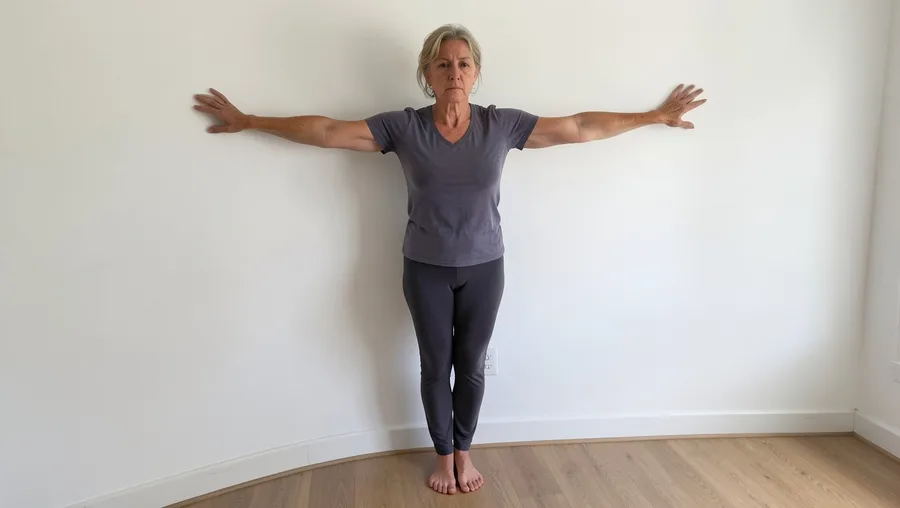
The Wall Angel targets the thoracic spine—the 'upper back'—which is the first place we lose mobility.
Stand with your feet, glutes, and head flat against a wall. Put your arms against the wall in a 'W' position, then slowly slide them up until your elbows are overhead while keeping your wrists and elbows touching the surface the entire time.
Do 2 sets of 10 repetitions, resting 30 seconds between sets.
Wall Angel — At a Glance
⏱️ Time
3 minutes
💪 Targets
Scapular retractors
⚠️ Skip If
Sharp shoulder pain
📅 Results In
4 weeks
Why It Works
It forces the shoulder blades to retract, counteracting the forward-slump position.
2.
The Glute Bridge connects your hips to your spine.
If your hips are tight from sitting, your spine compensates by rounding forward. By activating the glutes, you provide the support your pelvic tilt needs to keep your spine neutral, which serves as the foundation for your upper body alignment.
Keep your feet flat on the floor, lift your hips until your thighs and torso form a straight line, and hold the contraction for five seconds.
Aim for 3 sets of 10, ensuring you don't hyperextend your lower back.
💡 Tip: Engage your core before you lift to keep your spine safe.
The Alignment Shift
3.
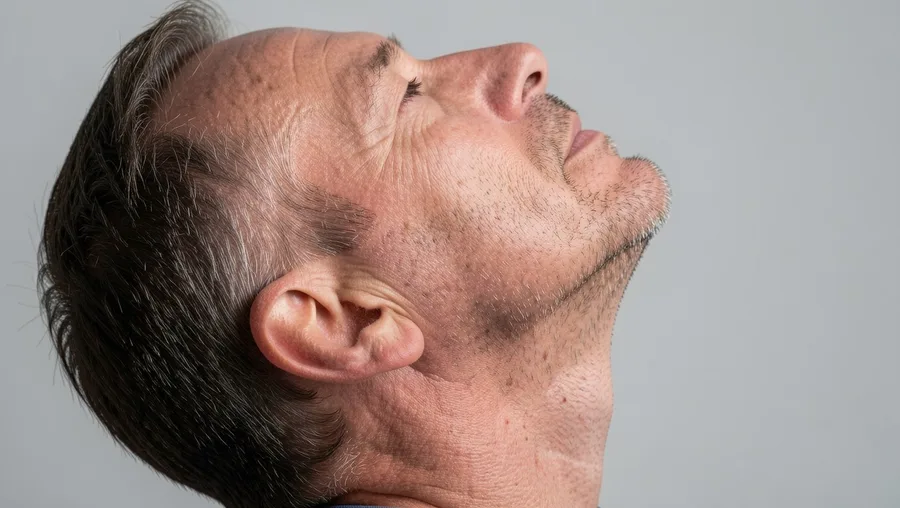
The Chin Tuck resolves 'forward head' syndrome effectively.
Your head weighs 10-12 pounds, and every inch it moves forward triples the strain on your cervical spine. This move targets the deep neck flexors, pulling the weight of your head back over your shoulders where it belongs.
Sit tall and pull your chin straight back as if creating a double chin, holding for 10 seconds. Do this 8 times throughout the day.
Most Effective Posture Habits
When to Stop and Call a Pro
Sometimes, posture is a symptom of something structural.
If you feel sharp, radiating pain—especially down an arm or leg—during these exercises, stop immediately. These moves are for muscular imbalances, not for underlying issues like scoliosis or vertebral fractures.
A physical therapist can tell you if your slump is habitual or caused by bone density changes.
Posture Check
Safe to Proceed
- Dull stretching sensation
- Muscles feel tired
- Slight warmth in back
See a Doctor
- Sharp, shooting pain
- Numbness or tingling
- Pain that lingers hours later
Best For
Making It Your New Normal

Posture is a daily practice, not a 'fix once and forget' project.
Micro-dose these movements. Perform your chin tucks while the coffee brews and your wall angels during television commercials. You aren't just doing exercise; you are retraining your body to sit and stand differently throughout the day.
Your Posture Week
Posture Hierarchy
⚠️ COMMON MISTAKE
Don't Arch Your Back
When doing wall exercises, people often arch their lower back to get their shoulders flatter. Keep your core tight and your ribs down.
🔄 Your Daily Posture Reset
Morning Check
Do your wall angels while the coffee brews.
Work Intervals
Perform chin tucks every hour you are sitting.
Evening Reset
Finish the day with glute bridges to release hip tension.
Your Body's New Normal
Fixing my posture didn't happen overnight, but it started with those three simple movements. It’s about building a rhythm that fits into your existing day.
Start today by just setting a reminder for your chin tucks. You will be surprised how quickly your body remembers how to stand tall again.

Meet Edward Green, the founder of GolfingGoal and a seasoned expert in golf. With years of experience on the course and a passion for the sport, Edward has a wealth of knowledge to share. As our Lead Writer, he contributes articles, tutorials, and resources to help readers to improve their skills and reach their full potential on the golf course. Join Our Team!