
It usually takes months of small erosions before you realize someone has stopped valuing your standing.
You sense the friction during casual conversations or team debriefs, but you brush it off as their stress or your own overthinking. Disrespect rarely announces itself with outright hostility; instead, it shows up in predictable patterns that chip away at your autonomy while staying just polite enough to deny.
Here are nine concrete behavioral patterns that show where you actually rank with someone, along with the precise scripts to address each one.
Quick Tips Before You Start
Track Recurrence
Ignore one-off slips and focus exclusively on repeated habits across three or more separate interactions.
Watch the Pivot
Notice if their conversational turns regularly pull the topic back to their own priorities.
Enforce Consequences
Protect your calendar by walking away rather than repeating the same verbal boundary.
Cut Low-Value Sharing
Stop supplying personal updates to anyone who handles your sensitive news casually.
Conversational Dismissal
Dismissal begins in ordinary dialogue.
When someone views your perspective as secondary, they demonstrate it during normal back-and-forth exchanges. They disrupt your speaking cadence, minimize your opinions under a layer of humor, or issue hollow apologies that protect their self-image rather than repair rapport.
1. They Cut You Off Because Your Ideas Don't Matter

Losing your footing in a group begins with the quiet erosion of your right to finish a sentence.
An enthusiastic peer interrupts out of shared excitement, often adding to your premise before handing the floor straight back. Disregard sounds entirely different. The person cuts across you mid-clause, raises their volume by half, and pivots the conversation toward their own agenda before your point can land. You notice it at a dinner table or during a project review: you offer an assessment, and two sentences in, they speak over your cadence to recount their own weekend or pitch an unrelated idea.
The room takes social cues faster than you think.
Over four or five months of this dynamic, colleagues or friends stop tracking your contributions because another voice consistently marks them as skippable background noise. The cost is not hurt pride; it is the visible decay of your standing in the room. When nobody defends the space to let you conclude, the unspoken consensus becomes that your input carries zero consequence.
Recovering the floor requires neither aggression nor retreating into silence. Pause for two full seconds, look them in the eye without a placating smile, and say evenly: 'Hold on, let me finish this thought first.' Complete the sentence cleanly at normal volume, then hand the floor away on your own terms.
💡 Tip: Keep your pitch neutral when reclaiming the floor; raising your volume sounds defensive, while dropping your pitch commands focus.
⚠️ COMMON MISTAKE
Laughing Along to Keep the Peace
Chuckling at personal digs trains the other person to treat your discomfort as permission. A flat face and a two-second pause reset the room much faster.
2. They Disguise Belittling Put-Downs As Innocent Jokes

Common advice suggests brushing off sharp barbs as harmless, affectionate teasing.
Healthy reciprocal humor targets shared absurdities or everyday quirks where both people laugh equally. Targeted disrespect is different: it takes aim at your competence, earnings, or private insecurities, relying on sarcasm to maintain plausible deniability while probing your tolerance for hostility.
You share a recent personal milestone with friends, and they immediately offer a public insult: 'Must be nice to have so much free time to play around.' When the table goes quiet, they quickly defend the slight: 'Relax, you are way too sensitive, it was just a joke.'
Ask one flat question: 'What was the funny part of that?' Hold their gaze in absolute silence for 3 seconds, letting the question sit until the social cover dissolves completely.
3. They Offer Half-Hearted Apologies That Evade Responsibility
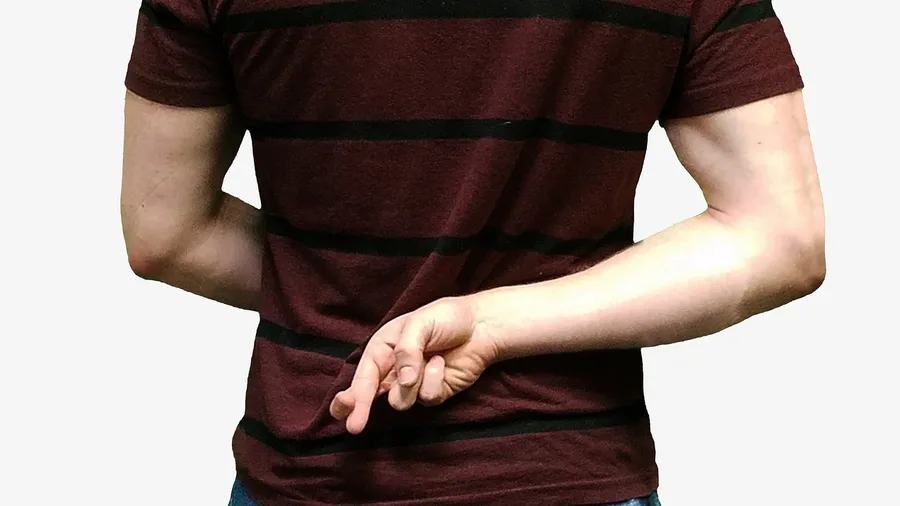
A genuine apology relies on three distinct moving parts: naming the exact harm, accepting personal ownership without caveats, and offering a concrete repair.
Someone evading responsibility skips the second step entirely and substitutes social damage control. They rely on classic phrases like 'I am sorry you felt that way' or 'I am sorry you took it so personally.' The surface reads as courteous, but the phrasing quietly redirects accountability onto your emotional threshold while framing their original conduct as entirely reasonable.
Managing public appearance protects their comfort, whereas repair requires acknowledging that their choice carried an avoidable cost for you.
Stop validating conditional phrasing as an actual resolution. A steady response immediately clarifies the evasion: 'That addresses my reaction, not your choice. What are you actually apologizing for?'
💡 Tip: Never reply with 'It is okay' when an apology fails to own the behavior. Say 'Thank you for acknowledging that' instead.
Accountability vs. Appearance Management
Genuine Respect
- Names the specific action that crossed a line
- Accepts your perspective without calling you sensitive
- Focuses on repairing trust going forward
- Adjusts the behavior in future interactions
Quiet Disrespect
- Frames your reaction as an overreaction
- Uses conditional language like 'if you felt hurt'
- Focuses on ending the awkward moment quickly
- Repeats the identical behavior within weeks
Boundary and Time Violations
How someone handles your time reveals how they value your status.
People manage their schedules strictly when dealing with those they look up to or fear losing. When they casually discard your hours or run over your explicit limits, they are showing you where you rank.
4. They Treat Your Time As Fully Disposable

Social scientists studying relational compliance note that people routinely find the focus to meet commitments when the stakes matter to them. If someone arrives punctually for executive syncs and salon appointments, yet consistently turns up 35 minutes late to dinner with you without sending word, the breakdown is not poor time management. It is selective priority.
Serving as someone's perpetual backup plan eats your logistics and quietly erodes your self-respect. Protect your calendar with a firm 15-minute departure rule. If they miss the window without a heads-up, text 'Heading out now since we missed our window; we will catch up another time' and leave.
The Measurable Cost of Repeated Invalidation
5. They Ignore Your Explicitly Stated Limits

People occasionally step over an explicit preference simply because they forgot, which is entirely normal. A genuine slip brings a quick apology and a clean adjustment once mentioned.
Disrespect looks different: it treats stated boundaries as open negotiations. When a colleague borrows expensive field gear without asking, or a friend brings up private financial details after being asked to drop them, they are running a quiet test to see what you will tolerate. Letting minor boundary erosions slide without friction invited the collapse of the standard in the first place.
Stop explaining the rule. Enforce the outcome: 'I mentioned I do not discuss this topic, so I am ending our conversation here.'
💡 Tip: Never defend or justify your boundary when restating it. Explaining invites the other person to debate your reasoning.
💡 PRO TIP
The Power of the Non-Emergency Decline
Saying 'I am unavailable this weekend' to an extraction request reveals their motives immediately. Resentment exposes entitlement; graceful acceptance signals mutual respect.
6. They Only Reach Out When They Need Something Done

'
Take ten seconds to run a quick test on your message thread. If their bubbles consist almost entirely of requests, urgent tasks, and logistical favors, while your personal milestones remain unacknowledged, you are managing an extractive arrangement rather than a balanced connection.
Healthy dynamics lean on mutual curiosity and shared effort over time. Extractive patterns run entirely one way: someone stays silent for six weeks, reappears with three urgent demands for free feedback or a ride across town, and cuts communication the moment their immediate problem clears.
Decline their next routine request with a neutral line: 'I cannot help with that this week, but I hope it goes smoothly.' Someone who values you absorbs the no easily, while someone using you as a convenience will react with annoyance or vanish until the next emergency.
Relationship Dynamics — At a Glance
⚖️ Reciprocity
Balanced Effort
🔒 Confidentiality
Strict Discretion
🎉 Celebration
Mutual Joy
🛡️ Boundaries
Respected on First Ask
The Litmus Test
True respect shows up when there is nothing to gain from treating you well.
Social Undermining and Exclusion
Public exclusion cuts deeper than quiet private slights.
When someone aims to reduce your social standing, they use subtle tactics that stay under the radar: leaking your secrets under the guise of concern, leaving you out of key loops, or withholding warmth when you succeed.
7. They Leak Your Private Confidences To Gain Social Clout

Leaking personal confidences is almost never an accidental slip of the tongue.
Most people assume someone shared a private detail because they were simply careless or talkative. In reality, trading your sensitive news is a fast transaction to buy attention or curry favor within a group, ranking their social standing above your security. They tell a mutual contact about your medical scare or confidential job search while disguising the breach as empathy: 'I was just so worried about them.' When confronted, they shrug and claim they completely forgot it was confidential.
Cut their access immediately without debating intent. Put them on a strict information diet and state the boundary flatly: 'That was not yours to share. I will keep that in mind moving forward.'
8. They Intentionally Leave You Out Of Key Loops

You walk into the breakroom at 10 AM, and four colleagues are already dissecting changes to next month's launch schedule. When you ask where that came down, someone points to an email thread sent three hours ago that hits every inbox on your team except yours.
The reflex is to brush it off as an innocent slip.
Most workplace advice tells you to assume positive intent, laugh off the oversight, and casually ask a neighbor to forward the attachments. That instinct usually backfires. A genuine slip happens once across different people; systematic omission happens when one person repeatedly drops your name while remembering seven others at your exact peer level. That selective forgetting is a quiet maneuver to establish informational isolation, quietly eroding your footing before you even realize you are playing defense.
Being kept out of the loop does real damage to your daily confidence. You show up to status calls unprepared, stumble over basic project metrics, and end up looking detached in front of senior leaders simply because you were denied baseline context. The person doing it gets to watch you hesitate, all while retaining plausible deniability because missing an address field looks harmless on paper.
Skip the visible frustration and skip asking what you did wrong. Treat the gap as an operational discrepancy and put the correction directly into writing: 'I noticed my name was missing from yesterday's client strategy deck. Please add my address to the main distribution list this morning so our project files stay aligned.'
Stating the logistical fact on record strips away the convenience of an accidental oversight. It protects your standing without giving them the emotional reaction they were hoping to provoke.
💡 Tip: Keep copies of project communication threads off-site if exclusion is impacting your professional deliverables.
📋 Steps to Factually Address Workplace Exclusion
Document the Gap
Save the thread or calendar invitation showing that peers at your level were included while you were left off.
Send a Neutral Request
Email the organizer asking to be added back to the recurring loop without attaching emotional commentary.
Track the Next Cycle
Monitor whether the omission repeats itself on the subsequent project milestone.
Escalate Operationally
Present the documented pattern to leadership as a workflow bottleneck rather than a personal dispute.
9. They Go Silent Whenever You Achieve Real Wins

Nothing drains the momentum of hard work faster than celebrating in front of someone waiting for you to fail.
A quiet rival often shows genuine warmth when your project collapses, because your setbacks keep their position secure. When you land a major promotion, finish a long race, or secure a $5,000 bonus, their tone abruptly cools. They manage a tight-lipped smile, pivot the topic within seconds, or offer faint praise wrapped in an immediate caveat: 'Well, the territory was pretty quiet this quarter anyway.'
Stop offering your milestone achievements to people who treat them as an insult. When the cold reaction lands, take your win back into the room with two plain lines: 'I worked hard for this outcome, so I am going to celebrate it. Excuse me for a minute.' Step away and let the silence belong to them.
The Boundary Enforcement Roadmap
Frequently Asked Questions
How can I tell the difference between bad manners and hidden disrespect?
Look for consistency and selectively applied behavior. Bad manners show up indiscriminately across everyone they interact with, regardless of rank or role. Disrespect is selective: they respect the time, boundaries, and wins of higher-status individuals while treating yours as optional.
Should I stage a sit-down confrontation about their behavior?
No. Formal confrontational talks give someone who disrespects you an opportunity to reframe your points as oversensitivity. Set operational boundaries in real time instead, adjusting your actions the moment the disrespect occurs.
What if the person quietly disrespecting me is my direct supervisor?
Rely heavily on clear written documentation. Send neutral follow-up emails confirming meeting notes, track omissions factually, and keep interactions strictly professional and tied to operational deliverables.
Can a relationship recover once subtle disrespect takes root?
It can, but only if the other person modifies their conduct when you enforce boundaries. If setting a firm limit leads to changed habits, the dynamic can reset; if they mock your boundaries, the dynamic will remain extractive.
Why do people express disrespect subtly instead of directly?
Covert disrespect provides plausible deniability. It allows an individual to chip away at your status and express resentment without facing the social consequences of an open dispute.
Setting Your First Real Line
Do not stage a grand confrontation or unload a list of past grievances all at once.
Pick the single habit that costs you the most dignity or time right now, whether that means using the 15-minute departure rule or shutting down personal digs immediately. Watch closely to see whether they adapt to your standard or push back harder, and let their action decide how much access they get moving forward.
Audit Your Relationships This Week
Review your recent message threads and calendar invites against these nine signs to identify where your boundaries need tightening.

Meet Edward Green, the founder of GolfingGoal and a seasoned expert in golf. With years of experience on the course and a passion for the sport, Edward has a wealth of knowledge to share. As our Lead Writer, he contributes articles, tutorials, and resources to help readers to improve their skills and reach their full potential on the golf course. Join Our Team!