

You stare at the ceiling at 3:14 a.m., flat on a luxury mattress that cost more than a weekend getaway, wondering why you still feel like coarse sandpaper when the alarm rings.
Sleep medicine specialists consistently point away from expensive gadgets and toward a single, neglected variable: thermal regulation in your immediate sleep micro-climate.
Fixing this does not require a four-figure smart mattress; it requires understanding how your body sheds heat.
By the end of this article, you will know exactly how a simple $15 material swap alters your nighttime core temperature and locks in restorative deep sleep.
💡 PRO TIP
The Core Temperature Drop
Your core body temperature must drop by approximately 1 to 2 degrees Fahrenheit to initiate and sustain deep slow-wave sleep.
Why Your Expensive Mattress Can Not Fix a Thermal Trap
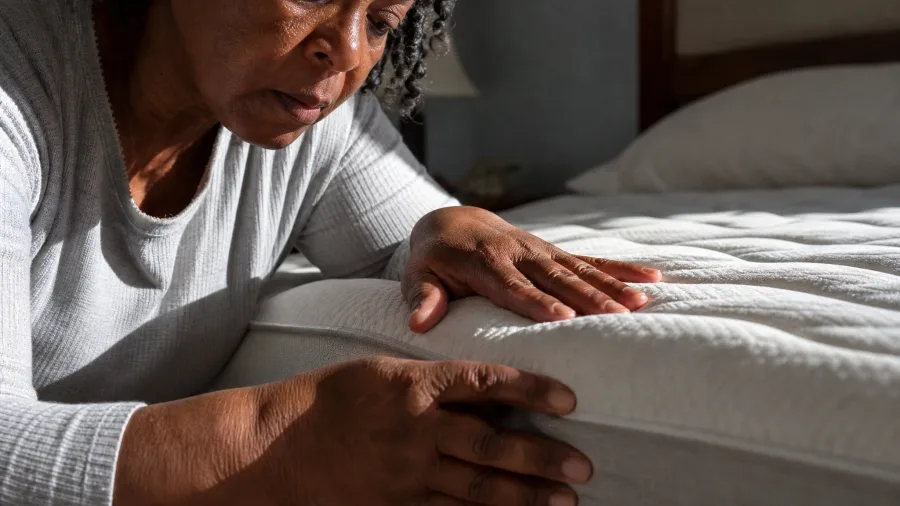
Your circadian rhythm is intimately tethered to core temperature fluctuations managed directly by the hypothalamus.
Synthetic polyester blends and dense memory foam without phase-change gel create an insulating micro-climate that traps metabolic heat against your skin.
This trapped heat forces micro-awakenings, pulling your nervous system out of Stage 3 deep sleep without you ever fully waking up conscious.
You wake up exhausted because your physiology spent the entire night fighting its own biological need to cool down.
Synthetic Traps vs. Breathable Surfaces
Synthetic Foam & Polyester
- Retains body heat and moisture rapidly
- Elevates micro-climate humidity
- Triggers unconscious nocturnal restlessness
- Prevents natural core temperature descent
Breathable Natural Weaves
- Wicks away moisture instantly
- Allows continuous convective airflow
- Supports uninterrupted deep sleep stages
- Maintains stable thermal equilibrium
The Physiology of Sleep-Onset Thermoregulation

Blood vessels in your hands and feet dilate during the evening to release internal core heat to the skin surface in a process called vasodilation.
This natural radiator system works in tandem with melatonin production to cue your brain that it is time for deep rest.
When bedroom or bedding temperatures remain too high, your body fights its own autonomic cooling response.
Cortisol and heart rate spike overnight as your system struggles to dump excess metabolic heat into a trapped environment.
🌡️ The Nocturnal Thermal Descent
8:00 PM
Core temperature begins its natural downward descent as melatonin output ramps up.
11:00 PM
Vasodilation opens blood vessels in hands and feet to shed core heat outward.
2:00 AM
Deep slow-wave sleep peaks if the micro-climate successfully dissipates heat.
5:00 AM
Core temperature bottoms out before rising naturally to signal morning waking.
The $15 Solution: What It Is and How It Works
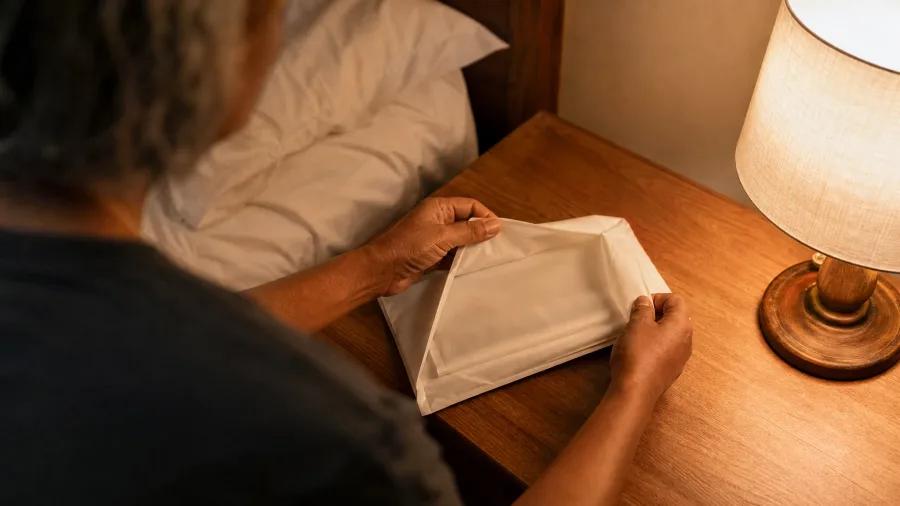
The fix is remarkably straightforward: sourcing high-airflow, open-weave 100% cotton percale or basic bamboo pillowcases and top liners.
Percale uses a grid-like weave that maximizes fabric permeability, drastically improving moisture evaporation and airflow across your head and neck.
Your head acts as a primary thermal radiator for the entire body, meaning an unbreathable pillowcase sabotages overall temperature regulation.
Audit your current bedding layers today and swap out any tight-weave synthetic pillowcases for crisp, lightweight percale cotton under a $15 budget.
The $15 Percale Upgrade — At a Glance
💵 Cost
$12 to $15 retail
🧵 Material
100% long-staple cotton percale
💨 Mechanism
Open-grid weave for maximum airflow
⏱️ Results In
1 to 3 nights for noticeable relief
Core Impact
Targeting head and neck heat dissipation drops overall micro-climate resistance.
The Bedding Micro-Climate Shift
Where Sleep Specialists Agree and Marketing Hype Fails
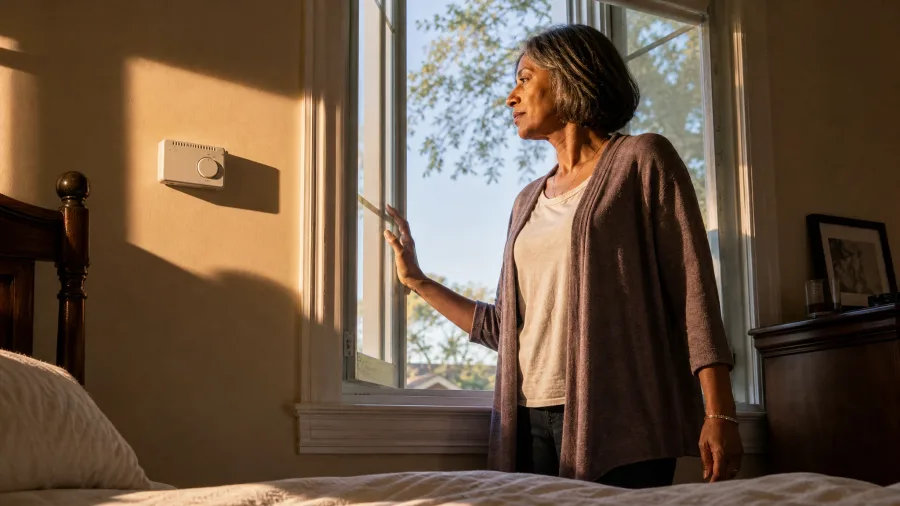
Sleep research organizations consistently emphasize passive environmental control—maintaining room set points between 60 and 67 degrees Fahrenheit—over expensive electronics.
Active electronic cooling pads costing hundreds of dollars attempt to brute-force a problem that breathable fabrics solve naturally through physics.
Avoid unverified chemical cooling treatments sprayed onto synthetic foams, as these often off-gas volatile compounds and irritate facial skin overnight.
Stick to time-tested natural textiles that honor human physiology without adding mechanical noise or financial strain to your bedroom.
⚠️ COMMON MISTAKE
The Thread Count Trap
Do not chase high thread counts above 400. Manufacturers often use multi-ply yarns that pack threads tightly together, choking off airflow and trapping heat.
Thermal Disruption Spectrum
How different sleep setups impact core heat accumulation
- Open Percale Cotton: Minimal heat retention, optimal nocturnal cooling.
- Standard Sateen Weave: Moderate insulation, acceptable for cooler ambient rooms.
- Dense Memory Foam: Severe heat trapping, frequent micro-awakenings.
Is Your Sleep Environment Failing? A Quick Self-Check

Run through this simple four-point diagnostic test to see if a thermal micro-climate trap is ruining your rest.
Do you routinely wake up feeling clammy around the neck, or do you toss off heavy blankets only to freeze hours later?
Do you sleep noticeably better and deeper when staying in a hotel room with crisp, lightweight linens?
If you answered yes to these indicators, your current bedding materials are actively fighting your body's nightly cooling drive.
Signs Your Setup Is Failing
Reclaim Your Rest Tonight
Deep, uninterrupted sleep does not require a luxury financial overhaul or complex machinery.
Working in harmony with human biology means giving your body the physical space it needs to dissipate heat naturally.
Audit your pillows tonight, ditch the dense synthetic pillowcases, and thread a crisp cotton percale layer into your routine.
Consistency in your micro-climate will transform your nights faster than any expensive gadget on the market.
Sleep Environment Action Lanes
- Breathable Percale Linings — Immediate implementation for safe thermal dissipation.
- Programmable Thermostat Setpoints — Ensure baseline stays between 60 and 67 degrees without freezing.
- Synthetic Memory Foam Shells — Eliminate unventilated synthetic covers trapping heat.
Thermal Recovery Metrics
Key biological percentages governing nighttime rest
Frequently Asked Questions
What is the ideal ambient bedroom temperature for deep sleep according to sleep doctors?
Most sleep specialists recommend maintaining a bedroom temperature between 60 and 67 degrees Fahrenheit. This specific range mirrors the environmental cues your body needs to trigger melatonin release and maintain uninterrupted slow-wave sleep cycles.
Can changing just a pillowcase or top layer really impact core body temperature?
Yes, because the head and neck function as major thermal radiators for human blood circulation. Upgrading to a breathable open-weave fabric allows immediate heat dissipation where your body needs it most.
How do I know if my mattress or bedding is trapping heat?
If you wake up feeling damp or uncomfortably warm around your shoulders and head within twenty minutes of lying down, your bedding materials are retaining humidity and blocking airflow.
Are expensive smart cooling mattress pads worth it compared to basic environmental changes?
Basic breathable fabric adjustments achieve similar thermal regulation for a fraction of the cost. Expensive electronic pads solve a mechanical problem that simple natural textiles often fix natively.
Does room temperature affect sleep stages differently as we get older?
Age-related shifts in human thermoregulation make older adults more sensitive to ambient heat changes. Maintaining an optimized, breathable micro-climate becomes increasingly critical for preserving deep sleep stability.
Start With This One Simple Bedtime Swap
Do not overhaul your entire bedroom at once or spend hundreds of dollars on unproven tech.
Swap your pillowcase to a basic 100% cotton percale weave tonight, keep your thermostat steady, and let your natural biology do the rest.

Meet Edward Green, the founder of GolfingGoal and a seasoned expert in golf. With years of experience on the course and a passion for the sport, Edward has a wealth of knowledge to share. As our Lead Writer, he contributes articles, tutorials, and resources to help readers to improve their skills and reach their full potential on the golf course. Join Our Team!