

You stare at the bedroom ceiling at 11:45 PM, running through tomorrow morning's meeting schedule while your body feels utterly exhausted yet entirely unable to slip into actual rest.
That frustrating tired-but-wired state is not a failure of willpower or a lack of evening discipline. It is a physiological reality where your nervous system remains stuck in high-alert sympathetic dominance long after the sun goes down.
Clinical sleep specialists do not rely on vague relaxation platitudes or generic advice like putting the phone away. They use a systematic, four-step biological off-ramp to force cortisol down and trigger the body's natural cooling mechanisms.
⚠️ COMMON MISTAKE
The 10 PM Screen Fallacy
Turning off your phone at ten o'clock fails if your nervous system is still processing the day's accumulated cortisol spike and mental friction.
Why Evening Cortisol Refuses to Drop on Command
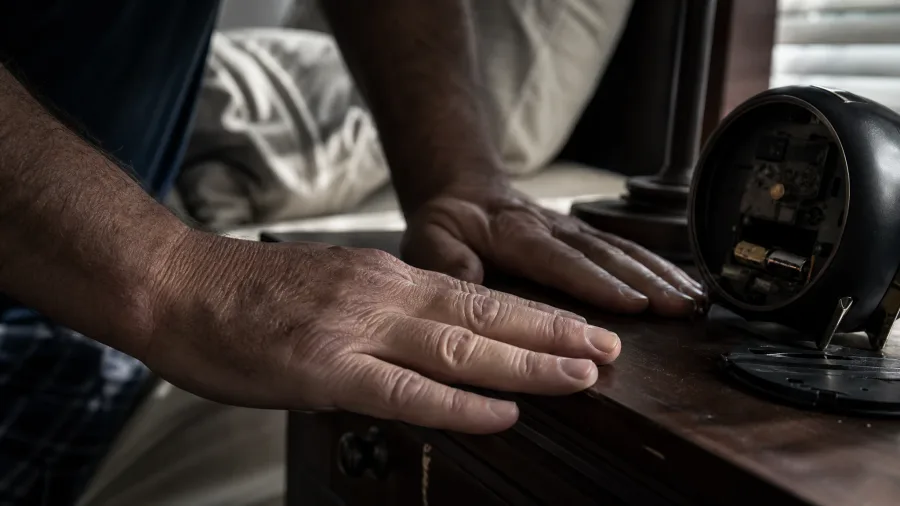
Your biology requires a precise sequence of hormonal shifts to initiate deep sleep.
Melatonin release depends entirely on a coordinated drop in your core body temperature by roughly one degree Celsius. When chronic micro-stressors keep adrenaline and cortisol circulating in your bloodstream, that essential thermal drop is physically blocked.
Cognitive friction compounds this problem by keeping your prefrontal cortex actively scanning for unresolved tasks and open loops.
Without an intentional transition ritual, your brain stays at work even when your eyes are closed.
🌙 The Evening Neurochemical Shift
Sympathetic Sunset
The nervous system begins shifting away from high-alert daytime vigilance.
Thermal Radiation
Core body temperature drops as heat moves outward to the hands and feet.
Melatonin Surge
The pineal gland releases sleep hormones once environmental light and stress clear.
Step One: Offloading Cognitive Friction Through Paper

You stop the mental loops by physically moving unfinished tasks out of your working memory and onto a blank page.
Clinical sleep research demonstrates that writing down tomorrow's to-do list ninety minutes before bed significantly decreases sleep onset latency.
Grab a physical notebook and divide the page into three distinct sections: Unfinished Tasks, Tomorrow's Top Three Priorities, and Unresolved Emotional Residue.
The act of writing signals to your prefrontal cortex that the data has been safely stored, releasing the brain from active monitoring.
Cognitive Management Methods
Mental Rehearsal
- Loops through unresolved problems
- Keeps prefrontal cortex active
- Triggers subtle adrenaline spikes
- Delays initial sleep onset
Paper Brain Dump
- Externalizes cognitive load
- Signals completion to the brain
- Clears working memory instantly
- Allows natural melatonin rise
Step Two: Triggering the Thermal Drop
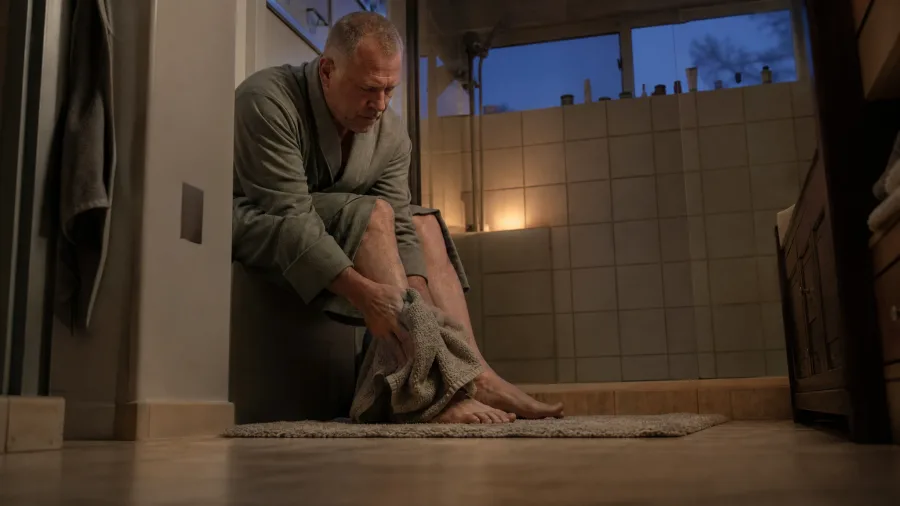
Your body prepares for sleep by intentionally venting heat from its core to the outer extremities.
Taking a warm bath or shower one to two hours before bedtime accelerates this exact thermodynamic process through a mechanism called distal vasodilation.
When you step out of warm water into a cooler room, blood vessels in your hands and feet dilate, allowing trapped core heat to radiate outward rapidly.
This artificial thermal manipulation tricks your internal thermostat into initiating the sleep cycle much faster than it would naturally.
Thermal Drop Protocol — At a Glance
⏱️ Timing
60 to 90 minutes pre-sleep
🌡️ Water Temp
100°F to 104°F comfortably warm
⏳ Duration
15 to 20 minutes immersion
🎯 Target
Distal extremity vasodilation
The Core Mechanics
Warming the skin forces core heat out, dropping internal temperature to mimic deep sleep states.
Step Three: Managing the Lux Threshold

Light exposure is the single most powerful external zeitgeber dictating your circadian rhythm.
In the final sixty minutes before sleep, you must drop your environmental light levels below fifty lux to protect your retinal cells from suppressing melatonin production.
Switch off harsh overhead fixtures entirely and rely strictly on low-placement floor lamps outfitted with amber bulbs under 2200 Kelvin.
Pair this visual dimming with an auditory anchor like consistent ambient brown noise to mask sudden household disruptions.
💡 PRO TIP
The Floor-Level Lamp Adjustment
Position your evening lamps below eye level. Light receptors in the lower retina are particularly sensitive to overhead illumination.
Step Four: The Somatic Anchor
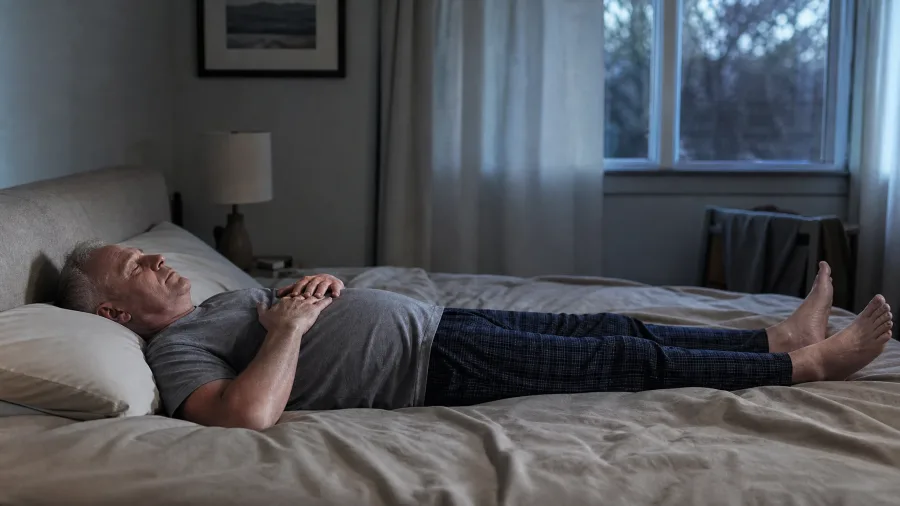
Your final transition step uses proprioceptive feedback to lock your nervous system into parasympathetic control.
Execute the four-seven-eight breathing method or controlled physiological sighs to immediately stimulate the vagus nerve and lower elevated heart rate variability spikes.
Follow your breath work with progressive muscle relaxation, consciously releasing chronic tension held tightly in your jaw, shoulders, and hands.
Differentiate between active cognitive meditation, which can frustrate an alert mind, and mechanical somatic anchoring.
Best Somatic Anchors
The Consensus Payoff: Where Specialists Agree

When you strip away competing theories among sleep researchers, one absolute consensus remains standing across clinical practices.
Consistency of your morning wake time matters infinitely more than the exact minute you manage to fall asleep.
Avoid the trap of sleep perfectionism, where the intense effort required to relax creates a brand new form of performance anxiety.
Audit your current evening habits against the four-step framework to identify which specific component is missing from your nightly routine.
Clinical Priority Ranking
Evening Biology Mosaic
Nervous System Arousal Spectrum
From high alert to deep parasympathetic rest
- Daytime Vigilance: High sympathetic dominance and circulating cortisol.
- The Transition Zone: Active deployment of the four-step wind-down routine.
- Parasympathetic Rest: Core temperature dropped and heart rate stabilized.
Routine Implementation Investment
Critical Sleep Metrics
The numbers that drive restorative rest
Frequently Asked Questions
What if my late work schedule forces me to stay up past midnight? The four-step routine still functions effectively as long as you anchor your morning wake time to a fixed hour regardless of sleep duration.
How long does it take for the brain to automate these steps? Expect neuroplastic habit formation to take roughly fourteen to twenty-one consecutive days of strict consistency.
Can I read a physical book during step three? Yes, provided it is light fiction read under amber light rather than engaging non-fiction that restarts problem-solving loops.
What should I do if I wake up at 3:00 AM? Get out of bed after twenty minutes of wakefulness and repeat step one in dim light until sleep pressure returns.
From Wire to Rest: Building Your Personal Evening Off-Ramp
Stop fighting your biology with sheer willpower when your nervous system is simply asking for a structured, mechanical off-ramp.
Pick just one step from the four to implement tonight rather than attempting an overwhelming overhaul of your entire evening.

Meet Edward Green, the founder of GolfingGoal and a seasoned expert in golf. With years of experience on the course and a passion for the sport, Edward has a wealth of knowledge to share. As our Lead Writer, he contributes articles, tutorials, and resources to help readers to improve their skills and reach their full potential on the golf course. Join Our Team!