

You stare at the glowing numbers on the bedside clock, realizing it is precisely 3:14 AM. Your mind is fully alert, yet your body aches for rest.
Age-related shifts in your internal clock change how your brain manages sleep architecture. However, you can retrain your circadian rhythm using a simple morning habit that requires zero supplements.
The Biological Shift Behind Fragmented Nights

Your sleep patterns alter significantly as you cross the fifty-year mark.
Deep slow-wave sleep diminishes naturally, leaving you vulnerable to micro-awakenings that turn into long hours of staring at the ceiling. The master pacemaker in your brain loses sensitivity over time.
Modern indoor lifestyles worsen this drift by depriving aging retinas of the intense photon signals required to anchor a strong sleep-wake cycle.
The Circadian Shift in Numbers
How aging alters your daily light response and sleep architecture.
Why Melatonin Production Flattens Out After Fifty

Your body operates on a master internal clock located in the hypothalamus.
This cluster of cells, called the suprachiasmatic nucleus, relies on external light cues to synchronize your hormones with the 24-hour solar day. Morning photon exposure suppresses melatonin immediately.
That sharp morning suppression creates a biological timer, automatically triggering a robust melatonin release fourteen to sixteen hours later.
Key Hormonal Drivers of Sleep
The Morning Light Protocol for Immediate Reset

You must step outside within sixty minutes of waking up.
Aim for ten to fifteen minutes of direct outdoor exposure on clear days, extending that window to thirty minutes when heavy cloud cover mutes the sky. Never wear sunglasses during this routine.
Window glass blocks the crucial blue-wavelength light spectrum required to reset your internal pacemaker.
🌅 Your Step-by-Step Morning Circadian Routine
Wake & Hydrate
Drink a full glass of water immediately upon rising to kickstart physiological alertness.
Step Outside
Go out onto your porch, balcony, or sidewalk within one hour of waking.
Unfiltered Exposure
Keep your eyes uncovered—remove sunglasses and step away from behind window panes.
Hold the Line
Maintain 10 to 15 minutes of quiet exposure while drinking your morning coffee or tea.
Light Source Efficacy Spectrum
Comparing how different environments deliver photon signals to your circadian clock.
- Standard Indoor Office Light: Roughly 300 to 500 lux. Insufficient for triggering a proper circadian reset.
- Clinical Light Box: 10,000 lux at 12 inches. Effective backup tool during dark winter months.
- Overcast Outdoor Sky: Roughly 10,000 to 25,000 lux. Highly effective with slightly longer duration.
- Direct Morning Sunlight: Exceeds 50,000+ lux. The gold standard for fast, robust circadian entrainment.
What Sleep Scientists and Gerontologists Agree On

Sleep medicine organizations share a unified stance on circadian health.
Light remains the single most powerful zeitgeber, or time-giver, for human biology. Pharmaceutical sleep aids manage frustrating symptoms without fixing the underlying phase misalignment.
Clinical researchers emphasize that consistent morning anchor times stabilize daily metabolism, mood, and core body temperature alongside nighttime sleep quality.
⚠️ COMMON MISTAKE
The Window Glass Trap
Standing behind a closed living room window feels bright, but architectural glass filters out the exact light wavelengths your brain needs. Step fully outside.
Is Your Daily Routine Sabotaging Your Nights?
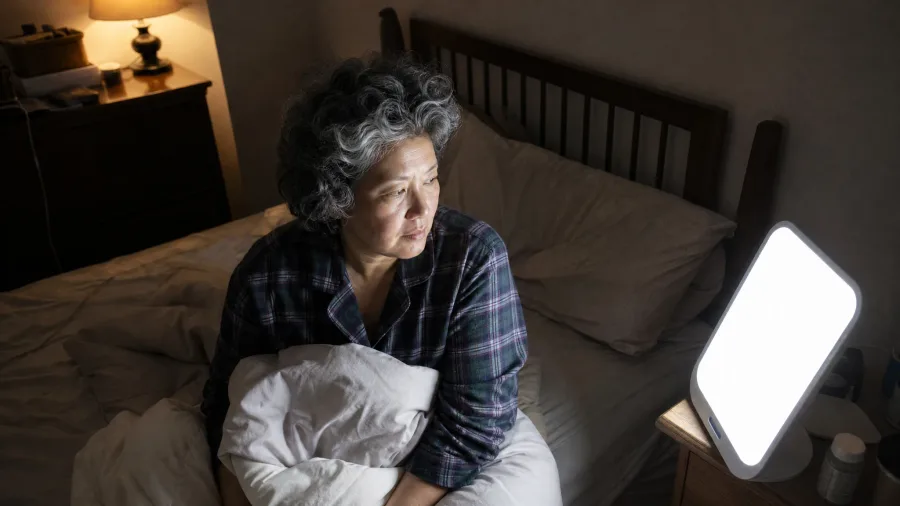
Audit your daily habits before blaming your mattress for poor rest.
Check your wake time consistency across the entire week, measure how many minutes pass before your eyes catch outdoor light, and note your evening screen habits.
Shift workers and individuals facing dark winter mornings can successfully substitute a medical-grade 10,000-lux light box placed directly at eye level during breakfast.
Circadian Saboteurs vs. Circadian Anchors
Circadian Saboteurs
- Waking up in dark rooms with heavy curtains drawn
- Consuming morning coffee behind tinted car windshields
- Bright overhead LED lighting late into the evening
- Irregular wake times that drift on weekends
Circadian Anchors
- Stepping outside within an hour of rising
- Unfiltered outdoor light exposure for 15 minutes
- Dim amber lighting after sunset to protect melatonin
- Consistent wake times every single day of the week
Implementation Time and Financial Cost
Frequently Answered Questions About Light Exposure

Car windshields and office windows block essential ultraviolet and blue light spectra.
Overcast days still deliver exponentially more lux than any indoor room, requiring only a slight extension in duration. Prescription eyeglasses do not interfere unless they feature heavy tinting.
Expect a realistic adjustment timeline of seven to fourteen days of consistent exposure before your sleep onset shifts.
Best For Managing
Turning Your First Hour Into a Sleep Catalyst
Restoring deep sleep after fifty starts the moment your feet hit the floor.
Do not wait for bedtime to fix your rest cycle. Step onto your porch tomorrow morning with your first glass of water and let natural light do its work.
Consistency changes everything.
Top Priorities for Better Sleep
Start With This One Habit Tomorrow Morning
Solid, restorative sleep after 50 relies on anchoring your internal clock through early morning light exposure rather than relying on evening sleep aids.
Step outside for fifteen minutes tomorrow morning and let natural sunlight reset your rhythm.

Meet Edward Green, the founder of GolfingGoal and a seasoned expert in golf. With years of experience on the course and a passion for the sport, Edward has a wealth of knowledge to share. As our Lead Writer, he contributes articles, tutorials, and resources to help readers to improve their skills and reach their full potential on the golf course. Join Our Team!