

You turn the television volume up another two notches, convincing yourself the actors are simply mumbling their dialogue.
That minor adjustment feels harmless at the time. Yet, researchers and neurologists view that exact moment through a very different lens.
Hearing loss is not merely an annoying inconvenience of aging. It ranks as the single largest modifiable midlife risk factor for dementia.
By the time you finish reading this article, you will understand the exact neurological mechanisms linking your ears to your brain, and how to take action.
The Hidden Connection You Never Expected
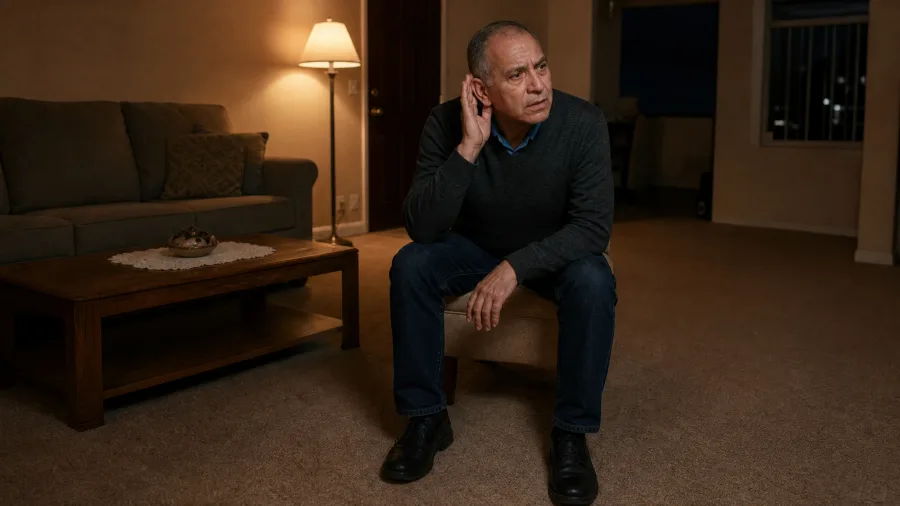
Society treats failing hearing as an inevitable byproduct of getting older, much like gray hair or minor joint stiffness.
That cultural dismissal hides a severe public health reality.
Landmark data from the Lancet Commission on Dementia Prevention identified midlife hearing loss at the very top of modifiable risk factors, outstripping hypertension, smoking, and obesity.
When environmental sounds stop reaching the cortex, an invisible cognitive tax begins.
⚠️ COMMON MISTAKE
Ignoring Midlife Hearing Changes
Many adults wait up to ten years after noticing early symptoms before getting evaluated, allowing auditory deprivation to compound quietly.
What Is Happening Inside Your Brain? The Three Core Mechanisms

Missing acoustic signals physically alter brain structure and function over time.
The cognitive load hypothesis explains how your brain must expend excessive computational resources to decode degraded auditory input.
This diverts critical mental energy away from working memory and executive function.
Unused auditory cortex regions can physically shrink due to sensory deprivation, accelerating overall grey matter volume loss across adjacent structures.
Communication difficulties also breed avoidance, loneliness, and depression, which independently starve the brain of complex mental stimulation.
Auditory Deprivation — At a Glance
🧠 Primary Driver
Cognitive overload
📉 Structural Impact
Cortical volume shrinkage
👥 Behavioral Shift
Social withdrawal
⏱️ Onset Timeline
Decades of gradual decline
The Core Issue
The brain works twice as hard to process half as much sound.
The Numbers Behind the Risk: What the Long-Term Studies Show

Longitudinal cohort studies tracking thousands of adults over decades reveal a stark, graded relationship between hearing impairment severity and cognitive decline risk.
Mild hearing loss doubles the relative risk compared to normal hearing.
Moderate impairment triples it, and severe untreated loss scales the risk even higher.
Data from major institutions demonstrate demonstrably faster cognitive decline trajectories in unassisted populations.
Normal Aging vs. Auditory Strain
Typical Memory Slips
- Forgetting a neighbor's name temporarily
- Occasional misplacement of car keys
- Recovering a word within a minute
- Fully engaging in group banter
Auditory Strain Signals
- Misinterpreting consonants in quiet rooms
- Mental exhaustion after family dinners
- Constantly asking others to repeat phrases
- Withdrawing from noisy restaurants
Early Signs Your Brain Is Working Harder Than It Should

Subtle behavioral shifts often precede clinical diagnoses by years.
You might find yourself constantly turning up television volume, misinterpreting consonants in noisy environments, or feeling mentally drained after simple social interactions.
Listening fatigue is real.
A full day of straining to hear leaves your brain cognitively exhausted rather than physically tired because every sentence requires active decoding.
💡 PRO TIP
Spotting Listening Fatigue
If you need a nap after a 30-minute grocery trip simply due to ambient noise, your brain is burning excess energy on auditory processing.
Where Medical Consensus Meets Action: The Role of Intervention

Geriatricians and audiologists agree on one foundational truth.
Restoring auditory input relieves the brain's heavy cognitive load immediately.
Emerging clinical trials investigate whether consistent use of modern hearing aids can slow or mitigate cognitive decline rates significantly.
Treating hearing loss is not just about restoring sound volume.
It is about preserving neuroplasticity and maintaining your vital cognitive reserve.
📈 Neurological Benefits Post-Intervention
Month One
Immediate reduction in daily listening fatigue and mental strain.
Month Six
Re-engagement in social conversations and group gatherings.
Year Two
Stabilized cognitive load measures matching age-adjusted controls.
Your Personal Hearing and Brain Health Self-Check

Assessing your personal risk requires honest introspection.
Run through a quick five-point mental audit covering your tolerance for background noise, your ability to track dialogue in a crowded room, and your daily fatigue levels.
Differentiate between casual online sound checks and a comprehensive diagnostic audiogram performed by a licensed professional.
Schedule an evaluation and prepare specific questions for your provider.
Best Action Steps
Restoring auditory input is one of the most direct ways to unburden the aging brain.
— What clinical audiologists emphasize
Protecting Your Mind Starts With Protecting Your Ears
Hearing health is fundamentally brain health, not just an isolated ear problem.
View an audiologic exam not as a sign of aging, but as a proactive investment in your long-term cognitive longevity.
Reclaim your clarity, your social connection, and your mental sharpness today.

Meet Edward Green, the founder of GolfingGoal and a seasoned expert in golf. With years of experience on the course and a passion for the sport, Edward has a wealth of knowledge to share. As our Lead Writer, he contributes articles, tutorials, and resources to help readers to improve their skills and reach their full potential on the golf course. Join Our Team!