

Why do men over 60 who regularly rebuild engines, fit cabinet hinges, or carve wood retain sharper recall than those who rely solely on digital brain games? The answer comes down to sensory feedback and physical problem-solving in three dimensions.
When your fingertips measure tension, texture, and resistance, your brain activates vast networks of motor cortex and tactile sensory channels simultaneously. This article breaks down why hands-on labor maintains cognitive agility, who benefits most, and how to structure a workshop routine that keeps your mind agile.
🎯 THE SHORT ANSWER
The Short Answer
Working with physical tools requires constant real-time calculations of force, angle, and material feedback. This multisensory engagement maintains neural pathways governing spatial memory and executive control far more effectively than passive screen activities.
1. Does Manual Work Really Stimulate Memory?
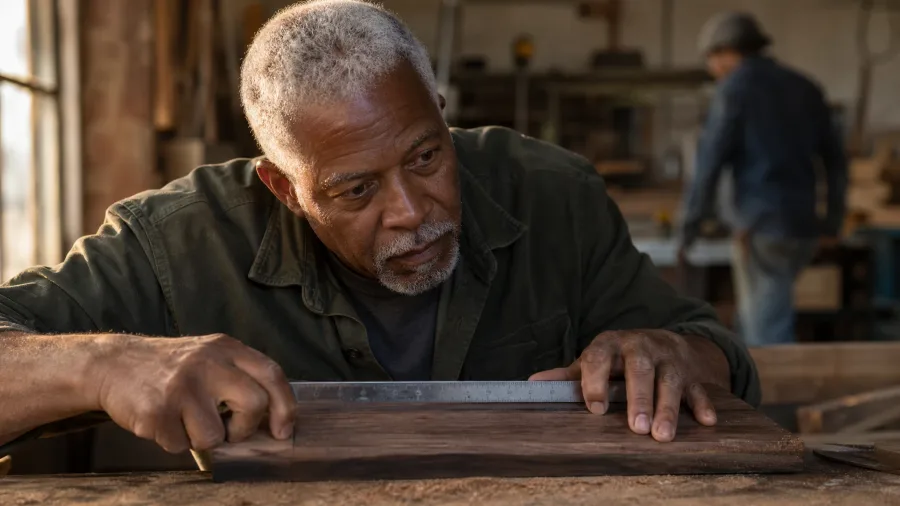
Forty percent of your primary motor cortex is dedicated entirely to controlling your hands and fingers.
Most men assume working with tools is just mechanical repetition that lets the brain go idle. In reality, whenever you gauge surface roughness or align a tiny thread, you force your cerebellum and parietal lobes to coordinate instantly. That tactile feedback creates an active spatial map in memory, doing far more cognitive heavy lifting than tapping on a glass screen.
Swap ten minutes of digital brain games today for a small, hands-on repair you can complete entirely by touch and sight.
💡 Tip: Try using hand chisels or manual hand planes instead of power sanders for detailed finishing work.
Tactile Engagement Factors
How manual labor engages distinct neural channels
2. Why Does Working With Wood Calm an Overactive Brain?
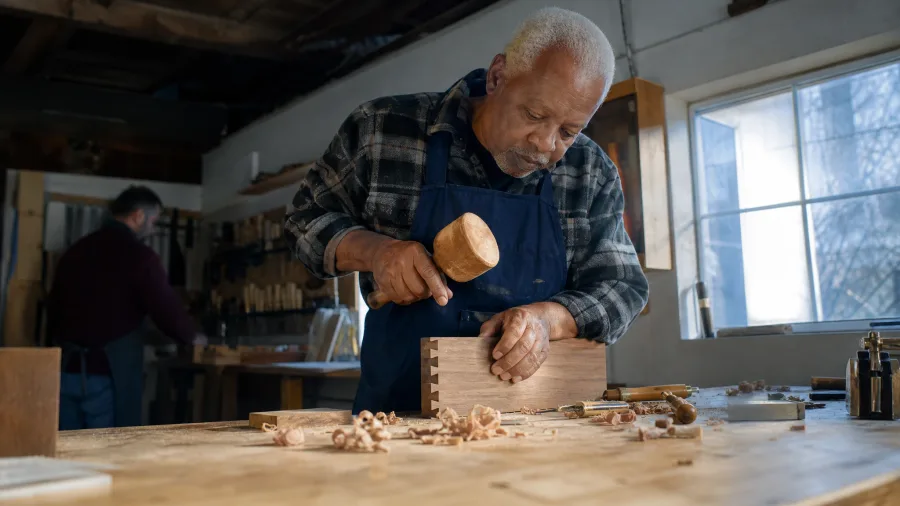
"My mind stops racing the second I turn on the shop light." Ask almost anyone over sixty who spends time working wood, and you will hear some version of that exact realization.
When you set a fine hand saw directly into a scored line, your brain cannot afford background noise. Managing sharp steel, physical safety, and accurate depth forces absolute sensory presence. Specialists who study cognitive resilience note that structured, tactile work quiets ruminative thought loops far faster than sitting in an armchair attempting to clear your head.
The wood demands every ounce of your attention right now.
If you notice your mind looping through late-afternoon worries, stop trying to think your way out of the fog. Step out to a workbench, pick up a piece of scrap timber, and plane a single edge down until it sits perfectly square. Giving your hands a tangible physical line to follow gives an overactive mind an immediate place to land.
Woodworking Mechanics — At a Glance
🌲 Material
Hardwood / Softwood
🔍 Focus Level
High Tactile Precision
⚡ Cognitive Payoff
Stress Cortisol Dip
Key Mechanism
Physical tactile resistance forces immediate focus on hand position and cutting angle.
3. How Does Physical Problem-Solving Build Cognitive Resilience?
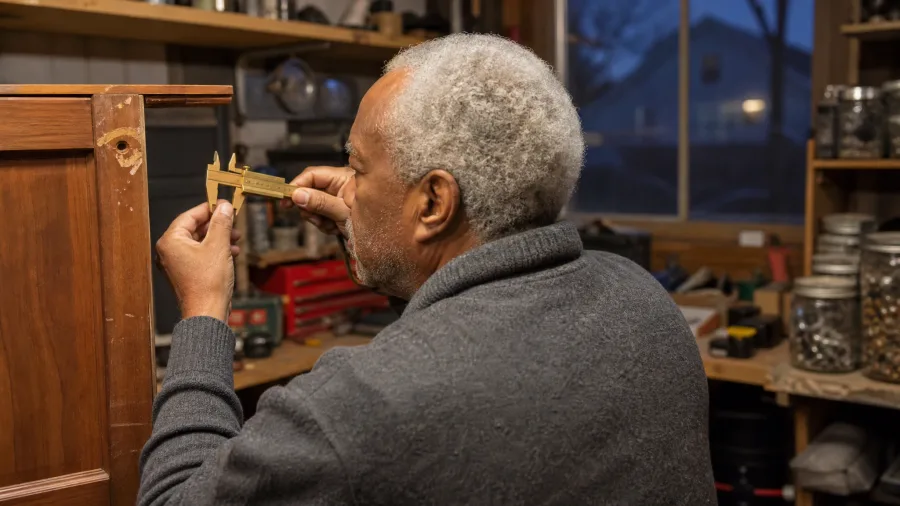
You turn the steel screwdriver into the cabinet frame, expecting that firm final cinch, but the soft brass thread strips out completely, leaving the hinge crooked and dangling loose against the bare wood.
Popular advice claims that keeping your mind sharp as you get older requires digital brain games, crosswords, or online memory puzzles. But software offers neat, pre-packaged choices and an instant reset button when things go wrong. In a garage workshop, stripped wood gives you no backspace key; it forces your brain to stop, absorb an unexpected defect, and adapt to physical reality.
Digital puzzles build screen patience, but material friction builds true resilience.
In the quiet beat right after the screw spins loose, your prefrontal cortex kicks into active executive function. You do not panic or walk away; you stop, examine the damaged hole, and evaluate your choices.
You say to yourself, "I can plug the hole with a glued hardwood dowel, step up to a larger thread size, or relocate the mounting plate entirely." Psychologists who study cognitive health note that working through unyielding material resistance conditions your brain to handle daily stress and unexpected life news with steady, flexible composure.
When a simple project stalls out this week, resist the urge to force the tool or give up in frustration; step back for thirty seconds, take a breath, and name three separate physical solutions before acting.
💡 Tip: Keep a small notebook at your workbench to sketch out repair steps before cutting into expensive material.
Best Manual Tasks for Brain Health
4. Can Small Repairs Replace Mental Crosswords?
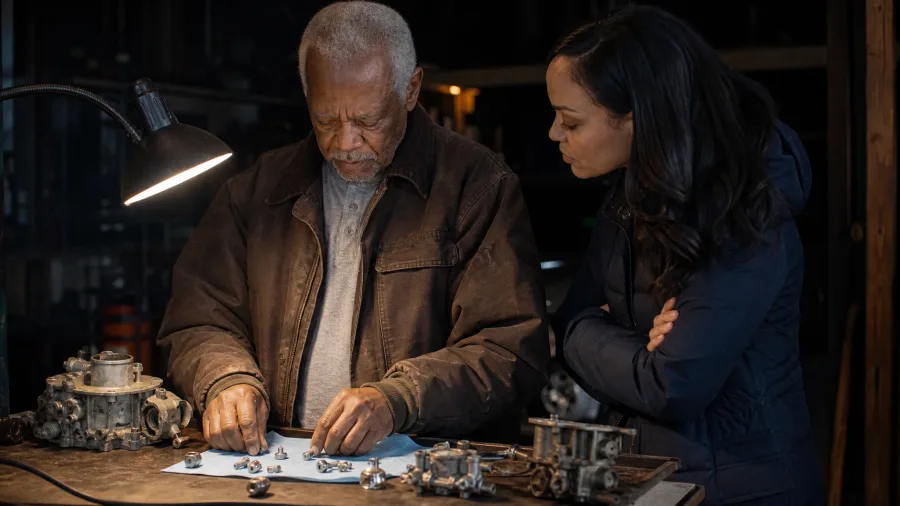
I spent my first two years after turning sixty-five convinced that maintaining a daily digital crossword streak was keeping my memory sharp. Then I spent a Saturday afternoon on my garage bench tearing down a clogged lawnmower carburetor, and realized how much of my cognitive capacity was actually sitting dormant behind a glass screen.
Word puzzles balance on language retrieval and static recall. Rebuilding a mechanical assembly forces the brain to hold complex spatial geometry, precise sequencing, and fine motor control in mind at the same time – a far broader cognitive workout than tapping a tablet screen.
Take ten seconds to answer one honest question.
When was the last time you fixed a problem that required your fingers to adjust in real time to a three-dimensional object? If your answer is purely screen-based, replacing twenty minutes of digital puzzles with a quick mechanical repair will challenge your executive functioning in ways a letter grid simply cannot match.
💡 PRO TIP
Sequencing Strategy
When taking apart a mechanical device, arrange parts in a straight line from left to right as you remove them. Reversing the sequence during reassembly exercises temporal memory.
5. Why Does Tactile Feedback Sharpen Spatial Awareness?

Relying purely on visual information causes fine hand-eye calibration to decline over time, leaving you surprisingly clumsy when working in dark or tight quarters.
When a nut catches thread or a saw blade binds in maple, sensory nerve endings send high-speed signals straight to your brain stem. You make micro-adjustments without looking directly at your fingers. When guiding someone, use these exact words: 'Eyes find the bolt, but fingers feel the thread seat. Let touch do the steering.'
That continuous loop of touch and movement keeps your internal spatial map young.
🛠️ 5 Steps to Build a Daily Hands-On Routine
Audit Your Space
Clear a 4-foot workbench area with adequate lighting and dedicated hand tool storage.
Pick a Low-Stakes Project
Start with a simple restoration project like refinishing an old wooden tool crate.
Schedule 45-Minute Blocks
Work at the bench three afternoons a week to build consistent motor habits.
Work Manual First
Use hand saws, rasps, and manual screwdrivers before reaching for power gear.
Document Solutions
Write down how you solved tricky fittings so you retain the mental pathway.
6. Does Working With Tools Lower Daily Anxiety?
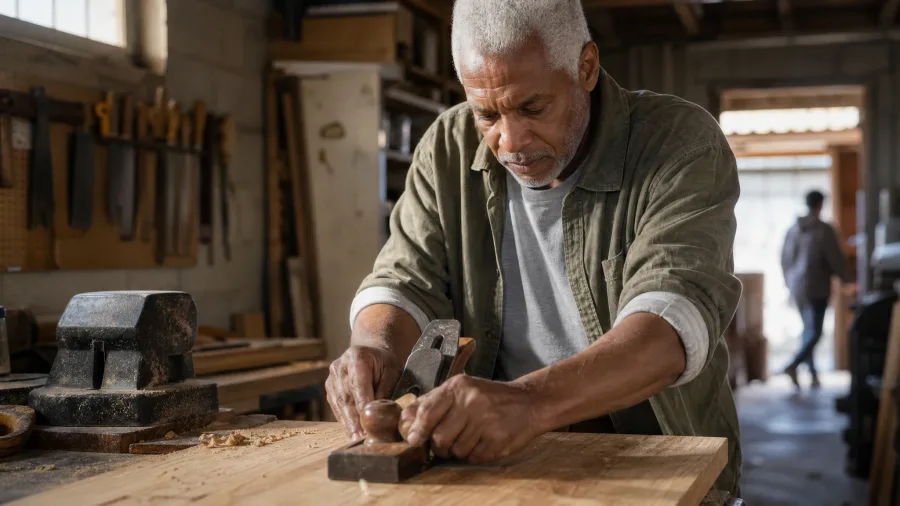
Working with physical tools gives your nervous system an immediate anchor when quiet background anxiety starts to build up during the day.
Most modern stress comes from open-ended inputs: endless news streams, administrative tasks, and digital chatter that rarely offer a clear finish line. A workbench operates under entirely different rules. When you plane a piece of timber, the feedback is instant and non-negotiable: the edge is either straight and flush or it is not, regardless of what you think.
Tangible certainty quietens the brain in a way abstraction cannot.
Completing a clean joint gives your mind an unmistakable signal that a task is finished. That physical closure drops resting nervous system tension far better than passive relaxation, settling the evening jitters and helping you fall asleep without your mind spinning in place.
When low-level worry strikes, step away from screens and spend twenty minutes making one clean, simple repair you can physically test with your fingers.
Activity Cognitive Assessment
- Manual Hand Tool Operations — High motor cortex stimulation and continuous spatial adaptation.
- Automated Power Tool Use — Saves physical effort but reduces fine tactile control.
- Passive Workshop Watching — Watching video tutorials without physical application yields zero motor benefits.
7. Why Does Finely Tuned Motor Control Protect Cognitive Speed?
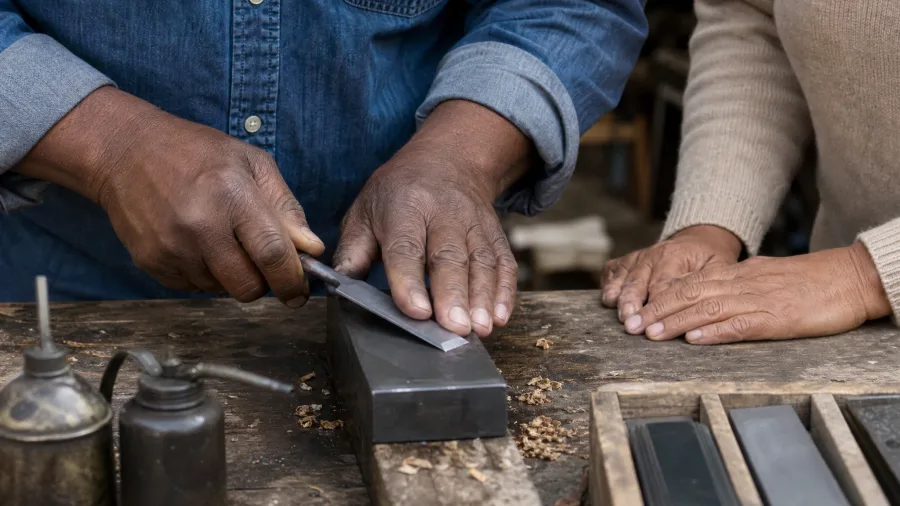
Most people assume clumsy fingers and lost dexterity are an inevitable consequence of aging nerves.
In reality, fine precision declines primarily from lack of practice, not inevitable physical decay. When you thread small brass screws or sharpen a chisel on an oil stone, your brain coordinates constant, high-speed micro-adjustments between tactile feedback and muscle output. Forcing your fingers to execute delicate work maintains rapid firing speeds along your motor pathways, keeping the corresponding brain regions fully active.
Instead of avoiding fiddly mechanical jobs, keep seeking out the detailed calibration work that demands deliberate, exact movement.
Digital Brain Training vs. Hands-On Benchwork
Digital Screen Puzzles
- 2D visual input only
- Repetitive button clicking
- No physical feedback or material resistance
- Isolated cognitive stimulation
Physical Workbench Projects
- 3D spatial alignment and texture feedback
- Complex fine motor nerve activation
- Real-world physical problem solving
- Tangible finished output builds agency
8. How Does Hands-On Creation Build a Sense of Agency?
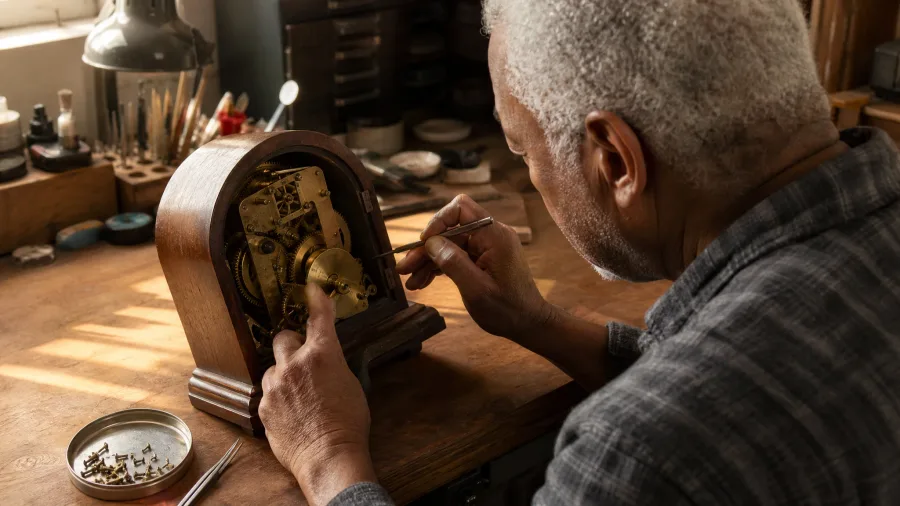
Does spending three hours repairing a sticky wooden drawer actually matter when ordering a brand-new one takes four clicks on a screen? It does, because the psychological return was never about the money.
For decades, your mind relied on daily operational challenges – solving problems, managing logistics, and making decisions – to confirm your personal authority. When retirement abruptly removes that professional framework, passive habits like watching commentary or scrolling digital feeds fail to satisfy the brain. They leave an uncomfortable void where your sense of agency used to live.
Agency requires direct cause and effect.
The exception to remember is that you do not need master craftsman skills or a museum-quality outcome for this mechanism to work. Disassembling an old clock radio on a Tuesday afternoon, cleaning the tarnished brass contacts, and resetting the housing alignment restores your felt sense of capability, even if the casing still shows its age.
It is genuinely fine if the repair takes three attempts, or if the finished object stays slightly imperfect. The goal is not industrial efficiency; it is the active exercise of your own judgment.
If a family member asks why you are spending hours on a ten-dollar item, the script is simple and direct: "I am not trying to save money on a replacement; I am keeping my hands and mind in working order." That small daily proof acts as a strong buffer against late-life apathy.
💡 Tip: Take on repair work for neighbors or local charities to add social connection to your shop time.
9. Does Working With Raw Materials Improve Attention Span?
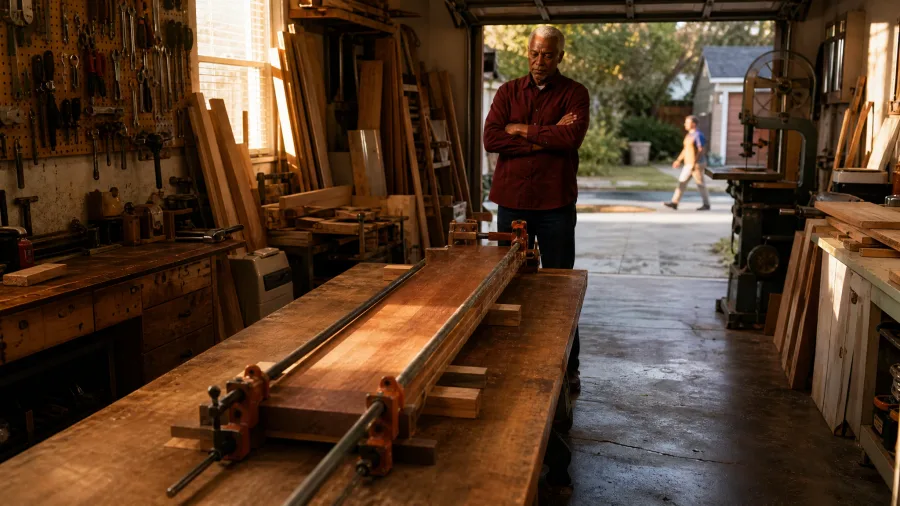
Most focus advice claims that keeping your mind sharp requires digital brain games or strict willpower drills. In reality, forcing concentration against instant notifications spends your nervous energy without building genuine endurance.
Raw physical materials reject artificial urgency entirely. You cannot hurry wood glue drying time no matter how much you want to, and forcing a rusted iron bolt without allowing penetrating oil time to work simply snaps the fastener off clean in the block. Working with physical materials demands patient observation, teaching you to respect physical limits.
That daily shift quietly trades chronic agitation for lasting focus.
Adjusting your personal pacing to match wood grain or fine metal tolerance retrains your brain to stay comfortable during long, quiet working stretches. When a glued joint needs two hours to set today, resist reaching for a screen–leave the bench idle and let the real world dictate your rhythm.
10. Why Does Mechanical Troubleshooting Keep Executive Function Sharp?
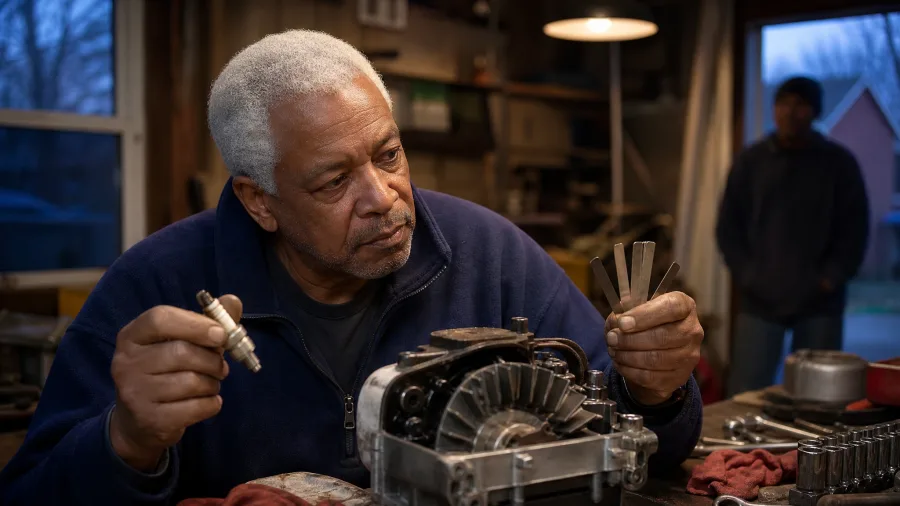
Why does standing over a lawnmower that sparks but refuses to catch keep your mind sharper than a brain-training app? Because troubleshooting forces your prefrontal cortex to execute a strict process of elimination under real conditions.
You pull the cord, hear a brief cough, and smell unburnt gas. Instead of guessing, you systematically isolate the variables: verifying fuel flow, checking the spark plug gap, and testing cylinder compression. You hold the engine's internal cycle in your head while resisting the urge to make random adjustments.
That patient diagnostic discipline is executive logic in action, and doing it regularly keeps real-world problem solving remarkably quick.
11. Does Craftsmanship Help Prevent Brain Fog?
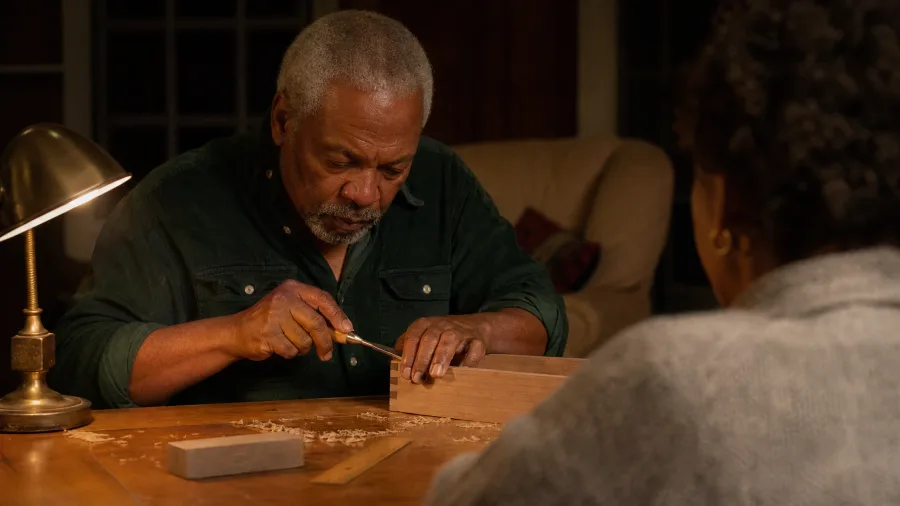
Three hours passed before you even looked up at the workshop clock, surprised to find your workbench covered in fine shavings and the afternoon light completely shifted.
Most men over sixty assume brain fog is a sign of mental fatigue that requires turning your mind off. You think resting your brain means sitting back on the couch, watching television, or scrolling news feeds. But sitting passively with an under-stimulated brain usually allows background worries and scattered mental clutter to settle into a heavy, persistent haze.
Brain fog is rarely true cognitive exhaustion; it is scattered focus.
Craftsmanship clears that haze because physical work demands total alignment between your eyes, hands, and intent. When a task matches your skill level, your mind locks onto the concrete challenge in front of you.
This deep state of focus suppresses background anxieties and forces your brain to operate on a single channel. When you step away from the shop, your mind feels refreshed, focused, and calm. You did not clear the haze by doing nothing; you cleared it by giving your brain a problem real enough to demand complete presence.
Regularly engaging in hands-on craftsmanship builds a protective habit of clarity that preserves executive function and mental speed long into your senior years.
The next time mental fatigue sets in, skip the armchair. Pick up a chisel, head to your workbench, and spend forty uninterrupted minutes on one precise joint.
12. How Does Physical Effort Trigger Deep Focus States?
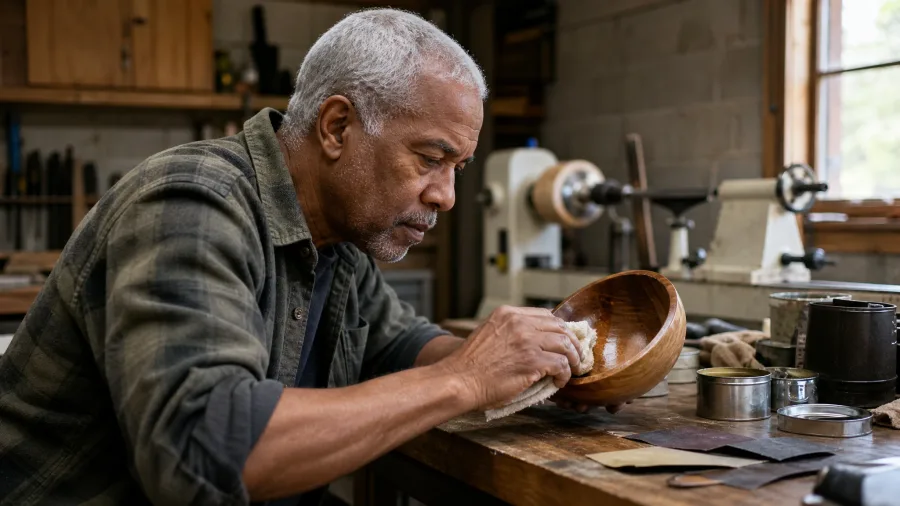
I spent years assuming that the best way to rest an aging brain was to collapse onto the sofa and turn off my mind. Sitting in front of a screen feels like recovery, but it leaves your attention unanchored, wide open to low-grade worry and endless mental drift.
Physical effort changes the equation completely.
When you sand down a sticky drawer or balance a fence post, your eyes and hands lock onto a single physical objective. That structured immersion pulls your focus away from abstract anxiety, giving your nervous system a far deeper rest than passive relaxation ever could.
13. Does Repairing Old Objects Reinforce Mental Flexibility?

Spending three full afternoons fighting a stubborn split in an oak leg easily turns into pure frustration if you treat the aged grain as a mechanical defect rather than an evolving condition.
A modern flat-pack kit supplies identical plastic components that snap together predictably, demanding almost no cognitive pivoting. An antique chair brings warped maple, brittle hide glue, and stripped screw holes that reject off-the-shelf hardware. Adapting your repair on the fly forces your brain to build creative workarounds, using custom dowels or hand-cut shims to match asymmetrical wear.
The cognitive benefit vanishes the moment persistence hardens into obstinacy.
If you spend hours trying to force a distorted joint back into its original factory alignment, you stop practicing flexibility and start practicing sheer stubbornness. Real mental agility requires recognizing when to yield, setting the chisel down, and sketching two alternative fixes that work with the wood's present condition before picking up a tool again.
💡 Tip: Keep scrap hardwood offcuts near your bench to test joints before making final cuts on your main project.
14. Why Does Tactile Mastery Reduce Frustration Intolerance?
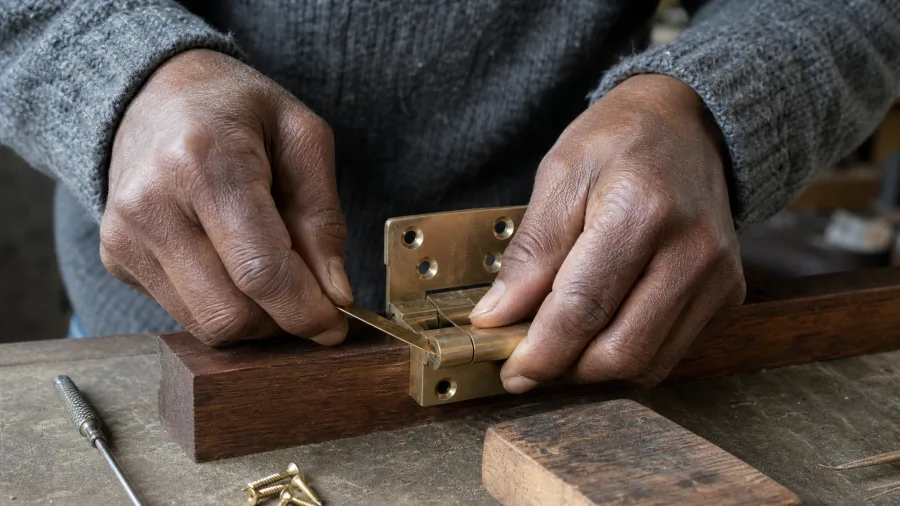
"If it doesn't fit, don't force it." Most popular advice treats frustration tolerance as a tense mental exercise, telling you to swallow your temper and use willpower whenever daily life stops cooperating.
The workshop exposes that approach as useless almost immediately. Trying to muscle a cross-threaded steel bolt into place does not demonstrate determination; it strips the threads and ruins the workpiece completely. Working with raw materials forces a plain realization: physical resistance is not a personal insult, but precise structural data showing where the joint catches.
You cannot negotiate with jammed metal.
You learn the craftsman's default move: back off half a turn, inspect the interference point, and shave off a fraction of a millimeter. Researchers who study self-regulation note that this hands-on routine builds deep emotional patience. When software freezes or bureaucracy stalls, the impulse to rage disappears, replaced by the practical habit of stepping back to see where it binds.
15. How Does Daily Tool Use Keep Proprioception Young?
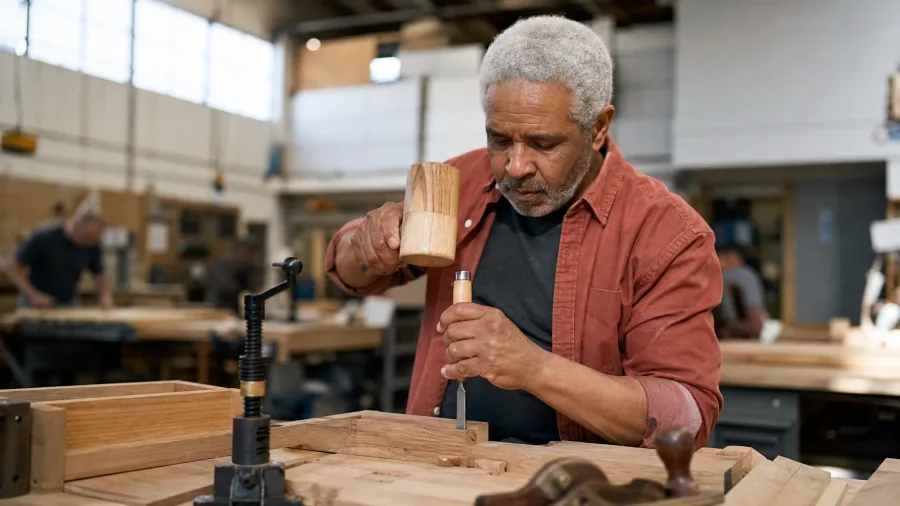
Holding a chisel at a precise angle or driving a finishing nail flush requires your brain to track where your hands are in space without looking.
Movement researchers describe this silent spatial tracking as proprioception, a feedback loop between joint receptors and the motor cortex that naturally dulls when daily life becomes physically passive. Consistently handling tools that demand exact pressure and placement – like guiding a wood rasp or turning a fine screw – forces the brain to continuously update these internal motor maps.
That quiet practice is what keeps your physical balance, hand coordination, and everyday confidence sharp as the years pass.
Frequently Asked Questions
How many hours a week should men over 60 spend on physical crafts?
Aiming for 4 to 6 hours spread across three or four sessions provides consistent sensory stimulation without causing joint strain or physical fatigue.
Are hand tools really better for cognitive health than power tools?
Yes. Hand tools require continuous fine motor adjustments, physical balance, and tactile feedback, engaging significantly more brain volume than pushing a button on a power tool.
Can beginners over 60 start working with their hands safely?
Absolutely. Starting with simple woodworking kits or basic household furniture repairs allows you to build fine motor control and safety habits gradually.
Does manual work help maintain memory better than digital brain games?
Physical benchwork engages spatial memory, fine motor control, and sensory processing simultaneously, offering a broader cognitive workout than 2D screen puzzles.
The Tactile Circuit That Restores Focus
You do not need an elaborate commercial shop to keep your mind sharp as you age. A modest workbench, a set of quality hand tools, and a broken clock or wooden box are all it takes to trigger deep cognitive engagement.
When your hands actively shape physical materials, your brain stays focused, flexible, and young. Step up to your bench today, pick up a hand tool, and let physical problem-solving keep your executive function sharp.

Meet Edward Green, the founder of GolfingGoal and a seasoned expert in golf. With years of experience on the course and a passion for the sport, Edward has a wealth of knowledge to share. As our Lead Writer, he contributes articles, tutorials, and resources to help readers to improve their skills and reach their full potential on the golf course. Join Our Team!