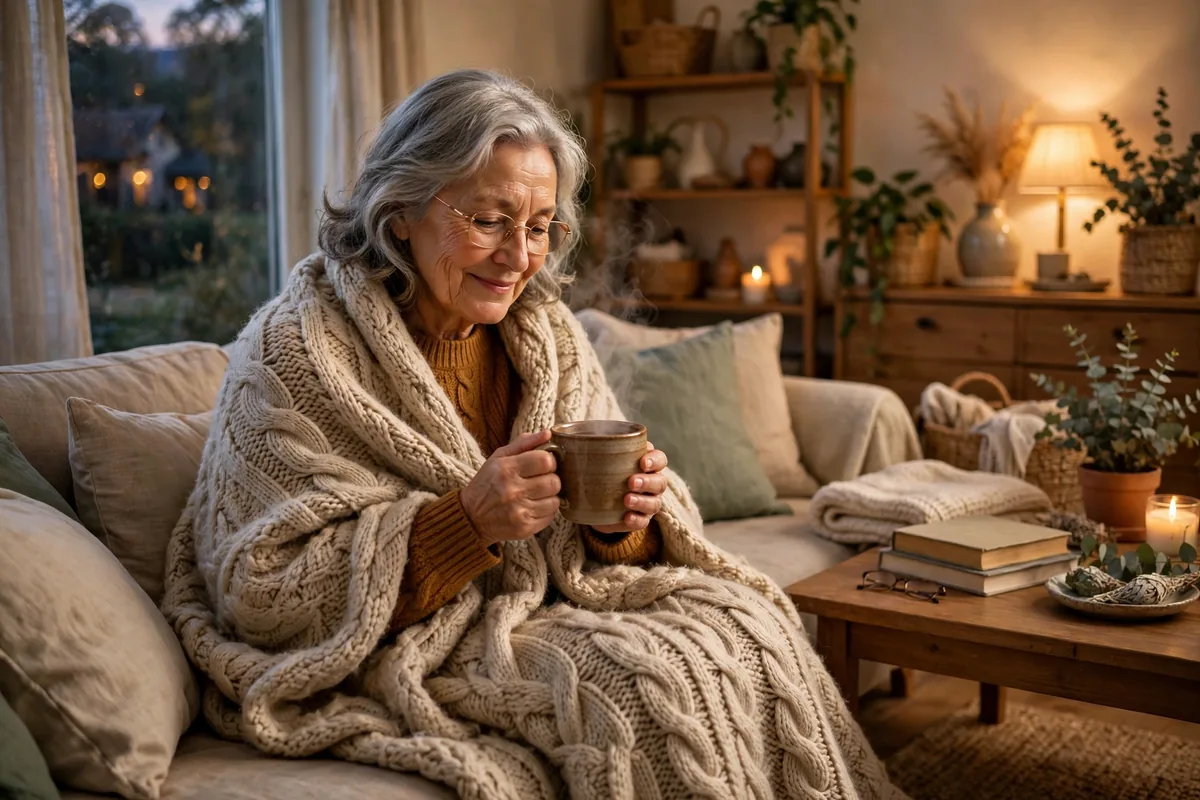
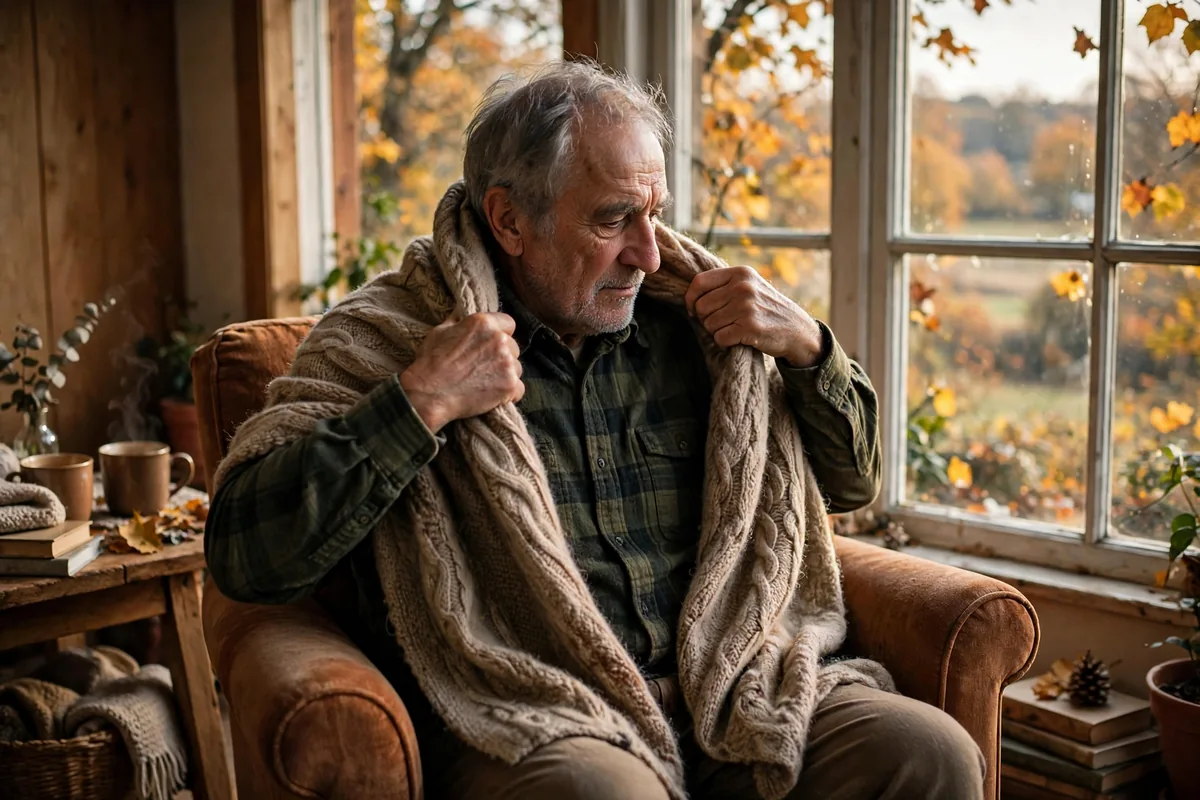
Your sweater is on, the thermostat is up, and your spouse is fine in a T-shirt.
It is not your imagination. The same house that felt comfortable ten years ago can feel drafty now, and it has nothing to do with the windows. The change is happening inside you.
Think of your body as a house with its own heating system. There is a furnace, there is insulation, there are pipes that carry the warmth around, and there is a thermostat that tells everything what to do. After 55, every one of those parts gets a little less efficient. The change creeps in slowly, often starting in your fifties, and by your sixties it is hard to miss. Here is what is happening, piece by piece.
The furnace runs lower
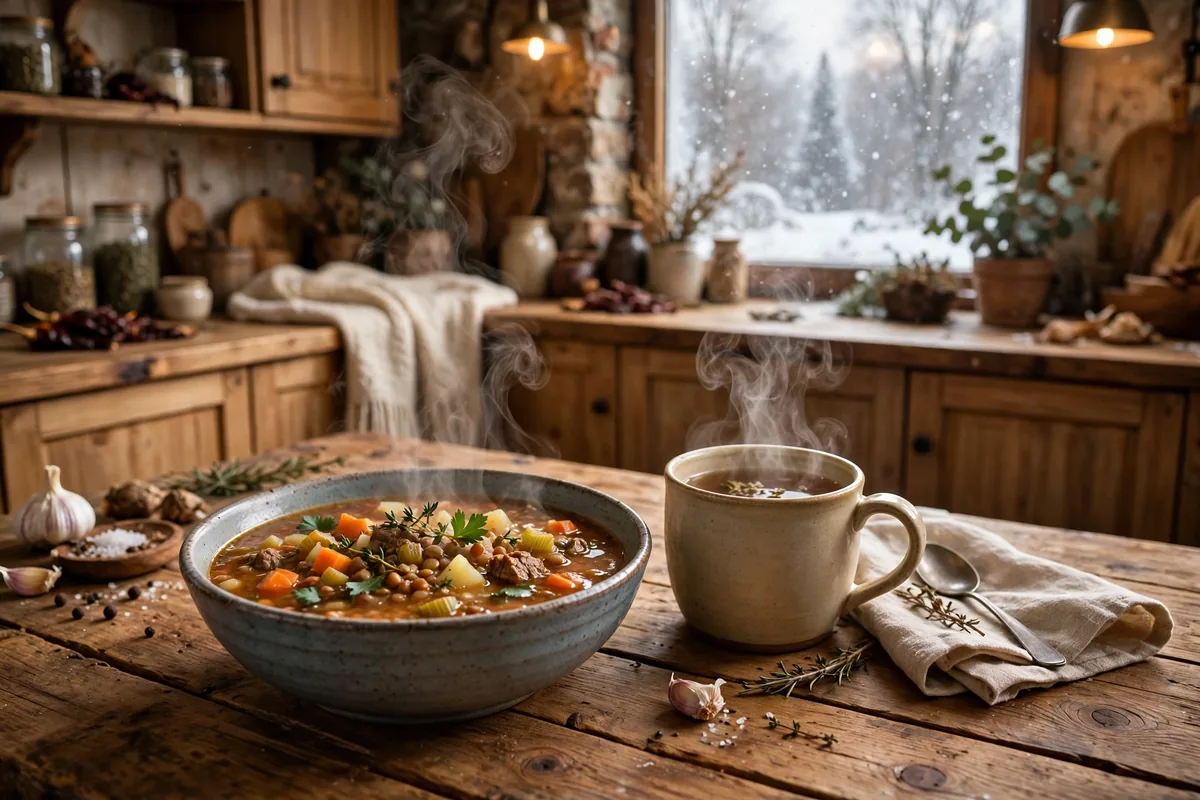
Your metabolism is the furnace. It turns food into energy, and heat is the exhaust. That is not a figure of speech, your body literally glows with warmth as a byproduct of burning fuel.
With age, the furnace idles. Basal metabolic rate, the energy you burn just existing, drops decade by decade, partly because lean body mass shrinks. Geriatricians point to this as the single biggest reason older adults feel cold: the same body, running the same daily routine, simply produces less heat than it used to.
Food plays a role too. Skipping meals or eating very little means less fuel for the furnace, and older adults who eat less are more likely to feel chilled. Warm meals and hot drinks are not just comfort. They are literal fuel.
Less furnace, less warmth. Simple as that.
The insulation thins out
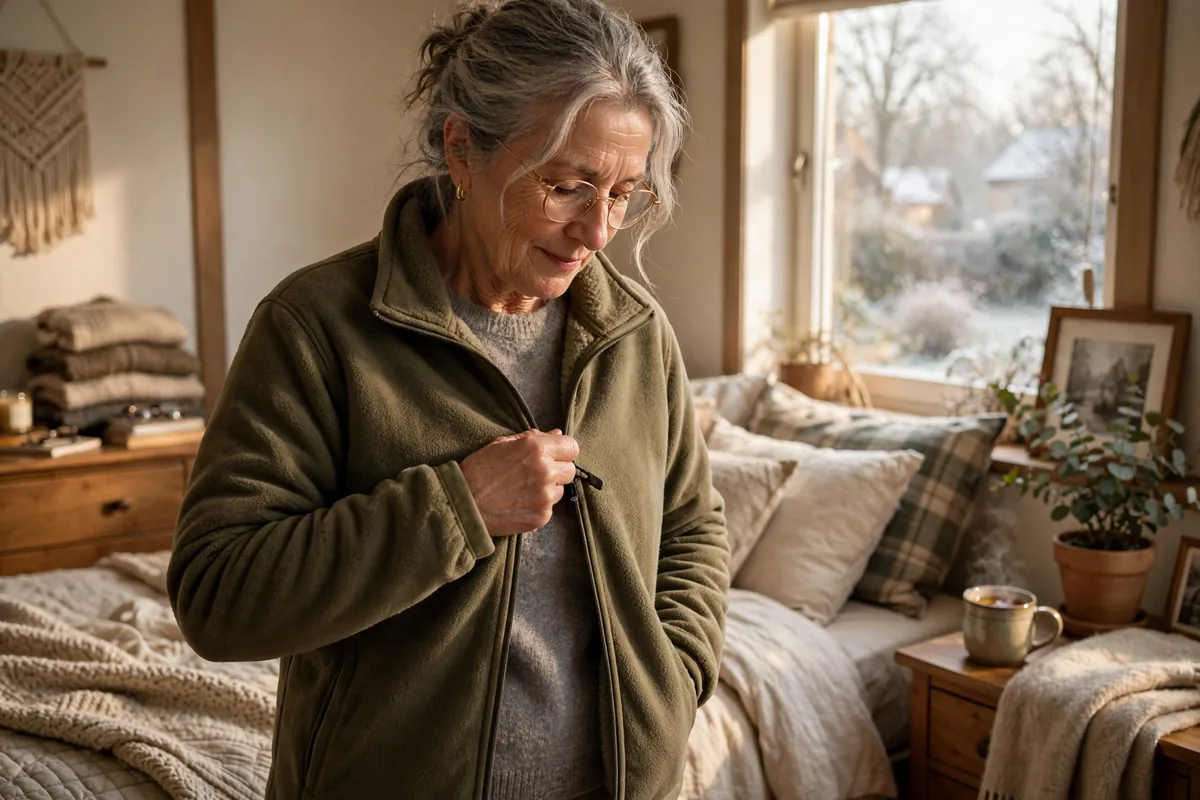
Houses have fiberglass in the walls. You have fat and muscle. Both decline.
The layer of fat just beneath your skin is a genuine insulator, the same principle as a wetsuit. It thins with age, particularly in the extremities, so heat escapes more easily. Skin itself also gets thinner and drier, which weakens the barrier. At the same time, muscle mass slowly decreases, a process doctors call sarcopenia. Muscle is the body’s warmest tissue, so every pound lost is like pulling out a radiator.
Researchers have found that fat does not just shrink, it relocates, moving away from the limbs toward the center of the body. Your core stays relatively protected while your arms and legs pay the price. That is one more reason the hands and feet take the hit.
This is why strength training matters far beyond fitness. Muscle is heating equipment.
The pipes deliver less heat
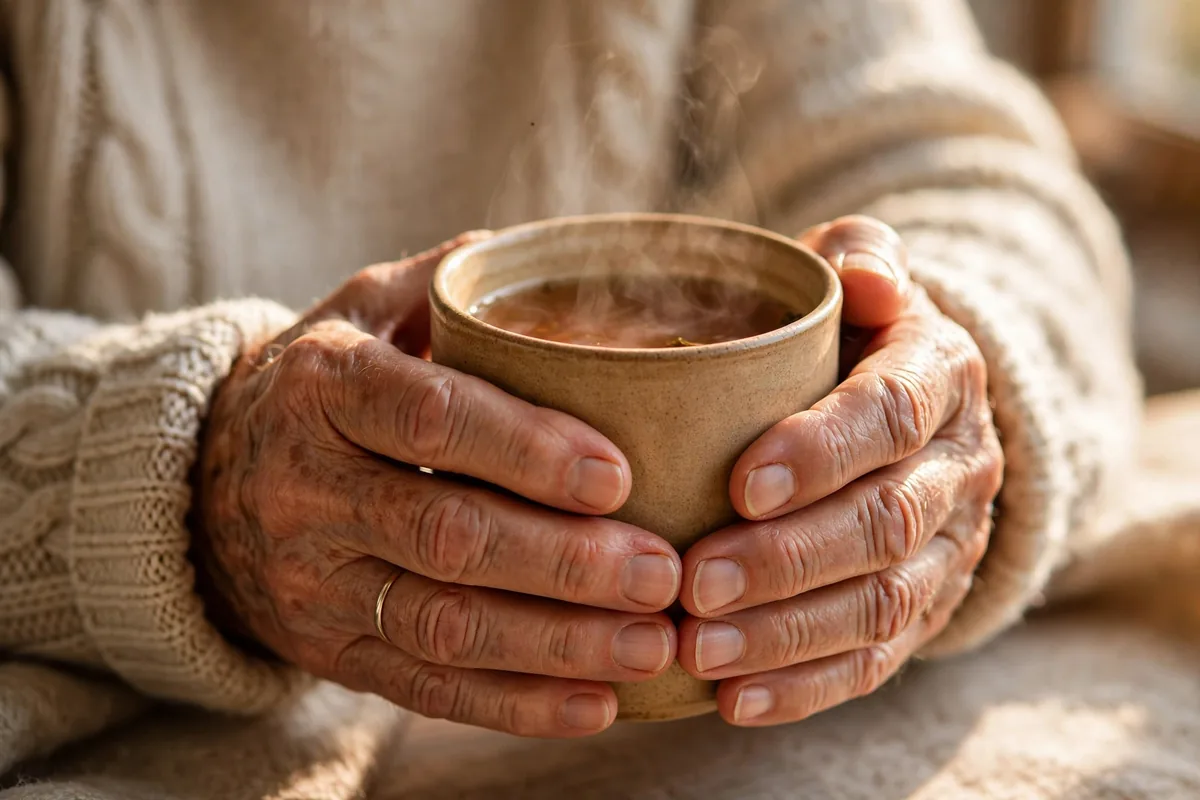
Blood is the delivery truck for warmth. It picks up heat at your core and carries it to your hands, feet, and skin surface. In youth the roads are wide and flexible.
Arteries stiffen over time. The vessels lose their spring, and the finely tuned system that narrows and widens skin vessels to conserve or release heat becomes sluggish. Research from Penn State has traced this to changes in nitric oxide production in the skin, the chemical that tells vessels when to constrict. Aged vessels simply respond late.
The result is predictable: fingers and toes get cold first and stay cold longest, because the delivery routes to the farthest corners are the narrowest. Warming the hands and feet back up also takes longer, since the vessels are slow to widen again once the chill sets in.
Movement is the free workaround. Walking, stretching, even doing the dishes fires up circulation and pushes warm blood outward. Sitting still in a cool room is the fastest way to get cold, because the pump slows and the pipes cool.
The thermostat stops nagging you
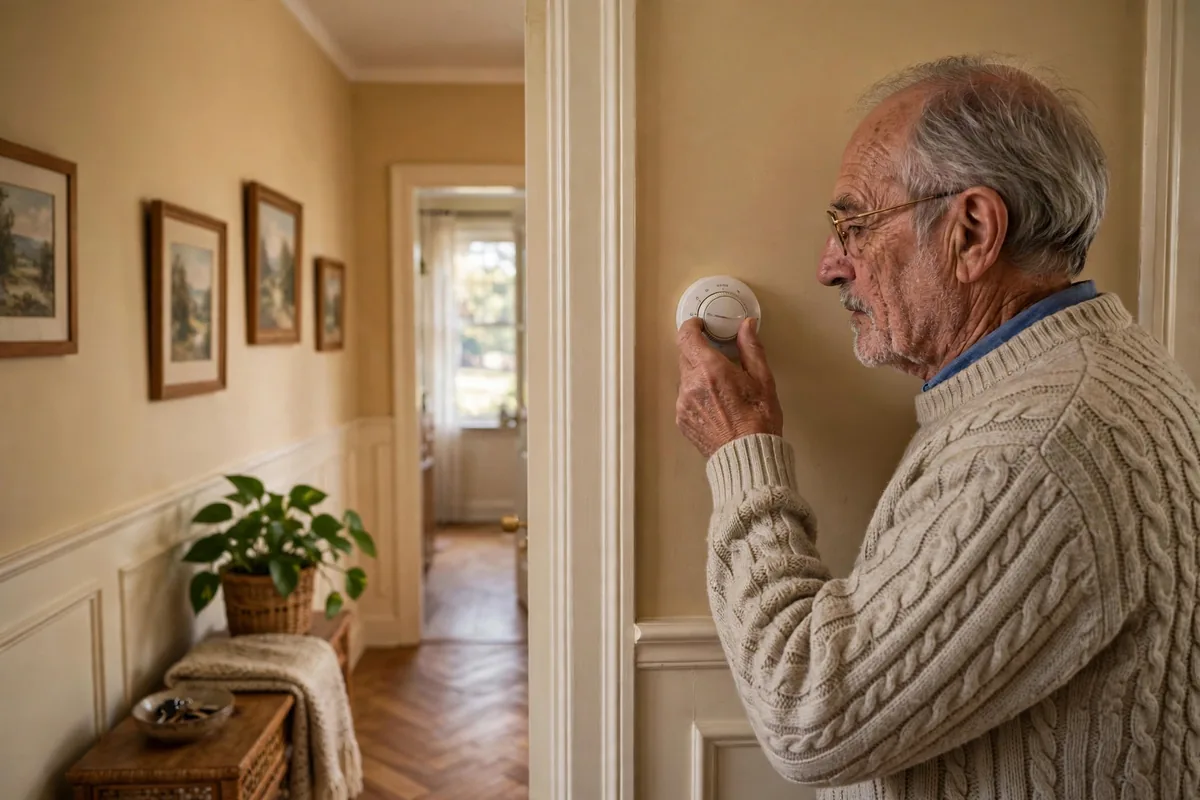
Your hypothalamus is the thermostat. It senses body temperature and fires the warming systems: shivering, constricting vessels, releasing heat-producing hormones. It is supposed to complain loudly the moment things drift.
In older adults the thermostat goes quiet. Studies show shivering starts later, weaker, and at a lower core temperature than in younger people. The experts at Care.com note that this blunted response means older adults feel the cold sooner but warm up more slowly, because the body’s automatic warming machinery engages late and half-heartedly.
Cruel irony. You feel colder while your body does less about it.
There is a safety angle here worth knowing. Because the thermostat is quiet, older adults can slip toward dangerous cold without the usual loud alarms. Confusion, unusual drowsiness, or clumsiness in a cold environment are signs to take seriously and warm up fast. The body will not always tell you in time.
The wiring has complications

So far this is all normal aging. But several common conditions and medications turn the dial down further.
An underactive thyroid slows the furnace directly, because thyroid hormones set the metabolic pace. Anemia means fewer red blood cells carrying oxygen, and tissues starved of oxygen produce less heat. Diabetes can damage both vessels and the nerves that report temperature. Even heart disease reduces how efficiently warm blood gets pumped around, as Home Instead’s guide to feeling cold explains.
Then there are medications. Beta blockers slow the heart, which can reduce blood flow to the skin. Some sedatives and antidepressants interfere with the hypothalamus itself. Diuretics can leave people mildly dehydrated, and dehydration lowers body temperature.
Do not adjust anything on your own. But if your coldness arrived suddenly, or worsened soon after a new prescription, that timing is information your doctor will want to hear. It is one of the most common and most overlooked explanations.
What to do about the draft
You cannot stop the years, but you can outsmart them. Layers beat single thick garments, because trapped air between thin layers is itself insulation. Keep your core warm first, since warm blood starts there. Move more, because muscle is both the furnace and the radiator, and even light activity generates real heat.
Check your environment honestly. Older adults sometimes keep the house cooler than they admit, to save money, and end up chilled all day. A warmer room is medicine you can afford to take. And warm your bed before you climb in: a cold bed steals heat all night, while a pre-warmed one lets you fall asleep instead of shivering.
Dress for your extremities. Warm socks, gloves, and a hat matter more now than they did at forty, because the body’s own defenses to those areas have weakened. And keep warm drinks in rotation through the day. The heat goes straight in.
Watch for warning signs. Persistent, worsening coldness, especially with fatigue, pale skin, or unexplained weight change, deserves a conversation with your doctor. Feeling cold is normal with age. Feeling frozen is a symptom.
This article is general information, not medical advice, so talk to your own doctor about what applies to you.

Eliza Mercer, the renowned golf coach with unmatched expertise in the sport, is our Lead Instruction Coach. Eliza provides exclusive and personalized coaching sessions to help golfers of all levels improve their skills. With her wealth of knowledge and experience, Eliza is a valuable resource for readers looking to elevate their game. Join Our Team!