

After 55, the skin on your face is not the same skin you had at 40. It is thinner, drier, and slower to repair itself.
That sounds discouraging. It is not. It just means the ingredients you want on a product label change with time. What mattered in your thirties will not be enough now. The good news: dermatologists agree on a short list of ingredients that actually do the heavy lifting for mature skin. Six of them. That is it.
Think of this list as a pocket guide. Next time you stand in front of a shelf (or scroll through one online), you can check the label and know exactly what you are looking at. And you can ignore the rest of the noise. Seriously. Ignore it.
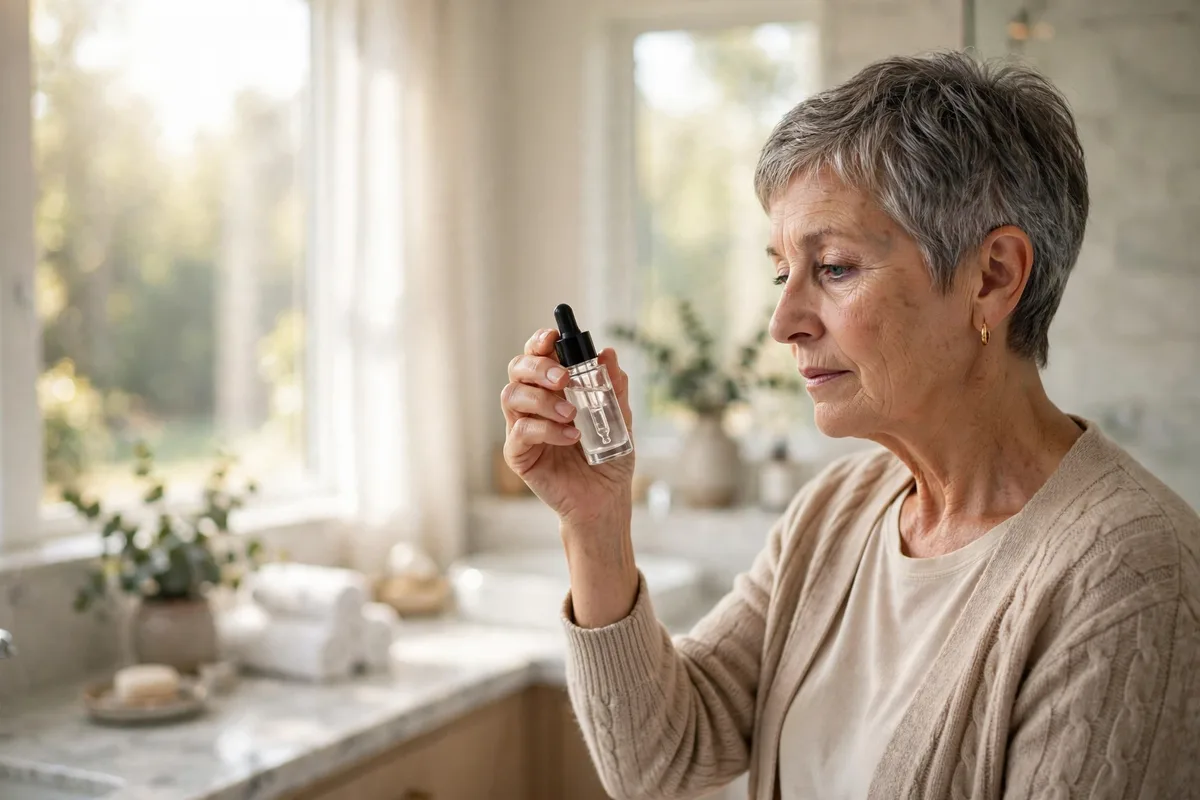
1. Retinoids: the family name to know
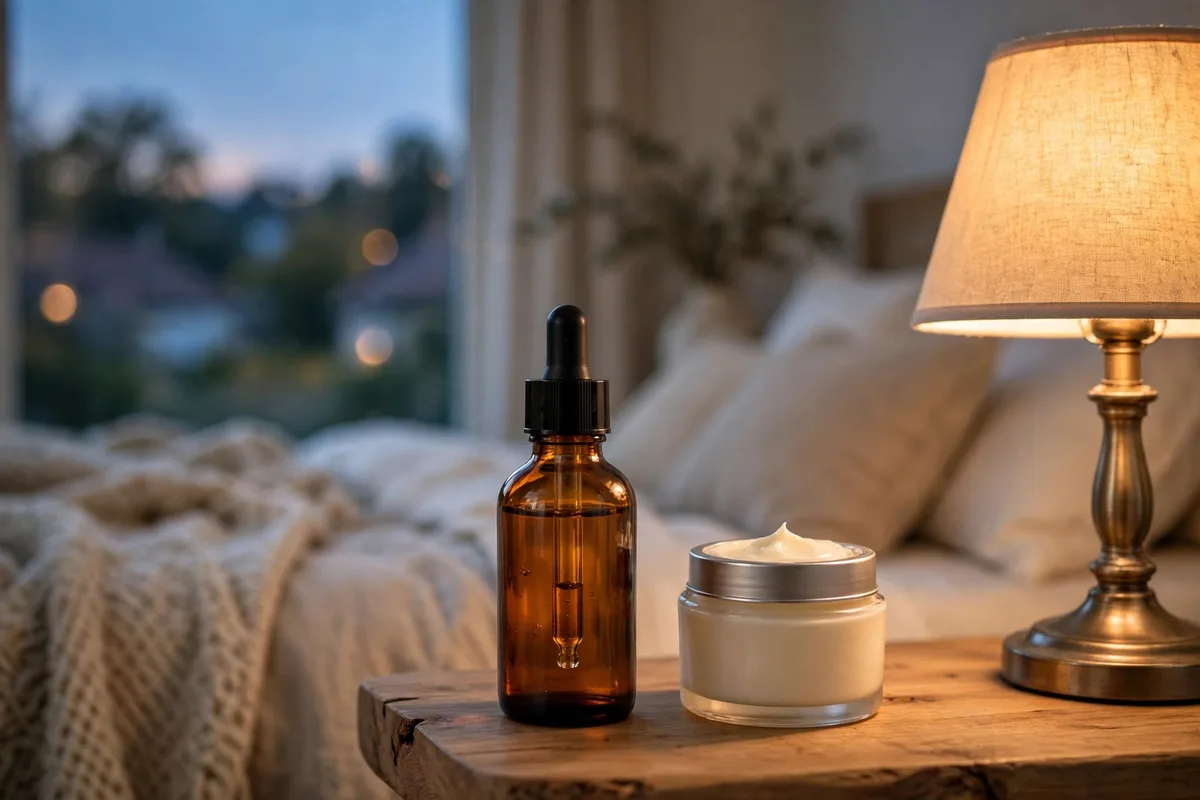
Retinoids is the umbrella term for everything made from vitamin A. Retinol, the kind sold over the counter, is one member. Tretinoin, which a doctor prescribes, is a stronger one. What unites them is this: they are the most studied ingredients in all of skin care for lines and wrinkles, and a recent national survey of leading dermatologists put them at the top of the recommended list for signs of aging.
How do they work? Your skin makes less collagen as the years pass. Collagen is the springy protein that keeps skin firm. Retinoids nudge your skin cells to make more of it, and they also speed up cell turnover, which is a fancy way of saying they help old surface cells flake away so fresher cells take their place.
One honest warning. Retinoids can irritate at first. Redness, dryness, a bit of peeling. Normal. Start slow, a few nights a week, and use a moisturizer on top. If over-the-counter retinol still feels too harsh, talk to a dermatologist about the right strength for you. Patience pays off here. Most people need several weeks of steady use before they see a difference.
2. Vitamin C: your morning shield

If retinoids do their work at night, vitamin C belongs in the morning. It is an antioxidant, which means it helps neutralize the unstable molecules (free radicals) that sunlight and pollution leave behind in your skin. Those molecules break down collagen. Vitamin C helps stop that from happening.
It also brightens. Those flat brown patches that show up on faces and hands after years of sun? Dermatologists call them solar lentigines. The rest of us call them age spots. Harvard Health notes that products with vitamin C are among the options that can help fade them over time.
Look for the words L-ascorbic acid on the label. That is the most active, best-studied form. One thing to know: vitamin C breaks down when it meets air and light, so packaging matters. A dark or airtight pump bottle is a good sign. Apply it, then sunscreen over it. More on sunscreen shortly.
3. Niacinamide: the quiet multitasker
Niacinamide is simply vitamin B3, formulated for skin. It rarely makes the headlines, yet dermatologists keep recommending it. In the Northwestern Medicine consensus study it earned expert backing for both redness and dark spots, and it is gentle enough for sensitive skin.
What does it actually do? Several useful things at once. It helps the skin hold on to moisture. It calms redness. It can make enlarged pores look smaller. And it even helps even out blotchy tone. For mature skin that is often drier and more reactive than it used to be, that is a handy combination.
Usual strength: around 4 to 5 percent. You will find it in serums and moisturizers. It plays well with almost everything else on this list, so it layers into a routine without drama.
4. Hyaluronic acid: the moisture magnet

Here is the simplest idea on this list. Hyaluronic acid is a substance your skin makes on its own. It attracts and holds water. But your body makes less of it as you age, and less moisture means more fine lines that come from dryness.
The versions sold in serums are humectants. That is the jargon word for an ingredient that draws water into the skin and helps keep it there. The result is a plumping effect. Dehydration lines, the shallow ones that show up when skin is thirsty, look softer almost right away.
One trick worth knowing: apply it to slightly damp skin, then follow with a moisturizer to seal everything in. On very dry days, hyaluronic acid without a moisturizer on top can actually backfire, pulling moisture the wrong way. Damp skin first. Cream second.
5. Ceramides: the mortar between the bricks
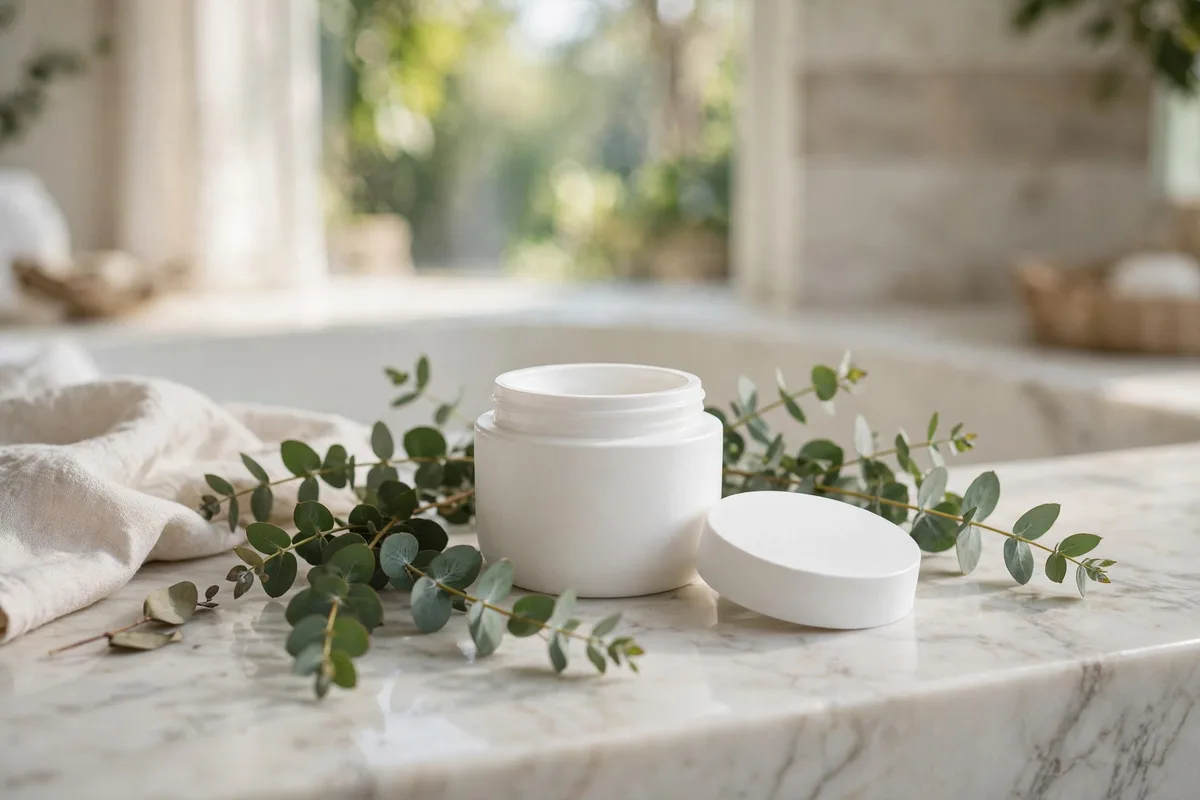
Picture your skin’s outer layer as a brick wall. The skin cells are the bricks. Ceramides are the mortar. They are fats that sit between the cells, holding everything together and keeping moisture in and irritants out.
After 55, your ceramide levels drop. The wall gets leaky. That is one reason mature skin feels drier and more easily irritated. Dermatologists list ceramides among their top picks for dry skin, and they pair especially well with hyaluronic acid: one draws the water in, the other locks it in.
You will usually find ceramides in moisturizers and barrier creams rather than serums. Look for labels that name actual ceramides, like ceramide NP or ceramide AP. Cholesterol and fatty acids often sit alongside them on the ingredient list. They work as a team.
6. Peptides: tiny messengers
Peptides are short chains of amino acids. Amino acids are the building blocks of proteins, and the proteins your skin cares about most are collagen and elastin. So when a peptide signals your skin to make more of them, firmness can improve.
The science is newer here than it is for retinoids, but the logic is sound and dermatologists use them. One name you may see: Matrixyl, a brand name for a family of peptides studied for firmness and wrinkle depth.
Peptides are not the headline act. Think of them as strong supporting players. They fit comfortably into a routine alongside everything above, and mature skin that needs every bit of structural help it can get will take them.
Reading a label without the headache
Now the practical part. How do you actually use this list in the store?
Flip the bottle. Read the first five to seven ingredients. Ingredients are listed in order of how much of each is in the product, so the ones at the top matter most. The six names above should appear near the top of something you plan to use every day. If an ingredient you want is buried at the very end, there is probably too little of it to do much.
Two more label habits from the dermatology world:
- Look for the words “broad-spectrum SPF 30 or higher.” Sunscreen is the one ingredient nearly every dermatologist names first. UV light is still the biggest reason skin ages, at every age. Vitamin C in the morning and retinoids at night do their best work under daily sunscreen.
- Skip the fragrance if your skin is sensitive. Scent is one of the most common causes of irritation in mature skin. “Fragrance-free” is the safest choice.
A quick word of caution before you shop. This article is general information, not medical advice. Everyone’s skin is different, especially after 55, when medications, hormones, and health conditions all play a role. Talk to your doctor or dermatologist before starting a new active ingredient, and keep them in the loop if anything irritates your skin.
You do not need a twelve-step routine. You need six ingredient names on a list, a good sunscreen, and the patience to use them consistently. That is the whole formula. Start tonight.

Eliza Mercer, the renowned golf coach with unmatched expertise in the sport, is our Lead Instruction Coach. Eliza provides exclusive and personalized coaching sessions to help golfers of all levels improve their skills. With her wealth of knowledge and experience, Eliza is a valuable resource for readers looking to elevate their game. Join Our Team!