

Seven minutes. That is shorter than brewing a pot of coffee, and it may be the most useful exercise block of your week.
Most people over 50 do not skip workouts because they are lazy. They skip them because an hour at the gym does not fit between work, grandkids, and everything else. So the workouts stop happening, and the muscle quietly leaves.
After age 30, inactive adults can lose 3 to 5 percent of their muscle mass per decade, a process doctors call sarcopenia. The encouraging part: research on adults in their 70s shows they can build strength at a rate similar to people in their 20s when they follow a steady resistance program. Your muscles do not know your age. They only know whether you use them.
That is where this circuit comes in. Seven moves, 45 seconds each, with short rests. No equipment. A sturdy chair and a wall are the whole gym. Trainers recommend this style of workout for busy adults over 50 because it hits every major muscle group, raises the heart rate, and ends before your schedule can object.
This article is general information, not medical advice. Talk to your doctor before starting a new exercise program, especially if you have a heart condition, high blood pressure, or joint problems.

Why Seven Minutes Is Not a Joke

Let us be honest. Seven minutes sounds like a marketing trick.
It is not the whole story, and it should not be. A single seven-minute session will not replace longer training the way one salad does not replace a healthy diet. But consistency beats duration, every time. Three short circuits a week add up to 21 minutes of real strength work. For someone currently doing zero, that is an enormous upgrade.
The muscle-loss math makes the case. Mayo Clinic notes that people who sit too much can lose up to 5 percent of muscle mass per decade after age 30, and the fix is straightforward: hit all your muscle groups with resistance work, two to four sessions a week. A seven-minute circuit is simply the smallest session that still covers everything.
Short bouts also dodge the number-one workout killer for people over 50: dread. Nobody dreads seven minutes. You can do this before breakfast, between meetings, or while dinner simmers. And because the whole body is involved, you finish feeling warm and worked, not wrecked.
How the Circuit Actually Runs
The timer math is simple. You will do seven moves. Each move lasts 45 seconds, followed by 15 seconds of rest. Seven rounds of one minute equals seven minutes.
Work at a pace you control. This is not a race against the clock. For the first week or two, move slowly and focus on feeling the right muscles fire. Speed comes later, and only if you want it.
Rest means rest. March gently in place, shake out your arms, take a breath. The 15 seconds exist so you start each move fresh enough to keep good form. Sloppy reps help nobody.
The golden rule for week one: if a move feels wrong in a joint, skip it and do the easy swap listed below. Finishing six moves with good form beats forcing seven with bad form.
The Seven Moves, One by One

Each move targets a muscle group you use in daily life. Read through the list once before you start your timer.
- Sit-to-stand (legs and glutes). Stand in front of a sturdy chair, feet hip-width apart. Lower yourself until your backside touches the seat, then stand back up. Keep your knees tracking over your toes.
- Wall push-up (chest, shoulders, arms). Place your palms flat on a wall at shoulder height, arms straight. Bend your elbows to bring your chest toward the wall, then push back. Step farther from the wall to make it harder.
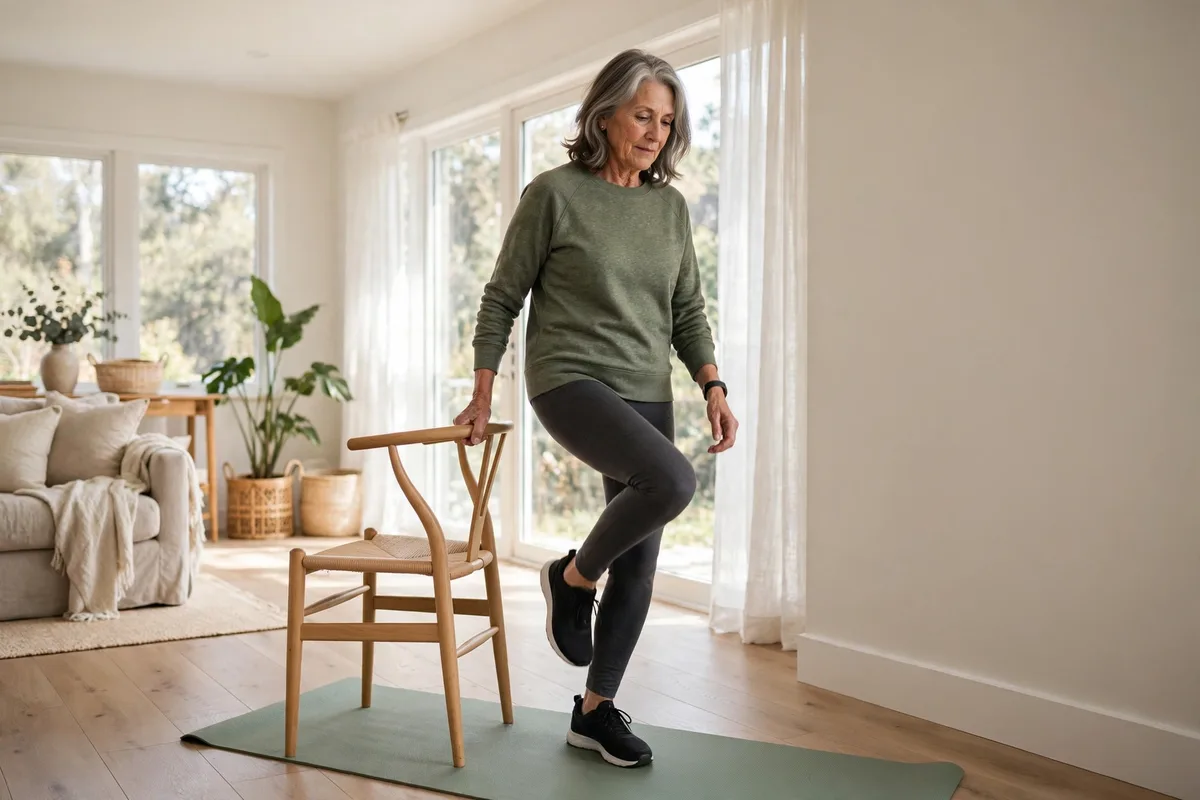
- Standing march (hip flexors and balance). Hold the back of a chair lightly. March in place, lifting each knee toward hip height. Keep your torso tall.
- Glute bridge (glutes and lower back). Lie on your back, knees bent, feet flat. Press through your heels to lift your hips until your body forms a straight line from shoulders to knees. Lower slowly.
- Chair-supported calf raise (calves and ankles). Hold the chair, rise up onto the balls of your feet, pause one second, lower. Strong calves are your anti-trip insurance.
- Bird dog (core and back). On hands and knees, extend your right arm forward and left leg back until both are straight. Hold two seconds, switch sides. Move slowly.
- Standing side leg raise (outer hips and balance). Hold the chair with one hand, lift the outside leg slowly to the side about a foot, lower it. Switch hands and legs halfway through.
Easy swaps: if floor work bothers your knees, replace the glute bridge and bird dog with extra wall push-ups and standing marches. The circuit still works.
Form First, Speed Never Required

Trainers who work with older adults repeat one phrase: the best exercise is the one done correctly. After 50, joints carry more history, and that history deserves respect.
Three form checks cover most problems. One: breathe out on the effort, never hold your breath while straining. Two: move through a comfortable range, not the maximum range you can force. Three: pain is information. Muscle tiredness is normal. Sharp or pinching sensations in a joint are your signal to stop that move.
Start with one round, three days a week. When all seven moves feel manageable, you have two options: add a second round, or make individual moves harder. Most trainers prefer the second path. A harder single round, for example slower sit-to-stands or a farther wall push-up, builds more strength than rushing through two sloppy rounds.
What You Actually Need
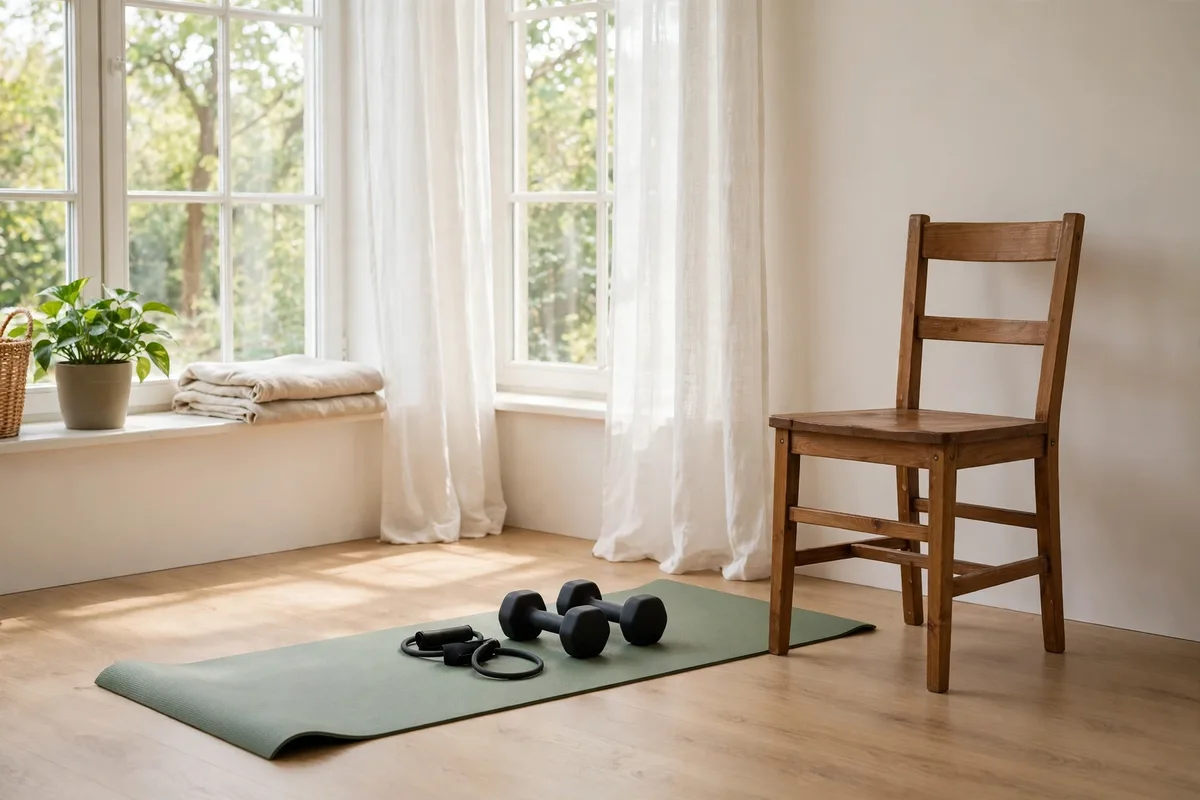
A sturdy chair that will not slide. A clear stretch of wall. Shoes with grip, or bare feet on a non-slip floor. That is the complete equipment list.
Optional upgrades, when the bodyweight version gets easy: a pair of light dumbbells for the march (held at your sides), or a resistance band looped around your thighs for the side leg raises. Experts suggest choosing a resistance you can lift about eight to ten times before your muscles tire, and it is perfectly fine to begin with less and build up.
Skip the fancy gear until you have done the circuit ten times. By then you will know exactly which moves need more challenge, and you will buy the right thing instead of the shiny thing.
How Often Should You Run It

Two to three times per week is the sweet spot. That matches the general guidance for strength training at any age: at least two sessions weekly, covering the major muscle groups, with at least 48 hours of rest between sessions for the same muscles.
Monday, Wednesday, Friday works beautifully. Or Tuesday and Saturday, if your weeks are packed. The schedule matters far less than the repetition. Muscles adapt to what you do regularly, not to what you do perfectly once.
On off days, walk. Walking and strength training are partners, not rivals. The circuit builds the muscle, and walking keeps the joints happy and the heart working. Together they cover what Mayo Clinic describes as the full package: strength, aerobic fitness, balance, and flexibility.
Making It Stick Past Week Two

Everyone starts. Fewer continue. The difference is rarely motivation. It is friction.
Remove the friction in advance. Pick a fixed trigger: right after your morning coffee, or the moment the evening news starts. Lay out your workout clothes the night before. Put the chair in its spot and leave it there. When the decision is already made, willpower is not required.
Track it on paper. A wall calendar with an X on every circuit day is surprisingly powerful. After two weeks of X marks, skipping feels like breaking a streak, and streaks are hard to abandon.
Finally, notice the small wins. The grocery bags feel lighter. The stairs stop negotiating. You catch your balance on an uneven sidewalk instead of stumbling. These are the real payoffs of seven minutes, and they arrive sooner than you think.

Eliza Mercer, the renowned golf coach with unmatched expertise in the sport, is our Lead Instruction Coach. Eliza provides exclusive and personalized coaching sessions to help golfers of all levels improve their skills. With her wealth of knowledge and experience, Eliza is a valuable resource for readers looking to elevate their game. Join Our Team!