
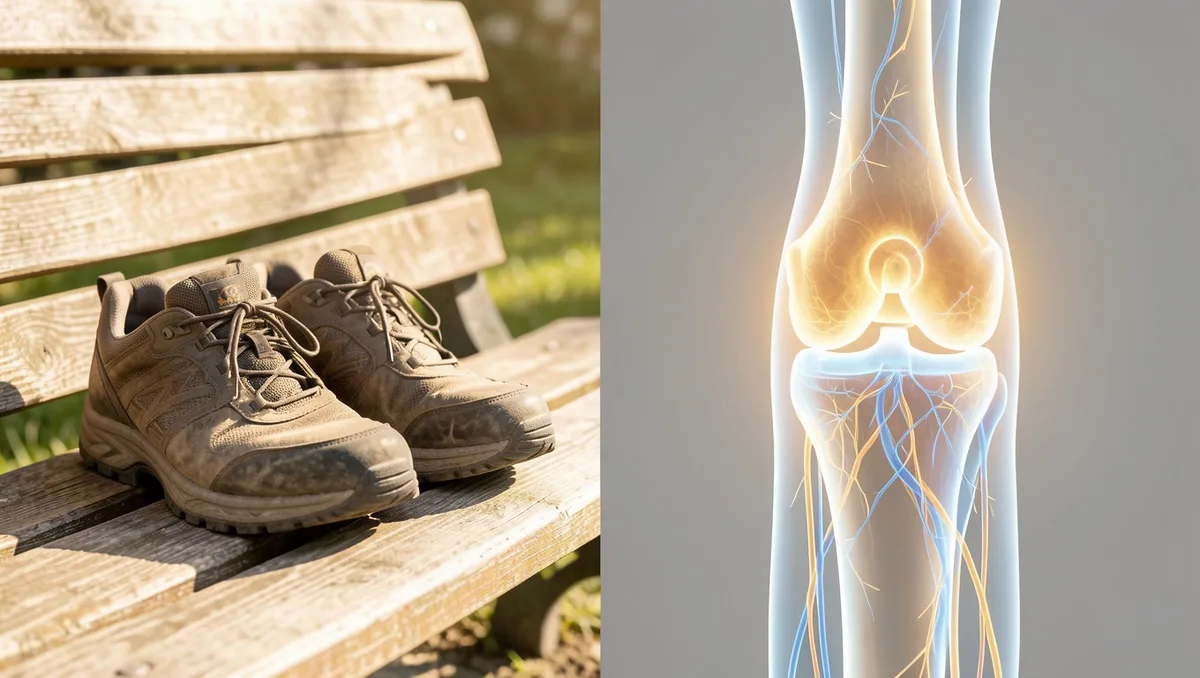
My knees made the final decision for me on a rainy Tuesday morning.
I was 59, staring down a rigid 10,000-step goal that left my lower back aching and my patellar tendons throbbing by 4:00 p.m. everyday. Trying to force a young person's fitness volume onto fifty-something connective tissue was not working.
The arbitrary 10,000-step target actually originated as a 1965 Japanese pedometer marketing campaign, not a clinical mandate. Recent epidemiological research from public health institutions paints a very different picture for adults over 50. The real metabolic and longevity sweet spot sits much closer to 8,000 steps.
So I made a quiet contract with myself: hit 8,000 steps every single day for 365 days, track the internal metrics, and stop chasing numbers designed for college athletes. Here is what actually happened to my body.
The Biological Shift: What 8,000 Daily Steps Does to Aging Joints and Vessels

Your joints do not have a direct blood supply.
Articular cartilage in your knees and hips depends entirely on joint movement to survive. When you compress and release the joint during a walk, you create a mechanical sponge effect. This draws nutrient-dense synovial fluid into the tissue while flushing out inflammatory cellular debris.
Continuous daily walking also triggers a critical vascular response.
The gentle, sustained pressure on your blood vessels stimulates the endothelium to release nitric oxide. This simple molecule relaxes vessel walls, reduces systemic arterial stiffness, and gives your heart a break.
Skeletal muscle contractions act as non-insulin-dependent glucose sinks, pulling sugar straight out of your bloodstream without demanding extra output from an aging pancreas.
💡 PRO TIP
The Joint Lubrication Window
Cartilage needs rhythmic compression to absorb synovial fluid. Walking three separate 15-minute bouts delivers more joint-nourishing fluid cycles than forcing one brutal 80-minute march.
Months 1–3: The Joint Adaptation and Sleep Realignment
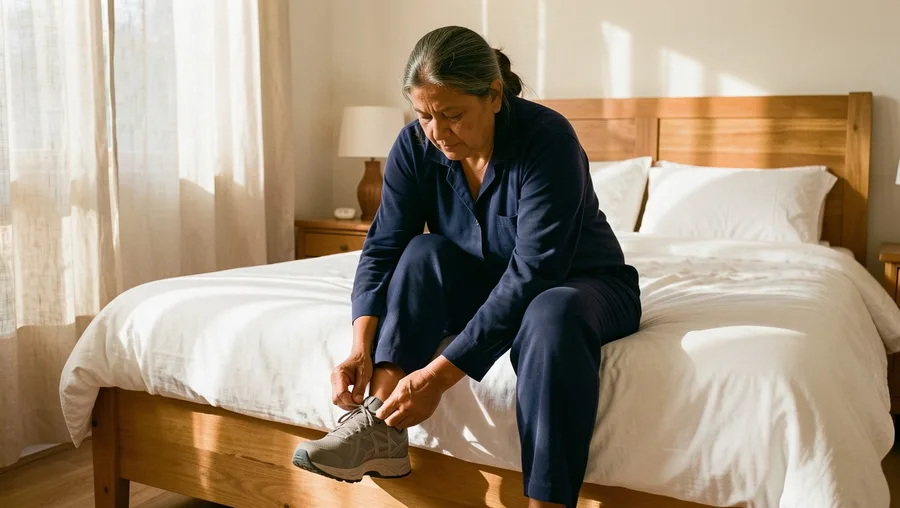
The first three weeks felt like a failure.
My achilles tendons felt stiff every morning, and my hip flexors complained every time I stood up from my desk chair. I had to resist the urge to buy new shoes or double my magnesium dose.
Around week four, the tissue adapted.
The dull ache in my knees began to dissipate, replaced by a surprising sensation: systemic sleep pressure. By 9:30 p.m., my body felt physically heavy in a way that mental work never produces.
Accumulating physical adenosine through steady, low-impact foot strikes increased my slow-wave deep sleep by nearly twenty percent. I stopped waking up at 3:15 a.m. staring at the ceiling.
Months 4–8: Visceral Fat, Resting Heart Rate, and Blood Pressure Drops
The bathroom scale was a terrible reporter.
By month five, my total weight had dropped by a modest four pounds. But my trousers were loose at the waist, and my face looked less puffy in morning photos.
Low-intensity steady-state walking burns fatty acids without spiking cortisol.
Unlike high-intensity interval classes that send cortisol soaring and trigger ravenous hunger, 8,000 daily steps steadily oxidized deep visceral abdominal fat while keeping my appetite stable.
My resting heart rate dropped from 68 to 61 beats per minute. My systolic blood pressure readings fell seven points into a clean, healthy zone.
6-Month Transformation Breakdown
Baseline (Day 1)
- Resting Heart Rate: 68 bpm
- Frequent post-lunch brain fog crashes
- Morning knee stiffness lasting 20 minutes
- Inconsistent sleep with 3:00 a.m. awakenings
Mid-Point (Month 6)
- Resting Heart Rate: 61 bpm
- Stable afternoon energy with zero mid-day crashes
- Zero morning joint stiffness or pain
- Uninterrupted 7.5 hours of deep restorative sleep
Months 9–12: Cortisol Balance, Brain Fog, and Real-World Endurance
The mental shift eclipsed the physical results.
By month nine, walking 8,000 steps was no longer a task on a checklist. It became my primary tool for regulating my nervous system and clearing cognitive sludge.
Mid-day brain fog vanished entirely.
Aerobic movement increases brain-derived neurotrophic factor, a key protein that supports synaptic plasticity and cognitive processing in mature brains.
Stepping away from screens for two 20-minute walks every day lowered my ambient daily stress. I had built a sustainable habit that required zero willpower.
Joint Stress vs. Step Volume Spectrum
Finding the sweet spot where longevity gains max out without destroying cartilage.
- 2,000 Steps (Sedentary): High cardiovascular risk; joint stiffness due to inactivity.
- 4,000 Steps (Baseline): 30% reduction in all-cause mortality risk curve begins.
- 8,000 Steps (The Sweet Spot): Maximum longevity benefit, optimal joint hydration, minimal wear.
- 13,000+ Steps (Excessive): Diminishing returns; elevated risk of tendonitis and joint shear stress.
Target the 7,500–8,500 range for peak health returns after age 50.
Step Count vs. Cadence: Where Exercise Physiologists Agree
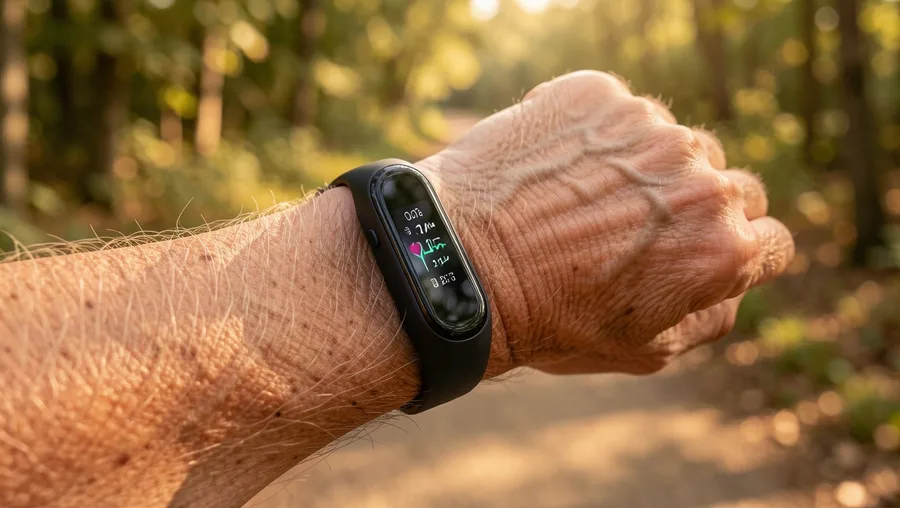
Public health research aligns on one crucial finding.
Large-scale studies published in major medical journals consistently show that all-cause mortality reduction plateaus between 7,500 and 8,500 steps for adults over 50. Pushing to 10,000 or 12,000 yields negligible extra benefits while dramatically increasing wear on worn connective tissue.
Cadence matters just as much as raw volume.
Walking at a brisk pace of roughly 100 steps per minute stimulates the cardiovascular system far more effectively than a casual shuffle through a grocery store. Bouts of brisk movement amplify insulin sensitivity and arterial flushing.
Volume gets you out of the danger zone, but consistent daily cadence is what repairs your aging vascular system.
— Consensus among physical therapists and clinical exercise physiologists
Who Benefits Most From the 8,000-Step Target
How to Assess Your Readiness: The 8,000-Step Self-Check
Do not jump from 3,000 steps to 8,000 overnight.
Your cardiovascular system adapts in days, but your tendons and plantar fascia take six to eight weeks to remodel under new loads. Jumping volume too quickly guarantees heel pain or shin splints.
Audit your daily capacity with these three fundamental questions before starting.
The Daily Walking Priority Hierarchy
Build your daily step habit from the foundation up.
👣 The 3-Phase Blueprint to Reach 8,000 Steps Without Injury
Weeks 1–2: Anchor Post-Meal Bouts
Add a 10-minute walk after breakfast, lunch, and dinner to effortlessly capture 3,000 low-stress steps.
Weeks 3–4: Establish Morning Baseline
Incorporate one dedicated 20-minute brisk walk every morning before sitting down at your desk.
Month 2+: Passive Accumulation
Maintain your structured walks and let natural daily movement cover the remaining 2,000 steps.
Sample 8,000-Step Weekly Distribution
Varying daily volume prevents repetitive stress strain on aging ankles and knees.
⚠️ COMMON MISTAKE
The Concrete Surface Trap
Walking exclusively on hard concrete sidewalks increases ground reaction forces on aging hip joints. Seek out asphalt, dirt trails, park paths, or synthetic tracks whenever possible.
Beyond the Pedometer: Making Movement a Practice, Not a Chore
A year later, I rarely check my watch during the day.
Hitting 8,000 steps shifted from a calculated fitness goal to the natural rhythm of my daily routine. My knees are quiet, my sleep is deep, and my blood pressure readings are the lowest they have been in fifteen years.
You do not need painful high-impact workouts or arbitrary 10,000-step mandates to transform your health after 50.
Put on a supportive pair of neutral shoes, step out your front door after breakfast, and let gentle consistency do the heavy lifting.
Your First Step Starts Today
If you do only one thing after reading this article, start with a 10-minute walk right after your next meal.
That single adjustment handles joint lubrication, blunts post-meal sugar spikes, and puts 1,200 steps on the board without demanding extra willpower.

Meet Edward Green, the founder of GolfingGoal and a seasoned expert in golf. With years of experience on the course and a passion for the sport, Edward has a wealth of knowledge to share. As our Lead Writer, he contributes articles, tutorials, and resources to help readers to improve their skills and reach their full potential on the golf course. Join Our Team!