
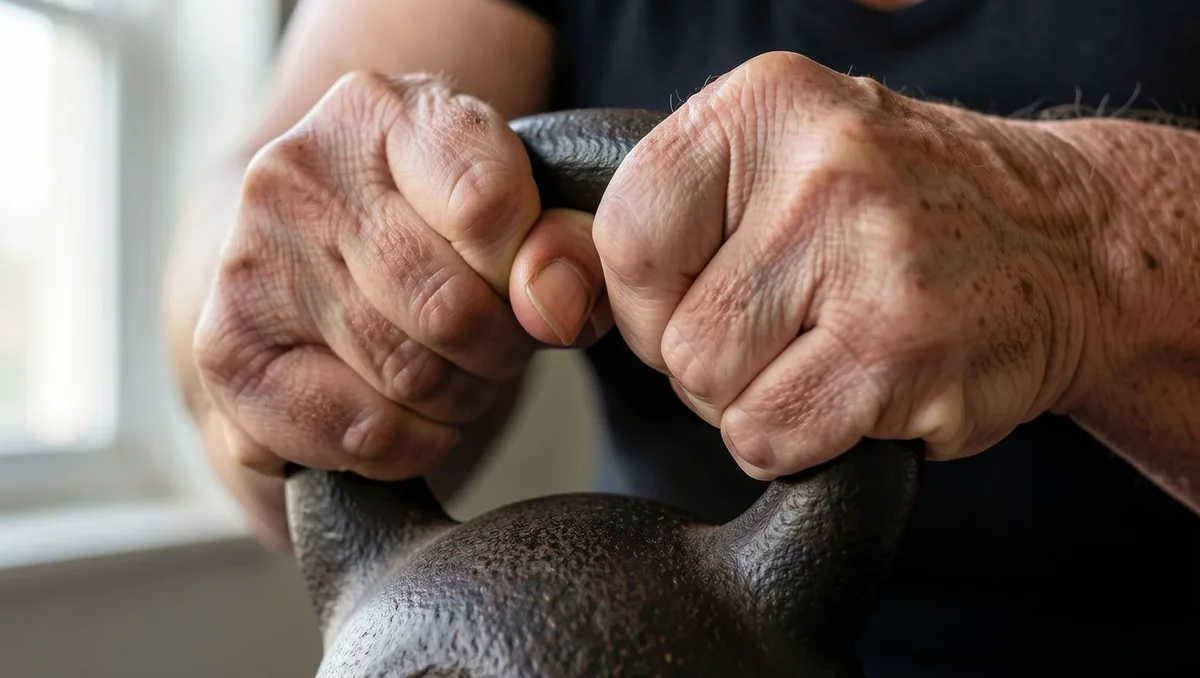
You twist the metal lid of a pickle jar, strain until your knuckles turn chalk-white, and nothing happens.
Your wrist throbs, the glass stays sealed, and you end up running the cap under hot water while quietly wondering when your hands got so weak. It is easy to write off that moment as a minor annoyance or a side effect of aging joints. Longevity researchers view that lost squeeze as an alarm bell.
Your grip force is not just hand power—it is a window into your central nervous system, arterial health, and total muscle quality.
By tracking how your hands age, you can measure your systemic vitality and protect your functional independence for decades to come.
The Surprising Biomarker Hiding in Your Handshake
Your hand is a metabolic mirror.
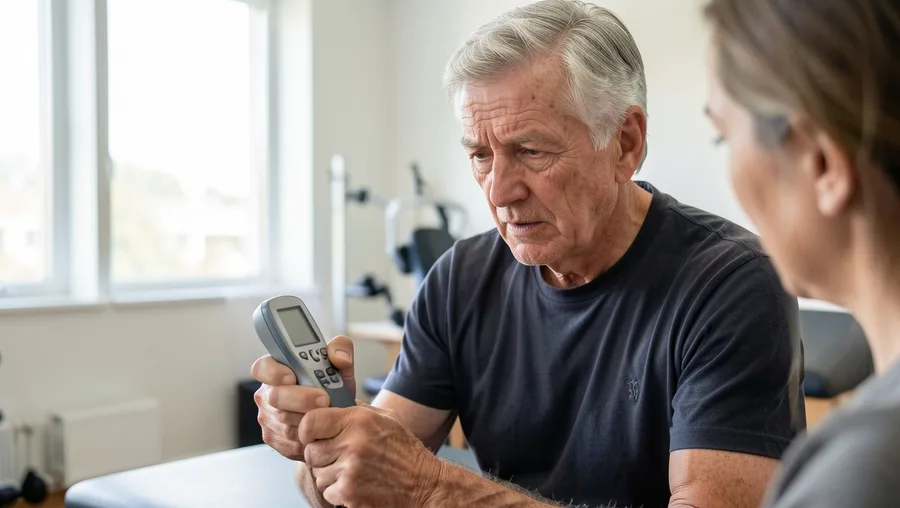
When physical therapists test your grip force, they are not evaluating finger muscles alone. Squeezing requires your brain to fire rapid electric signals down spinal nerves, recruit hundreds of motor units, and contract muscle fibers against resistance.
Weakness in that chain signals dynapenia—the age-related decline in muscle tissue quality.
After age 50, you lose muscle quality faster than actual muscle mass. A weak handshake often indicates that motor neurons are firing less efficiently across your whole body, long before your leg or core strength visibly drops.
💡 PRO TIP
Grip Power as a Clinical Vital Sign
Cardiologists and geriatric specialists increasingly use hand dynamometer readings alongside blood pressure checks. Squeezing force directly reflects microvascular health and systemic neuromuscular reserve.
What Science Says Your Grip Discloses About Your Heart, Brain, and Cells
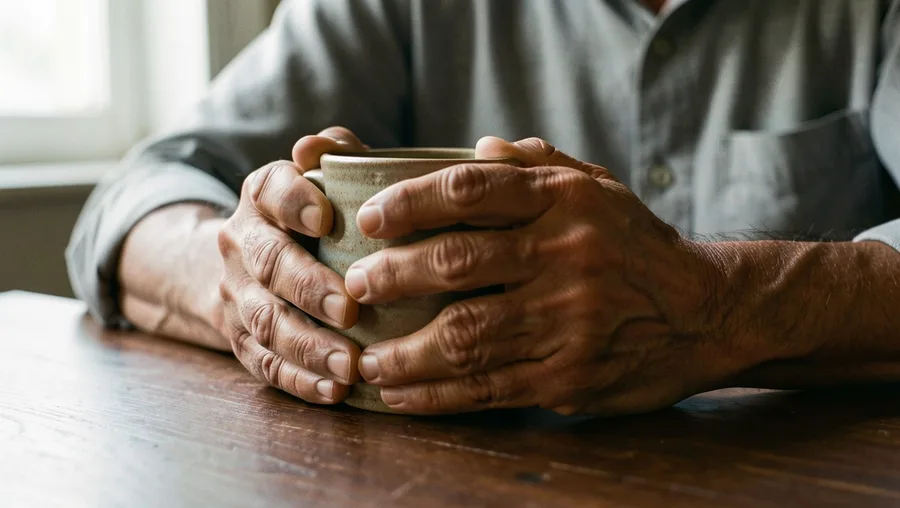
The connection between hand strength and heart health sounds improbable until you examine the vascular network.
Small blood vessels feeding your forearm and intrinsic hand muscles depend on arterial elasticity to deliver oxygen under strain. When systemic arteries stiffen from vascular aging, capillary density drops and peripheral muscular endurance plummets.
Systemic inflammation compounds the problem.
Higher circulating inflammatory markers—like interleukin-6 and C-reactive protein—corrode muscle fiber integrity and degrade nerve conductivity. A declining grip is frequently the earliest visible sign of this chronic, low-grade inflammatory load.
How to Measure Your Grip Power (At Home and In the Clinic)
You do not need a medical degree to test your hands.
In clinical settings, doctors use a hydraulic hand dynamometer. You sit upright, bend your elbow to 90 degrees, and squeeze the metal handle with maximal effort for three full seconds.
Men over 50 generally want to score above 27 kilograms, while women aim for at least 16 kilograms.
Falling below those thresholds points to accelerated muscle aging, but functional home tests can give you immediate feedback without specialized hardware.
Grip Power — Clinical Reference Norms
⏱️ Test Duration
3-second maximal effort
🏋️ Men's Baseline
> 27 kg (59.5 lbs)
🏋️♀️ Women's Baseline
> 16 kg (35.2 lbs)
🏡 Home Test
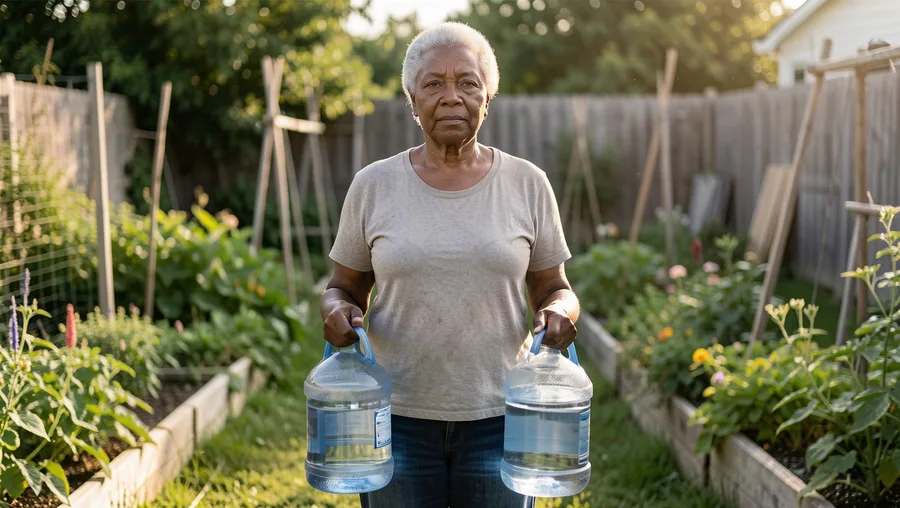
30-second Farmers Carry
Key Action
Measure three times per hand and take the highest score as your true baseline.
1. Decompress Your Spine while Retraining Finger Flexors
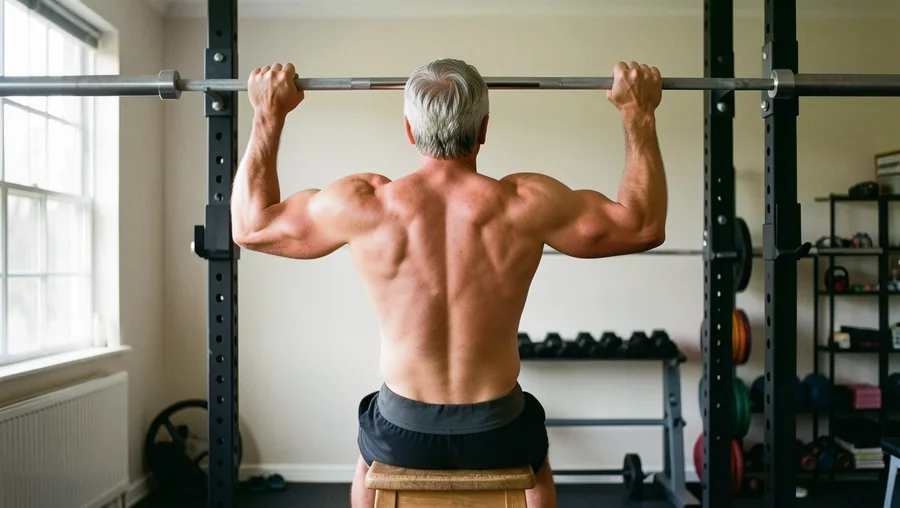
Hanging from a bar is the single fastest way to rebuild isometric grip force.
When you hold your body weight against gravity, finger flexor tendons sustain a heavy continuous load that stimulates collagen rebuilding.
Better yet, hanging stretches your thoracic spine and relieves pressure on lower back discs.
The protocol: Place a sturdy step stool under a pull-up bar so your feet can rest lightly on the ground. Grip the bar shoulder-width apart, pull your shoulder blades down away from your ears, and transfer 50 percent of your body weight to your hands. Hold for 20 seconds, rest two minutes, and complete 3 total sets three mornings a week.
Best For
2. The Farmer’s Carry: Total-Body Tension for Grip and Posture
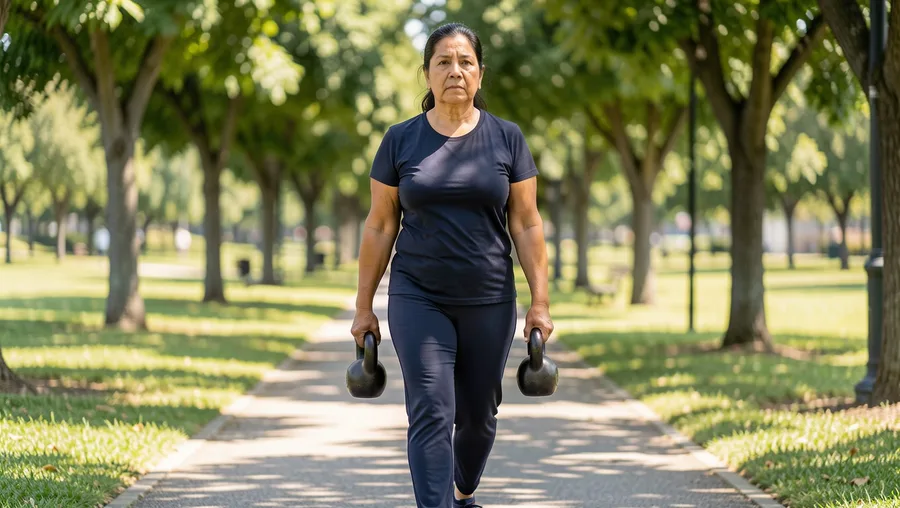
Crush strength is useful, but carrying heavy loads over distance is how you build practical endurance.
Loaded carries force your forearm flexors, rotator cuff, upper traps, and deep core stabilizers to work in unison for extended periods.
Your posture improves almost immediately because you cannot carry weight with rounded shoulders without losing your balance.
Pick up a pair of 10-to-20-pound dumbbells or kettlebells, stand tall with your chest up, and walk 50 smooth steps across the floor. Keep your shoulders down and avoid letting the weights bounce against your thighs. Rest 60 seconds and repeat for 4 total rounds.
The 4-Week Grip & Carry Starter Routine
3. Target the Smaller Muscles: Pinch Strength and Extensor Work
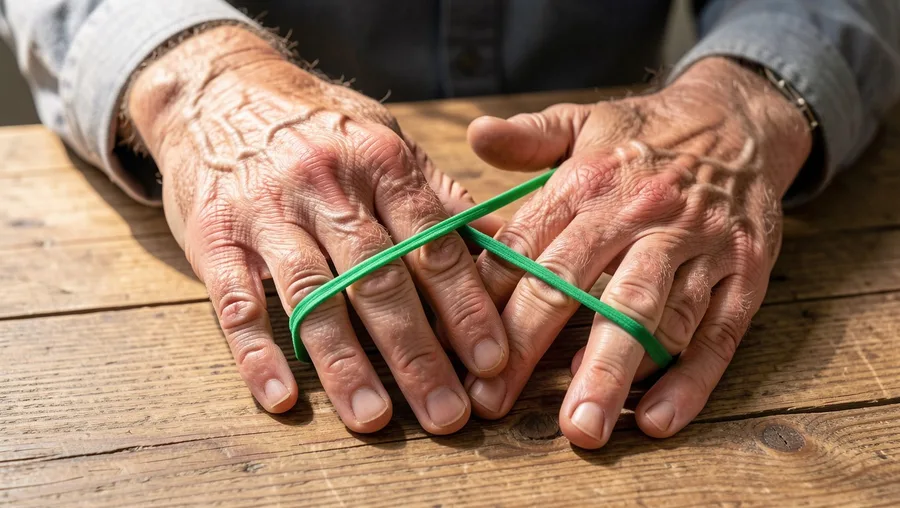
Closing your hand all day without balancing the opposing muscles is a fast track to elbow pain.
Tennis elbow and medial epicondylitis develop when crush-grip flexors overpower the smaller finger extensor muscles on the back of your forearm.
You need pinch strength and finger expansion to keep elbow joints healthy.
Grasp two small weight plates or heavy hardcover books between your thumb and four fingertips, holding them at your side for 15 seconds per set. Follow that immediately with extensor training by placing a thick rubber band around the outside of your closed fingers and opening your hand against resistance 15 times.
⚠️ COMMON MISTAKE
Ignoring Finger Extensor Balance
Over-training crush grip with stress balls or heavy squeezes without opening exercises strains elbow tendons. Always match squeezing sets with finger expansion drills.
4. Practical Daily Resistance: Dynamometers, Grippers, and Stress Balls
You do not need a gym membership to build resilient hands.
Keeping an adjustable spring-loaded hand gripper or high-density therapy putty near your desk or couch lets you fit grip work into quiet moments.
Speed and control matter far more than total resistance.
Squeeze the tool as fast and hard as comfortable for one second, then take three slow seconds to release the tension. Perform 10 controlled reps per hand while watching the evening news to build both explosive nerve drive and tendon thickness.
Grip Exercise Tendon Strain Spectrum
From lowest joint compression to highest tendon demand
- Therapy Putty / Soft Squeeze: Ideal for active arthritis flare-ups
- Elastic Band Finger Openings: Low joint stress, high extensor balance
- Farmer's Carries (Moderate): High muscle recruitment, stable joints
- Full Unassisted Dead Hangs: Maximum tendon load — progress carefully
When to Hold Back: Protecting Aging Joints While Building Force
Pushing through sharp joint pain will wreck your progress.
If basal thumb osteoarthritis or swollen knuckle nodes flare up, forcing a tight squeeze will only aggravate inflamed cartilage.
Adapt the exercise instead of quitting.
Wrap a thick towel around dumbbell handles or use wide-diameter foam grips to spread force across a larger surface area. Thick grips lower joint compression while keeping your forearm flexors working at full capacity.
Joint Protection Strategies
Safe Progression
- Use foam grips or wrapped towels to widen handles
- Focus on 3-second slow eccentric releases
- Pair squeezing with finger expansion drills
- Stop at mild muscular fatigue
Habits to Avoid
- Squeezing through sharp joint or knuckle pain
- Using narrow, metal-knurled handles during flare-ups
- Jerking heavy weights without grip control
- Training grip 7 days a week without rest
📈 The 12-Week Grip Transformation Plan
Weeks 1–3: Tendon Priming
Focus on light finger extensor bands and toe-assisted dead hangs to prepare connective tissue.
Weeks 4–7: Muscular Recruitment
Introduce moderate loaded farmer carries twice weekly to build systemic core and forearm endurance.
Weeks 8–12: Progressive Strength
Increase carry weight gradually and decrease foot assistance on dead hangs as grip endurance peaks.
Grip strength is not about vanity or heavy lifting—it is your everyday armor for maintaining total autonomy as you age.
— Physical Therapy & Longevity Consensus
The Hand Health & Longevity Hierarchy
Build your foundation from bottom to top
Start With This One Action Today
If you do only one thing from this guide, start with the assisted bar hang.
Grasp a overhead bar for 20 seconds while keeping your feet lightly on a stool, and feel your back decompress while your fingers work.
Building hand power is one of the most direct investments you can make in your daily independence. Test your baseline, protect your joints, and keep squeezing.

Meet Edward Green, the founder of GolfingGoal and a seasoned expert in golf. With years of experience on the course and a passion for the sport, Edward has a wealth of knowledge to share. As our Lead Writer, he contributes articles, tutorials, and resources to help readers to improve their skills and reach their full potential on the golf course. Join Our Team!