

You reach for the bathroom mirror and wonder why the twenty-step routine you built a decade ago suddenly leaves your face feeling tight, irritated, and chronically parched.
That exhaustion comes from fighting a biological shift your skin is actively undergoing. After sixty, your oil glands slow down, cell turnover crawls, and moisture escapes before your natural barrier can trap it.
The goal is no longer chasing youth with aggressive acids and stripping detergents. The real objective is supporting structural integrity, locking in vital moisture, and restoring daily comfort to mature skin.
💡 PRO TIP
The Core Philosophy After Sixty
Mature skin requires physiological support rather than aggressive correction. Stop stripping your barrier and focus entirely on replenishment.
The Biological Shift: Why Over-60 Skin Behaves Differently

Before changing a single bottle on your vanity, you need to understand what is happening beneath the surface.
Your skin experiences a sharp drop in sebum production after sixty, which compromises the acid mantle and accelerates moisture evaporation across the epidermis.
At the same time, the cellular layers thin out and the dermal junction flattens, making lightweight hydrators completely inadequate for preventing deep dryness.
Surface dehydration and oil depletion are two entirely different problems. Treating them requires shifting your entire approach away from lightweight gels and toward lipid-rich maintenance.
The Biology of Change
Key metrics defining mature skin transitions
1. Low-Foam, Lipid-Restoring Cleansing

Your morning face wash should never leave you feeling squeaky clean.
High-pH soaps and heavy foaming detergents strip away the fragile lipids your sixty-year-old skin desperately needs to retain water throughout the day.
Switch immediately to a non-foaming cream, milk, or oil cleanser that deposits ceramides and fatty acids while it cleans.
Massage the product onto dry or damp skin for sixty seconds, then rinse with lukewarm water. Your face should feel soft, supple, and comfortable the second you step out of the shower.
💡 Tip: Toss any cleanser that leaves your skin feeling tight. Tightness is not clean; it is micro-damage to your barrier.
Cleanser Face-Off: Stripping vs. Restoring
Foaming Detergents
- High pH strips the acid mantle instantly
- Leaves skin feeling tight and squeaky
- Accelerates moisture loss within minutes
- Worsens chronic winter dryness
Lipid-Rich Milks
- Preserves natural skin oils during washing
- Deposits soothing ceramides on contact
- Maintains comfortable hydration levels
- Supports long-term barrier resilience
2. Targeted Humectant Layering Beyond Basic Water

Hydration and moisture are two entirely different mechanisms in mature skincare.
Humectants like glycerin, hyaluronic acid, and polyglutamic acid act like tiny sponges, drawing ambient water into the upper layers of your skin.
Applying these ingredients to bone-dry skin in a low-humidity room will actually backfire, pulling moisture from your deeper cells instead.
Always smooth your humectant serums onto damp skin immediately after cleansing, and lock them in within sixty seconds before evaporation occurs.
Humectant Layering — At a Glance
⏱️ Timing
Apply within 60 seconds of washing
💧 Key Actives
Glycerin, hyaluronic acid, urea
🌡️ Environment
Use a facial mist in dry climates
⚠️ Common Mistake
Applying serums to completely dry skin
The Core Rule
Humectants pull water from wherever they can find it; make sure that source is damp air or a hydrating mist.
3. Biomimetic Barrier Creams with Ceramides and Cholesterol

Water alone evaporates quickly without a physical roof to keep it trapped inside your cells.
Healthy skin relies on a precise three-to-one-to-one ratio of ceramides, cholesterol, and free fatty acids to act as the mortar between brick-like skin cells.
As we age, that mortar crumbles and leaves microscopic gaps where irritants enter and moisture escapes unchecked.
Look for rich, velvety creams that explicitly list ceramide NP, phytosphingosine, and squalane high on the ingredient deck to rebuild that structural integrity.
Essential Barrier Ingredients
The Barrier Repair Hierarchy
Building mature skin resilience from the ground up
4. Controlled Retinoid Strategy Focusing on Frequency

Many people over sixty abandon retinoids entirely after a single week of peeling redness.
That failure usually stems from treating mature skin like resilient youth skin by applying high percentages every single night.
Dermatologists agree that frequency trumps potency when dealing with a slower cellular turnover cycle.
Start by applying a low-strength retinaldehyde or retinol ester just twice a week, buffering it between two thin layers of moisturizer to save your barrier.
⚠️ COMMON MISTAKE
The Retinoid Burn Trap
Never jump straight into nightly prescription tretinoin after sixty. Your skin needs a twelve-week adaptation curve built on twice-weekly application and heavy buffer creams.
5. Daily Broad-Spectrum Mineral Shielding

No anti-aging step matters if you skip morning UV protection.
Cumulative ultraviolet exposure continues to degrade fragile dermal collagen long after retirement age, deepening lines and accelerating stubborn pigmentation spots.
Chemical filters can sometimes trigger sensitivity on compromised post-sixty barriers, making mineral formulas containing zinc oxide and titanium dioxide the safer daily choice.
Layer a nickel-sized amount of SPF 30 or higher over your morning moisturizer every single morning, regardless of whether it is raining or you plan to stay indoors.
The Daily Skincare Traffic Light
- 🟢 GO LANE: Ceramide Creams — Essential daily application for sealing moisture and repairing lipid gaps.
- 🟡 CAUTION LANE: Active Retinoids — Limit to two nights a week using the sandwich buffering method.
- 🔴 STOP LANE: Foaming Cleansers — Strip away essential oils and destroy the acid mantle instantly.
Where Dermatologists Agree: The Minimalist Shift
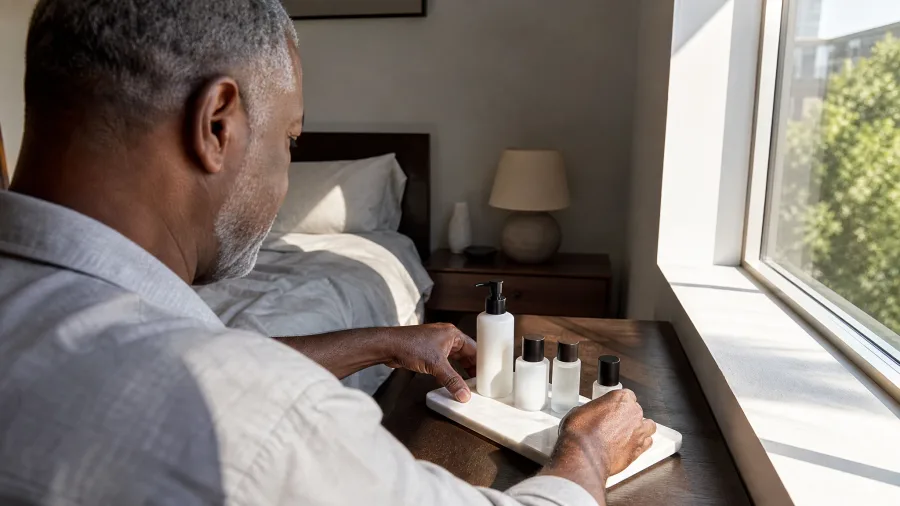
If you walk into a clinical conference today, you will hear a unified message across generations of dermatologists.
Complexity breeds chronic inflammation, while consistency with basic physiological building blocks yields actual visible health.
The skincare industry pushes endless specialized spot treatments, but fixing your foundational barrier resolves eighty percent of texture concerns.
A streamlined four-step daily routine outperforms any erratic ten-step regimen because your skin finally has the quiet space to repair itself.
Complexity breeds inflammation. Consistency with basic barrier support beats twenty active steps every single time.
— Dermatological Consensus
Frequently Asked Questions
Can I layer vitamin C with my retinoid after 60?
Separating them is much safer for mature skin barriers. Apply your antioxidant vitamin C serum in the morning under sunscreen, and reserve your low-frequency retinoid strictly for your evening routine.
Why is my skin suddenly reacting to products I used safely in my 50s?
Your sebaceous glands drop oil production significantly as you move past sixty. This natural shift thins the protective lipid film, making your skin much more permeable to fragrances and strong active ingredients.
How long does it take to see visible barrier repair in mature skin?
Expect four to six weeks of consistent lipid replacement to restore basic surface comfort and eliminate flaking. Deeper structural improvements in firmness require at least twelve weeks of steady cellular support.
Do expensive anti-aging creams perform better than medical-grade basics?
Price tags reflect marketing budgets rather than clinical efficacy. High concentrations of ceramides, glycerin, and pure squalane found in affordable pharmacy brands frequently outperform luxury formulations.
Should I completely stop using physical scrubs on my face?
Rough abrasive scrubs create microscopic tears in thinned mature epidermis. Switch entirely to gentle chemical exfoliation like low-percentage lactic acid if dullness becomes an ongoing issue.
Self-Check Payoff: Building Your Custom Routine
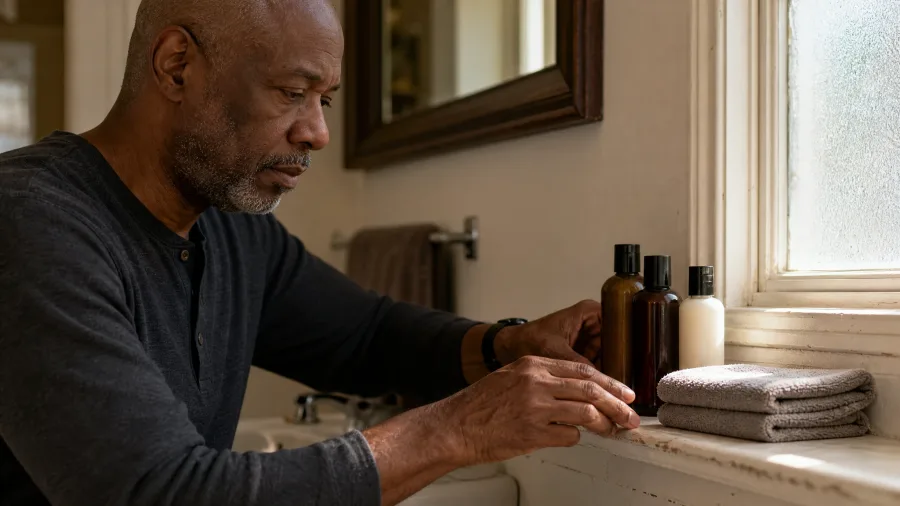
Take a hard look at the bottles lining your bathroom shelf right now and run them through a simple three-question audit.
Does your cleanser leave your face feeling tight? Does your serum sting upon contact? Does your moisturizer actually seal the skin for more than an hour?
If you answered yes to the first two questions, phase those products out immediately without shocking your system all at once.
Direct your budget toward three non-negotiable staples: a lipid-restoring cleanser, a ceramide barrier cream, and a reliable daily mineral sunscreen.
Your Skin's Quiet Power
Caring for your skin after sixty is an act of biological stewardship rather than an exhausting uphill battle against time.
Consistency with five well-chosen steps beats complexity every single day, returning comfort and resilience to your daily routine.
Embrace this streamlined approach and let your skin settle into the quiet health it has earned.

Meet Edward Green, the founder of GolfingGoal and a seasoned expert in golf. With years of experience on the course and a passion for the sport, Edward has a wealth of knowledge to share. As our Lead Writer, he contributes articles, tutorials, and resources to help readers to improve their skills and reach their full potential on the golf course. Join Our Team!