

You do everything right, count every calorie, and step on the scale only to watch the midsection refuse to budge.
Traditional Japanese populations maintain remarkably low rates of metabolic syndrome without grueling gym routines.
The secret lies not in starvation, but in daily metabolic regulation.
The Science of Visceral Adiposity: Why Midsections Hold On

Visceral fat is not just stored energy; it is an active endocrine organ.
High cortisol levels from chronic stress direct fat storage straight to the abdominal cavity.
Insulin resistance locks that fat in place, creating a stubborn metabolic trap.
Stabilizing postprandial blood glucose shifts the body from storage mode to fat oxidation.
⚠️ COMMON MISTAKE
Ignoring Visceral Fat Danger
Treating belly fat as purely cosmetic ignores the inflammatory cytokines it releases directly into your portal vein.
Habit 1: Hara Hachi Bu – The 80% Full Rule
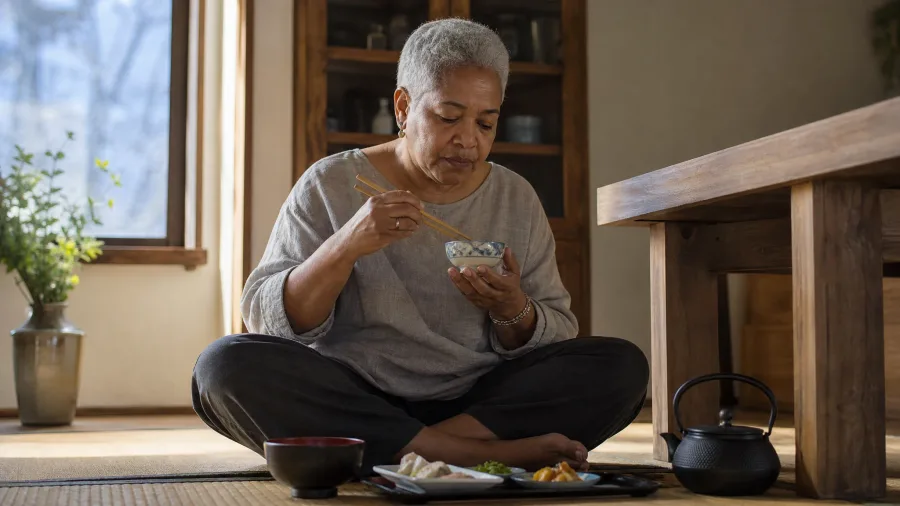
Stop eating before you feel completely full.
This Okinawan practice gives gut-brain peptide signaling time to reach your hypothalamus.
Rapid eating delays satiety hormones like PYY and CCK.
Slowing down prevents gastric over-distension and sharp insulin spikes.
Habit 2: Green Tea Catechins (EGCG) and Lipid Oxidation

Green tea is more than a calming ritual.
Epigallocatechin gallate inhibits the enzyme that breaks down norepinephrine.
Prolonged sympathetic nervous system activity enhances fat oxidation during rest.
Brew Sencha or Matcha around 70 degrees Celsius to protect delicate antioxidants.
💡 PRO TIP
Maximize Catechin Extraction
Never use boiling water for high-grade green tea, as excessive heat destroys beneficial catechins and releases bitter tannins.
Green Tea Realities
Habit 3: Low-Intensity Steady-State Movement and Active Commuting

Grueling gym workouts often trigger cortisol spikes that stall fat loss.
Walking cultures prioritize constant, low-intensity movement throughout the day.
Longer, steady walks maximize fat as a primary fuel source via beta-oxidation.
A brief fifteen-minute walk after meals blunts glucose excursions effectively.
Walking Benefits
Post-Meal Movement Shift
Habit 4: The Protein-First, Fermented-Rich Traditional Breakfast

Morning meals set the metabolic tone for the entire day.
Traditional Japanese breakfasts feature quality amino acids and fermented foods.
Natto and miso deliver beneficial probiotics and Bacillus subtilis strains.
Short-chain fatty acids from fermentation improve insulin sensitivity and gut integrity.
Fermented Foods & Gut Health
Habit 5: Hydrotherapy, Warm Bathing, and Autonomic Balance

Daily warm water immersion promotes peripheral vasodilation and deep relaxation.
Passive heat therapy stimulates heat shock proteins to support metabolic health.
Evening relaxation shifts the nervous system into parasympathetic dominance.
Lower nighttime cortisol output protects your sleep and prevents fat retention.
Hydrotherapy Impact Metrics
Estimated physiological responses to warm immersion
📅 Implementation Roadmap
Week 1
Practice eating until eighty percent full at dinner.
Week 2
Swap your morning beverage for authentic brewed green tea.
Week 3
Add a fifteen-minute walk after your largest meal.
Week 4
Incorporate fermented foods and warm evening baths.
Metabolic Approaches Compared
Western Crash Dieting
- Severe calorie slashing
- High cortisol from intense hunger
- Muscle loss and metabolic slowdown
- Insulin resistance persistence
Japanese Metabolic Rhythm
- Mindful portion awareness
- Low-intensity daily movement
- Gut microbiome support
- Autonomic nervous system balance
Frequently Asked Questions
Can I lose visceral fat with these habits without a strictly Japanese diet?
Yes. The core principles of portion mindfulness, green tea catechins, post-meal walking, and stress reduction apply to any cultural cuisine.
How long does it take to see reductions in abdominal visceral fat?
Most people notice improved waist measurements and metabolic markers within four to six weeks of consistent daily practice.
Is green tea safe to drink in large quantities throughout the day?
Moderate intake of three to four cups daily provides optimal catechins while keeping caffeine within safe limits for most adults.
Why is visceral fat harder to lose than subcutaneous fat?
Visceral fat cells possess a high density of receptors that make them stubborn to mobilize, requiring stabilized insulin and lowered cortisol.
Do I need intense cardio to complement these lifestyle habits?
Low-intensity steady-state movement like walking is actually superior for fat oxidation because it avoids triggering cortisol-driven fat storage.
Make It Stick
True metabolic health comes from honoring biological rhythms rather than fighting your body.
Start with a single habit tomorrow and let consistency compound your results.

Meet Edward Green, the founder of GolfingGoal and a seasoned expert in golf. With years of experience on the course and a passion for the sport, Edward has a wealth of knowledge to share. As our Lead Writer, he contributes articles, tutorials, and resources to help readers to improve their skills and reach their full potential on the golf course. Join Our Team!