
You step slightly to the right in a crowded hallway, and the word slips out before you can catch it: sorry. The other person did not even look up, yet your vocal cords performed the automatic reflex anyway.
That small linguistic tic costs more than you think. It trains the people around you to treat your presence as an inconvenience you are constantly managing.
Quick Tips Before You Start
Notice the Reflex
Catch yourself every time the word leaves your mouth without cause.
Embrace Silence
Let a two-second pause fill the space where your apology used to go.
Switch to Gratitude
Trade 'sorry for being late' for 'thanks for waiting'.
1. The Quiet Tax on Your Credibility

I am so sorry to bother you with this. You type that exact sentence into a Slack message directed at a colleague whose actual job description includes answering your questions.
That little opening prefix functions as a subtle tax on how people weigh your professional presence over time. Each unnecessary apology quietly trains everyone in your orbit to treat your basic requests as if they were inconvenient favors.
You end up spending your accumulated social capital before you even manage to ask for the file or check the status of the report. People eventually stop taking your workplace boundaries seriously because your own framing signals that you do not expect them to hold.
When you catch yourself typing out the preemptive sorry, delete the entire phrase and start the message with the direct request instead. Watch how quickly the tone of the response changes once you stop treating your job as an intrusion.
💡 Tip: Delete the first five words of every email draft before hitting send.
⚠️ COMMON MISTAKE
The Over-Apology Trap
Treating routine communication as a social debt makes others view your competence through a distorted lens.
2. Reframing the Social Debt

We are often told that keeping the peace requires absorbing the friction and smoothing out every awkward edge in the room. That advice treats an apology like a cheap coin you toss to settle a bill, assuming a quick sorry clears the ledger and keeps everyone comfortable. But when you treat minor social friction as your personal debt, you are taking out a high-interest loan on weather you did not make.
Picture standing in a crowded kitchen while someone complains about the traffic, and your immediate instinct is to say you are sorry you picked this restaurant. The delay had nothing to do with you, yet you stepped forward to carry the inconvenience like a dropped tray. That reflex turns every stray cloud into your private storm.
Instead of paying for conditions you did not create, notice the cost of footing a bill that was never yours to settle. Real balance returns the moment you let the weather stay where it is, leaving the discomfort in the air without rushing to catch it.
At a Glance
3. The Flawed Logic of Peacekeeping

I spent years thinking that getting ahead of every minor friction with a preemptive apology was the hallmark of an emotionally intelligent partner.
The hidden trap is that you think you are keeping the peace, but you are actually training people to blame you by volunteering for the fault before they even have a chance to look at the situation objectively.
Next time the bill comes out uneven or a plan shifts, drop the reflexive sorry entirely and say thank you for your patience instead.
Before You Start Speaking
-
Identify actual fault Did your action directly cause harm?
-
Check your posture Uncross your arms and keep your chin level.
-
Pause for two seconds Let the urge to blurt out an apology pass.
4. The Friday Afternoon Meeting Collision

Four forty-five in the afternoon on a Friday usually feels like a gentle slide toward the weekend until a last-minute project revision lands squarely on your desk.
Your manager drops the new brief down with a heavy sigh and says, Sorry for the late notice, before you can even pack your bag.
You immediately respond with, No, I am sorry, I should have anticipated this change before the weekend, taking the weight entirely onto your own shoulders.
You did not miss a single detail in the original scope; the brief simply shifted after the client changed their mind.
By absorbing the blame in that exact second, you let the actual workflow error vanish into thin air, and your Friday evening evaporates right along with it.
That scene repeats in kitchens, conference rooms, and group chats across the country every single day because reflexive appeasement feels safer than silence.
Workflow Friction — At a Glance
⏰ Timing
Late Friday
📋 Trigger
Scope change
💡 Proper Move
Acknowledge without blame
Key Takeaway
Never apologize for operational shifts you did not initiate.
5. The Exact Words to Say Instead

Let us look at how to fit this in on Monday.
You do not need an elaborate script or a defensive explanation when an unexpected request arrives on your desk before lunch.
Try saying, I can take that on by Wednesday afternoon, or simply, That is outside my current capacity.
Leaving the sentence right there prevents the old reflex from rushing in to fill the quiet space.
Best Alternatives to 'Sorry'
6. The Misread Social Signal
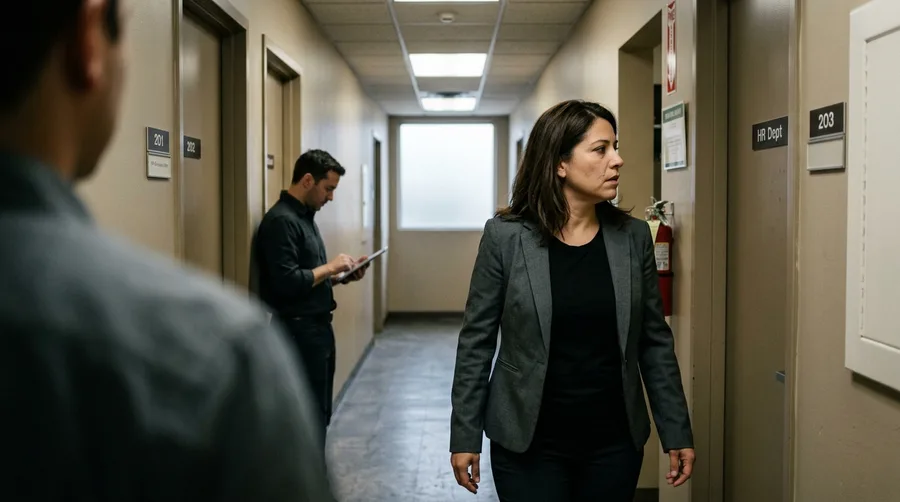
You sidestep in the narrow office hallway, murmuring sorry into the empty air before the other person has even looked up from their tablet.
You treat taking up space as a minor infraction that requires an immediate verbal tax, assuming that smoothing the edges away makes you easy to work alongside.
The people standing across from you do not register gracious self-awareness or polished manners when you do that.
They read it as an involuntary admission that you expect to be found in the wrong whenever a decision lands on the table.
That invisible shift in perception alters how they delegate tasks to you, how often they talk over you during a meeting, and how quickly they dismiss your perspective when the room gets loud.
7. What the Research Shows About Deference

You slowly lose your seat at the table the moment you trade clarity for a soft tone.
Researchers who study conversational dynamics keep finding that habitual deference alters how authority is distributed in small groups.
When one person consistently softens their statements with unnecessary apologies, listeners begin to view their factual assertions as tentative suggestions rather than firm conclusions.
This is not about being aggressive or dominating the room with a loud voice, but rather about matching your linguistic weight to the actual facts of the situation.
A team lead presents quarterly numbers during a Tuesday morning review and starts every single data point with a quiet, apologetic smile as if the metrics were a personal inconvenience.
The room stops taking the numbers seriously by slide three, not because the math is wrong, but because the speaker is treating valid data like an intrusion.
If you did not break the plate, do not pay for the shards, and if your report is accurate, state the findings without wrapping them in an apology.
Replace the introductory cushion with a plain declarative sentence, such as stating the timeline directly instead of asking if it works for everyone.
💡 PRO TIP
The Authority Shift
Matching your tone to the actual facts builds instant trust without sounding aggressive.
8. The Quick Fix for Reflexive Habits

Why does a reflexive apology spill out before you even realize you are speaking?
It happens because your brain treats potential social friction as an immediate threat, reaching for a quick script to neutralize it before you have time to evaluate whether you actually did anything wrong.
The fix is not to reprogram your instincts overnight, but to insert a single breath between the impulse and the sentence. Tomorrow, when someone bumped into you or a small delay happens, count one silent beat before opening your mouth. That brief delay gives your brain enough time to swap a reflexive apology for a clear observation or a simple statement.
9. When Apologizing Is Actually Appropriate

Overusing a reflex turns an important social tool into background noise that nobody listens to anymore.
Real accountability requires clear timing and actual substance rather than a blanket shield against minor discomfort.
When you genuinely miss a deadline or create a costly oversight for a coworker, a clean and direct ownership of the mistake carries real weight.
Drop the elaborate backstory or the defensive preamble and simply state what went wrong and how you plan to fix it.
Reserve the word for actual infractions so that when you do use it, people know you mean it.
10. The Ten-Second Self-Test

I am so sorry, I did not mean to cause any trouble here.
If you notice that phrase leaving your mouth when a server brings the wrong drink or a colleague misses an email, pause for ten seconds and ask what you are actually trying to fix.
If the honest answer is that you are simply trying to soothe the ambient tension in the room so your own nervous system can settle down, stop talking immediately and let the silence sit.
11. The Gap Between Intention and Impact

You assume your reflexive apologies communicate kindness and consideration.
In reality, they often create an awkward imbalance that forces the other person into an uncomfortable reassurance loop.
Instead of smoothing things over, you have turned a minor moment into an emotional chore for everyone involved.
12. Scripts for Everyday Conversations

"Thanks for bearing with me." Use that instead of "Sorry I am so disorganised."
It shifts the frame from failure to appreciation.
13. The Power of the Short Pause
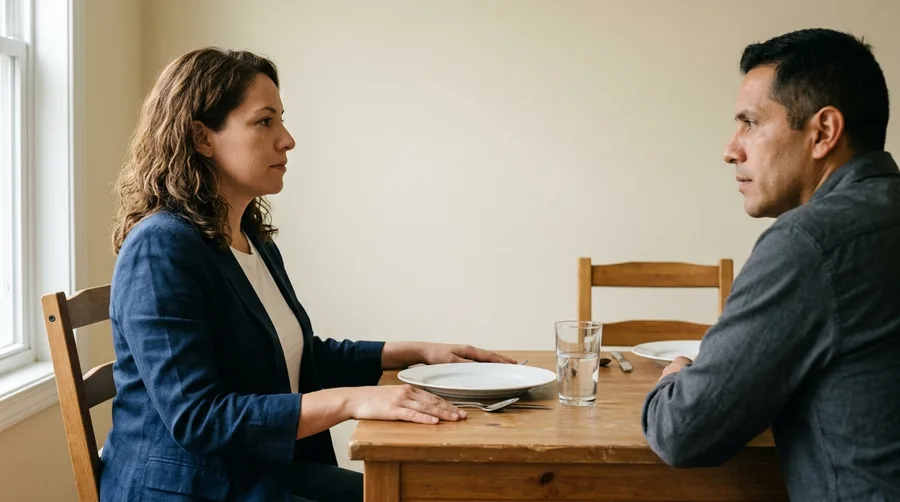
People tell you that filling every empty breath in a conversation keeps the momentum alive.
That advice creates the exact panic it promises to cure.
Silence is not an error in the room.
Let it work by staying quiet after you state your position.
Do not add a qualifier, do not laugh to soften the edge, and do not offer a secondary reason.
Let the other person live with the full weight of the sentence you just delivered.
14. What the Data Says About Social Friction

I used to think that over-apologizing was just a harmless quirk, a quirky little habit of mine that kept the peace.
Researchers who study group dynamics keep finding that reflexive deference carries a very specific cost in modern workplaces.
When you say sorry for a delayed email response caused by an office-wide server outage, you are absorbing friction that belongs to the system itself.
Observers note that individuals who eliminate unnecessary apologies experience clearer interpersonal boundaries within weeks.
When you stop taking the blame for routine friction, colleagues and friends adjust their expectations and treat your time with equal respect.
This shift does not make you cold or distant, but simply aligns your words with your actual responsibilities, clearing away the clutter of false guilt.
You become easier to work with because people know where you stand, and trading the reflexive apology for a clear factual statement changes the entire room.
15. Knowing When to Hold Your Ground

Three seconds of quiet feels like an eternity when you are used to rushing in with a quick sorry.
There are moments when an apology is not just a reflex, but the exact right tool for a genuine misstep.
When you genuinely drop someone's coffee or miss a critical deadline, a direct acknowledgment repairs the tear in the social fabric instantly.
You know the difference because the mistake belongs to you, not the ambient tension in the room.
Let the silence sit for three seconds while the other person processes the moment without your preemptive rescue.
You will find that most rooms can handle your presence just fine without an apology attached.
Frequently Asked Questions
Why do I automatically say sorry for everything?
It is a deeply ingrained habit designed to lower social friction. Over time, your brain treats minor spatial or conversational adjustments as personal failures that require immediate peacekeeping.
How can I stop apologizing without seeming rude?
Swap the apology for gratitude or neutral acknowledgment. Saying 'thanks for waiting' instead of 'sorry I am late' shifts the tone from guilt to appreciation while keeping your message warm.
Does stopping this habit make me sound cold?
Not at all. Eliminating filler words actually makes your genuine apologies more meaningful and your professional boundaries much clearer to everyone around you.
What should I say when I bump into someone?
A simple nod and a quick 'pardon' or 'go ahead' works perfectly. You do not need to launch into a full apology for occupying physical space.
How long does it take to break the habit?
Most people notice a substantial drop in unnecessary apologies within two weeks of consistent mindfulness and intentional phrase-swapping.
Where This Actually Starts
Pick one small trigger from today and change your response tomorrow.
That is where the new pattern takes root.
Build Better Communication Habits
Join our newsletter for weekly insights on social dynamics and clear boundary-setting.

Meet Edward Green, the founder of GolfingGoal and a seasoned expert in golf. With years of experience on the course and a passion for the sport, Edward has a wealth of knowledge to share. As our Lead Writer, he contributes articles, tutorials, and resources to help readers to improve their skills and reach their full potential on the golf course. Join Our Team!