

You decline the Friday night dinner invitation via a short text, place the phone face-down on the kitchen counter, and register a total absence of guilt.
For decades, keeping up appearances, managing career optics, and chasing physical perfection dictated almost every decision you made. The sudden realization that those intense anxieties have quietly evaporated can feel strange at first.
But that silence is not a void. It is the arrival of a sharpened clarity regarding what actually deserves your energy. Releasing the urge to manage everyone else's perception of you is a major psychological milestone. You are finally trading superficial obligations for the practical realities that sustain you, making it safe to embrace this newfound freedom without looking back.
Quick Tips Before You Start
Notice the relief
Pay attention to which canceled obligations make you physically relax.
Expect some pushback
People who relied on your anxiety might complain when it fades.
Start small
Say no to one minor, draining event this weekend.
Social Image and Identity
Decades of adult life are often spent managing how other people perceive your choices, your career, and your wardrobe. The shift away from that external performance is usually the first major psychological change people notice in their sixties.
It changes how you spend your Tuesday afternoons.
1. Guarding Your Time Beats Pleasing Everyone
Wasting three hours at a loud dinner party you never wanted to attend costs you the peaceful evening you actually needed. The lifelong compulsion to be universally liked usually demands a heavy tax on your schedule. For decades, the fear of disappointing a casual acquaintance translates directly into agreeing to draining committee roles and endless favors.
That habit eventually collapses.
The exception is obvious when it happens. Showing up for a true friend in crisis remains an easy yes, but handing a free Saturday to an acquaintance out of pure guilt stops entirely.
A deliberate social circle of four or five close confidants becomes a genuine preference rather than a loss. The exhaustion of maintaining a massive, shallow network fades out entirely, replaced by a fierce, unapologetic protection of your daily energy. Saying a polite, firm no to an invitation stops feeling like a personal failure and starts acting as your default setting.
💡 Tip: A delayed text reply is a perfectly valid way to buy yourself time.
The Time Reallocation
2. Daily Meaning Replaces Career Status

Forty years of introductions usually start with the same fact: what you do for a living. Just as the exhaustion of pleasing every casual acquaintance fades, the reflex to measure personal value by an income tier or a spot on the organizational chart begins to look profoundly hollow. Psychologists studying later-life transitions consistently note that the intense drive for prestige quietly dissolves, exposing how little that endless climbing actually mattered.
The ambition simply changes targets toward quiet routines completely disconnected from public applause.
Showing a junior hire how to handle a difficult client, sorting cans at a neighborhood pantry, or finally building that heavy oak table in the garage suddenly delivers the exact satisfaction that chasing a director role never quite managed.
The Shift in Ambition — At a Glance
📉 Focus
Lowering baseline stress
🌱 Target
Generative daily habits
🤝 Action
Mentoring or community work
3. Timeless Comfort Outlasts Chasing Trends

I spent a full decade buying rigid, aggressively uncomfortable clothing just to prove to passing strangers that I understood what year it was. When professional status stops defining your identity, the exhausting compulsion to signal your cultural relevance through the latest technology, cars, and lifestyle trends usually fades right along with it, leaving a sudden quiet.
That expensive performative treadmill never actually stops.
The exhaustion of trying to look culturally relevant gives way to the deep psychological relief of authentic self-expression. The panic of tracking seasonal wardrobes is replaced by deliberately investing in durable fabrics, genuinely supportive footwear, and whatever physically feels good. You stop treating your body like a display piece for a crowd that is not paying attention anyway.
This reframe changes your habits forever. Peer approval loses its artificial value against the immediate, tangible reward of living authentically. You simply refuse to finance another year of performative consumption.
Changing Standards
Relationships and Accumulation
Midlife is defined by gathering people, events, and possessions into a larger space to prove you are keeping up.
That math reverses itself later.
4. The Joy of Missing Out Arrives

The anxiety of a missed invitation vanishes the moment you stop dressing for an audience. A lighter social calendar naturally follows the rejection of performative living.
Young adult socialization runs on a manic energy that demands your presence everywhere. The obvious assumption is that staying home means you are isolating yourself, but that is entirely wrong. Forcing yourself to attend a crowded Friday dinner party only guarantees absolute exhaustion.
The fear of being left out transitions into the joy of missing out. A quiet evening reading holds far more psychological value, and protected downtime becomes a deliberate necessity rather than a skipped event.
Friday Night Value
The Joy of Missing Out
- Reading quietly in a comfortable chair
- Waking up rested on Saturday morning
- Choosing your company deliberately
- Zero social performance required
The Fear of Missing Out
- Attending an event purely out of guilt
- Shouting over loud background music
- Managing exhausting small talk
- Maintaining an upbeat persona for hours
5. Giving Things Away Replaces Accumulation

"Take the good plates now, because I am done polishing them." That sentence perfectly captures the moment a lighter social schedule begins mirroring the sudden, undeniable urge to strip away physical weight at home.
Midlife runs on an intense, competitive drive to buy, upgrade, and display material success in increasingly larger rooms. For thirty years, a packed garage and a basement crammed with seasonal decorations feel like the unquestionable proof of a life well lived. Then the undeniable arithmetic of daily ownership completely flips.
The psychological burden of managing, repairing, and storing thousands of accumulated possessions eventually outweighs the lingering thrill of acquiring them. You stop seeing a magnificent mahogany dining set and start seeing a heavy wooden obligation.
The anxiety of keeping up with neighborhood consumption is replaced by the massive, immediate relief of decluttering your physical space. Passing on meaningful items to heirs while you are still alive to watch them being used becomes a highly deliberate, deeply satisfying strategy for the next decade.
Handing over an heirloom watch or a set of vintage tools today removes a massive future sorting burden from your family members. It spares your children the exhaustion of emptying a house.
Watching your adult children load those heavy wooden chairs into the back of their car creates an immediate, profound emotional lightness in your own chest. The empty space left behind in the living room no longer feels like a loss, but finally just looks like absolute peace.
⚠️ COMMON MISTAKE
The Storage Trap
Waiting until you move to start decluttering means you spend your present years managing inventory for a house you do not even want.
The Big Picture
The final shift moves away from managing your physical appearance and tightly controlling the timeline of your life.
The focus snaps to the present day.
6. Maintaining Mobility Eclipses Perfect Appearance
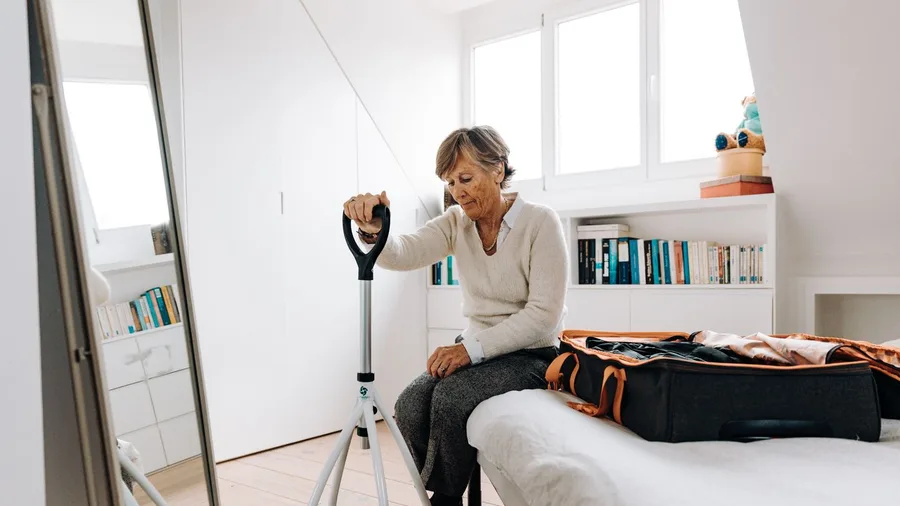
You stand in front of the bedroom mirror, but instead of pulling the skin tight around your jawline, you are slowly rolling a stiff shoulder to see if it still catches. When the rooms around you are finally emptied of heavy, unnecessary objects, the only physical limits that actually command your attention are your own.
For decades, that reflection was a ruthless auditor tracking every new wrinkle, shifting waistline, and failing vanity metric. Sometime around sixty, the quiet exhaustion of constant cosmetic anxiety simply evaporates.
Purely aesthetic goals dissolve into an urgent, highly practical focus on physical health and protecting your daily independence. The punishing pursuit of a seasonal beach body is entirely eclipsed by the immediate, overriding desire to stay active and move through the week without wincing in pain.
Functional fitness takes over the daily routine. True physical victories become the ability to haul heavy groceries from the car, climb a flight of stairs without knee pain, and maintain steady balance.
The Physical Hierarchy
7. Savoring the Present Cancels Future Control

The honest answer is that you eventually stop trying. As the daily focus narrows from perfecting an aesthetic appearance to managing practical physical limits, the illusion of total control collapses right alongside it. The drive to aggressively script the distant future simply runs out of fuel.
Try a ten-second test to measure this exact shift.
Look at your schedule for tomorrow. Are you scanning it for potential disasters to preempt, or just checking what time you need to be awake?
If you look at the day and only see a plain Tuesday, future-oriented anxiety has successfully yielded to the tangible present. Younger decades foster the exhausting belief that micromanaging finances, relationships, and rigid plans can dictate how life unfolds. Accumulating enough experience naturally dismantles that lie, replacing it with a profound acceptance of uncertainty.
You stop living ten steps ahead. Enjoying a morning coffee without plotting out the next five years ceases to feel like a failure of ambition, becoming instead the ultimate psychological victory.
Enjoying a morning coffee without planning the next five years is the ultimate psychological victory.
— The Daily Reality
Frequently Asked Questions
Is it normal to suddenly want fewer friends?
Yes. Culling a massive social network down to a few close, high-quality relationships is a normal psychological graduation, not a decline in social skills.
How do I handle people who expect me to keep saying yes?
State your boundaries plainly without over-explaining. A simple 'I cannot make it' is a complete sentence that requires no defensive backstory.
Will giving away my possessions make me feel empty?
Most people report an immediate sense of emotional lightness and relief. Managing less inventory directly lowers daily baseline stress.
Does letting go of ambition mean I am giving up?
No. It means you are trading ego-driven status for activities that provide actual daily meaning, like mentoring or hobbies.
How do I stop worrying about the physical signs of aging?
Shift your focus to functional fitness. When you prioritize lifting groceries and walking without pain, cosmetic metrics lose their psychological grip.
The Reality of Dropping the Act
Swapping those early superficial panics for practical, daily realities marks an elevation of your true priorities, rather than any sort of decline. The relentless stress over career optics and social perception simply served as training wheels until you discovered what you actually value.
You can claim this psychological freedom without an ounce of hesitation. Let your days unfold entirely on your own terms. The next time you leave the phone face-down on the counter, recognize that quiet house not as a missed obligation, but as the exact evening you earned.
Ready to set some new boundaries?
Review the 'Quick Tips Before You Start' section near the top to handle pushback from people who preferred your old habits.

Meet Edward Green, the founder of GolfingGoal and a seasoned expert in golf. With years of experience on the course and a passion for the sport, Edward has a wealth of knowledge to share. As our Lead Writer, he contributes articles, tutorials, and resources to help readers to improve their skills and reach their full potential on the golf course. Join Our Team!