The gym at 66 felt like a club I was not invited to. I watched everyone else tossing around heavy plates, knees gliding, backs straight, while I stood near the water cooler wondering if my lower back would allow me to just walk out without a groan. The fear of injury is a real, physical weight that stops more of us from moving than a lack of desire ever could.
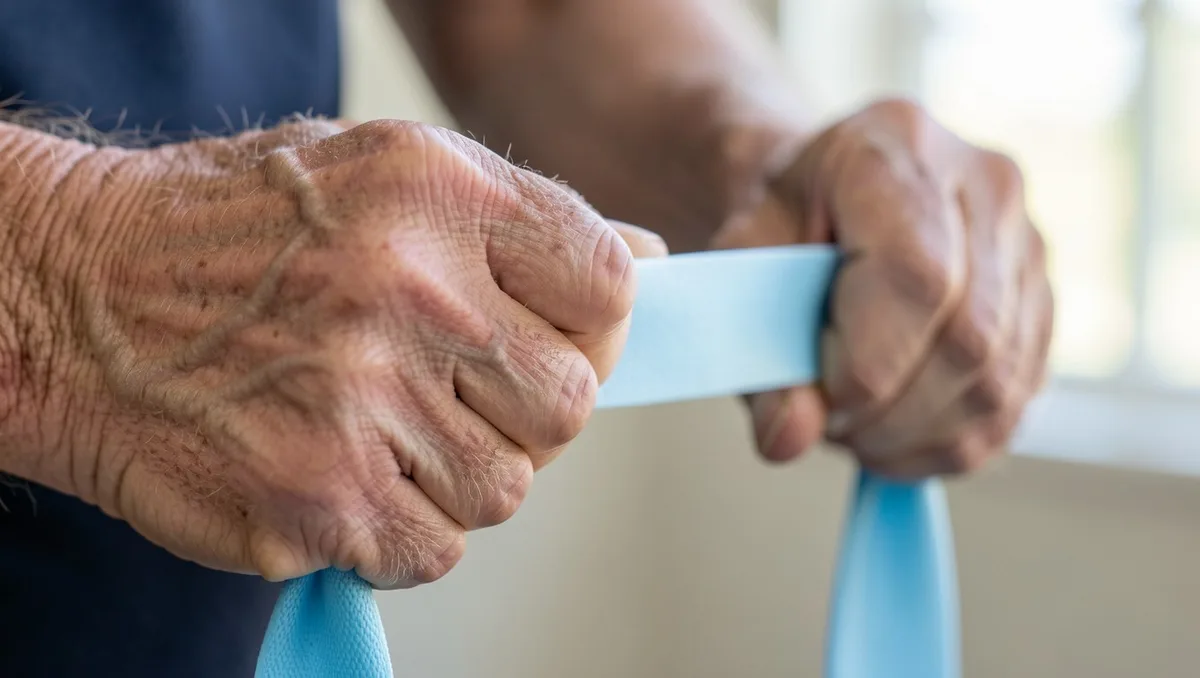
Then I picked up a simple blue rubber band, and the entire game changed. Twenty minutes of daily resistance training gave me back the functional independence I thought I had lost for good.
Resistance Training Jargon
Why Bands Outperform Machines After 60

Weight machines lock your body into a single, fixed path that often forces your joints into unnatural angles. At 66, those angles are often where the pain lives.
Resistance bands offer variable resistance, meaning the tension increases as you move, matching the strength curve of your own body rather than forcing your joints to fight a rigid metal lever. Because the resistance is lighter at the start, you avoid that sharp 'joint-shock' feeling, while the heavier tension at the end of the movement builds deep muscle fibers without the danger of a heavy weight slipping.
It is safer and effective.
Machines vs. Bands
Resistance Bands
- Gentle on inflamed joints
- Variable resistance protects form
- Total mobility, use anywhere
- Cheap and portable
Fixed Machines
- Fixed paths cause strain
- High risk of joint impact
- Requires gym membership
- Harder to customize for size
The 8-Week Arc: From Stiff to Strong
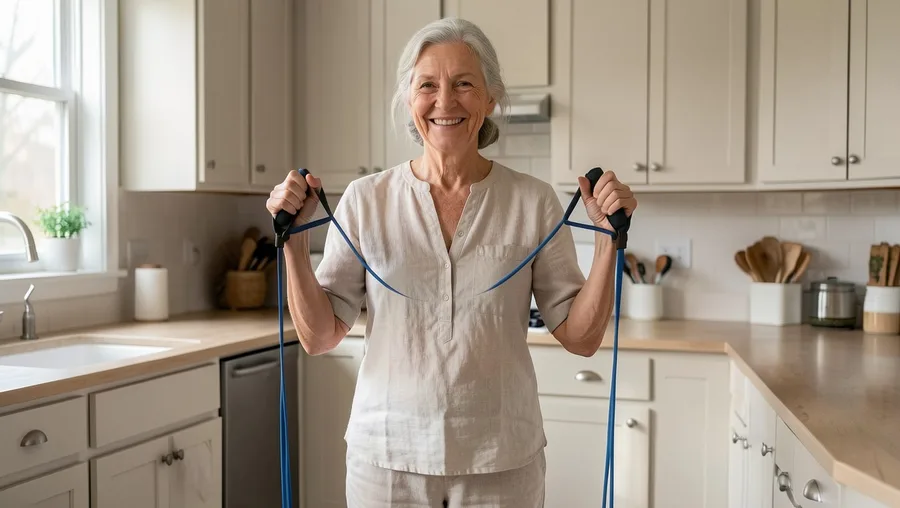
In the first two weeks, I did not push for weight; I pushed for control. The goal was simply to map out the range of motion in my shoulders and hips without any compensation.
Weeks three through five were about slowing down the descent of every movement, which created a deep burning sensation that told me those dormant muscle groups were finally waking up. By week six, I moved to a medium-tension band and introduced compound movements that mirrored how I actually reach for shelves or stand from my deep armchair.
Consistency beat intensity every single time.
📈 My 8-Week Resistance Journey
Weeks 1-2: Foundation
Focused entirely on form and full range of motion with light tension bands.
Weeks 3-5: Adaptation
Introduced a 3-second pause at the peak of every contraction to build stability.
Weeks 6-8: Strength
Switched to medium-tension bands and performed compound movements like rows and presses.
Cost of My 8-Week Setup
Why Resistance Training Matters After 60
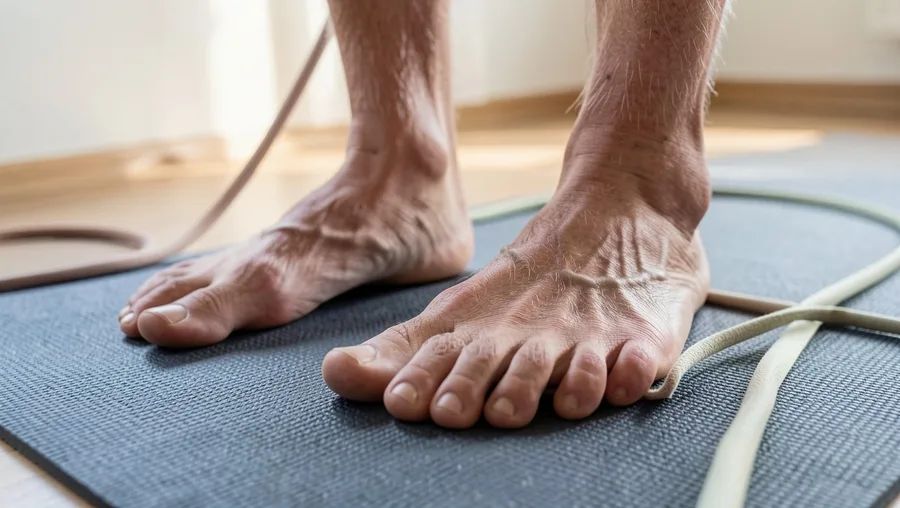
Science is clear: we lose muscle mass as we age, and that loss is the primary driver of frailty. Regular resistance training does more than build size; it stimulates bone mineral density, which is your best defense against fractures.
When you train with bands, you are sending a signal to your body that it needs to maintain muscle tissue to survive. This also triggers a metabolic shift, improving how your cells manage glucose during the day, which keeps energy levels steady.
It is essentially maintenance for your engine.
⚠️ COMMON MISTAKE
The Over-Eager Trap
The most common mistake people make is trying to move to the 'heavy' band too soon. If your form breaks or your breath hitches, the band is too strong for the movement.
Band Training — At a Glance
⏱️ Daily Time
20 minutes
📅 Results Visible
4–6 weeks
💪 Targets
Core, arms, postural back muscles
⚠️ Skip If
Active acute joint injury — see PT
Why It Works
Variable tension forces your stabilizer muscles to fire, not just the large prime movers.
How to Measure Your New Strength
Success at 66 is not measured by the mirror, but by the 'Chair Rise Test'. Can you stand up and sit down from a standard dining chair five times in thirty seconds without using your hands?
If you can, you have adequate leg strength for daily autonomy. I track my own energy levels mid-afternoon as a proxy for metabolic health; when the daily resistance work started, that '3 p.m. slump' simply vanished.
Your body tells you the truth.
Best For
My Personal Transformation
Your Strength Baseline Starts Today
If you buy one thing, get a pack of bands with different resistance levels—the color-coded ones are standard. Start with the lightest one for the first week until you can finish twenty reps with perfect form.
Stack this onto your existing morning routine. My secret was keeping the band right next to the coffee maker; while the pot brewed, I got my work in. Eight weeks is a blink in the timeline of healthy aging.
Do not wait for the perfect day.
💡 PRO TIP
The Coffee Hack
Keep your bands where you spend your time in the morning. Linking the habit to something you already do—like brewing coffee—means you never have to remember to 'do your exercises'.
Your Next Step for Better Movement
You do not need a gym membership or a master plan. You just need twenty minutes, a cheap band, and the willingness to show up for your body every single morning.
Start today, even if it is just five minutes.

Meet Edward Green, the founder of GolfingGoal and a seasoned expert in golf. With years of experience on the course and a passion for the sport, Edward has a wealth of knowledge to share. As our Lead Writer, he contributes articles, tutorials, and resources to help readers to improve their skills and reach their full potential on the golf course. Join Our Team!