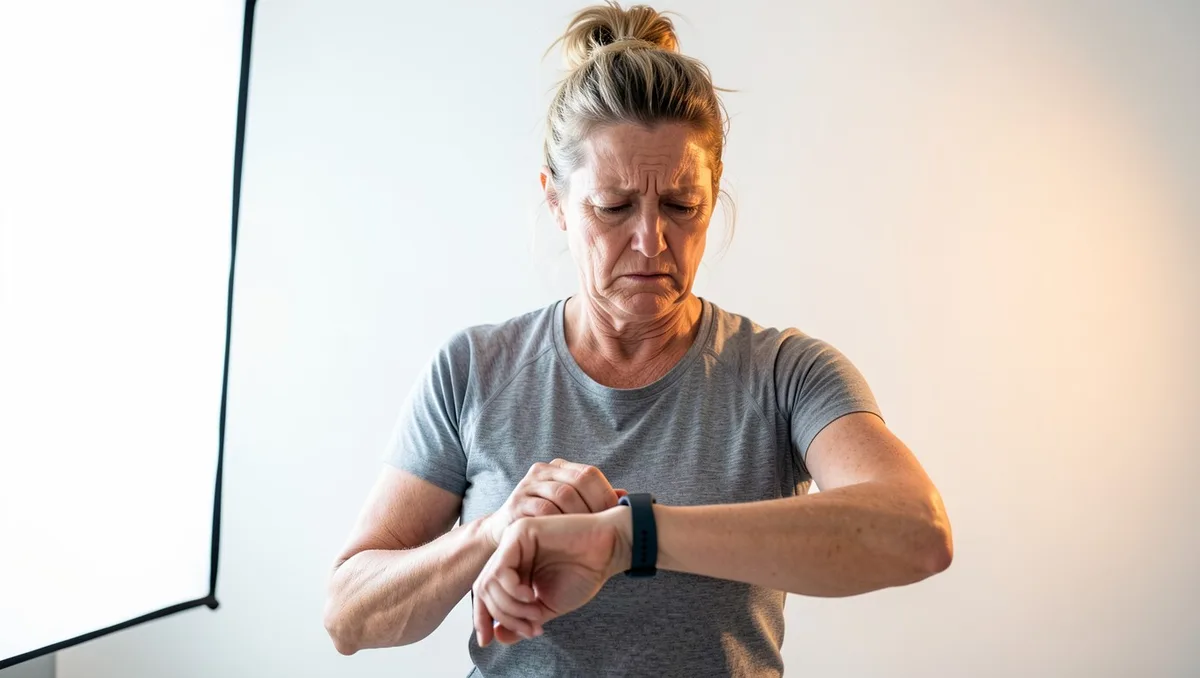
You finish your hour-long session feeling drained, yet the mirror and the scale show nothing changed. It feels like your body has developed a stubborn resistance to the work you have always relied on.
That frustration is common. You are not losing your edge; you are just hitting the wall where training for vanity stops working and training for functional longevity must begin. This approach reconfigures your effort to match what your body actually needs now.
Why the Rules of the Game Shift at 50
Your physiology undergoes a quiet overhaul in your 50s. Muscle protein synthesis slows down, and your hormonal landscape shifts, meaning your body processes stress and recovery differently than it did at 35.
The standard assumption is that doing more volume or higher intensity will force the body to change, but after 50, that often just triggers cortisol spikes and systemic inflammation.
The goal moves from simply burning calories to maintaining motor unit recruitment and metabolic health. Your training must become a precise signal rather than a generic stressor.
1. The Sarcopenia Wall
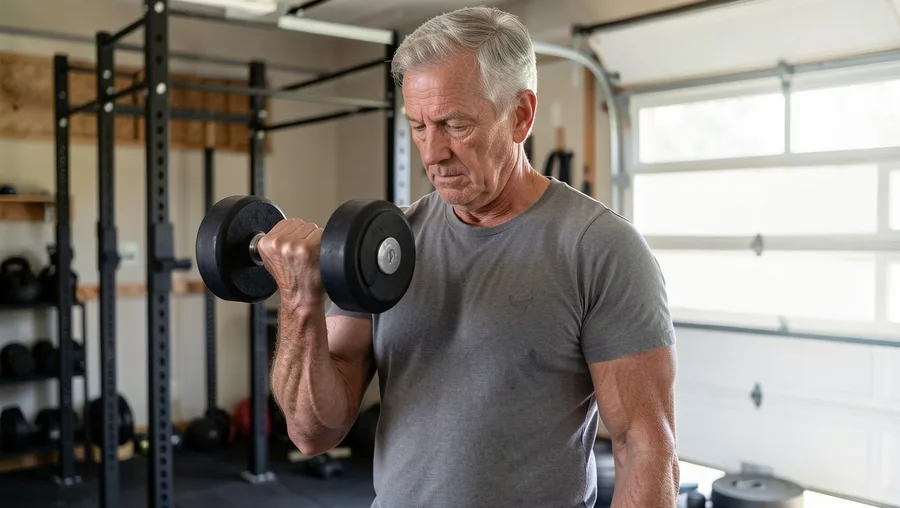
You might feel like you are doing everything right, but if you stick to high-repetition, low-weight circuits, you are missing the signal your muscles need.
Sarcopenia, the natural age-related loss of muscle mass, begins to accelerate after 50. Without heavier tension, your body treats muscle tissue as an optional luxury it cannot afford to maintain.
Trainers often suggest shifting to lower-rep, higher-intensity training. This provides the neurological and mechanical demand required to maintain skeletal muscle density.
2. The Chronic Inflammation Loop

High-impact plyometrics or excessive repetitive pounding often feel like progress, but they might be keeping your body in a state of constant repair.
If your joints feel stiff or achy 48 hours after a session, you are likely trapped in a chronic inflammation loop. This 'inflammaging' makes connective tissue slower to heal and prevents you from hitting intensity targets in your next workout.
The fix is to prioritize eccentric-focused movements. By slowing down the lowering phase of an exercise—such as a squat or press—you build tendon strength and muscular control without the joint-pounding impact of explosive movements.
Impact Hierarchy
High Risk / High Impact
- Box jumps
- Long-distance running
- Explosive snatches
- High-rep plyometric circuits
Low Impact / High Benefit
- Controlled goblet squats
- Slow eccentric presses
- Swimming or cycling
- Kettlebell deadlifts
⚠️ COMMON MISTAKE
Ignoring Joint Signals
People over 50 often mistake joint pain for 'good work.' If you feel pain in the joint rather than the muscle, stop, adjust your range of motion, or swap the movement entirely.
3. Metabolic Slowdown and the Insulin Factor

Your ability to clear glucose from your bloodstream changes, and steady-state cardio alone often fails to address this insulin sensitivity issue.
Compound movements are the most effective lever you have. By engaging multiple large muscle groups at once—like in a squat, lunge, or overhead press—you force the body to use glucose for fuel, preventing the insulin spikes that contribute to stubborn fat retention.
Stop isolating small muscle groups for hours. Instead, dedicate your energy to multi-joint patterns that demand total-body coordination.
Compound Movement — At a Glance
⏱️ Time
30 minutes
💪 Targets
Full body
📉 Benefit
Insulin regulation
Why It Works
Recruiting more muscle fiber mass clears glucose from the blood more efficiently.
4. The Mobility Anchor

If you cannot reach a full range of motion, you are effectively leaving half your workout on the table. You aren't just limited by flexibility; you are limited by how well you can recruit those motor units.
Shortened hip flexors and thoracic stiffness are the common culprits. They prevent you from squatting deep enough or pressing overhead correctly, which forces your joints to compensate and eventually leads to injury.
You must spend 15 minutes of every workout session on active mobility. Focus specifically on thoracic extension and hip capsule work before you pick up a weight.
Mobility Transformation
Essential Mobility Areas
5. Inadequate Protein and Recovery Windows

Younger bodies are resilient enough to handle inconsistent fuel, but after 50, your body develops what experts call 'anabolic resistance.'
Essentially, you need a higher threshold of protein per meal to trigger muscle protein synthesis than you did in your 30s. If you are eating small, protein-sparse meals, you are likely failing to signal muscle growth entirely.
Aim for 25–30 grams of high-quality protein within 60 minutes after your training session. This is the critical window where your muscles are most receptive to the amino acids required for repair.
The Post-Workout Recovery Investment
📋 The 50+ Workout Audit
Evaluate Load
Are you lifting heavy enough to reach near-failure by 8–10 reps?
Check Impact
Does your routine cause persistent joint pain the next morning?
Verify Mobility
Did you include 15 minutes of dedicated thoracic/hip work?
Refuel Properly
Are you consuming 25-30g of protein within an hour post-workout?
Reclaiming Your Rhythm
This plateau is not a wall—it is a pivot point. Your body did not stop responding to your efforts; it simply updated its requirements for how you must treat it.
By focusing on precision over performance, eccentric control over explosive impact, and protein timing over sheer volume, you can reignite your progress. Start by auditing your next three sessions with these new rules in mind.

Meet Edward Green, the founder of GolfingGoal and a seasoned expert in golf. With years of experience on the course and a passion for the sport, Edward has a wealth of knowledge to share. As our Lead Writer, he contributes articles, tutorials, and resources to help readers to improve their skills and reach their full potential on the golf course. Join Our Team!