

Standing at the bottom of my cellar stairs with a forty-pound bag of water-softener salt, my hands slipped. My grip simply gave out.
That moment was a terrifying wake-up call about my fading physical independence.
Walking three miles a day and taking weekend swims was no longer enough to keep my muscles working. At age 64, I walked into a commercial weight room for the very first time in my life, terrified, feeling completely out of place, and convinced my joints would immediately break.
Here is what actually happened over the next six months, along with five crucial lessons every older beginner needs to know before picking up a weight.
What Actually Happens to Older Muscle (And Why It Is Never Too Late)

Sarcopenia is the silent stealer of vitality after 50.
Starting around age 30, adults lose roughly 3% to 8% of their muscle mass per decade. Once you pass 60, that rate accelerates rapidly, taking your balance, metabolic speed, and joint stability along with it.
Your brain changes before your muscle grows.
In your first six weeks of lifting, your nervous system learns to fire dormant motor units more efficiently. You get dramatically stronger without adding bulky muscle, as your brain simply learns how to wake up the tissue you already own. Mechanical loading also forces bone-building cells called osteoblasts to deposit new mineral content along your skeletal frame.
1. Lesson 1: My Ego Left the Room Before My Weights Did
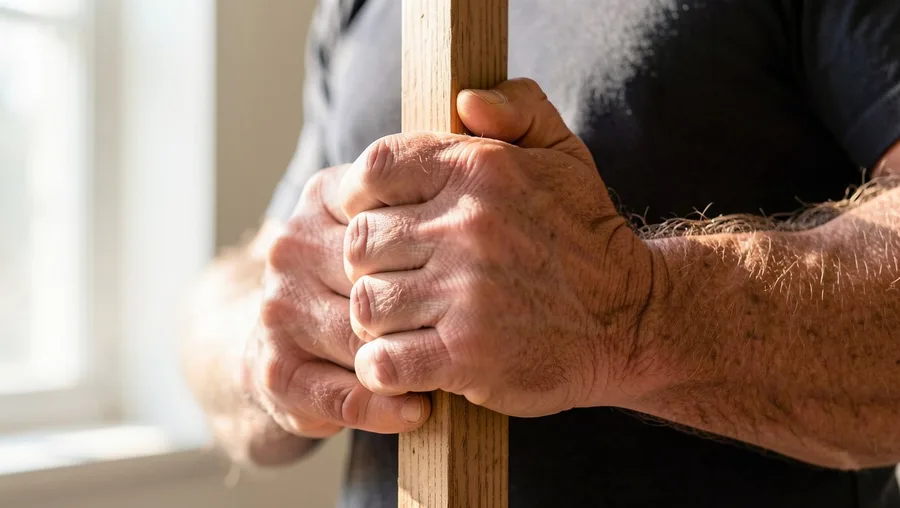
I wanted to lift heavy iron right away to prove I was not fragile.
That mistake cost me ten days of severe lower back stiffness. Physical therapists who specialize in older adults constantly emphasize mastering movement patterns before adding external loads. You need to hinges at the hips, squat to a chair, push, pull, and carry safely using just your bodyweight or light resistance bands first.
Weak glutes force your lower spine to take the load.
Before touching a barbell, I spent three weeks learning how to squeeze my glutes at the top of a hip hinge while holding a simple wooden broomstick against my spine. Establishing that basic brain-muscle connection kept my joints safe once I finally picked up a metal kettlebell.
⚠️ COMMON MISTAKE
Rounding the Lower Spine During Pickups
Bending at the waist instead of hinging at the hips dumps heavy compressive forces directly into your lumbar discs. Always push your hips back toward the wall behind you and keep your chest lifted before lifting anything from the floor.
Best Starting Tools for 60+
2. Lesson 2: I Needed Double the Recovery Time I Thought I Would

Younger bodies bounce back overnight; older connective tissue operates on a completely different timetable.
Tendons and ligaments have lower blood supply than muscle tissue, and that vascularity decreases as we age. When I tried lifting every other day during my second month, a nagging ache settled into my left elbow that took three weeks of rest to clear.
Resting is where the actual remodeling happens.
Older adults require 48 to 72 hours between sessions targeting the same muscle group. I switched to a twice-a-week schedule—Tuesday and Friday—which gave my joints full time to repair while leaving me with high energy for every single workout.
The Senior Recovery Window
Why patience yields better strength gains after 60
3. Lesson 3: Salads Weren’t Enough — I Had to Rethink Fuel

I used to think eating healthily meant light greens and a small dinner.
That diet left me constantly fatigued once I started pushing weights. Research points to a phenomenon called anabolic resistance: as we age, our bodies become less efficient at turning dietary amino acids into new muscle tissue. To trigger muscle repair, you need a larger spike of protein in a single sitting than a 25-year-old does.
Aim for 25 to 35 grams of protein per main meal.
Instead of eating a tiny toast breakfast and a massive dinner, I spread my protein intake evenly across the day. Adding three eggs with a scoop of cottage cheese at breakfast made an immediate difference in my mid-workout stamina and drastically cut down my post-gym muscle soreness.
Daily Senior Protein Blueprint
4. Lesson 4: Two Moderate Days Beat One Heroic Workout
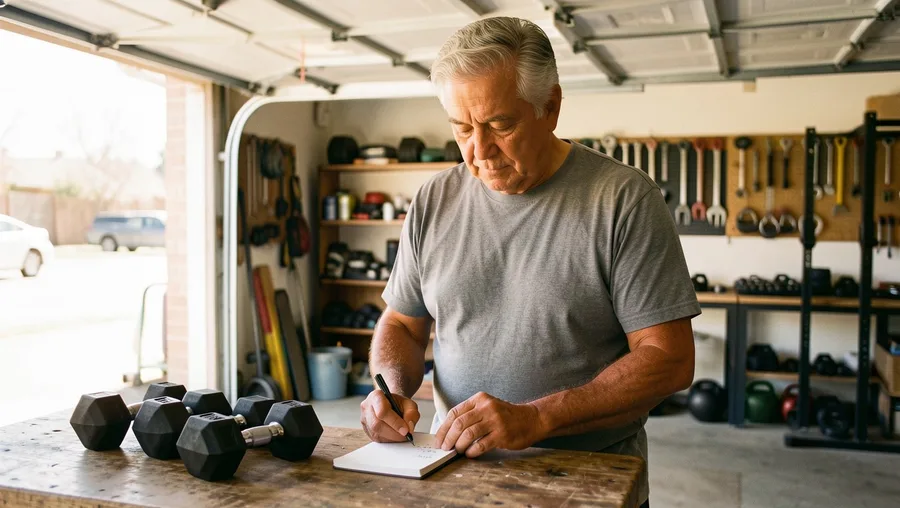
Consistency is your single greatest asset when building late-life functional reserve.
Going all-out during a single intense workout leaves you so sore you miss the next ten days. Trainers who work with older lifters recommend working at a Rate of Perceived Exertion (RPE) of 6 or 7 out of 10. You should finish every set feeling like you could have done two more clean repetitions if someone offered you a hundred dollars.
Micro-progressions protect your joints from sudden overload.
Instead of jumping from 10-pound dumbbells straight to 15-pounders—a massive 50% increase—I bought fractional magnetic weights that add just one pound at a time. Adding one extra rep or one extra pound every two weeks keeps your strength moving forward without triggering joint inflammation.
💡 PRO TIP
Track Reps, Not Just Weight
When a weight feels too heavy to increase safely, keep the weight the same and add one single repetition per set each week. Going from 8 reps to 10 reps over three weeks is a significant strength gain that spares your wrists and shoulders.
My Starter 2-Day Weekly Schedule
5. Lesson 5: The True Payoff Isn’t Aesthetic

I started lifting to avoid getting weak, but the real reward was getting my life back.
Six months in, I carried that same forty-pound bag of salt up my basement stairs without stopping for breath and without my hands shaking. Getting up off the living room floor after playing with my grandkids no longer requires finding a sturdy piece of furniture to push off of.
Your body remembers how to adapt if you give it the signal.
The subtle fear of falling that used to hover in the back of my mind during winter walks has completely evaporated. Strength training after 60 is not about vanity or muscle size; it is about keeping your freedom to move through the world without asking for help.
Functional Gains — At a Glance
📦 Grip Strength
Carrying heavy groceries easily
🪑 Leg Power
Rising from low chairs with no hands
🪜 Stair Climbing
No knee pain on steep descents
🪵 Core Reserve
Yard work without lower back aches
The Ultimate Result
Regaining full bodily confidence and functional independence in everyday life.
Are You Ready to Lift? A 4-Step Safety Self-Check
Before you touch a weight, take five minutes to assess your body’s baseline readiness.
Physical therapists consistently recommend clearing basic mobility benchmarks before adding resistance. If you struggle with any of these four movements, address the joint restriction or seek a practitioner’s guidance before loading the pattern with weights.
📋 Your First 14 Days: From Safety Check to First Session
Medical Clearance
Ask your physician if you have unmanaged cardiovascular conditions, joint replacements, or acute spinal disc issues.
Chair-Stand Test
Sit in a hard dining chair and stand up 5 times without using your arms to push off.
Single-Leg Balance
Stand near a kitchen counter and hold balance on one foot for 10 seconds per side without leaning.
Wall Push-Up Check
Perform 10 smooth wall push-ups with your body straight to test basic shoulder stability.
First Session
Book two sessions with a trainer credentialed in senior fitness to learn safe equipment setup.
The Safe Starter Workout Sequence
Frequently Asked Questions
Is 60+ too old to start strength training if I have never lifted weights before?
Not at all. Research consistently shows adults in their 70s, 80s, and beyond gain muscle mass and neural firing speed when exposed to progressive resistance. Your muscle tissue retains its ability to adapt regardless of your starting age, provided you begin with appropriate bodyweight progressions.
How many days a week should an older adult lift weights?
Two to three non-consecutive days per week is ideal for senior beginners. This structure provides sufficient mechanical stimulus to build muscle and bone density while leaving mandatory 48-to-72-hour recovery windows for joint and connective tissue repair.
Is strength training safe if I already have arthritis or joint stiffness?
Yes, when done with correct form. Strengthening the muscles surrounding arthritic joints stabilizes the articulation, reduces joint friction, and improves synovial fluid circulation. Stick to pain-free ranges of motion and avoid exercises that cause sharp joint pain during or after the set.
Should I use resistance bands, weight machines, or free weights?
Start with weight machines or resistance bands during your first four weeks. Machines guide your movement through a fixed, safe path and require less core stabilization while you build baseline force. You can gradually introduce light free weights like kettlebells or dumbbells as your joint stability improves.
How long does it take for an older beginner to feel stronger?
You will likely notice neurological strength improvements within three to four weeks, such as feeling more stable on stairs or standing up from chairs with ease. Actual visible muscle fiber growth and measurable shifts in bone density typically take eight to twelve weeks of consistent training.
Start With This Single Move Today
You do not need to buy expensive gym clothes or sign a multi-year health club contract to start reclaiming your physical independence.
Stand up from your chair right now without using your hands to push off the armrests, then lower yourself back down under control. Do that five times. That simple chair squat is the exact moment your body begins adapting toward a stronger, more capable next decade.

Meet Edward Green, the founder of GolfingGoal and a seasoned expert in golf. With years of experience on the course and a passion for the sport, Edward has a wealth of knowledge to share. As our Lead Writer, he contributes articles, tutorials, and resources to help readers to improve their skills and reach their full potential on the golf course. Join Our Team!