

You stare at the digital numbers glowing red on the nightstand, watching two o'clock tick over to three.
Your lower back aches from a mattress that lost its support three years ago, and a pile of unfolded laundry casts a heavy, anxious shadow from the armchair across the room. You did everything right today, avoiding caffeine past noon and dimming the overhead lights, yet your body remains trapped in a state of high-alert wired exhaustion.
Sleep physicians approach bedroom design through a strict neurological lens, treating the sleeping quarters not as a multi-use living space, but as a biological recovery chamber that requires total environmental defense.
💡 PRO TIP
The Hidden Cost of Micro-Awakening
Subconscious environmental interference fragments deep-stage sleep cycles without causing full awakenings, leaving you chemically depleted by morning.
The Science of Sanctuary: How Your Brain Scans the Bedroom
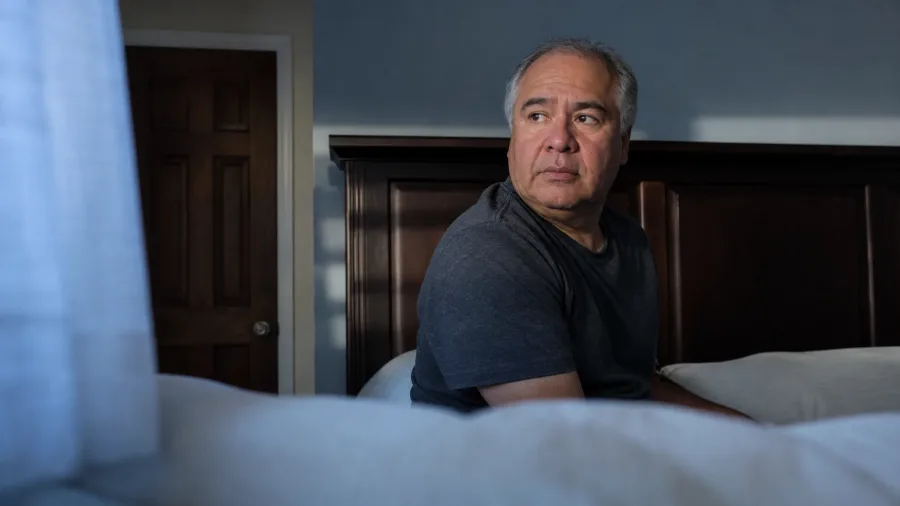
Your primitive nervous system refuses to turn off its surveillance systems just because you pulled up the covers.
Evolutionary biology dictates that the human brain treats any unfamiliar or stimulating environment as a potential zone of vulnerability. Sleep researchers call this the first-night effect, where one hemisphere of the brain remains lightly active to monitor environmental cues.
The suprachiasmatic nucleus processes light, sound, and thermal data continuously, translating micro-clutter and ambient glow into subtle cortisol spikes that block restorative slow-wave sleep.
Sleep Environment — At a Glance
🌡️ Ideal Temp
60 to 67 degrees Fahrenheit
💡 Light Level
Absolute blackout darkness
🧠 Brain State
Parasympathetic nervous dominance
⏰ Reset Window
7 to 14 days for neuro-association
Core Mechanism
Environmental safety cues are required to trigger core body temperature drops and sustained melatonin production.
Item One: Glowing Digital Clocks and Charging Stations

A harsh blue or red LED number display sitting two feet from your pillow destroys your internal chemistry before you even close your eyes.
Intrinsically photosensitive retinal ganglion cells in your eyes detect narrow-band light wavelengths even through closed eyelids, immediately halting melatonin secretion from the pineal gland.
Moving charging stations and illuminated alarm clocks across the room or out of the sleeping quarters entirely is the single fastest way to deepen sleep latency.
Disrupted Bedroom Setup
- Glowing LED alarm clock face
- Smartphone charging on the nightstand
- Hallway light bleeding under the door
- Standby indicator lights on electronics
Sleep-Optimized Setup
- Analog clock with zero luminous glow
- Phone charging in the kitchen or hallway
- Draft stopper sealing under-door light
- Total blackout curtains fitted to frame
Item Two: The Work-From-Bed Desk and Laptop Caddy
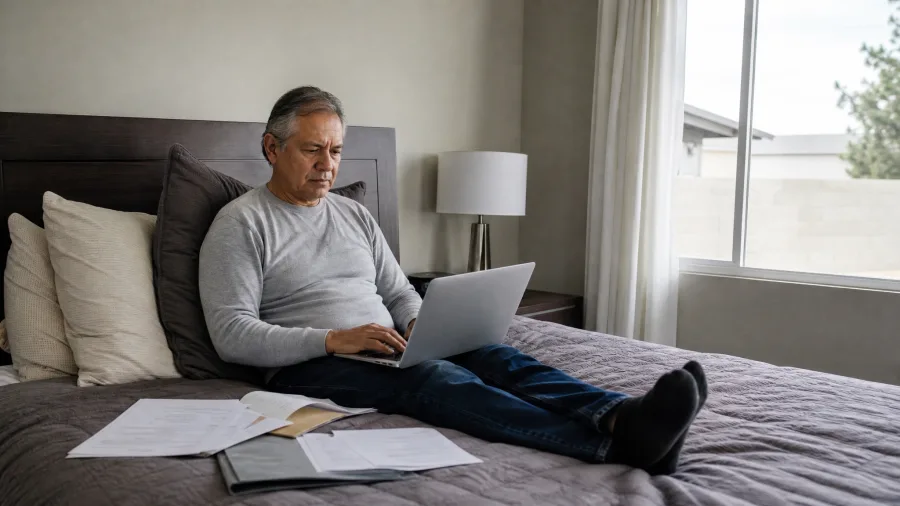
Answering midnight emails under the duvet trains your brain to associate your mattress with high-stakes problem solving instead of physical recovery.
Classical conditioning forms unbreakable neural links between physical spaces and mental states through strict stimulus control therapy principles.
If your workspace shares physical square footage with your sleeping area, erect a physical room divider or keep your laptop completely zipped inside a bag out of sight.
⚠️ COMMON MISTAKE
The Bed Association Trap
Never pay bills, answer professional texts, or stream stressful content while lying in bed. This destroys the automatic neurological cue for sleep onset.
Item Three: The Cluttered Storage Zone and Unprocessed Laundry

Piled laundry hampers and chaotic bookshelves act as a persistent source of visual friction for your executive processing centers.
The visual cortex continues parsing unfinished household tasks even after you turn off the lights, keeping the sympathetic nervous system locked in a low-grade state of readiness.
Replacing open wire racks with closed wooden armoires or sliding-door closets instantly lowers evening cortisol levels and eases mental wind-down.
Immediate Clutter Removals
Item Four: High-Temperature Mattresses and Synthetic Bedding

Your core body temperature must drop by one to two degrees Fahrenheit to trigger the onset of deep slow-wave sleep.
Trapping synthetic foam mattresses and heavy non-ventilated polyester duvets create localized microclimate heat traps that force your body to wake up and adjust positions.
Swap synthetic fills for breathable organic linen or percale cotton sheets with a tight 200 to 300 thread count to facilitate optimal thermal dissipation.
Moving Beyond Aesthetics to Nervous System Safety

True sleep restoration requires abandoning the idea of the bedroom as a decorated bonus room and treating it like a medical recovery chamber.
When you strip away modern environmental noise, you give your primitive brain the explicit signal that it is safe to lower its guard.
This biological reset transforms how your body handles stress recovery long after morning breaks.
🛏️ The 4-Step Bedroom Environmental Audit
Banish Electronics
Relocate all glowing clocks and charging stations outside the door.
Clear Visual Clutter
Put away laundry piles and secure items inside closed storage units.
Audit Thermal Output
Drop room thermostat down to 65 degrees and swap out synthetic blankets.
Establish Rule Boundaries
Reserve the mattress exclusively for sleep and intimate rest.
Auditing Your Sleeping Quarters Tonight
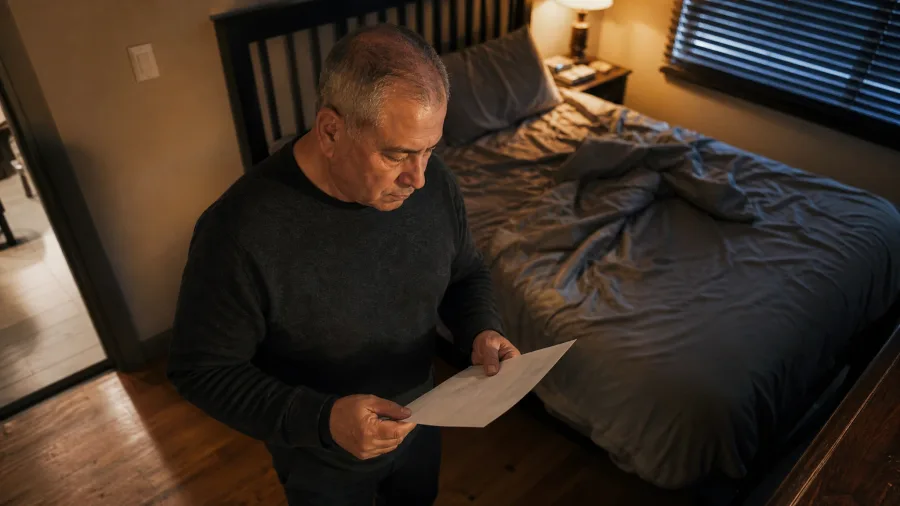
Evaluating your bedroom setup requires an objective look at what environmental triggers are sabotaging your nightly rest cycles.
Categorize your bedside items by immediate removal priority, starting with active screens and ending with thermal bedding adjustments.
Execute these zero-cost changes before turning off the lights tonight to experience an immediate shift in morning recovery quality.
Environmental Upgrade Cost & Time Audit
Based on standard sleep medicine environmental guidelines.
Bedroom Object Safety Lanes
- 🟢 Analog non-luminous clock — Safe for time checks without light pollution
- 🟡 Traditional paper books — Acceptable only if kept in closed nightstand drawers
- 🔴 Smartphones and tablets — Strictly ban from sleeping quarters
Disruption Impact Spectrum
Ranking how environmental factors degrade slow-wave sleep
- Ambient LED indicators: Suppresses melatonin production gradually
- Visual laundry clutter: Maintains low-grade cortisol activation
- Trapped mattress heat: Forces frequent nocturnal physical awakenings
Key Environmental Facts
The Numbers That Matter
Critical metrics for a sleep-optimized bedroom
Frequently Asked Questions
Can I use a white noise machine or smart speaker in the bedroom?
Acoustic consistency from a dedicated white noise machine is acceptable if it masks outside traffic. Avoid multi-function smart speakers with glowing status lights and microphone listening arrays.
What if my partner needs a TV or reading light to fall asleep?
Compromise by introducing a directional clip-on reading light with a warm amber bulb and mandate sleep masks for partners who require absolute darkness.
Does room color or wall art significantly impact sleep quality?
High-contrast geometric wall art and intense primary colors stimulate the visual cortex. Opt for muted, desaturated tones like soft sage, gray, or pale blue.
How long does it take for the brain to readjust after removing these items?
Most adults experience a noticeable drop in sleep latency and nighttime awakenings within seven to fourteen days of clearing environmental bedroom disruptors.
Start With This One Change Tonight
You do not need to overhaul your entire house by midnight to reclaim your rest.
Pick just one item from this list—move your smartphone charger into the hallway—and notice how quickly your nervous system settles down without that glowing distraction within arm's reach.

Meet Edward Green, the founder of GolfingGoal and a seasoned expert in golf. With years of experience on the course and a passion for the sport, Edward has a wealth of knowledge to share. As our Lead Writer, he contributes articles, tutorials, and resources to help readers to improve their skills and reach their full potential on the golf course. Join Our Team!