
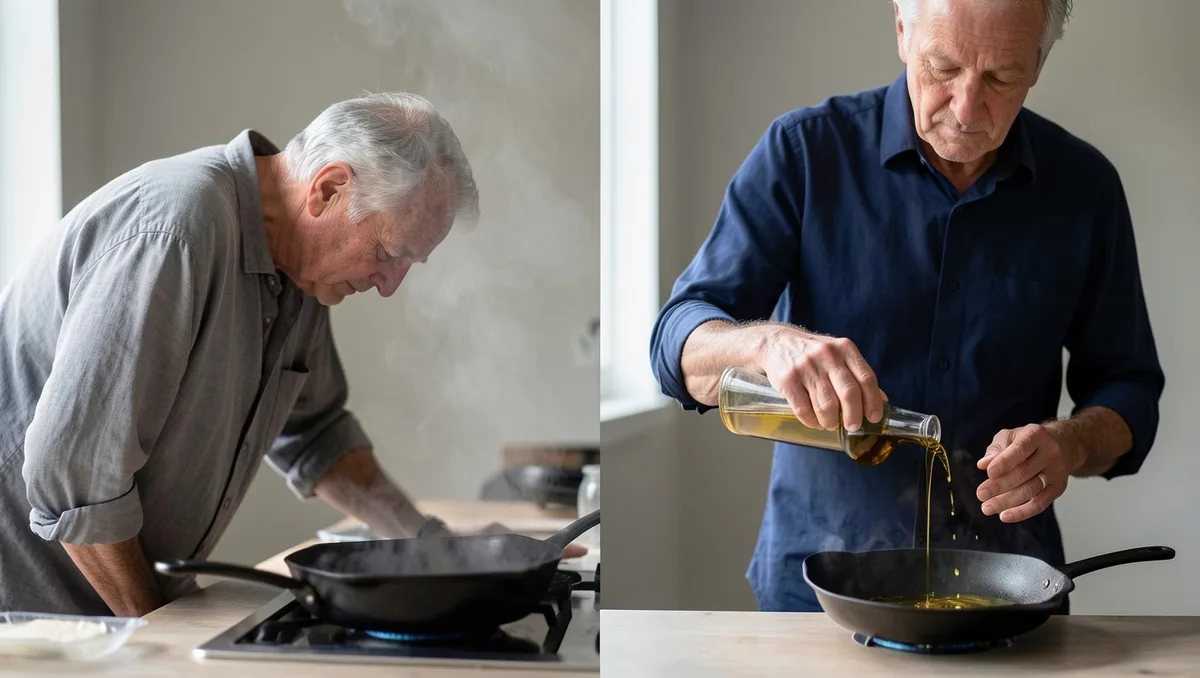
You stand in the oil aisle staring at dozens of sparkling glass bottles, each emblazoned with heart-healthy claims and pure vegetable promises. You pick an oil, heat up your favorite skillet to sear a piece of salmon, and within minutes, a light haze of smoke fills your kitchen.
That faint blue haze is a quiet warning sign. When cooking oil passes its thermal threshold, its chemical structure unravels, releasing harsh compounds into your air and your food. The oil you chose for its light taste and healthy label just oxidized on your stovetop.
Preventing that degradation is the real secret. Lipid researchers and preventive cardiologists do not select cooking oils based on flashy labels or front-of-pack marketing. They look at structural stability under heat, monounsaturated fat ratios, and extraction methods.
By the time you finish reading, you will know exactly which five oils belong in your skillet, which two should stay on the grocery store shelf, and how to store them so they never turn rancid.
Smoke Point vs. Oxidation: How Cooking Heat Rewires Your Oil
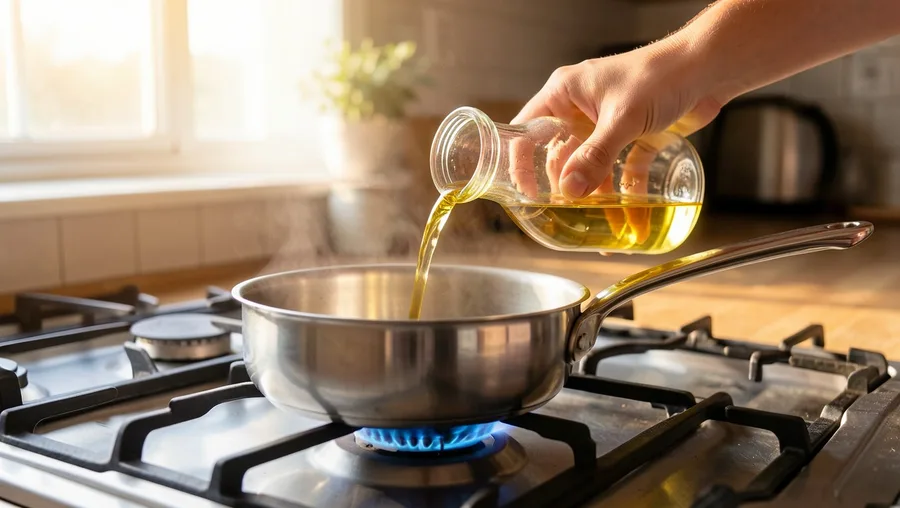
Your oil is breaking down long before it smokes.
Most home cooks rely entirely on smoke point to judge heat safety. Smoke point simply indicates the exact temperature at which volatile compounds become visible as smoke. Thermal stability is an entirely different chemistry problem.
Thermal stability depends on chemical bonds.
Polyunsaturated fats contain multiple double bonds that act as molecular weak links when exposed to stovetop heat. Under thermal stress, these fragile bonds break apart, forming reactive lipid peroxides and inflammatory aldehydes long before the pan begins to smoke visibly.
Monounsaturated fats feature a single, durable bond that resists heat exposure. Saturated fats contain zero double bonds, making them virtually indestructible in a hot skillet. Understanding this molecular hierarchy changes how you stock your pantry.
Fat Structure Under Heat: Double Bonds Matter
Monounsaturated & Saturated Fats
- Single or zero double bonds resist heat unraveling
- Minimal free radical formation during searing
- Low risk of toxic aldehyde accumulation
- Protects natural antioxidant content like vitamin E
Polyunsaturated Industrial Seed Oils
- Multiple double bonds break down rapidly when heated
- High susceptibility to lipid oxidation and peroxides
- Generates volatile inflammatory byproducts in pan
- Requires heavy industrial refining and deodorizing
The 5 Recommended Oils: High Heat Powerhouses and Daily Drivers
Not all culinary fats handle a hot skillet equally well.
Preventive cardiologists and dietary researchers consistently point to monounsaturated fats as the gold standard for daily cooking. These oils provide robust cardiovascular support while remaining structurally sound during normal kitchen heating.
1. Extra Virgin Olive Oil (EVOO)
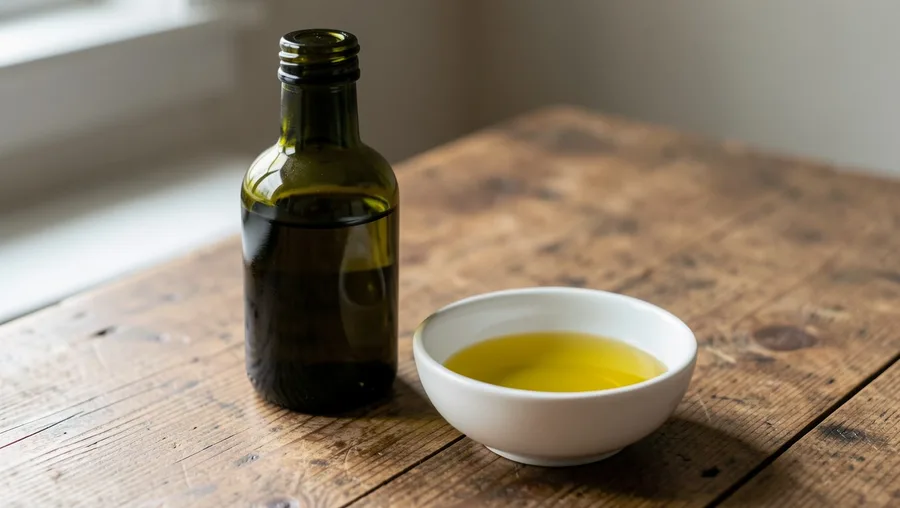
The old myth that extra virgin olive oil cannot take heat is completely false.
While unrefined olive oil has a moderate smoke point around 375°F to 400°F, its exceptionally high antioxidant density protects it from structural breakdown. Polyphenols act as natural bodyguards for the oleic acid, neutralizing free radicals as the pan heats up.
Choose cold-pressed bottles stored in dark green glass or metal tins. Keep EVOO for daily medium-heat sautéing, salad dressings, and gentle roasting under 375°F.
💡 Tip: Buy single-origin bottles displaying a clear harvest date within the last 12 months for peak antioxidant protection.
Extra Virgin Olive Oil — At a Glance
🌡️ Smoke Point
375°F – 400°F
🧪 Primary Fat
73% Monounsaturated
🍳 Best For
Sautéing, veggies, dressings
🛡️ Stability Key
Rich in polyphenol antioxidants
Medical Consensus
Polyphenols shield oleic acid from heat breakdown far better than refined light olive oils.
2. Avocado Oil
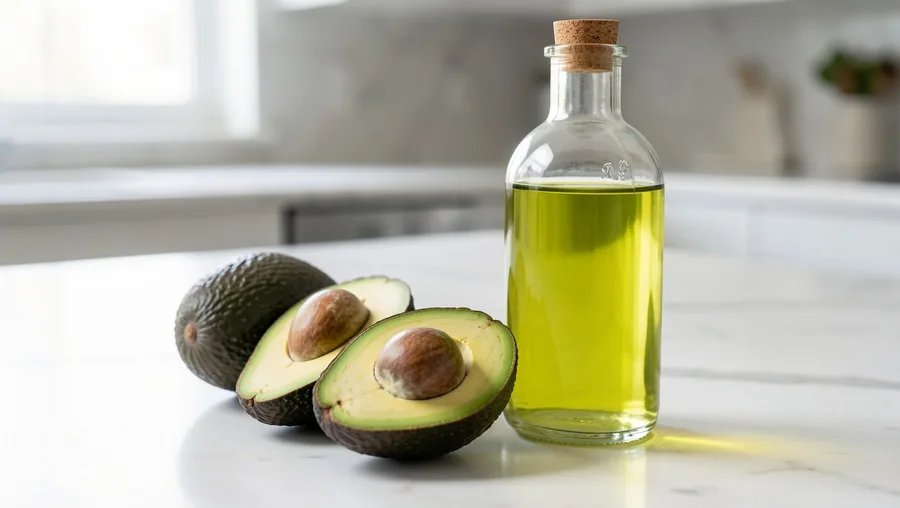
When your cooking calls for intense heat, avocado oil is unbeatable.
Extracted from the creamy pulp of pressed avocados rather than the seed, avocado oil boasts a staggering 70% monounsaturated fat profile alongside a high smoke point reaching up to 500°F. This makes it ideal for high-heat searing, wok stir-frying, and grilling.
You get all the high-temperature stability of an industrial oil without sacrificing your lipid profile.
Avocado Oil Extraction Process
3. High-Oleic Sunflower Oil
Do not confuse standard sunflower oil with its high-oleic sibling.
Standard sunflower oil is packed with fragile omega-6 polyunsaturated fats that oxidize under heat. High-oleic varieties are specially bred to contain over 80% monounsaturated oleic acid, completely reversing that weakness and yielding exceptional thermal resistance.
It provides a neutral taste profile perfect for baking or pan-frying when olive oil's peppery flavor would overpower the dish.
Sunflower Oil Misconceptions
4. Toasted and Virgin Sesame Oil
Sesame oil holds a unique position in dietary science.
Despite containing a moderate amount of polyunsaturated fats, sesame oil is packed with powerful natural lignans called sesamol and sesamolin. These compounds act as potent chemical shields during brief thermal exposure.
Use light virgin sesame oil for gentle skillet cooking, and reserve dark toasted sesame oil as a finishing drizzle after turning off the burner.
5. Grass-Fed Ghee (Clarified Butter)
Removing milk solids transforms butter into a high-heat tool.
Ghee is produced by simmering butter until the water evaporates and the lactose and casein settle to the bottom. What remains is pure, golden fat with a high smoke point around 485°F.
Because it consists primarily of saturated and monounsaturated fats, ghee is extremely stable under high heat. It also provides fat-soluble vitamins A, E, and K2 along with butyric acid, a short-chain fatty acid that supports intestinal wall integrity.
The Daily Cooking Fat Hierarchy
How physicians prioritize kitchen oils by fat structure and heat stability
The 2 Oils Doctors Left on the Grocery Shelf
Walk down the commercial baking aisle and you will find giant, inexpensive clear plastic jugs.
These industrial oils are marketed with terms like 'light' and 'cholesterol-free.' Yet lipid specialists routinely bypass them due to extreme oxidation susceptibility and harsh chemical extraction processes.
6. Industrial Soybean and 'Vegetable' Oil
Generic vegetable oil is almost always 100% refined soybean oil.
Soybean oil is packed with omega-6 linoleic acid, a highly unstable polyunsaturated fat. When consumed in excessive amounts, omega-6 fatty acids displace protective omega-3s in cell membranes, promoting systemic inflammatory signaling throughout your body.
To make soybean oil shelf-stable and odorless, manufacturers put it through intensive industrial refining, chemical solvent extraction using hexanes, bleaching, and high-heat deodorization. That process strips away natural protective antioxidants.
7. Standard Corn and Cottonseed Oil
Corn and cottonseed oils present identical molecular vulnerabilities.
These highly processed seed oils feature volatile polyunsaturated structures that break down rapidly when exposed to continuous stovetop heat. Repeated exposure creates cyclic monomers and toxic aldehyde byproducts linked in clinical trials to cardiovascular stress.
Pass on clear plastic jugs of corn oil and choose cold-pressed monounsaturated alternatives instead.
The Pantry Audit: Matching the Right Oil to Your Cooking Temperature
Choosing the wrong fat for a high-heat method ruins even the highest quality ingredients.
Match your oil's structural stability to your pan's temperature. Keeping three distinct oils in your pantry covers every culinary technique without risking lipid oxidation.
🫒 Pantry Setup Protocol: 3 Steps to Fresh Cooking Fats
Clear Out Unstable Seed Oils
Recycle clear plastic bottles of generic soybean, corn, and cottonseed oils.
Stock Your Three Daily Drivers
Purchase extra virgin olive oil, avocado oil, and grass-fed ghee in opaque containers.
Establish Dark Cabinet Storage
Move all oil bottles into a cool cabinet away from stovetop heat.
The Weekly Stovetop Rotation
Protecting Your Fats: Storage Rules for Light, Heat, and Shelf Life
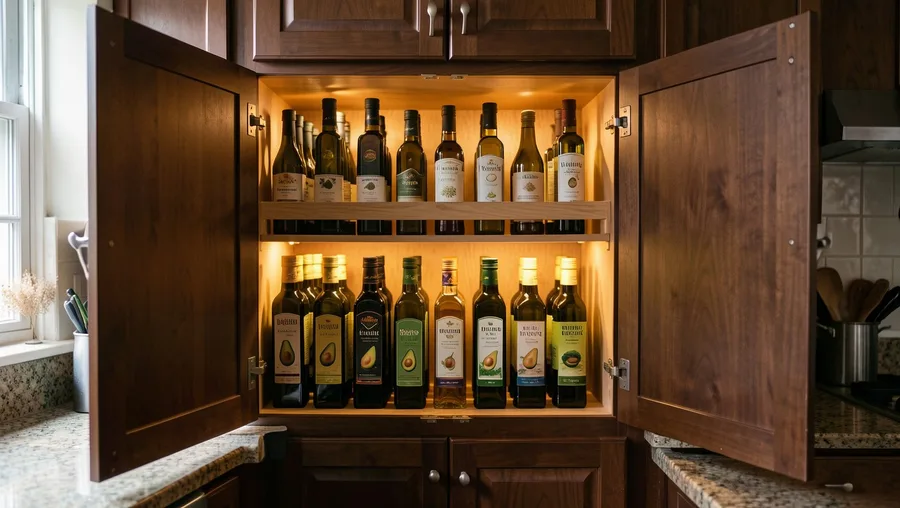
Even the finest extra virgin olive oil turns rancid if stored improperly.
Oxygen, light, and ambient heat are the primary triggers for lipid degradation. Storing your cooking oils right beside your warm gas range accelerates oxidation, ruining delicate flavors and breaking down protective antioxidants within weeks.
Follow three simple rules to keep your kitchen oils fresh.
Always purchase oils packaged in dark green glass bottles, metal tins, or opaque containers. Store them inside a cool, dark kitchen cabinet well away from the stove, oven, or sunny windows. Finally, buy sizes you can finish within three months of opening.
Frequently Asked Questions
Can I cook with Extra Virgin Olive Oil, or does heat make it toxic?
Yes, EVOO is completely safe for normal home cooking up to ~375–400°F. Its dense polyphenol antioxidant content shields its monounsaturated fats from breaking down into harmful compounds.
Is Coconut Oil recommended by preventive cardiologists?
Coconut oil sits in a nuanced middle ground. While highly stable under heat due to its saturated fat content, physicians suggest using it in moderation because it raises LDL cholesterol more than monounsaturated options like avocado or olive oil.
What does 'High-Oleic' mean on an oil bottle label?
High-Oleic indicates that the source seed was bred to contain predominantly heat-stable monounsaturated fats rather than fragile polyunsaturated fats, making it far more resistant to oxidation.
How can I tell if an oil in my pantry has gone rancid?
Trust your nose and taste buds. Rancid oil loses its fresh aroma and develops a sharp smell reminiscent of crayons, wet cardboard, or stale paint, accompanied by a harsh taste.
Why are soybean and corn oils so common if they oxidize easily?
They are heavily subsidized, extremely cheap to manufacture, neutral tasting, and have high smoke points after industrial refining—making them lucrative for commercial food production.
Your 30-Second Pantry Audit
Take a quick walk over to your kitchen cabinets right now.
Toss out clear plastic bottles of refined soybean, corn, or generic vegetable oil that have been sitting near your warm stovetop. Replace them with dark glass bottles of cold-pressed extra virgin olive oil for daily meals and avocado oil for high-heat searing.
That simple swap removes oxidized fats from your daily diet and protects your health every time you light the burner.

Meet Edward Green, the founder of GolfingGoal and a seasoned expert in golf. With years of experience on the course and a passion for the sport, Edward has a wealth of knowledge to share. As our Lead Writer, he contributes articles, tutorials, and resources to help readers to improve their skills and reach their full potential on the golf course. Join Our Team!