
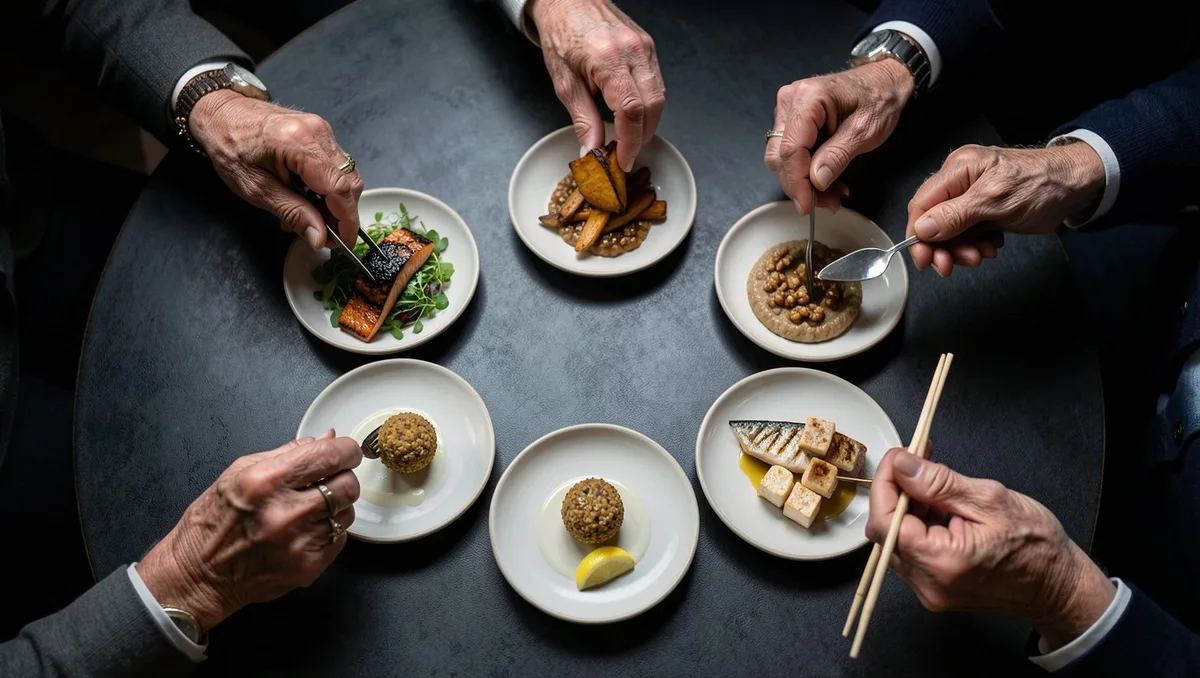
You finish a lovely dinner out, but three hours later your hands feel swollen, your stomach feels like a lead weight, and sleep simply will not come.
It is not imagination or bad luck. Restaurant kitchens routinely load dishes with hidden sodium bombs, refined seed oils, and sneaky sugars to maximize flavor, which hits very differently once your metabolic baseline shifts after 50.
You do not need to sentence yourself to plain steamed broccoli and dry chicken breasts every time you step into a bistro.
We interviewed five specialized dietitians to reveal exactly what they order when they go out—and how to align every menu with your body's changing physiology without sacrificing the pure joy of dining.
Why Restaurant Meals Hit Differently After 50
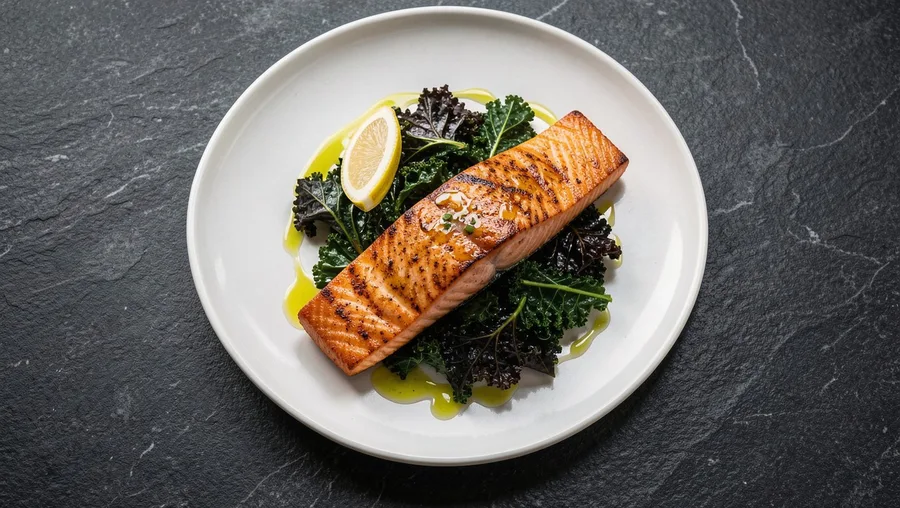
Your body handles a 1,200-calorie restaurant plate very differently at 55 than it did at 25.
Aging accelerates sarcopenia—the natural loss of muscle mass—which gradually dials down your daily resting metabolic rate. At the exact same time, naturally declining stomach acid makes digesting dense, high-fat dining hall sauces a far slower, heavier process.
The real culprit hiding in commercial kitchens is sodium density.
A standard entrée easily packs 1,500 to 2,000 milligrams of sodium in a single sitting, triggering fluid retention and overnight blood pressure spikes. Add refined carbohydrate sides that spike postprandial insulin, and you have a perfect recipe for brain fog and disrupted sleep.
Plate Comparison: Standard vs. Post-50 Optimized
Standard Commercial Order
- Fried or heavily breaded protein options
- Refined starch sides like french fries or buttered white rice
- Pan sauces loaded with butter, heavy cream, and sodium
- Sugary glazed marinades and commercial salad dressings
Post-50 Dietitian-Approved Order
- Grilled, baked, or poached lean complete proteins (35g+)
- Fibrous roasted greens, dark leafy salads, or ancient grains
- Emulsified olive oil, fresh citrus, and herb-based dressings
- Dry rubs and garlic-infused seasonings instead of thick glazes
The Post-50 Menu Priority Pyramid
Order your plate from foundational necessities to accents
The Cardiovascular Specialist: Italian Night Blueprint
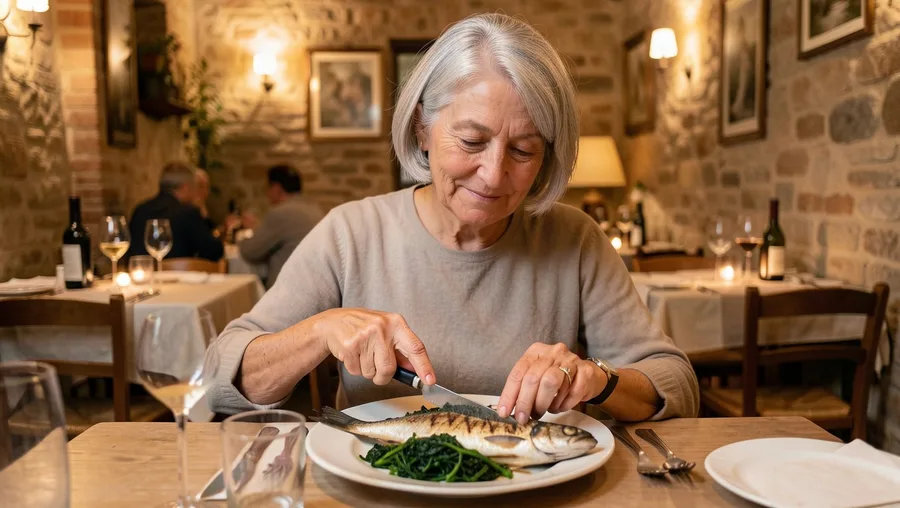
Italian dining usually means an avalanche of refined wheat and rich heavy cream.
A preventive cardiology dietitian bypasses the creamy fettuccine entirely, building the meal around wild sea bass or salmon served over a generous bed of sautéed spinach, garlic, and capers. She requests a double portion of vegetables in place of the standard pasta side dish.
Your vascular elasticity declines as arterial walls naturally stiffen over the decades.
Omega-3 fatty acids in wild seafood directly combat systemic vascular inflammation, while the high potassium content in cooked spinach balances out kitchen sodium exposure. Always ask for dressing and sauces on the side—a light drizzle of extra virgin olive oil and fresh lemon juice delivers polyphenol benefits without hidden sodium.
💡 PRO TIP
The Italian Sauce Swap
Request your fish or lean meat piccata-style with extra capers and lemon, but explicitly ask the kitchen to hold the butter emulsifier. You keep the bright flavor profile while cutting out 300 calories of saturated fat.
The Metabolic Expert: Steakhouse Navigation
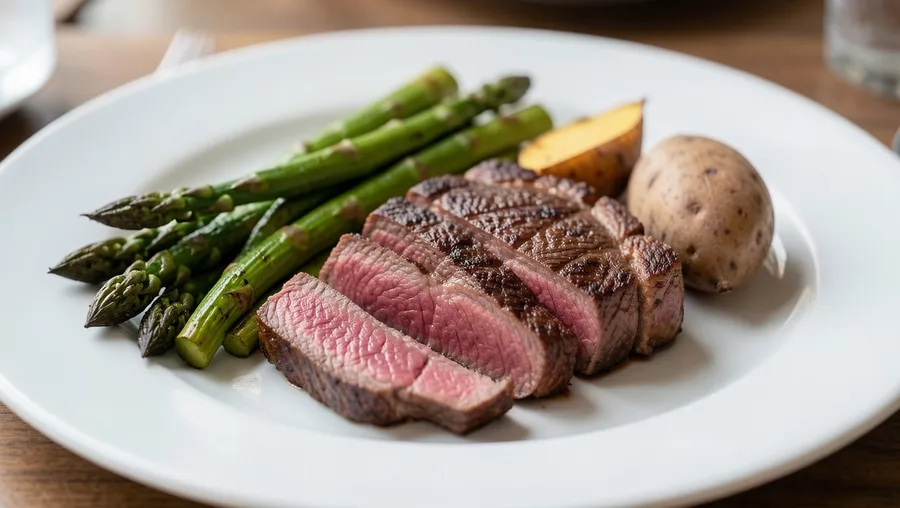
Steakhouses are surprisingly easy to navigate once you know how to order around the hidden butter.
An endocrinology-focused dietitian skips the prime rib and selects a 6-ounce sirloin or filet mignon, paired with a side of roasted asparagus and half a plain baked sweet potato.
Sarcopenia demands a higher threshold of leucine per meal to trigger muscle repair after 50.
A lean beef cut provides dense, complete protein without the massive saturated fat load of heavily marbled ribeyes. Ask for your steak cooked dry-rubbed rather than basted in compound butter, and politely decline the table's bread basket to avoid rapid postprandial glycemic spikes.
The Microbiome Specialist: Mexican and Latin Dining
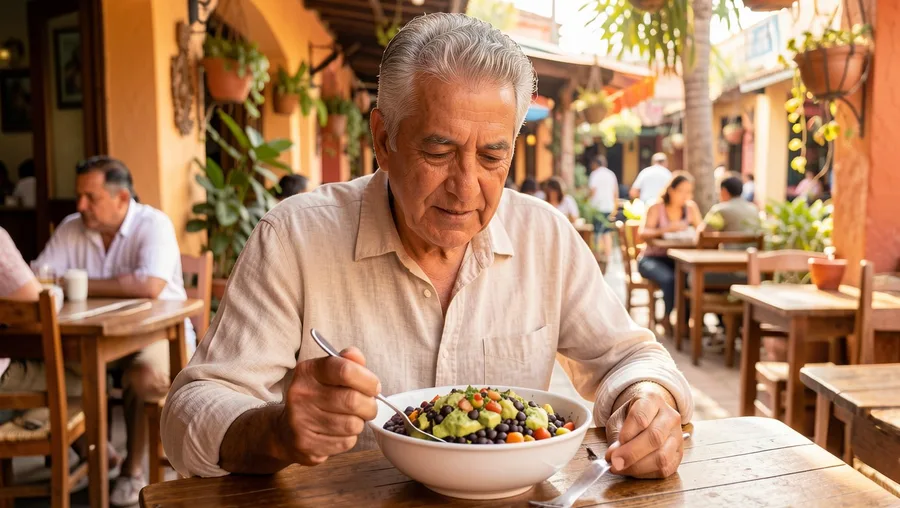
Commercial Mexican food can be a gut-health goldmine if you dismantle the heavy cheese tortilla layer.
A GI specialist orders a deconstructed bowl: a double scoop of black or pinto beans, grilled fajita chicken, roasted peppers, onions, fresh guacamole, and fresh pico de gallo.
Gut motility slows down noticeably with age.
Black beans supply crucial soluble fiber that feeds beneficial short-chain fatty acid producers in your colon, supporting the mucosal barrier. Guacamole provides monounsaturated fats that naturally slow gastric emptying, keeping you comfortably full without causing acid reflux or heavy bloating.
Latin Bowl — Microbiome Spec Sheet
🫘 Fiber Base
12g soluble fiber from black beans
🥑 Fat Source
Monounsaturated fats via guacamole
🌶️ Prebiotics
Sautéed onions, peppers, and garlic
🚫 Skip
Sour cream, queso dip, deep-fried shells
Gut Impact
Soluble fiber fuels short-chain fatty acids, reducing gut lining permeability after 50.
The Bone Density Expert: Sushi & Asian Fusion
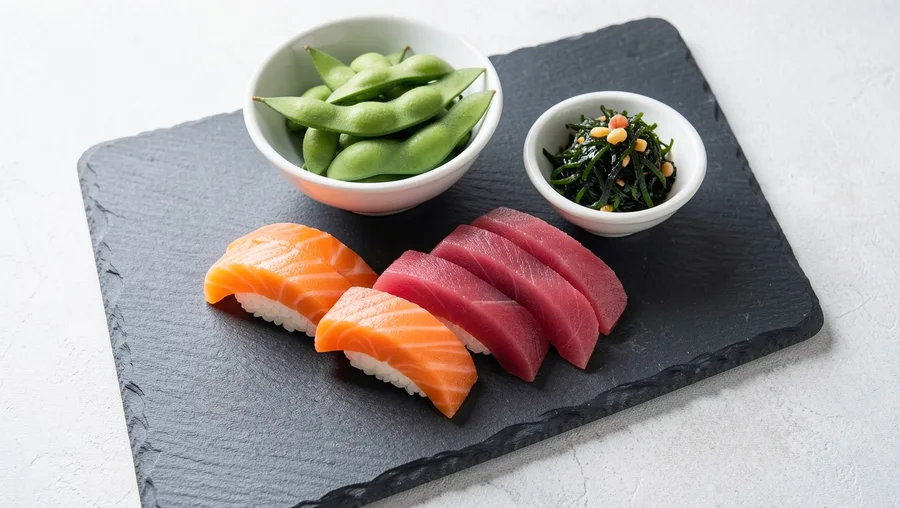
Sushi menus offer incredible micronutrient density, but standard soy sauce is a major sodium trap.
A bone health dietitian targets a sashimi platter featuring raw salmon, tuna, and mackerel, paired with steamed edamame and a side wakame seaweed salad.
Bone mineral density drops significantly after menopause and midlife and requires steady micronutrient intake.
Fatty fish delivers essential Vitamin D and omega-3s required for calcium absorption and bone remodeling, while seaweed supplies crucial trace minerals like iodine and magnesium. Swap standard soy sauce for coconut aminos or dilute low-sodium soy sauce with warm green tea right at the table.
Asian Fusion Dining Myths
The Longevity Specialist: American Bistro Staples
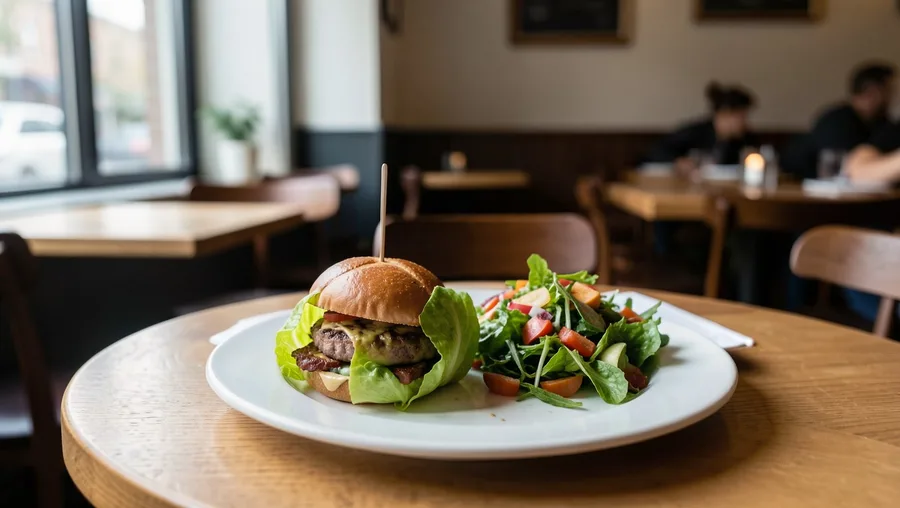
Neighborhood bistros can easily derail health goals with oversized burgers and heavy fried sides.
A longevity dietitian orders a turkey or grass-fed beef burger served protein-style wrapped in large butter lettuce leaves, paired with a simple side garden salad tossed in oil and vinegar.
Refined flour buns act like pure sugar in your bloodstream, triggering evening fatigue.
Removing the commercial bun eliminates fast-acting carbohydrates that disrupt postprandial blood glucose and trigger midnight acid reflux. Opt for sparkling water with a fresh lime wedge instead of wine—alcohol severely disrupts deep REM sleep architecture, which is already fragile after 50.
The Bistro Ordering Protocol
The Universal Consensus: What All 5 Dietitians Agree On
Despite their different specialties, every single registered dietitian follows the exact same baseline rules when dining out.
They all anchor their order around a minimum of 30 grams of clean protein, paired explicitly with at least one whole-food fiber source to buffer digestion. None of them view restaurant meals as an all-or-nothing cheat occasion.
Consistency always trumps perfection.
By controlling sauce placement, securing high-quality protein, and limiting alcohol to a single glass paired with water, you preserve your metabolic health while enjoying every bit of the social atmosphere.
🍽️ The Post-50 Meal Execution Flow
Pre-Drink Water
Drink a full glass of water upon sitting down to ensure hydrated digestion.
Anchor Protein
Select your 30g+ complete lean protein before looking at carb sides.
Modify Veggies
Swap starches for double steamed or roasted fibrous vegetables.
Side Sauces
Request all dressings, glazes, and butter on the side.
Box Half Early
Ask for a box immediately if portion sizes exceed your physiological needs.
The Self-Check Ordering Matrix
Before handing your menu back to the server, run this quick three-point audit in your head.
Is there a clear 30-gram protein anchor sitting in the center of the plate? Is there a visible plant-based fiber source present, like greens, beans, or roasted vegetables?
Did you explicitly specify dry preparation or sauces served on the side?
If you can answer yes to all three questions, your meal is fully optimized for your body's post-50 physiology.
The Post-50 Weekly Dining Plan
Frequently Asked Questions
How do I handle high restaurant sodium if I have high blood pressure?
Explicitly request that the kitchen add no extra salt during cooking. Rely on table-side lemon wedges, vinegar, black pepper, and fresh herbs to add vibrant flavor without spiking your blood pressure.
What is the best strategy for enjoying dessert after 50?
Instead of ordering a heavy individual pastry, share a fruit-based dessert or a small dish of dark chocolate with the table. This satisfies sweet cravings while keeping refined sugar and saturated fat minimal.
Is it rude to ask for half my meal to be boxed before serving?
Not at all. Kitchens and servers do this regularly. Packing away half the meal immediately prevents overeating oversized restaurant portions and gives you a balanced lunch for the following day.
How should I handle salad dressings at restaurants?
Always request oil-and-vinegar or creamy dressings on the side. Dip the tines of your fork into the dressing before taking a bite of salad to control the total amount consumed easily.
Taking Control of the Table
Dining out after 50 is not about rigid sacrifice or sitting silently while everyone else enjoys their food.
By making small, strategic adjustments—anchoring your meal with clean protein, doubling up on high-fiber greens, and taking control of sauces—you honor your evolving body while savoring great food.
Pick just one dietitian strategy from this list to test out on your very next night out, and feel the difference in your energy, digestion, and sleep.

Meet Edward Green, the founder of GolfingGoal and a seasoned expert in golf. With years of experience on the course and a passion for the sport, Edward has a wealth of knowledge to share. As our Lead Writer, he contributes articles, tutorials, and resources to help readers to improve their skills and reach their full potential on the golf course. Join Our Team!