
You step into the gym with every intention of protecting your health, head straight for the safety of fixed exercise equipment, and leave an hour later with a dull ache in your lower back or knees.
It feels like an impossible betrayal.
After 50, your joint cartilage thins and spinal discs lose hydration, meaning rigid machine pathways that lock your body into fixed arcs often produce high shear stress rather than safe strength.
Trading those restrictive fixed tracks for standing cable work and functional loads will instantly safeguard your joints while building real-world stability.
Why the Equipment You Used at 30 Fails You Today
Your body changed its biomechanical rules while you were not looking.
In your 30s, thick articular cartilage and hydrated intervertebral discs effortlessly absorbed the awkward shear forces created by rigid gym apparatuses.
By age 50, lower synovial fluid production turns those subtle mechanical mismatches into direct joint friction, forcing your connective tissue to absorb stress that muscle should be handling.
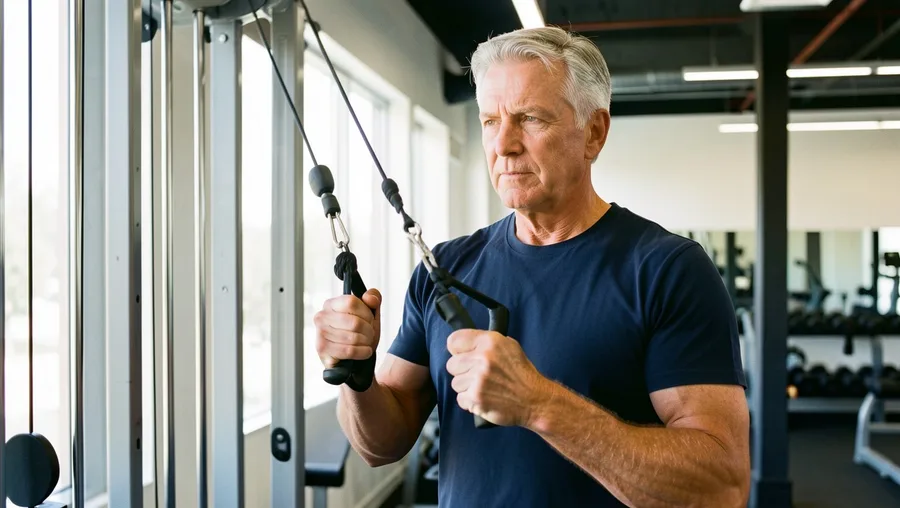
Fixed-path equipment also performs all balancing work for you.
When the machine stabilizes the weight, your primary movers fire while your rotator cuff, deep core, and gluteus medius quietly turn off.
Those dormant stabilizers leave you vulnerable to sudden twists, stumbles, and strains outside the gym.
⚠️ COMMON MISTAKE
The Hidden Cost of Machine Balance
When an exercise apparatus balances a heavy weight along a steel track, your deep stabilizer muscles go completely dormant. Over 50, weak stabilizers cause far more everyday joint injuries than weak primary muscles.
Post-50 Joint Stress Index
Relative mechanical shear stress on aging spinal discs and cartilage
- Standing Cable Pallof Press: Minimal lumbar load; active core engagement.
- Front Lat Pulldown: Natural shoulder path; low neck strain.
- Seated Leg Press: High risk of pelvic tuck and lower disc rounding.
- Seated Torso Rotation: Severe rotational shear on lumbar vertebrae.
1. Seated Torso Rotation Machine (The Ab Twister)
This machine locks your pelvis into a fixed vinyl seat while forcing your upper body to twist under heavy stack resistance.
Your lumbar spine is anatomically designed for stability, permitting only 5 to 10 degrees of natural rotation across its entire structure.
True torso rotation is meant to come almost entirely from your thoracic spine and hips.
Cranking weight across a locked lower back places immense, razor-thin rotational shear directly onto aging lumbar discs.
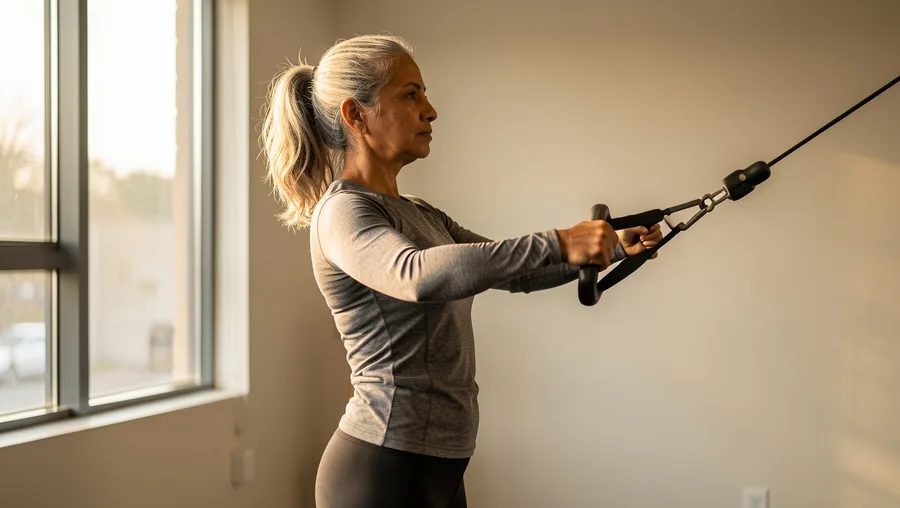
Swap this out for a standing cable Pallof press.
By pressing a cable handle straight out from your sternum and resisting its side pull, you build deep abdominal wall strength without grinding your vertebrae.
Rotational Core Comparison
Seated Torso Rotation
- Locks pelvis while twisting lower spine
- Generates high shear force on lumbar discs
- Minimal real-world athletic carryover
- Ignores dynamic hip engagement
Standing Cable Pallof Press
- Teaches core to resist unwanted rotation
- Keeps lower spine in neutral posture
- Recruits hips and glutes standing up
- Protects spinal discs during movement
2. Seated Leg Extension Machine
Sitting down and kicking a weighted lever upward feels like an isolated quadriceps workout.
The biomechanical cost is devastating to mature knees.
The weighted pad rests near your ankles, operating as a long lever arm that concentrates maximum shear force directly behind your patella at full lockout.
Without hamstrings co-activating to pull the knee joint backward, patellofemoral cartilage gets compressed into the femoral groove.
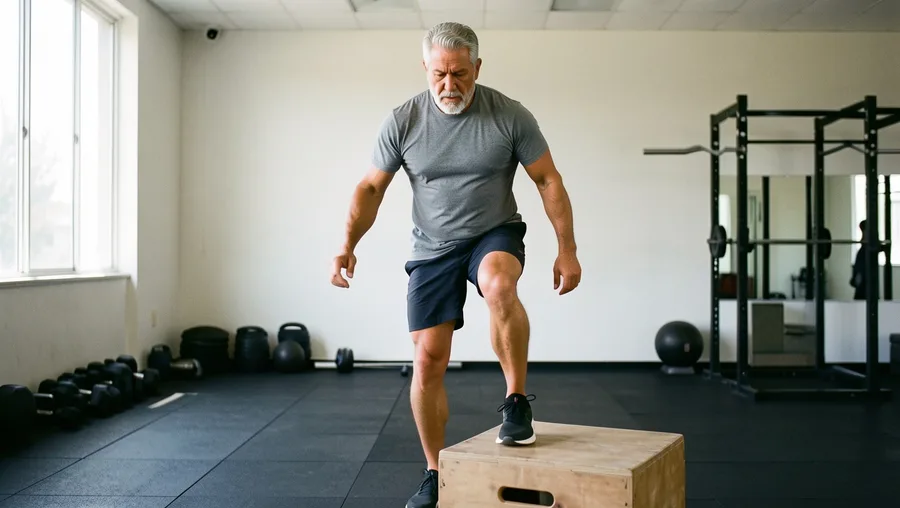
Step-ups onto a low box deliver far superior results.
Stepping upward forces your glutes, quadriceps, and hamstrings to fire together, creating natural joint compression rather than grinding shear force.
Knee Health — At a Glance
🦵 Target Joint
Patellofemoral tracking
⏱️ Frequency
2–3× weekly
🔄 Best Swap
10-inch Box Step-Ups
⚠️ Avoid If
Active meniscus tear
Biomechanical Reality
Closed-chain movements engage hamstrings to automatically stabilize the knee joint.
3. Behind-the-Neck Lat Pulldown
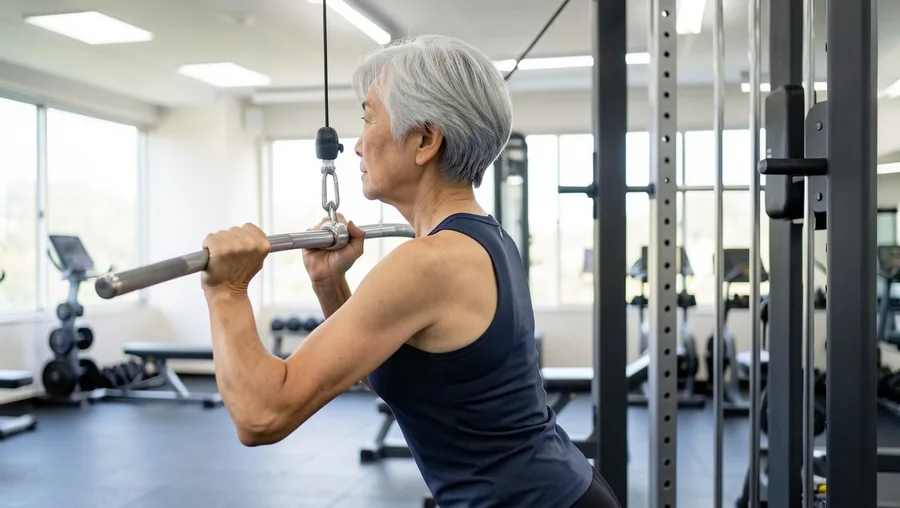
Yanking a steel bar down behind your neck forces your humerus into extreme external rotation and horizontal abduction.
Your rotator cuff is squeezed against the acromion process.
To clear room for the bar, you must jut your head forward, loading delicate cervical vertebrae while shoulder tendons undergo impingement.
Physical therapists consistently highlight this move as a top driver of subacromial bursitis in adults over 50.
Stick to front lat pulldowns.
Leaning back 15 degrees and pulling the bar directly to your upper chest keeps your shoulders safely within the scapular plane.
💡 PRO TIP
The Scapular Plane Rule
Always keep pulling and pressing movements angled roughly 30 degrees forward of your direct sides. Training in this natural scapular plane prevents rotator cuff impingement.
4. Heavy Incline Seated Leg Press
Pushing hundreds of pounds off an inclined sled gives a false sense of security.
The danger strikes at the bottom.
As your knees pull toward your chest, your pelvis tilts backward off the vinyl seat, forcing your lumbar spine into deep flexion under massive weight.
That pelvic tuck—often called butt wink—squeezes intervertebral discs like water balloons, pushing disc material outward toward sciatic nerves.
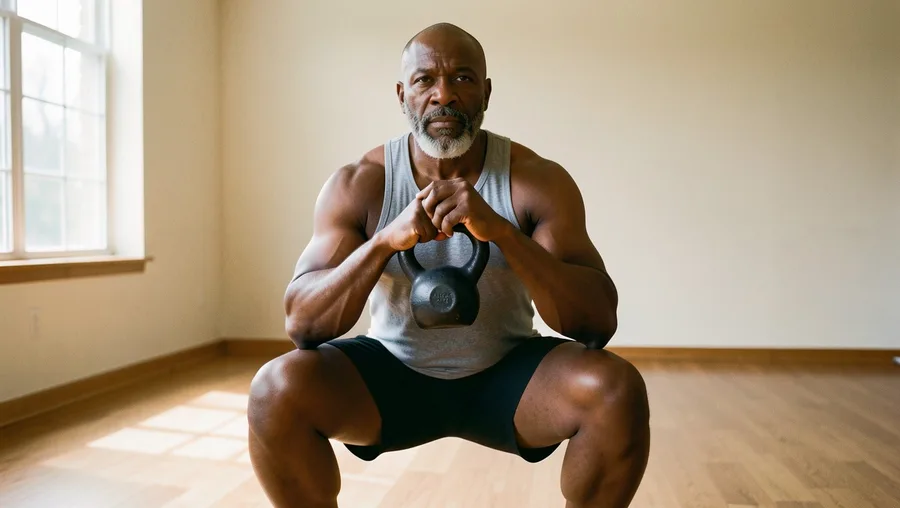
Replace heavy leg presses with goblet squats using a light dumbbell or kettlebell.
Standing squats let your pelvis tilt naturally, keeping your lumbar spine neutral while building balance.
Best Swaps for Lower Body Strength
5. Seated Hip Abductor and Adductor Machine
Sitting down to push padded levers apart isolates outer hip muscles while taking your core completely out of the equation.
Your hip abductors are designed to stabilize your pelvis while standing on one leg.
Forcing those small muscles to move heavy weight from a fixed seated position frequently causes tensor fasciae latae tightness and IT band irritation.
It trains hip muscles in an environment that never happens during walking or stairs.
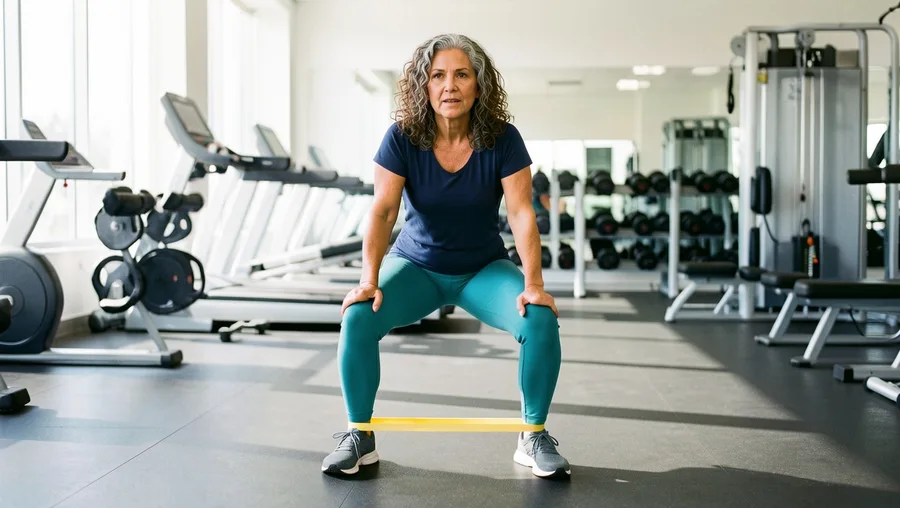
Try standing loop band walks instead.
Placing a light resistance band around your ankles and stepping laterally forces your abductors to stabilize your hips dynamically against gravity.
5-Day Joint-Safe Machine Transition Plan
Safe Gym Equipment You Should Keep Using
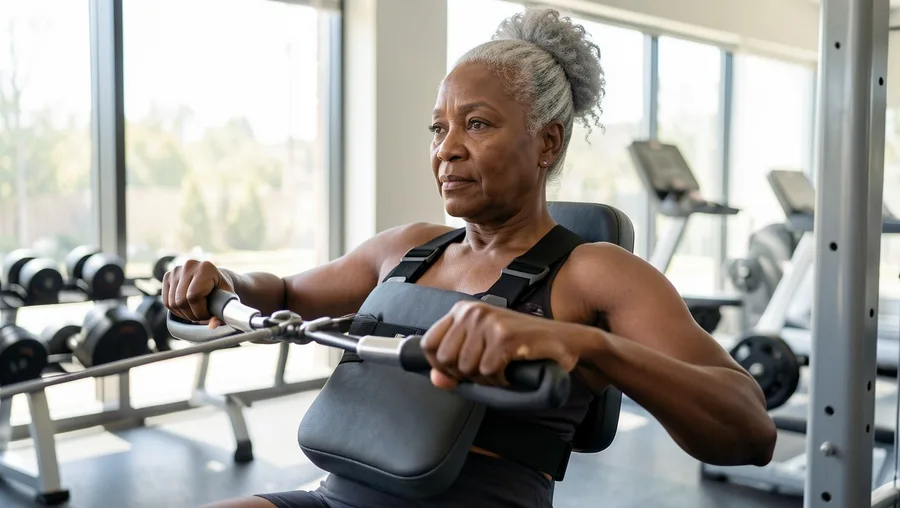
Abandoning bad machines does not mean giving up gym equipment entirely.
Cable towers are exceptional tools because they offer constant smooth tension without locking your body into fixed trajectories.
Chest-supported row apparatuses protect your lumbar spine while strengthening postural muscles between your shoulder blades.
Ergometer rowers and recumbent bikes provide great cardiovascular conditioning with zero joint impact.
Look for equipment that lets your joints find their natural path rather than forcing your body to conform to steel tracks.
The Post-50 Strength Hierarchy
Foundational movement patterns prioritized by physical therapists
🔍 4 Steps to Audit Any Gym Machine
Check Joint Path
Determine if the apparatus forces your joint into a rigid, non-negotiable track.
Monitor Spinal Alignment
Ensure your lower back is not forced to round or twist under weight.
Assess Stabilizer Firing
Confirm that your core or standing leg is actively engaged during the rep.
Verify Instant Exit
Make sure you can safely abandon the weight at any point without joint strain.
If an exercise machine balances the weight for you, it also takes away the exact stabilizer activation your joints need to stay healthy as you age.
— Consensus in Sports Medicine & Aging
Upgrade Your Next Gym Visit
Smarter workouts after 50 are never about lifting less effort—they are about picking movements that respect how your body actually moves.
On your next gym day, choose just one machine from this list and swap it for its cable or bodyweight alternative.
Focus on smooth motion over weight stack size, and let your joint health dictate your progress.

Meet Edward Green, the founder of GolfingGoal and a seasoned expert in golf. With years of experience on the course and a passion for the sport, Edward has a wealth of knowledge to share. As our Lead Writer, he contributes articles, tutorials, and resources to help readers to improve their skills and reach their full potential on the golf course. Join Our Team!