

You check the digital clock on your nightstand and your stomach drops. It reads 3:14 AM, and despite feeling exhausted when your head hit the pillow at ten, your mind is entirely awake.
This waking pattern is frustratingly common after 50. The real issue is not personal failure or insomnia, but a profound shift in how your biology handles rest over the decades.
Why the Over-50 Brain Rewires Sleep Architecture

Your master biological clock weakens over time. This flattening of your circadian rhythm reduces the sharp contrast between daytime alertness and nighttime melatonin production.
We see a natural reduction in slow-wave deep sleep and REM sleep. These stages are replaced by lighter Stage 1 and Stage 2 sleep.
Nighttime awakenings are normal evolutionary patterns. The inability to fall back asleep is what ruins your next day.
Sleep Habit Traffic Light
- ☀️ Morning outdoor light within 60 minutes of waking — Anchors your circadian clock effectively.
- 🍵 Afternoon coffee at 3:00 PM — Caffeine clearance slows down significantly after 50.
- 🍷 Glass of wine right before bed — Fragments your sleep severely in the second half of the night.
Fix #1 — Resetting the Melatonin Curve with Morning Lux

Morning sunlight exposure triggers a necessary cortisol pulse. This acts as your biological countdown timer for natural melatonin production sixteen hours later.
Step outside for ten to fifteen minutes within an hour of waking up. Do this even on overcast mornings.
Indoor lighting often falls under 500 lux. Natural daylight measures in the tens of thousands, which is what your circadian clock requires.
⚠️ COMMON MISTAKE
Skipping Morning Light Exposure
Relying purely on indoor kitchen lights in the morning keeps your circadian clock sluggish. You need real outdoor brightness to set your sleep timer.
Fix #2 — Managing the Evening Core Temperature Drop

Your core body temperature naturally drops to initiate deep sleep. Vascular changes in aging can delay this crucial cooling process.
Take a warm bath or shower ninety minutes before bedtime. As your blood vessels dilate to release heat, your core temperature drops rapidly afterward.
Keep your bedroom ambient temperature between sixty and sixty-seven degrees. This cool environment supports your thermal drop all night.
Nocturnal Disruption Spectrum
Ranking common sleep disruptors by their impact on nighttime awakenings after 50.
- Afternoon Caffeine: Extends sleep latency and reduces overall rest quality.
- Evening Alcohol: Causes rebound wakefulness as liver enzymes metabolize it.
- Late-Night Screen Time: Suppresses melatonin production and spikes cognitive alertness.
Fix #3 — Rethinking Late-Day Fluid and Digestion Timelines

Frequent nighttime bathroom trips become a primary driver of sleep fragmentation after 50. Prostate shifts and pelvic floor changes amplify this issue.
Taper your fluid intake two hours before bed. Shift eighty percent of your daily hydration into your morning and afternoon hours.
Finish heavy meals at least three hours before sleep. This prevents low-grade acid reflux and elevated heart rates from wrecking your rest.
Fluid Management Rules
Fix #4 — Shifting Alcohol and Caffeine Pharmacokinetics

Aging livers and kidneys process substances much slower. This doubles the half-life of caffeine in your bloodstream.
Alcohol acts as a sedative initially, but it fragments sleep in the second half of the night. As your liver processes it, it turns into stimulating aldehydes.
Establish a hard caffeine cutoff at noon. Treat alcohol as an occasional early-evening treat rather than a sleep aid.
Sleep Recovery Metrics
Key statistics on circadian rhythm adjustments in adults over 50.
Fix #5 — The 20-Minute Reset Rule for 3 AM Awakenings

Lying in bed awake for over twenty minutes trains your brain to associate your mattress with frustration instead of sleep.
If you stay restless for twenty minutes, leave your bedroom. Move to a dim-lit space for low-stimulation reading until sleep pressure returns.
Strictly avoid checking your phone or looking at clocks. Digital screens trigger immediate cortisol spikes and cognitive alertness.
💡 PRO TIP
The 20-Minute Bedroom Reset
Never stare at the ceiling waiting for sleep to return. Get up, read a physical book under a dim lamp, and return to bed only when your eyelids feel heavy.
Fix #6 — Calibrating Daytime Physical Reserve

Adenosine builds up in your brain throughout the day, creating the biological pressure required for deep sleep.
Sedentary routines after retirement reduce daily adenosine accumulation. This makes your nighttime sleep shallow and easily broken.
Incorporate thirty minutes of moderate daytime movement like brisk walking or resistance training at least three hours before bedtime.
🕜 Your Evening Wind-Down Timeline
4:00 PM
Finalize your daily caffeine intake and taper fluids.
6:30 PM
Eat a balanced early dinner to prevent nighttime digestion stress.
8:30 PM
Take a warm shower to trigger your core temperature drop.
10:00 PM
Head to a cool, dark bedroom for uninterrupted rest.
The Turning Point: Consistency Beats Perfection

Sleep specialists agree that your morning wake-up time matters far more than your bedtime for stabilizing your internal clock.
Expecting uninterrupted eight-hour blocks like you had in your twenties creates counterproductive performance anxiety.
A good night's sleep after 50 is measured by feeling stable and functional the next day, not by zero awakenings.
The Sleep Transformation
Old Habits vs. New Science
What Doesn't Work
- Staying in bed tossing and turning
- Drinking wine to get drowsy
- Relying on indoor lights in the morning
- Consuming caffeine past two o'clock
What Works After 50
- Getting up after twenty minutes
- Taking a warm evening shower
- Getting outdoor morning sunlight
- Tapering fluids two hours before bed
Self-Check Payoff: Which Habit Needs Your Focus First?
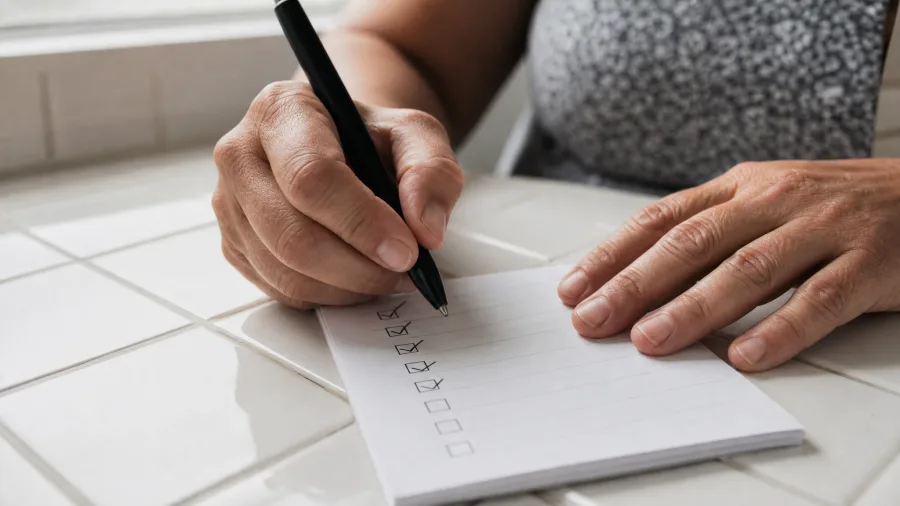
Review your nightly patterns honestly. Are you waking up to use the bathroom, staring at the ceiling anxiously, or feeling wired from late caffeine?
Pick one single variable to adjust for the next fourteen days rather than overhauling your entire routine at once.
Circadian biology takes one to two weeks to adapt to structural changes. Give your body time to respond.
Frequently Asked Questions
Is it normal to wake up two to three times a night after turning 50?
Yes, age-related flattening of circadian rhythms and lighter sleep architecture make brief awakenings entirely normal. The key factor is how quickly you return to sleep.
Should I take over-the-counter sleep aids or melatonin every night?
Sleep specialists generally advise against long-term nightly reliance on OTC antihistamines due to cognitive side effects. Low-dose melatonin is best reserved for occasional circadian shifts.
How long does it take for sleep hygiene changes to work in older adults?
Because circadian clocks adapt more slowly with age, consistency typically yields noticeable improvements within ten to fourteen days of steady application.
Does afternoon napping ruin nighttime sleep after 50?
Short power naps under twenty minutes before 2:00 PM are generally safe, but longer or later naps deplete homeostatic sleep pressure and worsen nighttime fragmentation.
Why do I feel wide awake at midnight even when my body feels exhausted?
This mismatch is often caused by a delayed circadian temperature drop or lingering cortisol from evening blue-light exposure and late-day stress.
Rewriting Your Nights: What to Do Tonight
Your sleep system is not broken after 50. It has simply shifted its rules, and working with its new biology restores peaceful rest.
Start with morning light tomorrow and a cool room tonight. Small adjustments compound quickly into steady, reliable sleep.

Meet Edward Green, the founder of GolfingGoal and a seasoned expert in golf. With years of experience on the course and a passion for the sport, Edward has a wealth of knowledge to share. As our Lead Writer, he contributes articles, tutorials, and resources to help readers to improve their skills and reach their full potential on the golf course. Join Our Team!