

You eat fresh spinach, buy wild salmon, and pass on refined sugar, yet your morning walk feels heavier than it did three years ago.
Your recent lab work shows dipping iron or low B12, and your doctor casually mentions that digestion slows down as we age.
Eating nutritious food is only half the battle. After 60, your GI tract changes how effectively it extracts those nutrients from every single bite.
The Hidden Digestive Shift That Happens After 60

As the body ages, gastric parietal cells gradually reduce their output of hydrochloric acid, a condition known as hypochlorhydria.
Without sufficient stomach acid, your digestive system struggles to separate bound vitamins like B12 from protein foods like beef and eggs.
Simultaneously, the microscopic villi lining your small intestine flatten slightly, reducing the surface area available to pull in minerals like calcium and magnesium.
Understanding this biological reality allows you to adapt your daily meals so your body actually uses what you eat.
Age-Related Gastric Acid Decline
Impact of reduced stomach acid on core nutrient absorption rates
- Age 30: Optimal Production: Full cleavage of protein-bound B12 and high mineral solubility.
- Age 50: Mild Reduction: Slight drop in intrinsic factor; iron absorption slows.
- Age 60+: Hypochlorhydria Onset: Significant drop in stomach acid; bound vitamins pass unabsorbed.
Fix 1: Wake Up Gastric Acid with Bitters and Timing

To offset lower stomach acid, take 10 to 15 drops of Swedish bitters or one teaspoon of raw apple cider vinegar in four ounces of water ten minutes before big meals.
Bitters trigger taste receptors on your tongue that signal your vagus nerve to release digestive juices before the first bite hits your stomach.
Stop drinking large glasses of iced water during your meals. Gulping 16 ounces of cold water dilutes the limited gastric acid you produce, stalling protein breakdown.
💡 PRO TIP
The Mealtime Liquid Limit
Cap liquid intake to no more than four ounces during meals. Sip room-temperature water or warm ginger tea to prevent diluting essential gastric juices.
Fix 2: Master the Science of Nutrient Synergy
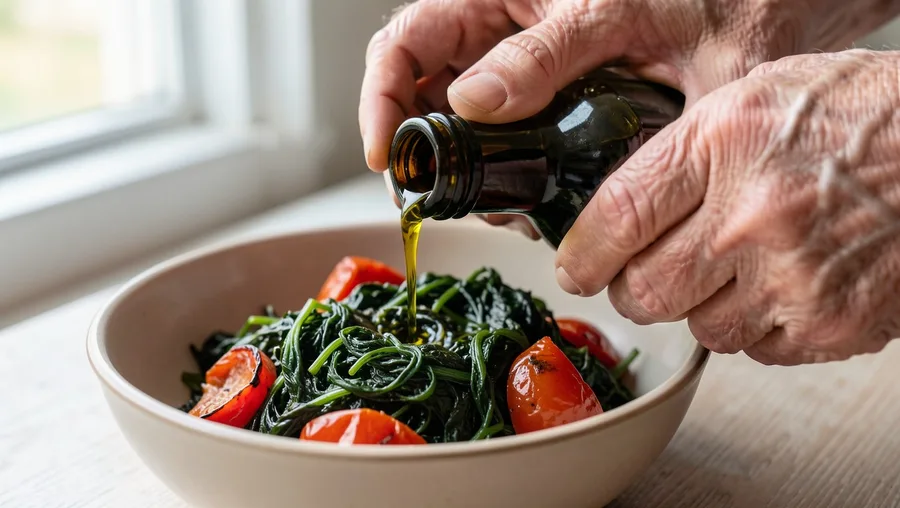
Certain vitamins depend on partner nutrients to cross your intestinal wall effectively.
Fat-soluble vitamins—A, D, E, and K—require dietary fat to stimulate bile production. Never eat steamed vegetables or kale salads completely dry.
Drizzle two teaspoons of extra virgin olive oil over cooked greens, or pair your plant-based iron foods like lentils with Vitamin C sources like sliced bell peppers.
| Isolated Food (Lower Absorption) | Optimal Synergy Pair | Target Nutrient Unlocked |
|---|---|---|
| Dry Steamed Spinach | Spinach + Lemon Juice + Olive Oil | Non-Heme Iron & Vitamin K |
| Calcium Supplement Alone | Calcium + Vitamin D3 & K2 | Bone Calcium Delivery |
| Raw Carrot Sticks | Carrots + Guacamole / Avocado | Beta-Carotene (Vitamin A) |
| Turmeric Powder | Turmeric + Black Pepper + Coconut Oil | Curcumin Solubility |
The Fat-Soluble Vitamin Pathway
Fix 3: Feed the Aging Gut Microbiome Prebiotic Fibers

Colonic populations of beneficial Bifidobacteria naturally decline after age 60, directly impacting mineral solubility.
Fermentable fibers produce short-chain fatty acids like butyrate, which lower colonic pH and allow magnesium and calcium to dissolve into the bloodstream.
Skip harsh wheat bran supplements that irritate delicate intestinal linings. Focus instead on cooked, cooled potatoes, stewed apples, and leeks.
⚠️ COMMON MISTAKE
Avoid High-Fiber Gulping
Introducing massive doses of raw bran powder too quickly can cause severe bloating and bind to minerals before they absorb. Build prebiotic intake gradually with cooked foods.
Gut Microbiome Care — At a Glance
🍲 Best Foods
Stewed apples, leeks, chicory, kefir
⏱️ Timing
Include one prebiotic with breakfast
⚙️ Mechanism
Creates SCFAs to lower colonic pH
🚫 Skip
Coarse raw wheat bran powders
Key Insight
A lower colonic pH keeps essential minerals dissolved so intestinal cells can absorb them.
Fix 4: Switch to Low-Acid-Friendly Supplement Forms
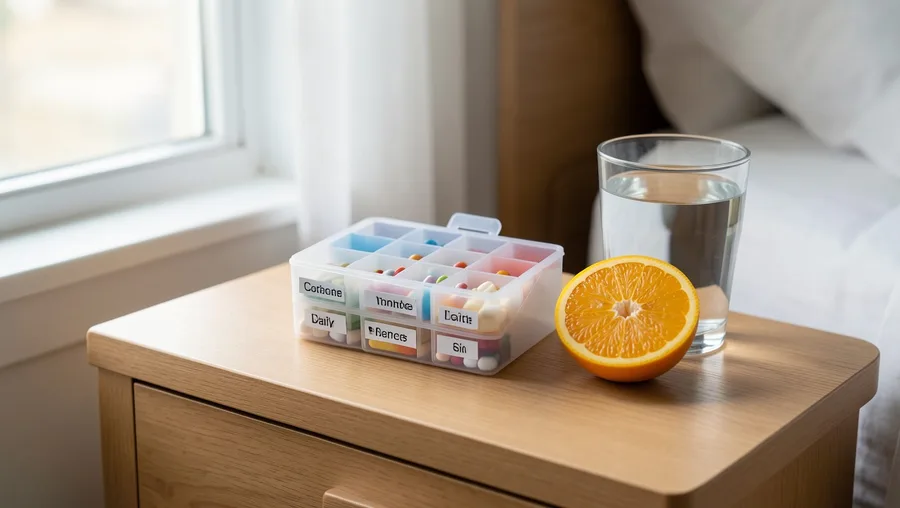
If you take calcium carbonate, you are relying heavily on robust stomach acid to dissolve the tablet.
Switch to calcium citrate, which absorbs efficiently whether stomach acid is high or low, and take it with or without food.
Replace standard B12 swallow pills with sublingual methylcobalamin drops or sprays. These dissolve under the tongue, absorbing directly through oral mucous membranes and bypassing stomach acid entirely.
Supplement Form Upgrade Budget
Fix 5: Audit Prescription Timings for Depletion Risks

Common medications prescribed over 60 frequently interfere with nutrient uptake pathways.
Long-term use of proton pump inhibitors (PPIs) blocks stomach acid production almost entirely, dramatically reducing B12, magnesium, and iron absorption.
Metformin, a standard blood sugar medication, alters intestinal motility and binds to B12 receptors in the lower bowel.
Discuss your medication schedule with a pharmacist to space mineral supplements at least two hours away from daily prescription doses.
Medication & Nutrient Management Strategy
Common Pitfalls
- Taking calcium carbonate simultaneously with PPI heartburn medication
- Gulping multivitamin pills with morning coffee or tea
- Ignoring routine B12 level checks while on Metformin therapy
- Washing down iron supplements with a large glass of milk
Smart Corrections
- Switching to calcium citrate which does not require acid to break down
- Spacing mineral supplements 2 hours apart from caffeinated drinks
- Requesting methylmalonic acid (MMA) blood tests annually
- Taking non-heme iron alongside 250mg of Vitamin C
Weekly Nutrient Optimization Routine
🌱 The Path to Restoring Digestive Efficiency
Step 1: Adjust Meal Liquids
Reduce water during meals to 4 ounces to protect natural gastric acid density.
Step 2: Add Bitters
Take 10 drops of bitters in warm water 10 minutes before your main meal.
Step 3: Pair Nutrients
Always add healthy fats to fat-soluble vitamins and Vitamin C to plant iron.
Step 4: Upgrade Supplements
Replace carbonate and oxide supplement forms with citrate and chelated glycinate options.
Step 5: Test Blood Markers
Request a complete metabolic panel and methylmalonic acid test from your primary physician.
Medical Consensus: When to Test, Not Guess

Before adding high-dose supplements, request blood tests from your primary physician to verify your baseline.
Ask specifically for Serum B12 along with Methylmalonic Acid (MMA), as MMA provides a far more accurate picture of cellular B12 status.
Check serum ferritin, Vitamin D3, and a complete metabolic panel to target exact deficiencies without risking over-supplementation.
Frequently Asked Questions
Does drinking tea or coffee with meals affect nutrient absorption?
Yes. Tannins and polyphenols in tea and coffee bind strongly to non-heme iron and zinc, reducing their absorption by up to 60%. Drink your coffee or tea at least one hour before or after eating nutrient-dense meals.
Should I take a digestive enzyme supplement with every meal?
Not necessarily. Broad-spectrum digestive enzymes help if you experience frequent upper-abdominal fullness after meals, but starting with simple bitters or diluted vinegar is often enough to stimulate your own acid production.
Is it harder to absorb protein as you age?
Yes. This is caused by lower pepsin levels in the stomach and anabolic resistance in muscle tissue. Aim for 25 to 30 grams of high-quality protein per meal rather than consuming one heavy protein dinner.
Can light exercise after eating improve nutrient absorption?
A gentle 10-minute walk after meals increases splanchnic blood flow to your digestive organs and promotes healthy peristalsis without causing indigestion.
Start With This One Shift Tomorrow
You do not need to overhaul your entire diet overnight to see real improvements in your daily energy.
Start tomorrow by reducing liquids during dinner and taking ten drops of bitters ten minutes before eating.
This simple tweak gives your stomach acid the upper hand, making every nutrient on your plate count.

Meet Edward Green, the founder of GolfingGoal and a seasoned expert in golf. With years of experience on the course and a passion for the sport, Edward has a wealth of knowledge to share. As our Lead Writer, he contributes articles, tutorials, and resources to help readers to improve their skills and reach their full potential on the golf course. Join Our Team!