

You reach for the moisturizer that has served you reliably for a decade, smooth it over your cheeks, and wake up an hour later feeling like it never even touched your face. The mirror presents a sudden, startling reality: unexpected tightness, a crepe-like texture under the eyes, and a frustrating tendency toward stubborn irritation.
This is not standard chronological aging catching up all at once. It is a profound endocrine shift that restructures the dermal matrix from the inside out, demanding an entirely new playbook for your daily routine.
The Estrogen Connection: What Happens Beneath the Surface

Estrogen receptors are distributed densely throughout human skin, influencing everything from keratinocytes to sebaceous glands. When hormonal baselines begin to crash during perimenopause, those cellular receptors lose their primary chemical messenger.
Clinical research consistently demonstrates that approximately thirty percent of dermal collagen is lost in the first five years following menopause, followed by a steady two-percent decline annually.
Your skin is literally losing its scaffolding at an accelerated rate.
Beyond structural protein loss, declining estrogen directly impairs natural hyaluronic acid production and sebum secretion. The lipid barrier thins out, allowing moisture to evaporate rapidly into the air, creating a chronic cycle of dryness and heightened reactivity that lightweight humectants alone cannot resolve.
⚠️ COMMON MISTAKE
The Over-Exfoliation Trap
Many women respond to sudden dullness by increasing physical scrubs or glycolic acid toners, inadvertently stripping an already fragile lipid barrier and triggering severe inflammation.
Adjustment 1: Shift From Surface Hydration to Barrier Architecture
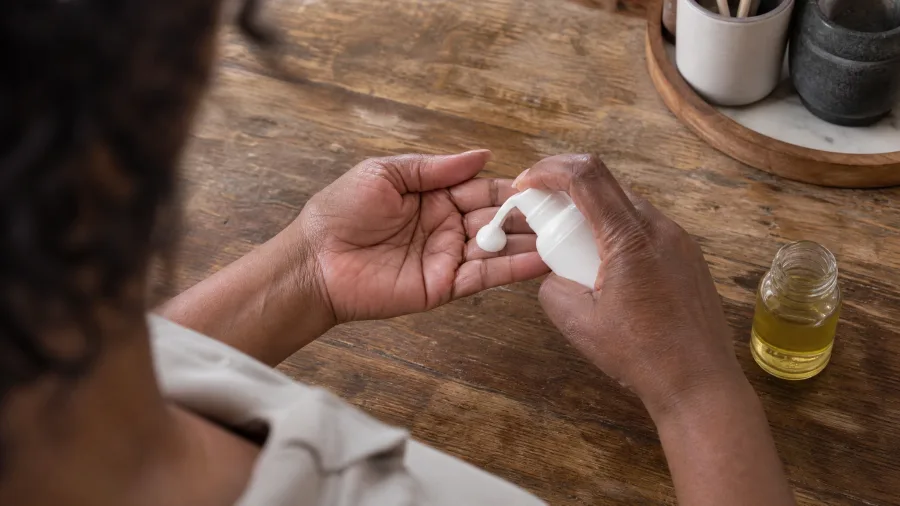
Lightweight gel moisturizers are no longer enough.
When the skin's lipid matrix thins out due to declining hormone levels, humectants like glycerin pull moisture inward but have nothing to lock it in, leaving your face feeling parched an hour later. You must pivot to biomimetic formulas loaded with ceramides, cholesterol, and essential fatty acids that physically rebuild the damaged stratum corneum.
Apply your richer creams immediately after cleansing while the skin is still damp, trapping ambient water molecules beneath a semi-occlusive layer of squalane or shea butter.
Give this foundational repair phase at least four weeks before judging whether a new cream is working.
Decoded: Essential Skin Terms for Midlife
Adjustment 2: Recalibrating Active Ingredients Like Retinoids

Retinoids remain the gold standard for stimulating collagen synthesis, but your old percentage will likely backfire on menopausal skin.
Receptor downregulation and reduced oil production mean your face cannot process high-strength prescription tretinoin the way it did at age forty. Instead of abandoning vitamin A entirely, step down to encapsulated retinol, gentle retinaldehyde, or plant-based bakuchiol alternatives that deliver renewal without flaking.
Buffer your application by mixing a pea-sized amount directly into your barrier cream, and limit use to two nights a week until your skin builds physiological tolerance.
💡 PRO TIP
The Retinol Sandwich Method
Apply a thin layer of hydrating serum, let it dry, apply your retinol, and seal it with a rich moisturizer to minimize irritation while maintaining collagen-boosting efficacy.
Adjustment 3: Upgrading Photoprotection for Vulnerable Dermal Matrices
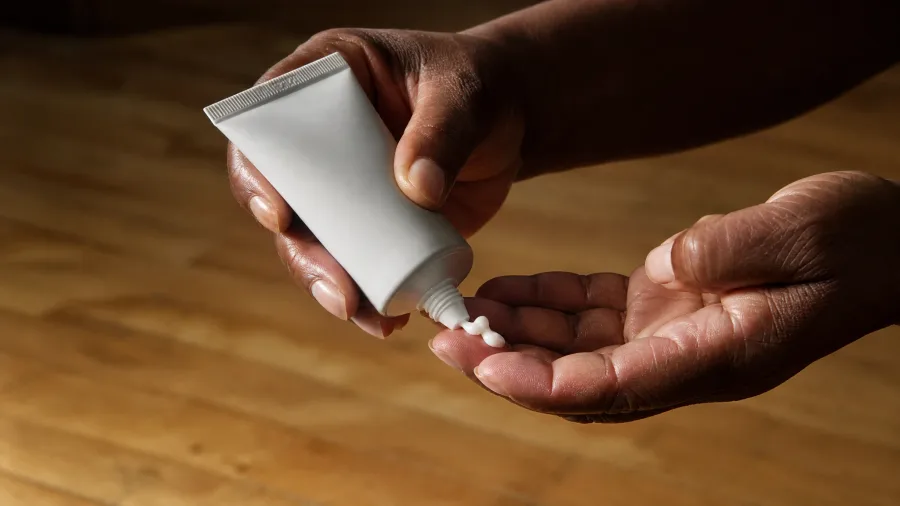
UV damage hits harder when your baseline melanin stability and epidermal thickness are compromised.
A thinning skin barrier allows ultraviolet radiation to penetrate deeper into the dermis, accelerating the breakdown of whatever fragile collagen networks remain. Chemical sunscreens that once felt weightless can suddenly cause stinging and contact dermatitis on reactive midlife skin.
Switch immediately to broad-spectrum mineral sunscreens featuring non-nano zinc oxide and titanium dioxide, which sit physically on top of the skin to deflect rays without chemical absorption.
Layer a stable antioxidant serum containing vitamin C and ferulic acid underneath your SPF every single morning to neutralize free radicals before they degrade your cellular matrix.
The Menopausal Skin Timeline
Key metrics tracking dermal shifts after forty
Adjustment 4: Systemic Support Through Nutrition and Sleep

Topical creams only address half the equation.
Hormonal fluctuations during midlife alter insulin sensitivity, making your body more susceptible to sugar-driven glycation. Advanced glycation end-products actively cross-link and stiffen collagen fibers, robbing your skin of its natural bounce. Swap refined carbohydrates for whole food sources rich in omega-3 fatty acids, such as wild-caught salmon and freshly ground flaxseeds, which supply the raw building blocks for cell membrane fluidity.
Prioritize seven to eight hours of deep sleep to support overnight microvascular repair pathways.
No serum can replace the restorative cellular recovery that occurs during deep slumber.
Best Dietary Staples
Adjustment 5: Professional Interventions Where Consensus Meets Practice

Sometimes at-home adjustments require clinical reinforcement.
When topical routines plateau, dermatologists recommend treatments designed to stimulate fibroblast activity without inducing excessive inflammatory trauma. Low-level light therapy, non-ablative fractional laser resurfacing, and specialized medical-grade infusions can kickstart sluggish cellular repair mechanisms safely.
Discuss your symptoms with a board-certified dermatologist or gynecologist regarding localized hormone therapy options if dryness and thinning become unmanageable.
A multi-pronged strategy combining clinical guidance with rigorous daily home care yields the most sustainable, glowing results.
Your Daily Midlife Skin Protocol
The Midlife Skincare Pivot
What to Leave Behind
- Harsh foaming cleansers that strip natural oils
- Daily high-strength glycolic acid toners
- Lightweight gel lotions that evaporate quickly
- Chemical sunscreens that trigger stinging
What to Embrace
- Nourishing, non-foaming milky cleansers
- Encapsulated retinoids and gentle PHAs
- Ceramide-heavy barrier repair creams
- Mineral-based zinc oxide sunscreens
📅 Your 4-Week Barrier Reset Timeline
Week 1
Strip away all harsh active acids and focus entirely on gentle cleansing and heavy ceramide moisturizing.
Week 2
Introduce an encapsulated retinoid just two nights a week, buffered heavily over your baseline repair cream.
Week 3
Upgrade your morning routine with a stable antioxidant serum and a dedicated mineral sunscreen.
Week 4
Evaluate your skin's moisture retention, adjusting retinoid frequency upward only if zero flaking occurs.
The Skincare Priority Hierarchy
Building your routine from foundation upward
Barrier Repair Cream — At a Glance
⏱️ Application
Twice daily on damp skin
📅 Results In
4 to 6 weeks of consistent use
💪 Targets
Stratum corneum, lipid matrix, transepidermal water loss
⚠️ Skip If
Formula contains heavy synthetic fragrances
💰 Investment
Mid-tier medical grade or specialized drugstore
Why It Matters
Restoring skin lipids is the single fastest way to eliminate menopausal tightness and flaking.
The Barrier Transformation
Frequently Asked Questions
Can topical estrogen creams reverse menopausal skin thinning?
Topical prescription estrogen can significantly improve skin thickness and hydration, but it requires direct supervision from a physician or dermatologist due to systemic absorption regulations and individual health histories.
Why is my skin suddenly breaking out during perimenopause even though it feels dry?
Fluctuating hormone baselines alter the ratio of estrogen to androgens, causing sebaceous glands to behave unpredictably and trapping dead skin cells within narrowed pores despite an overall lack of moisture.
How long does it take for a new barrier repair routine to show visible results?
Because cellular turnover slows down during midlife, expect a window of twenty-eight to forty-two days before your stratum corneum fully regenerates and displays sustained improvement.
Should I stop using Vitamin C if it suddenly stings my face?
Stinging usually indicates that your lipid barrier is compromised rather than a permanent allergy. Switch to a lower concentration, buffer it over your moisturizer, or pause use until your barrier heals.
Your Next Season of Skin
Menopausal skin changes are not a personal failure or a sign that you need to scrub harder. They represent a fundamental biological shift that requires a pivot from aggressive surface correction to supportive structural reinforcement.
Give your skin the patience, the ceramides, and the protection it asks for, and watch how smoothly it responds to a gentlest-first approach.

Meet Edward Green, the founder of GolfingGoal and a seasoned expert in golf. With years of experience on the course and a passion for the sport, Edward has a wealth of knowledge to share. As our Lead Writer, he contributes articles, tutorials, and resources to help readers to improve their skills and reach their full potential on the golf course. Join Our Team!