

You know that first-steps-of-the-day feeling?
You swing your legs out of bed. You stand up. And your knees, hips, or ankles send up an immediate protest. Stiff. Achy. Unwilling.
So you do the sensible thing. You sit back down. You rest them.
The bad news: rest feels kind, but it’s quietly making things worse.

Why moving helps more than resting
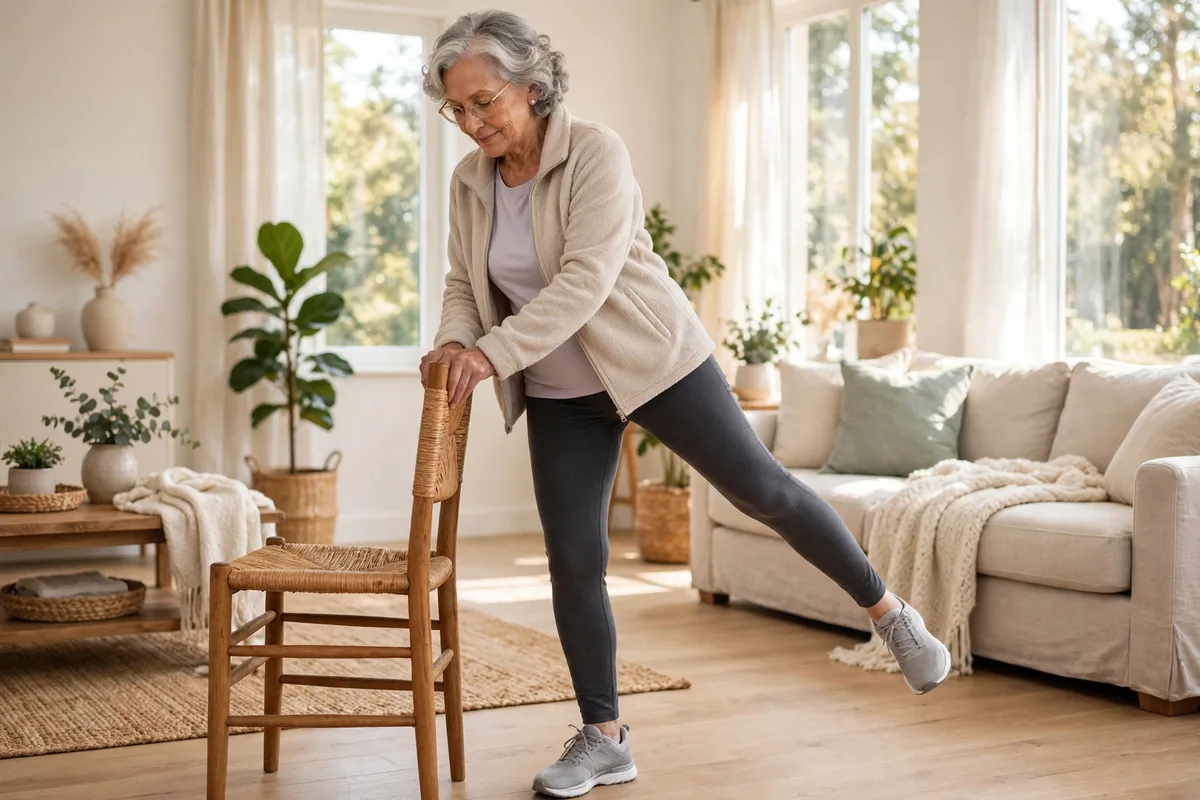
Inside every joint there’s a smooth, slippery fluid. Think of it as your body’s own WD-40. It only circulates when the joint moves.
No movement, no circulation. No circulation, more stiffness.
That’s the whole secret. Gentle, regular movement bathes your joints in their own natural lubricant. Doctors call it synovial fluid. You can just think of it as joint oil. Either way, the rule is simple: motion is lotion.
There’s a second reason, too. The smooth padding at the ends of your bones is called cartilage, and it has no blood supply of its own. It soaks up nutrients the way a sponge soaks up water. And sponges only soak when they’re squeezed. Walking, bending, stretching: that’s the squeeze.
None of this means pushing through pain. It means finding the kind of movement that doesn’t punish your joints in the first place.
The phrase you want is low-impact.
What “low-impact” actually means
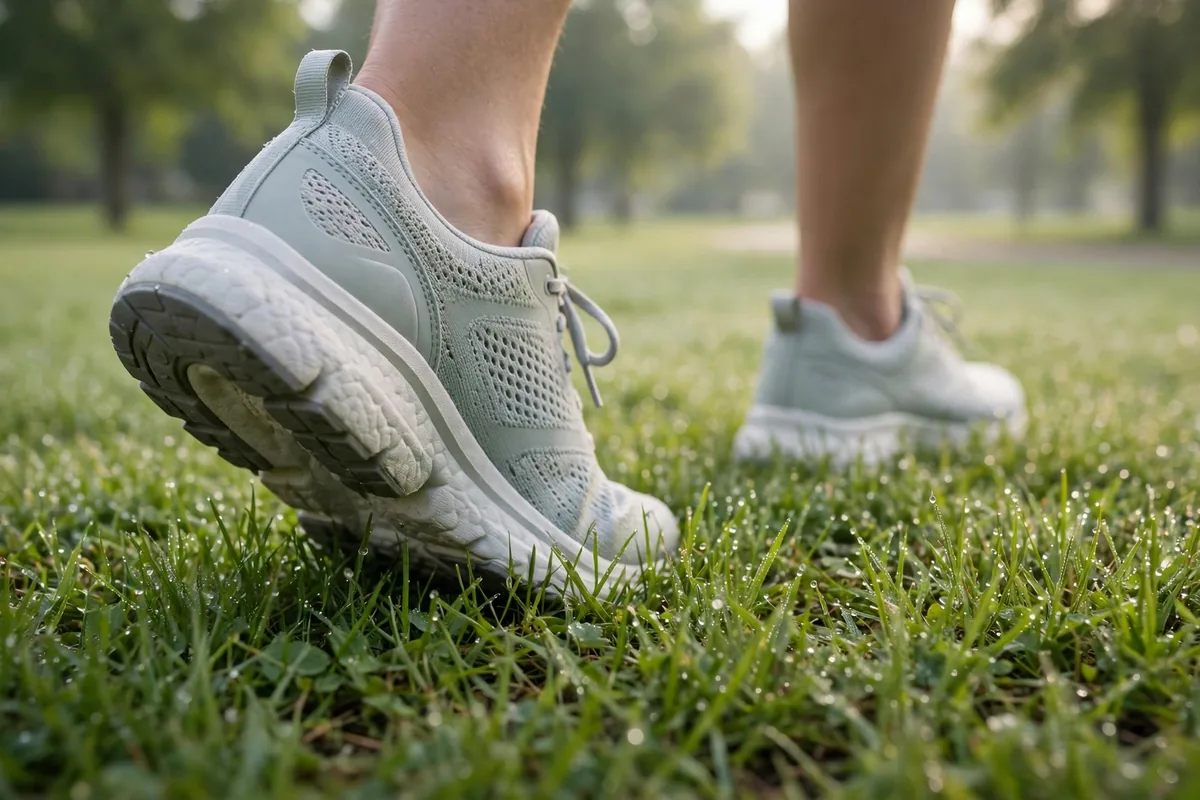
Simple. Low-impact exercise keeps at least one foot on the ground at all times. Or it supports your body some other way, the way water does. No jumping. No pounding. No sudden jolts hammering through your knees.
High-impact is running on concrete. Low-impact is gliding through a pool. Your joints can tell the difference instantly.
Here are six workouts worth your time, starting with the one you already know how to do.
1. Walking: the one you’re already qualified for
No membership. No special clothes. No learning curve.
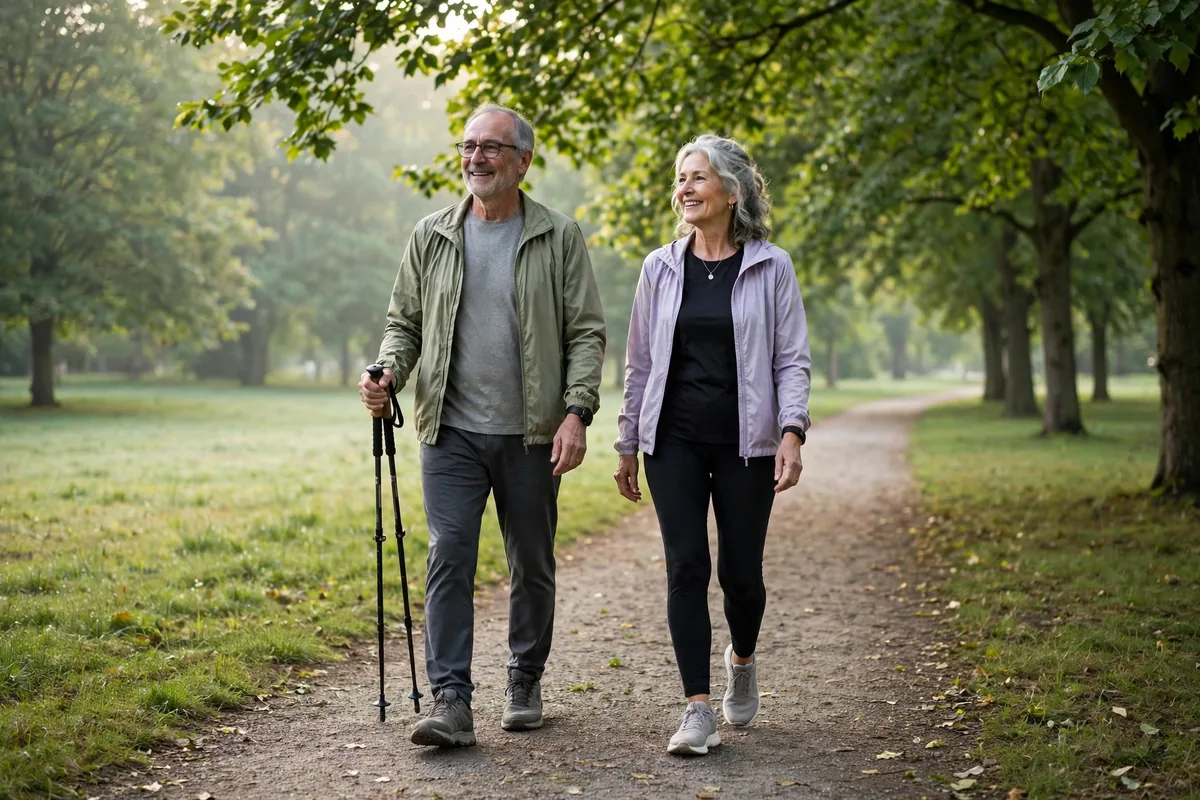
Walking is the most underrated joint-friendly workout on earth, mostly because it doesn’t feel like a “workout.” But for sore knees especially, it’s close to ideal. Your body weight stays controlled, your joints move through their full range, and you can adjust everything to match how you feel that day: pace, distance, terrain.
Two upgrades make it dramatically better. First, surfaces. Grass and packed dirt are kinder than concrete, and they quietly train your balance because the ground shifts a little under you. Researchers call it proprioception, your body’s built-in balance sense, and walking on uneven ground keeps it sharp.
Second, poles. Walking poles look like ski poles, and yes, you’ll feel slightly ridiculous for the first five minutes. Then your knees will thank you, because poles take real weight off your lower joints while giving your arms and shoulders something useful to do.
Start with ten minutes. Flat route. Comfortable shoes. This matters more than any gadget. Add five minutes a week. That’s it. That’s the whole program.
2. Water workouts: the closest thing to a cheat code
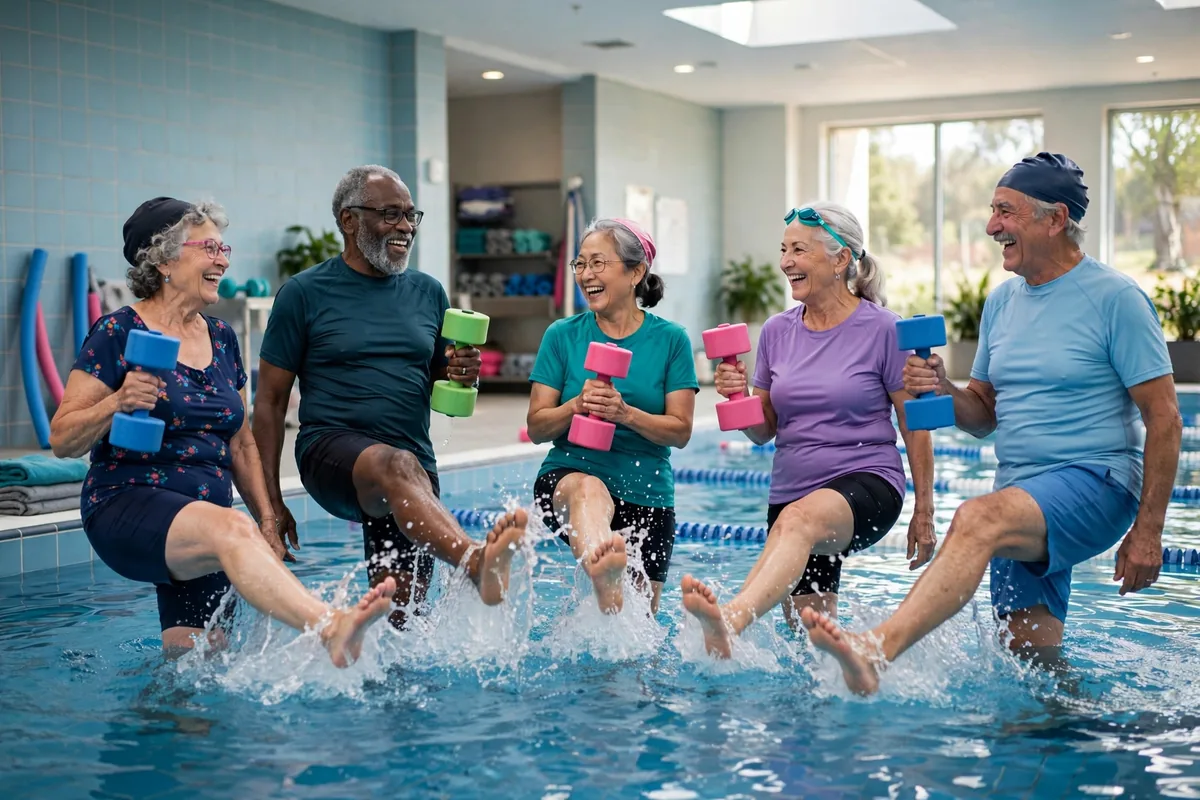
Here’s a number worth knowing. Standing in chest-deep water, the water holds up about 90% of your body weight.
Read that again. Ninety percent.
Your knees, which complain about every stair, suddenly get to move freely. Bending, kicking, marching, while carrying almost nothing. Meanwhile the water pushes back against every movement, so your muscles still get a genuine workout. Less load, more resistance. It’s the best trade in fitness.
This isn’t just feel-good theory. In a well-known study, adults over 60 with hip and knee arthritis did water exercise classes twice a week for twelve weeks. Their pain dropped. Their ability to climb stairs and walk improved. And the gains were still there three months later.
You don’t need to swim laps. Water aerobics classes, the ones at your local pool full of people exactly your age, are built for this. Marching in place, leg lifts, gentle kicks, all in chest-deep water. If your town offers an Arthritis Foundation aquatic program, even better. Those classes are designed joint by joint for people with arthritis.
Fair warning: the water hides how hard you’re working. You’ll feel fine during class and tired after. That’s normal. Drink water anyway. Yes, even in the pool.
3. Stationary cycling: kind to knees, honest workout
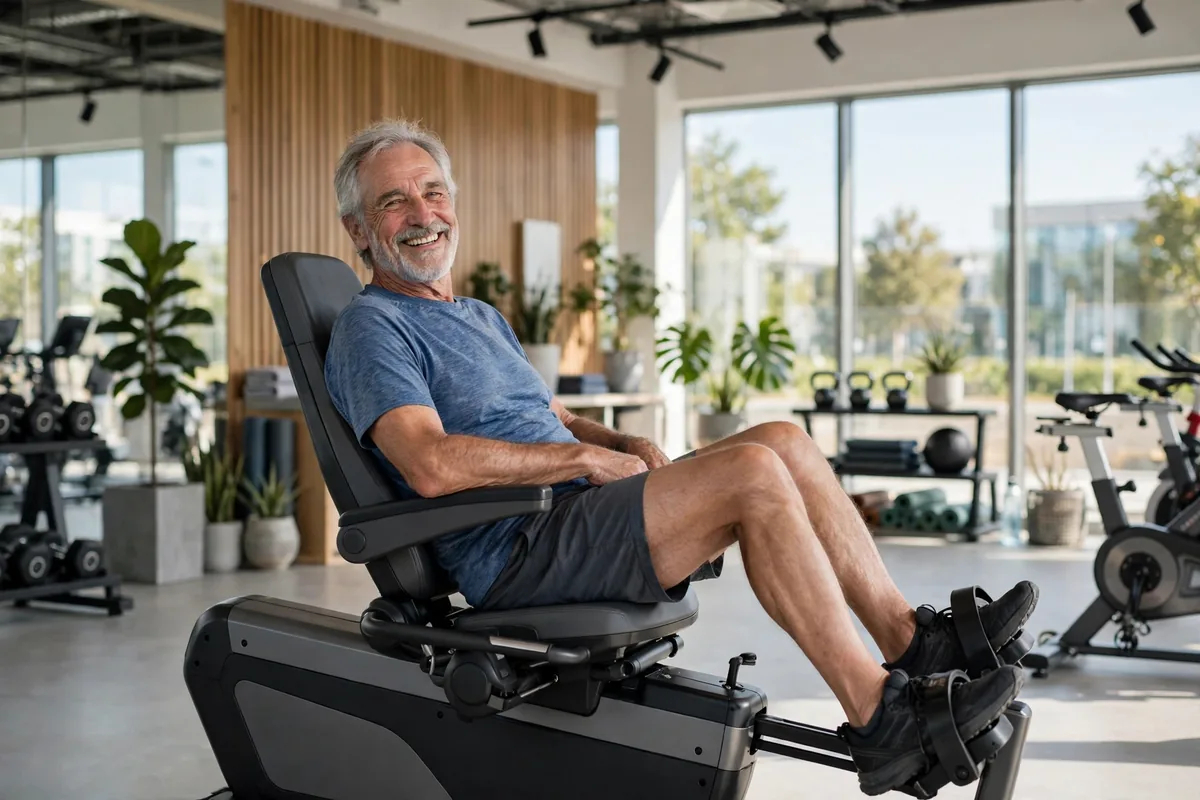
If walking bothers your knees but you still want your heart pumping, meet the stationary bike.
Cycling is a funny thing. It looks easy on the joints because it is. Your weight sits on the seat, not your knees. Your knees just do what knees love: smooth, repeated bending with zero pounding. The muscles around them, especially the fronts of your thighs (your quadriceps), get stronger with every pedal stroke. Stronger thigh muscles mean less work for the knee joint itself. That’s not a slogan. It’s mechanics.
The setup matters more than the bike. Seat height is everything. When your foot reaches the bottom of the pedal stroke, your knee should still have a slight bend. Never locked straight. Never deeply folded. Too low, and your knees will ache within minutes. Most gym bikes have a quick-release lever, so ask someone to check your position the first time.
Recumbent bikes, the ones where you lean back in a chair-like seat, are the gentlest option. Worth seeking out if upright bikes feel wobbly. Ten minutes at easy resistance is a fine start. Your joints will tell you when they want more.
4. Tai chi: slow motion with serious benefits
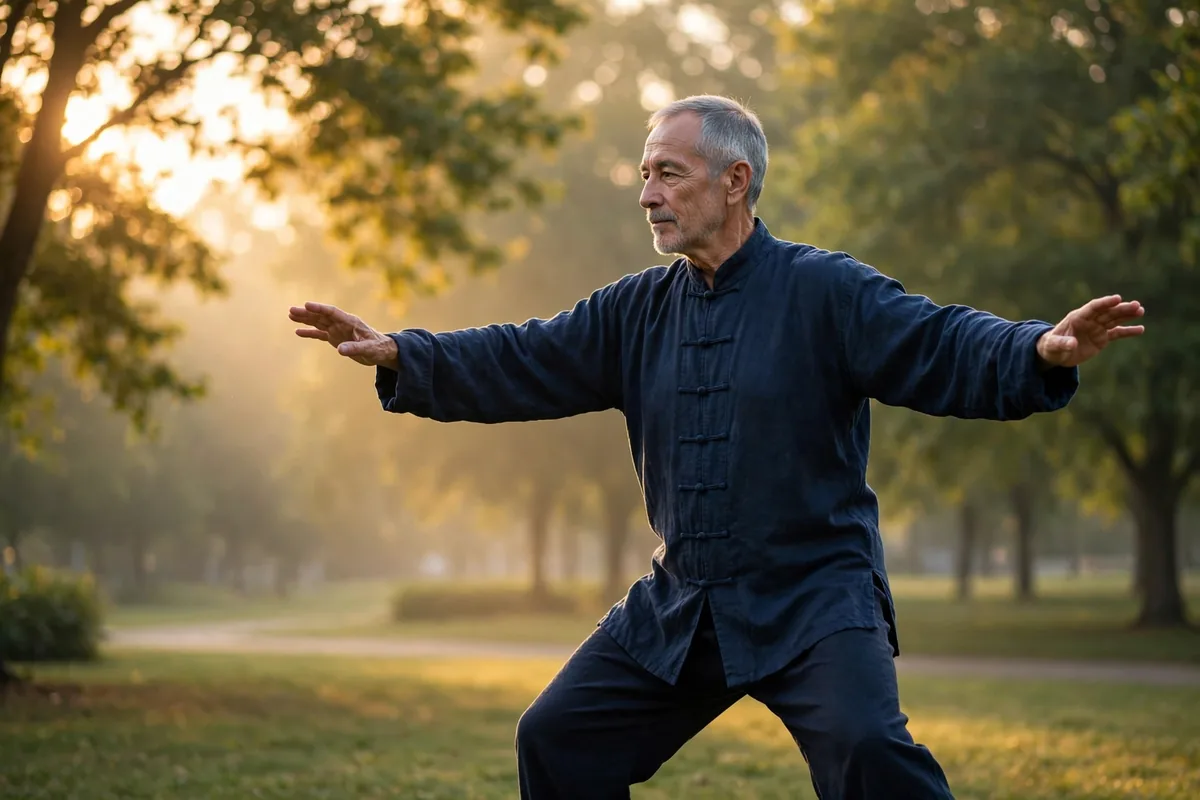
Picture this. A group of people in a park at sunrise, moving in slow motion. Arms circling. Weight shifting from foot to foot. Nobody sweating, nobody gasping.
It looks like nothing is happening. A lot is happening.
Tai chi is an ancient Chinese practice, centuries old, built on slow, flowing movements linked to deep breathing. Every shift of weight trains your balance. Every slow turn stretches your joints through their range of motion. And because nothing is ever sudden, your joints never get surprised.
The research here is unusually strong. A meta-analysis (that’s a study of studies, the gold standard) found that twelve weeks of tai chi significantly reduced pain and stiffness and improved physical function in people with knee arthritis. Other research has found it comparable to physical therapy for knee osteoarthritis, and the U.S. Arthritis Foundation endorses it.
One benefit gets overlooked: falling. Falls are the leading cause of injury-related death in adults over 65. Tai chi’s slow weight-shifting is essentially balance training in disguise, and studies consistently show it cuts fall risk.
Classes exist everywhere: community centers, YMCAs, parks departments. Most welcome absolute beginners. You cannot be “too stiff” for tai chi. Stiff is the starting point.
5. Chair yoga: yoga without the floor

Regular yoga is wonderful for joints. Getting up and down off the floor at 60? Less wonderful.
Chair yoga solves this by moving the whole practice into a sturdy chair. Seated twists. Seated forward bends. Gentle neck rolls. Ankle circles while your feet never leave the ground. You get the flexibility, the breathing, the calm, without a single trip to the floor.
This is the workout for the worst mornings. The ones where everything is stiff and the idea of “exercise” feels insulting. Fifteen minutes in a kitchen chair can be the difference between a day that loosens up and a day that doesn’t.
Look for classes labeled “gentle” or “seniors.” Online videos work too. Just use a sturdy, armless chair on a non-slip surface, and skip anything that hurts. A stretch should feel like a pleasant pull, never a sharp pinch.
6. Resistance bands: the myth-buster
“Should someone with sore joints lift weights?”
It’s the most common question, and the answer surprises people. Yes. Carefully, yes.
Here’s why. Your muscles are your joints’ bodyguards. Every bit of strength in the muscles around a joint is a bit of load the joint itself doesn’t have to carry. Weak muscles, achy joints. Stronger muscles, happier joints. Research published in Arthritis Care & Research found that older adults combining aerobic and resistance exercise improved their strength and endurance, joints included.
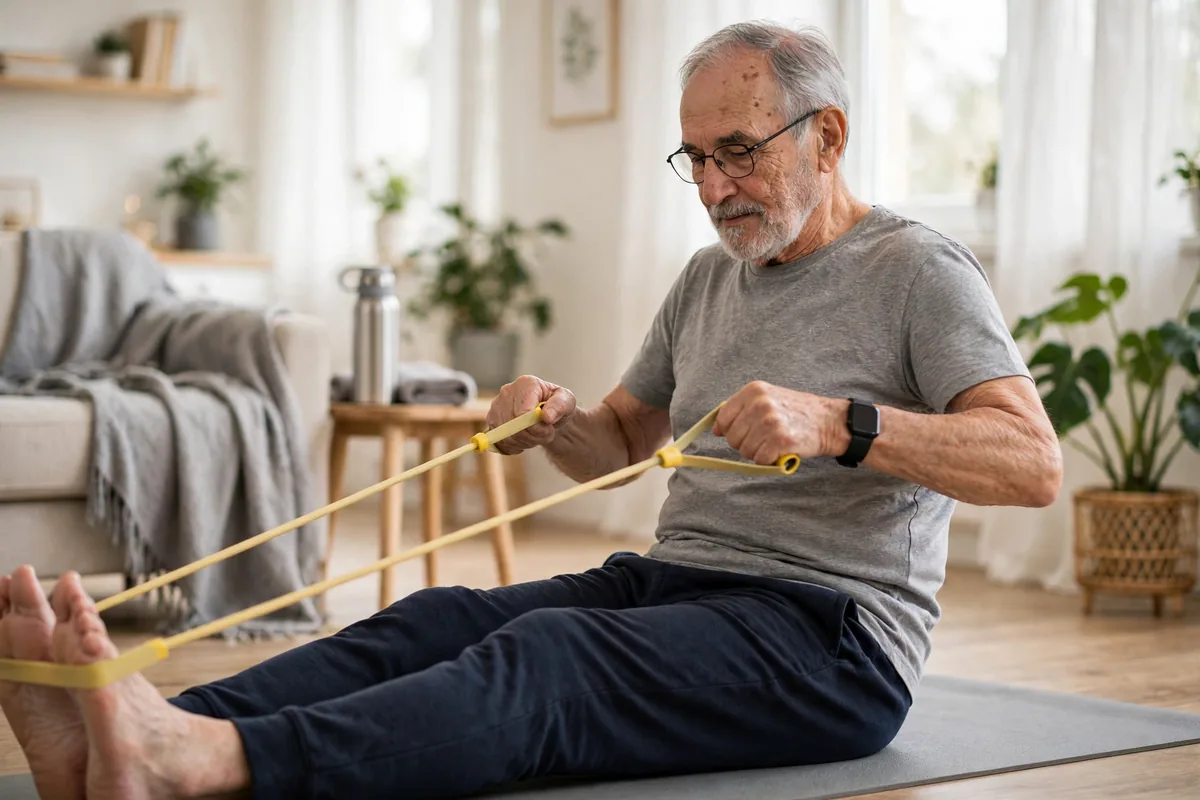
Resistance bands are the friendliest way in. They’re cheap, they weigh nothing, they fit in a drawer, and unlike dumbbells, they can’t fall on your foot. A band’s tension is gentlest where your joint is most vulnerable and firmest where you’re most stable. That’s the opposite of how free weights behave, and exactly what sore joints want.
Start with the lightest band (usually yellow or tan). Seated rows. Gentle chest presses. Leg presses with the band looped around your foot. Two or three days a week, not every day. Muscles need a rest day to rebuild. If a movement causes sharp pain, stop. Dull effort is fine. Sharp is not.
Your first week (keep it almost embarrassingly easy)
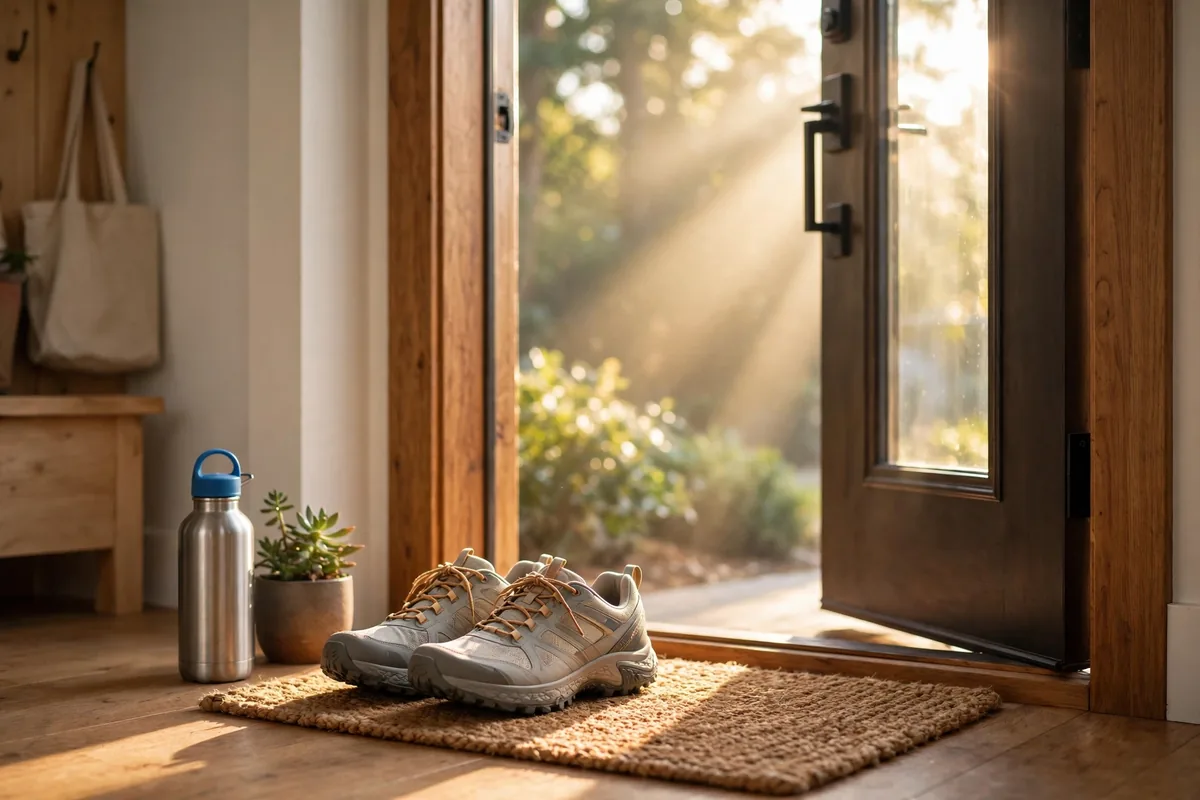
Don’t start all six at once. That’s how people quit by Thursday.
Pick two. Walking and one other, whichever sounded most appealing while you were reading. Ten to fifteen minutes, three days this week. Warm up first: march gently in place or swing your arms for three minutes. It signals your joints that movement is coming, and they respond better.
Week two, add a third day or a third workout. Week three, nudge the minutes up. Slow progress beats heroic starts. Every physical therapist on earth will tell you this, usually while treating someone who ignored it.
Safety first, the short version
- Sharp or sudden pain means stop. Dull muscle effort is fine; joint pain that spikes is not.
- Talk to your doctor before starting if you have arthritis, a heart condition, or recent surgery.
- Warm up for 3 to 5 minutes and cool down with gentle stretches. Never skip these.
- Good shoes, water nearby, and a chair or wall within reach for balance work.
One last thing
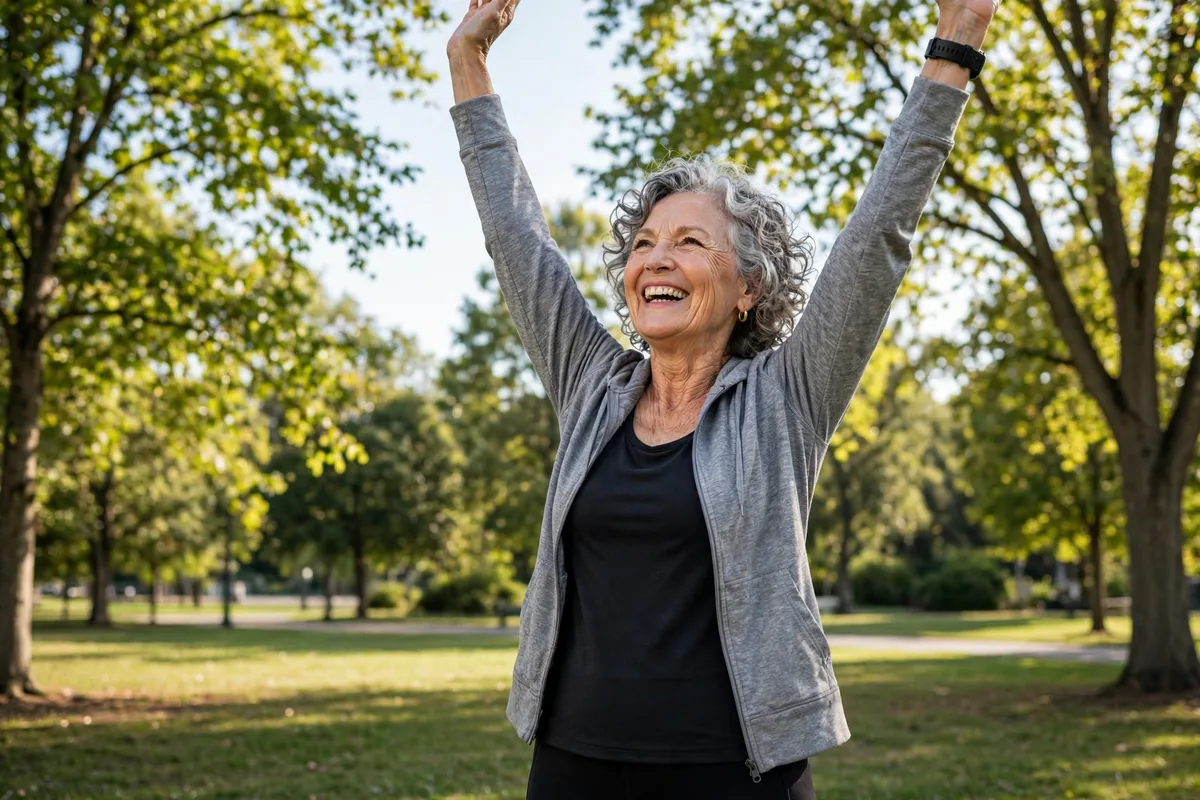
Sore joints after 55 aren’t a verdict. They’re a negotiation.
You don’t need to run marathons or lift heavy. You need to move. Gently, regularly, in ways your joints don’t hate. Walk a little. Float a little. Pedal, stretch, breathe, strengthen.
Start this week. Ten minutes counts.
Your future self, the one getting out of bed without the soundtrack, will thank you.

Eliza Mercer, the renowned golf coach with unmatched expertise in the sport, is our Lead Instruction Coach. Eliza provides exclusive and personalized coaching sessions to help golfers of all levels improve their skills. With her wealth of knowledge and experience, Eliza is a valuable resource for readers looking to elevate their game. Join Our Team!